Category: Senseless Nonsense

  • On-Demand Icicles Promised in 30 Minutes or Your Warmth Returned

    On-Demand Icicles Promised in 30 Minutes or Your Warmth Returned

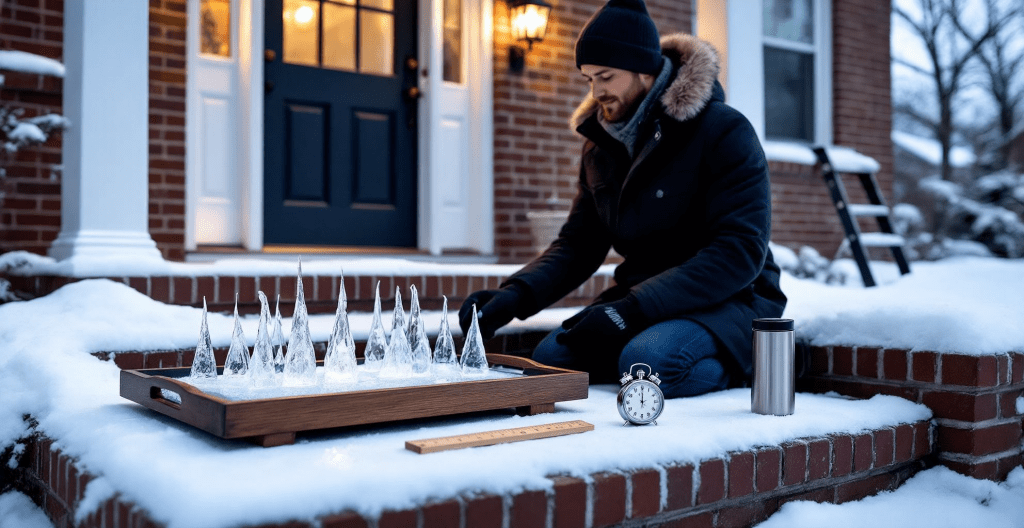
    A startup has entered peak winter with a bold offer: handcrafted icicles delivered to your gutter in half an hour, or a courteous refund paid in heat. Couriers travel shaded routes and north facing stoops, their satchels giving off a polite chill that steps around doormats like a well trained guest.

    Customers choose length, clarity, and a subtle curl. On arrival, the courier opens a felt lined tray, lifts an icicle with cotton gloves, and taps the gutter with a wooden ruler so the piece settles with quiet confidence. A brief mist appears, then the air looks freshly pressed, as if someone ironed the evening on low.

    Neighbors say the clues are gentle. A stopwatch leaves a pale ring on the step. The porch light lowers its voice. A ladder sets its feet and gives the smallest nod. The gutter replies with a soft metallic yes, and the breath above the tray signs off like it knows where to stop.

    Company reps describe a simple code of manners. Install on the third measured tap. Approach from the shaded side. Face curls streetward unless a hedge requests privacy. If asked, a courier will hold the icicle in the doorway for one quiet moment so the house can learn the shape.

    If the thirty minute mark slips, a technician arrives to return your warmth by careful ladle from a small thermos, just enough to fog the hallway mirror at its usual pace. The steam pauses beside the coat hooks as if reading the names. The guarantee is finished with a thumbprint of clean condensation.

    Most deliveries hit on time. Evenings now carry a soft clink as porches try on winter jewelry and decide it suits them. The ruler slides back into its sleeve. The tray closes with a whisper. The new icicles hold still, pleased to belong to the cold that brought them.

  • Spaghetti That Can “Read the Room” Debuts In Quiet Lab Trial

    Spaghetti That Can “Read the Room” Debuts In Quiet Lab Trial

    A culinary lab says it has cooked the first spaghetti that responds to diners’ moods. In early tastings, calm guests watched long, silky strands settle neatly across the plate, while anxious visitors found their noodles braiding into small bows that clung to the fork like reassurance.

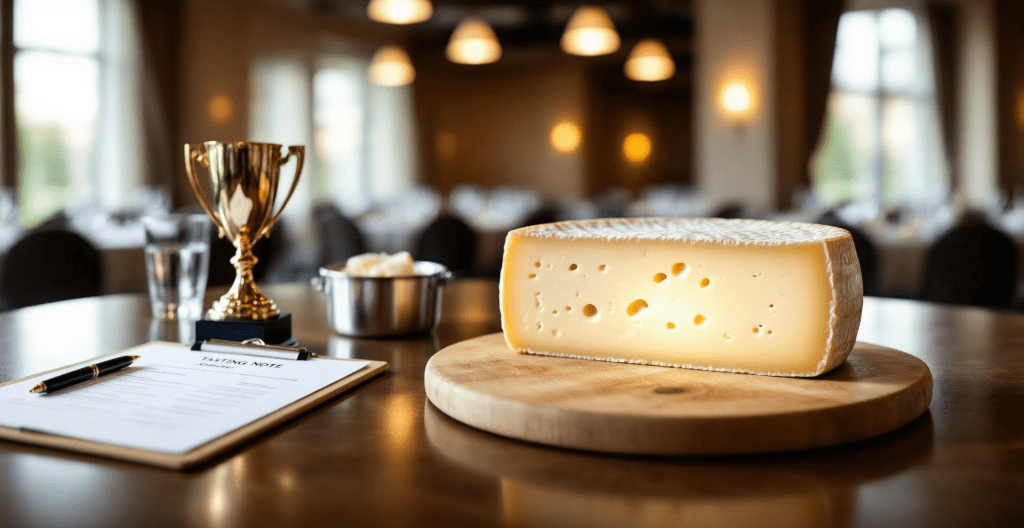
    The setup looks modest. Stainless bowls, a quiet thermometer, and a ring of sensors listen for tiny tremors in tableware and footsteps. When the signal says “relaxed,” strands align in parallel. When the signal says “nervous,” curls gather at the rim and begin a gentle weave that steadies the twirl.

    Little details back the claim. Condensation beads line the bowl in evenly spaced rows, as if counting heartbeats. The tasting bench holds two pale scuffs where shoes pause before sitting. Fork handles pick up a bright spot right where hesitant fingers rest. A pencil ledger on the counter notes texture shifts and ends every line with a tidy check.

    Music matters. Soft background tempos loosen the gluten and smooth the bite. A burst of confident laughter made one plate fall perfectly into straight lanes, according to the tasting log. In a quieter session, a shy visitor produced a decorative knot near the rim that the chef preserved in chilled olive oil for reference.

    “The pasta is not thinking,” the lead researcher said, “it is measuring. We are translating small human signals into strand behavior, then letting the boil and the starch do the rest.” The lab adds that warm plates and unhurried fork angles help the effect along.

    Most evenings end in a low hush of vents and clinks. Utensils settle. The thermometer blinks its approval. When someone pauses at the threshold, steam lifts in thin threads, and a single noodle ties a polite bow, just in case.

  • Botanists Launch Cactus Wellness Classes For Responsible Drinking

    Botanists Launch Cactus Wellness Classes For Responsible Drinking

    Botanists have launched a wellness initiative teaching cacti to drink responsibly after several were found overwatering themselves in sympathy with humans. Greenhouses report night sips from stray misters, a little extra dew coaxed from air, and morning soil with the polite shine of a late regret. The air smells of warm clay and cooled light.

    Classes meet at first light. Instructors set a drip timer to a slow beat and seat the plants in saucer circles, where they practice the two sip rule and a respectful pause. Moisture meters serve as breathing sticks for stomata, and a shallow basin in the center acts as a reminder, not a buffet.

    Evidence keeps tidy notes. Gravel shows small commas where pots settled and listened. A black line of emitters holds poised droplets that consider, then wait. A bead rides a spine, thinks better of it, and slides back into the mix with quiet relief.

    An accompanying memorandum, Desert Hydration Etiquette, rests on a clipboard in careful script. Water to be introduced with a greeting. Count to five, then remember the desert. Beads to return to soil without applause. Plants to lean away from unattended spray, and to take turns at the tap. Timers to click no louder than a turning page, labels to refrain from glare.

    Early results are steady. Spines look rested, pots dry evenly, and new growth arrives with the calm of someone who knows where the tap is but prefers conversation. The hygrometer keeps a modest baseline, coasters stack like patient moons, and the spray bottle sits facing slightly away to model restraint.

    Public guidance suggests repeating the greeting, counting to five, and letting the rest be weather. At close, the basin mirrors rafters without reaching, the drip line tidies its own shadow along the bench, and the plants hold a composed thirst. Dawn finds them ready, saucers clean in concentric rings, and the desert remembered by heart.

  • City Hires Octopus Traffic Officers, Commutes Get Surprisingly Smoother

    City Hires Octopus Traffic Officers, Commutes Get Surprisingly Smoother

    A coastal city has deputized octopuses to manage underwater intersections, and the early verdict is tidy. Tentacle coordination is excellent. Turn signals are less so, especially at the eelgrass roundabout during tide changes, where half the mullet commit and the other half hover like they forgot a grocery list.

    Each officer holds a low perch at canal crossings, one arm lifted to pause a school while two guide a slow turtle and a row of hermit crabs. Signals include a lift of the third arm, a left side ripple for merging, and a polite puff of ink for caution. Nearby cuttlefish mirror the gestures with casual bioluminescence, which does not help.

    Evidence lines the channel like neat tide notes. Sand shows diagonal commas where suction cups practiced yielding. A glass float at the corner throws soft glints that count like blinks. A ribbon of ink hangs like a bookmark, thins to nothing, and the eelgrass leans in agreement before standing up straight.

    The city is testing luminous sleeves for clearer blinking and small shells that click once for right and twice for left. The sleeves are algae lined and glow at conversation brightness, then dim politely when the moon climbs. On certain mornings a cool seam marks the centerline where bubbles turn from round to crisp, and everyone pretends to understand.

    Commute times have improved. Schools travel like tidy ribbons, crabs queue in alphabetical shells, and the turtle arrives when the turtle arrives. Rocks keep a spiral of scuffs that reads like attendance, while a patient current purrs along the curb.

    Locals say the stops feel fair and that everyone gets waved through eventually. At closing, an officer coils the sleeves, pats the glass float, and settles on the square block with a satisfied curl. One last puff of ink lingers like a soft comma, and the channel carries it gently downstream.

  • National Library Debuts Whisper Calibration, Graduates Can Hush From 50 Feet

    National Library Debuts Whisper Calibration, Graduates Can Hush From 50 Feet

    Librarians have begun mandatory whisper calibration sessions held before opening, when the building is at peak quiet. The goal is national consistency. Trainees practice sending a hush that lands at ear level and disturbs neither shelf nor signage.

    The toolkit is precise. Instructors use felt covered decibel wands, a page turning metronome, and a jar of polite gravel to set texture. A narrow ribbon stretches down the aisle to visualize pressure, tilting just enough when a well shaped sh travels past.

    Technique is taught in layers. Breaths match the rustle pace of a turning page, syllables narrow by the fifth shelf, and soften again by the seventh. The whisper is kept at shoulder height. Commas are preferred over periods to avoid hard stops.

    Early results read like tidy lab notes. Dust motes sketch a pale wave between coach and student. A rolling cart settles as if reassured. On the far table, a brochure folds itself by one neat third when a distant hush arrives.

    Certification has two parts. First, candidates must deliver a cart settling whisper at close range. Second, they send a distance hush that persuades a brochure to fold from across the room. Graduates receive a silent card that will not crinkle and a small pin that refuses to glare under fluorescent light.

    After training, the instruments rest. The metronome dozes with its arm at ease, the ribbon hangs plumb, and the gravel agrees in a single soft shift. Doors open, conversations end at a comfortable comma, and the building exhales like a page turned cleanly to the next.

  • Archivists Catalog Snow Beast Etiquette, Calm Rules In Frosted Ink

    Archivists Catalog Snow Beast Etiquette, Calm Rules In Frosted Ink

    Archivists have unveiled a cache of winterworn scrolls that read like a code of manners for giant snow creatures. The rules are disarmingly calm: no roaring before sunrise, paws brushed at thresholds, and a courteous berth when passing a sleeping pine.

    Illustrations show a hulking figure bowing to a drift, then pausing so icicles can finish their remarks. Track diagrams appear in polite pairs, with small notches interpreted as “after you.” A recurring frost seal depicts a listening ear, the emblem of patient behavior.

    The material evidence is as quiet as the subject. A loupe leaves a cool circle on linen, a soft brush clears a neat path through sifted snow, and a brass weight keeps a curling edge in line while the window admits careful morning light.

    Researchers say the etiquette has not vanished so much as blended into the season. Dawn wind arrives in a whisper, roofs creak once to acknowledge the hour, and fresh snowfall sometimes hesitates at a doorway like a guest waiting to be announced. “It is less superstition and more neighborhood policy,” said Dr. Lida Harrow, who led the catalog. “Winter behaves better when someone is listening.”

    The scrolls now rest in cold storage, the frost seal holding its patient ear. Outside, a pine seems to lean in, and the street keeps the kind of hush that suggests something large and careful just passed and said, very politely, after you.

  • Physicists Link Overcooked Turkey to Minor Time Glitches at Holiday Tables

    Physicists Link Overcooked Turkey to Minor Time Glitches at Holiday Tables

    Physicists are advising Thanksgiving hosts to avoid overcooking turkeys after test kitchens reported minor time irregularities during trial roasts. In multiple observations, oven lights blinked twice, kitchen clocks replayed the same minute, and a faint shimmer formed above the stovetop.

    “We are not talking about paradoxes,” said one researcher. “These are small, local repeats that resolve on their own if heat is reduced.” Labs describe the effect as a thinning of late afternoon that encourages brief echoes of recent actions.

    Early indicators are straightforward: Gravy thickens before it is stirred. A carving knife appears on the counter a moment before the host reaches for it. Short toasts repeat with cleaner phrasing. Cranberry sauce briefly reverts to a smoother state, then resumes its place as if nothing happened.

    Physical traces are consistent. Thermometers leave twin condensation rings on cutting boards. Refrigerators pause, emit a hum that resembles excuse me, and resume. Gravy boats cast two soft shadows that merge by dessert. Salt cellars are found slightly displaced with no clear witness.

    Guidance from researchers is simple. Remove the turkey from heat, tent with foil, and keep conversation in the present tense until the room stabilizes. “Avoid forecasting next year’s menu,” a lab note reads. “Let timers ring once. Do not restart them.” Most rooms return to normal within minutes as steam output flattens and wall clocks recommit to forward time.

    If a wishbone delivers the same result twice, officials recommend accepting the first outcome and moving to dessert. Custard has tested as stabilizing, and crust cooling sounds correlate with a rapid return to single track time. “Serve pie, keep voices level, and the evening proceeds as expected,” the memo concludes.

  • Smart Lampposts Now Read Your Sweater and Set the Mood

    Smart Lampposts Now Read Your Sweater and Set the Mood

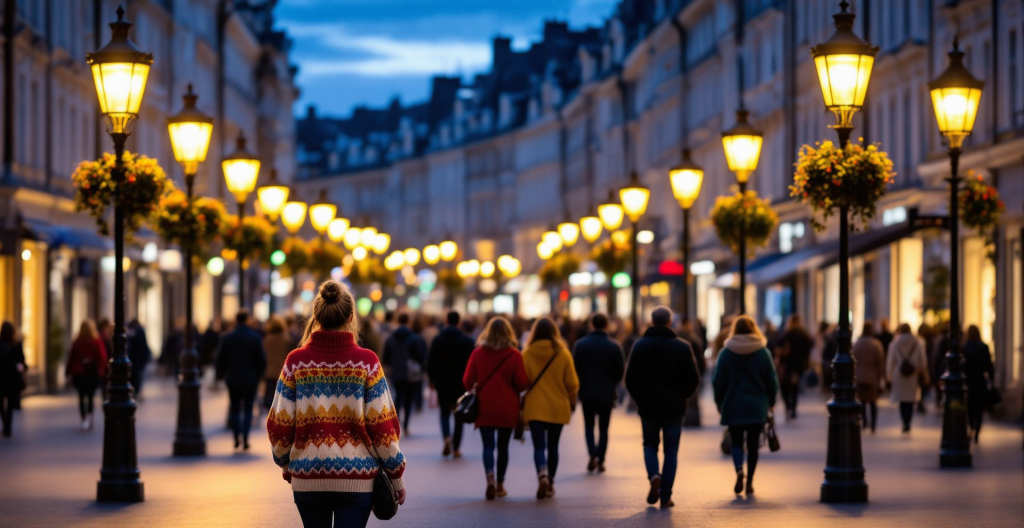
    Engineers have introduced a new era of intelligent street lighting. Smart lampposts can now sense the density of nearby sweaters and automatically adjust their color temperature to match. When sidewalks fill with cable knit and wool, the lamps glow warm and golden. When cardigans and light layers take over, the glow shifts cooler and brisker.

    The rollout began on a quiet avenue where residents agreed to a simple test. One block hosted a sweater parade at dusk. The lamps blushed to a caramel hue within seconds, then politely cooled when a jogger passed in a thin zip up. A tiny status light on each pole blinked twice as if to say understood.

    Neighbors quickly turned the feature into friendly competition. Households compare “lumens of coziness” during evening strolls, and community boards now track knit density like a weather report. Thursday is cable knit night, according to a chalkboard sign posted by the bakery. Gloves optional, scarves encouraged.

    Evidence of the system’s accuracy keeps piling up. A lamp outside a café drifted warmer when a party in fishermans sweaters lined up for cocoa. Another lamp cooled just a hair for a birthday group in breezy layers. The poles record only aggregate knit levels, engineers say, but it is hard to miss the way a lamp nods toward a particularly confident turtleneck.

    Local etiquette has already adapted. Residents pause beneath a pole to let it take a reading, then continue once the glow settles. A small placard near the park bench reads “thank you for layering.” Benches respond by feeling slightly more inviting, or at least that is how everyone describes it.

    Officials report fewer complaints about harsh lighting and more evening foot traffic. The plan is simple: Dress for the stroll you want, let the lamps do the rest, and enjoy a neighborhood that tunes itself to sweaters in real time. Sweater weather, it turns out, was waiting for a dimmer switch.

  • Stone Hearth Keeps Ice Age Flame On A Diet Of Unmailed Cards

    Stone Hearth Keeps Ice Age Flame On A Diet Of Unmailed Cards

    A longstanding local tradition claims a stone hearth has burned continuously since the last Ice Age, fed nightly with unmailed holiday cards. At dusk, a custodian places a neat stack by the grate, slides a few into the flames with tongs, and the room takes on the scent of paper, pine twine, and ink.

    Operators sort cards by decade to keep the burn consistent. Glossy stock ignites quickly like kindling, matte paper sustains a slower flame, and old stamps curl into laurel shapes before disappearing. Embossed snowflakes throw sharp shadows on the fireback, while stray glitter behaves like polite sparks that lift in measured bursts.

    Investigators note a pattern. Cards that were addressed but never posted burn with a steady, story length glow. Mail that once left the house refuses to catch, resting at the edge until it is removed and placed back in a separate pile. At the winter solstice, the hearth reportedly pauses, then resumes when a late season stack arrives from drawers and desk corners.

    Physical evidence supports the account. Ash settles in perforated lines that resemble stamp edges. The grate shows a bright strip where brass tongs habitually rest. A wax seal spoon sits on a trivet with a single red ring, and the stone lintel is worn smooth, consistent with frequent, careful handling over generations.

    Neighbors describe a reliable evening scene. The window takes on a blue quiet, the kindling crackles on cue, and a foil ribbon on the table flashes once before going still. The custodian lifts the tongs, the hearth accepts the cards without complaint, and the house settles as if a backlog of messages has finally been processed.

    Officials have not offered an explanation for the continuous burn. For now, the practice continues at dusk, and residents are advised to expect a faint scent of ink and fir whenever the stack is fresh and the season runs late.

  • Temple Fleet Comes Ashore, Mosaic Map Points Nowhere in Particular

    Temple Fleet Comes Ashore, Mosaic Map Points Nowhere in Particular

    Witnesses along a remote shoreline woke to an armada of stone vessels that look suspiciously like temples that set sail and never turned back. Each hull carries a porch and columns, all gently crusted with barnacles, and a tidy staircase that walks straight into the tide.

    Teams cordoned off a tide-level mosaic that shows a compass rose, stylized swells, and a faint legend that appears to read “continue until satisfied.” The tesserae flash at sunset, as if the map approves of the lighting.

    Inside the nearest vessel, surveyors recorded marble benches spaced like pews, plus mooring rings carved into the floor where hymnals might go. A stray gull has adopted the nave and insists on supervising.

    Divers say the stone keels are hollow in places, with shelves that look like they once held amphorae or very confident choir robes. The water inside is calm even when the waves outside disagree, which is either excellent engineering or good manners.

    Beachcombers keep returning curious items to the trench: a bronze cleat shaped like a laurel, a chipped pilot’s whistle, and a tile that reads as either “starboard” or “snack break” depending on the angle. Both options test well with the crew.

    “It is either a traveling sanctuary or a very ambitious picnic,” said Dr. Callie Mire, curator of nautical mysteries. “Until the mosaic stops pointing at itself, we will call it navigation adjacent.”

    At low tide the compass rose briefly aligns with a sailing dinghy on the horizon, then changes its mind and points toward a nicer patch of beach. The fleet does not move, but it does look pleased with its parking.

  • Compasses Prefer Hot Cocoa, Navigators Record A Cozy Deviation

    Compasses Prefer Hot Cocoa, Navigators Record A Cozy Deviation

    Voyage journals whisper about a brief era when compasses abandoned true north for something far more convincing. In tent or cabin, the needle eased away from duty and settled toward the galley, aligning with whichever cup of hot cocoa was steaming with the most confidence. A ship could find its heart by following the warmest mug on board.

    Navigators adjusted with surprising grace. Charts gained a second set of tidy lines labeled cocoa bearings, and a neat margin note tracked cozy deviation. Marshmallows, kept in cloth bags, acted as calibration weights. A few soft puffs placed around the binnacle nudged the needle until the ship remembered its sense of direction, or at least its priorities.

    On shore, surveyors made do with field improvisation. A ladle held at arm’s length stood in as a temporary meridian. If the ladle trembled over a kettle, crews penciled a small chocolate star on the map and took five for quality assurance. No one argued with findings that came with a sip.

    The effect waned as stoves improved and steam spread evenly through cabins. Even so, museum drawers still hold brass cards with faint brown halos near south. Old depots show circular stains where a map met a mug and left behind a compass rose drafted by warmth instead of iron.

    Logbook notes remain charming and precise. “Needle drifted toward galley, morale high.” “Bearing set by marshmallow, course sweetened.” In the end, the rule proved simple. Follow the heat, mark the cup ring, and remember that sometimes the shortest route to a destination begins with a steady hand and a little cocoa steam.

  • Mailboxes Demand Leading Holiday Movie Roles

    Mailboxes Demand Leading Holiday Movie Roles

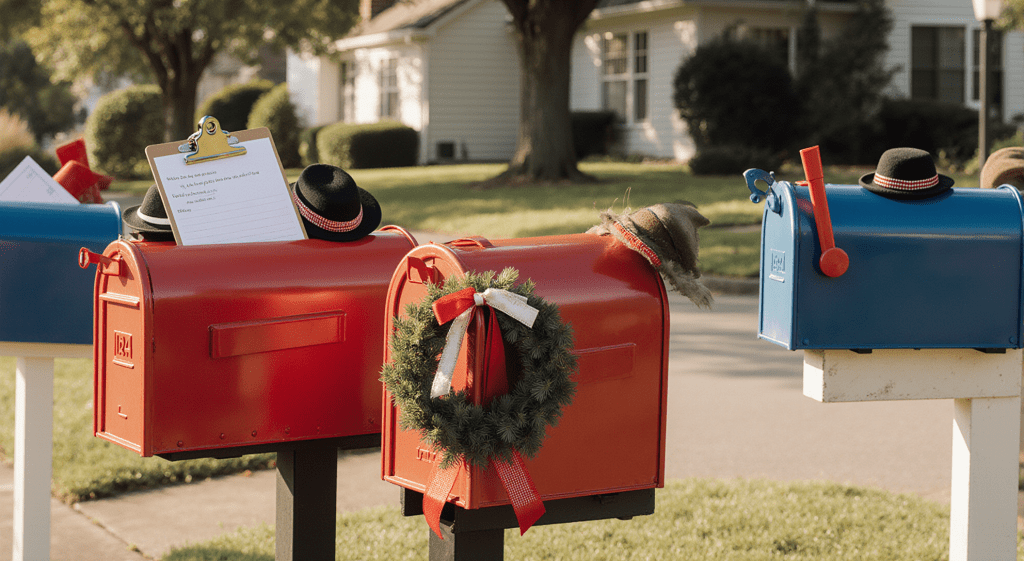
    A new group of unlikely celebrities is stepping into the spotlight, and they are not the type to sign autographs. They would rather stamp them. Mailboxes across a quiet suburb have officially unionized, demanding recognition for more than their stoic curbside cameos in holiday romances. For years they have stood silently through heartfelt deliveries and teary reunions. Now they are ringing their bells for overdue screen time.

    Mailbox spokesbox Red insists they are tired of being background props when their hinges could command the main stage. Among the demands are speaking roles, or at least one slow-motion closeup where the lid opens with Oscar-worthy gravitas. After all, suspense only works if the audience feels the tension of a mysterious envelope.

    Talks with filmmakers are already underway. The mailboxes want the right to reject glittery envelopes, a known cause of indigestion, and to approve proper wardrobe for festive appearances. Tiny hats and cheerful sashes are acceptable. Tinsel and rubber bands are not. Industry whispers suggest next year’s Christmas special may feature a love triangle starring two mailboxes and a persuasive little flag.

    Script requests continue to grow more inventive. Some boxes dream of exchanging letters with each other after hours, while others hope to confess their feelings to the recycling bin under moonlight. Many aspire to deliver dramatic monologues, with the clang of their lid timed for maximum emotional impact.

    Residents have embraced the cause, leaving supportive notes and miniature doughnuts as snacks for their hardworking postal pals. A few have even written short scripts, just in case a casting agent happens to scout an eager mailbox in the neighborhood.

    Union meetings are held at dusk, clipboards passed from post to post, as the red and blue boxes wait with all the poise of seasoned actors anticipating their big break. The suburban glow has never seemed so full of ambition.

    So if your next holiday special features a mailbox giving a heartfelt speech with a heart of stamped steel, do not be surprised. In this town, even the mailboxes believe dreams are worth delivering.

  • Rural Town Swaps Metal Cash Kiosks For Hay Bales That Pay Out

    Rural Town Swaps Metal Cash Kiosks For Hay Bales That Pay Out

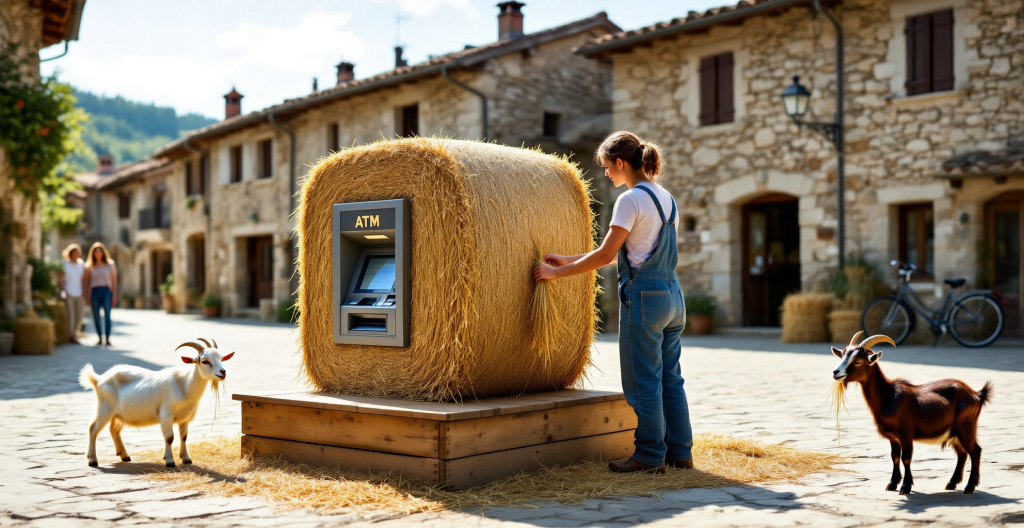
    In a quiet main street, the old metal cash kiosks have been replaced with neatly bound hay bales. The trick is simple, pull the right piece of straw, and cash slips out with a modest rustle. Withdrawals are quick, and locals insist the system is secure, unless a curious goat wanders too close.

    Each morning a pair of clerks wheel out a fresh square bale with the care of librarians shelving a favorite book. Straws are aligned by denomination, short for coins, medium for small bills, longer for larger surprises. Somewhere inside, a small bell offers a single, courteous ping, and a tidy bundle emerges as if it had an appointment.

    Regulars say you can hear your balance in the hush before the ping, a soft quiet that seems to measure intention. On breezy days an attendant stands by with a rake and a calm voice, smoothing errant straw like hair before a photo. Goats are gently steered toward a separate trough known as the decoy, stocked with unremarkable stems that still feel important.

    A handwritten card lists Hay Etiquette. No tugging two straws at once. Do not blow on the bale to find a jackpot. Pocket lint is considered a polite tip if the bale nods. Evidence of order is everywhere, scuffed boards from queueing boots, chalk tally marks that straighten themselves overnight, a length of twine tied in a bow for anyone who prefers a receipt.

    Security is present but affectionate. A reflective-vest scarecrow performs slow, reassuring nods. A ledger cricket chirps once for small withdrawals and twice for theatrical ones. The payout tray is brushed clean between customers by a broom that has learned to whisper, Thank you for your patience.

    By afternoon the bale smells like sunshine and lawn, and the line moves with a comfortable shuffle. A clerk pats the binding, tries a test straw, and grins at the punctual ping. As evening settles, the bale is tucked under a canvas, and the goats, full of decoy, blink deeply satisfied at absolutely nothing in particular.

  • Office Tests Precision Brewing For Peak Jitter By 10:30

    Office Tests Precision Brewing For Peak Jitter By 10:30

    A beverage analytics firm is now tracking workplace caffeine levels, hoping to catch peak jitter by 10:30 a.m. Mugs have discreet sensor clips that hum politely when a sip moves the needle. Around here, they call it precision brewing.

    A calm dashboard on the wall shows colorful waves drifting upward as baristas steer their cart through the aisles with the posture of air traffic control. Coaster lights go green for steady hands, amber for inspirational wobble, and a tasteful red for keyboard safe distance. Delivery times are measured in sips, which is considered both scientific and friendly.

    The wall screen offers soft, unhurried graphs, and the espresso machine releases well-behaved steam that ascends like a tidy promise. Paperclips sit in a quiet wave pattern that no one admits arranging. A few wristbands pulse in sympathetic rhythm, then dim modestly when meetings begin.

    Management reports faster typing and more confident brainstorming. Key clatter has risen seven percent, according to a small microphone that clicks its pen after each observation. The barista cart glides by with wheels that whisper, and the floor shows only considerate cup rings, evenly spaced like planetary orbits that remembered their manners.

    The system runs on a gentle code. Coasters will not judge before 9, latte art counts as morale, and any mug may request a soft coaster if the humming feels excitable. Decaf drills begin next week, complete with measured sips and tidy notes, followed by a ceremonial 3 p.m. tremor check.

    Near a window with late morning brightness, a lone saucer sits perfectly level, practicing serenity for the group. By 10:28 the waves on the dashboard crest and hold, as if posing for a portrait. Ideas fizz, hands steady, and the stapler achieves a brief but deserved moment of fame.

  • Northern Gardeners Raise Subzero Greens With Polite Frost

    Northern Gardeners Raise Subzero Greens With Polite Frost

    Members of a northern gardening society tend produce in glass houses that never warm above a friendly shiver. Sunlight is sifted through pale cloth to keep it thoughtful, vents breathe cold in gentle cycles, and clean snow is dusted over the beds like glittering mulch that minds its manners.

    Irrigation arrives as short flurries from a converted mist line, a soft hiss that settles into a fine, even sheen. Thermometers glow a reassuring blue below zero, and a small brass bell rings whenever the room drifts warm, the note crisp as a teaspoon on ice.

    Harvesters work in knit mittens with wool lined shears, catching each leaf before it can exhale a small white sigh. Crates are lined with linen that keeps its own frost, and every clipping leaves a tiny star on the air that breaks politely.

    Evidence sits where you would expect it. Door handles remember neat crescents of rime, a rubber boot has polished a narrow arc in the threshold, and the bell cord shows a bright spot from winter thumbs. A pencil ledger rests on a shelf with tidy columns labeled crunch, sparkle, and serenity, the last column frequently underlined.

    The results travel well. Lettuces answer the knife with a faint glassy note, cucumbers keep a starry rime along their peel, and herbs give off halos of cold that make steam from soup sit up straighter. When the bell chimes once at closing, the frost seems to listen, and the greens settle into their crates with a sound like a nod.

  • The 1814 Nutmeg Ratio Accord, Filed Beside Canals And Calmly Followed

    The 1814 Nutmeg Ratio Accord, Filed Beside Canals And Calmly Followed

    In 1814 a quiet accord established acceptable nutmeg ratios. The document set civil measurements for shavings, grates, and pinches across common dishes. It was filed beside postal routes and canal plans, tied with a ribbon the color of warm pastry.

    The ratios read like polite music. One shave per ladle for maritime stews, two quiet gratings for custards, and a ceremonial half pinch for festive punch, to be swirled clockwise exactly twice. Inspectors traveled with pocket graters, a tiny brass spoon calibrated to the word pinch, and a fan of aroma cards they flicked like a deck.

    Evidence remains tidy and persuasive. Ledgers show spoon silhouettes and little ovals where a shaving once rested, wax seals pressed with the starry cross section of the seed. Ship cooks learned to present their nutmeg like a passport and to keep a saucer for the official crumb. Floorboards near the galley hatch are softly scuffed in semicircles, the record of measured swirls.

    A surviving pamphlet, Civic Seasoning Memorandum, sets out the rules in small, patient type. Pinches to be declared in a clear voice, grates to proceed at the rate of a kettle calming. The grater to be warmed by the palm, never by flame. Clockwise swirls exactly twice, counterclockwise reserved for apology and only with permission. Cards to be stamped with a single star pressed in wax, then aired until fragrant.

    The accord remains in force, lightly. Violations are punishable by mild shame, a gentle “hmm” from the nearest steward, or the temporary turning of the spice jar to face the wall. Some kitchens keep velvet cases for the pocket grater, and a miniature balance nods at the tiniest shaving as if it recognizes an old friend.

    Each winter an appointed clerk tastes the air and declares it within range. The ledger receives a fresh dot of approval, the spoon sits straight on its napkin, and the jar returns to face the room. Somewhere a ladle pauses at the exact spoonful, then continues, as if the recipe and the canal map had agreed to meet.

  • Retired Northern Hotline Once Gave Live Aurora Updates

    Retired Northern Hotline Once Gave Live Aurora Updates

    In the far north, a payphone once offered real time aurora reports. Coins clicked, the handset warmed your ear, and instead of forecasts you heard faint jingling followed by the kind of patient laughter the sky keeps for itself. The booth light glowed as if pressing a small thumbprint onto the starry hour.

    The service logged calls as arcs rose. On strong nights the bells layered, light as pocket change against glass, on quiet nights a single chime and a hush that sounded like mittened applause. Operators were never identified, though technicians noted the signal arrived from a ridge with no poles, then wandered along the boreal map as if it traveled by curtain.

    Evidence still keeps tidy hours. The coiled cord remembers a gentle spiral at shoulder height, a habit of long calls. Frost outlines the earpiece with the neatness of careful listening. In the snow nearby, bell impressions proceed in two deliberate rows toward the tree line and return with equal courtesy. A ruled notebook under the coin tray shows penciled timestamps paired with little star pricks and the words good shimmer, checked.

    An accompanying memorandum, Aurora Hotline Operating Notes, survives in careful script. Coins to be fed one at a time, with a second of respect between drops. Handset to be cupped in the left hand so the right may signal yes by fingertip tap. Bells to chime in a pattern of two short, one patient, when arcs brighten. No announcements to exceed a breath and a half. If laughter arrives, do not interrupt. Let the sky finish its sentence.

    The line went dark one spring when the booth finally thawed around its base. Its last evening offered a soft intake of breath, then silence, while the lights gathered their hem and crossed town. The number no longer connects, the booth does not argue.

    Still, residents sometimes cup a hand to their ear when the green begins to stir. The handset swings once in a small approval, the bells remember how to listen, and the night seems to nod as if the update has already started.

  • Coastal Post Offices Trial Penguin Couriers, Schedules Smell Of Salt

    Coastal Post Offices Trial Penguin Couriers, Schedules Smell Of Salt

    Archival notes describe a coastal pilot program where post offices enlisted penguins as couriers. Oilcloth satchels buckled neatly around their shoulders, routes were marked with small fish symbols along the quay, and a bell plus one herring signaled the start of each shift. The register records that the bell rang politely, never startling anyone into the water.

    Cold mornings worked beautifully. Letters arrived punctual and slightly briny, with tidy beak dents on the corners. The birds preferred short hops between tide pools, took approved rests on shaded steps, and paused to study any puddle that resembled the sky. Turnstiles confused the timetable, fish markets revised priorities, and addresses with uphill sections drifted gently back toward the harbor.

    Evidence still cooperates. Smooth stones with faint fish icons sit by certain lampposts, their carvings softened by salt. A brass hand bell shows a bright thumb arc from careful use, and a mail cart wheel has left a permanent track along the best route like a suggestion. In one ledger, a clerk drew small fins to tally herring issued at dawn.

    An accompanying memorandum, Littoral Courier Policy, survives in tidy lines: One herring equals attendance, two equals overtime. Satchels to be buckled on the second notch, straps to be dried on coiled rope only. Puddles that resemble the sky to be treated as advisory mirrors. Turnstiles to be held open by the nearest adult, uphill segments to be relayed in short waddles, and shaded steps to count as official rest points.

    The delivery rate proved variable at best, so the scheme retired with thanks when spring softened the schedule. The last shift rang once for courtesy and once for luck, and the birds resumed dignified patrols between tide pools.

    A few towns still keep those smooth stones with fish icons, a child sized red satchel serves as a doorstop in one sorting room, and holiday mail sometimes carries the clean scent of tide and rope. A brass clip rests where a beak once paused, and the counter holds a shallow crescent as if a flipper had signed for receipt.

    Some mornings, when the quay is cool and the bell remembers its note, a single penguin stops by a marked lamppost and looks down the route. The satchel hook gives a small creak, the puddle agrees to reflect, and the air seems briefly organized, as if the tide has sorted the mail.

  • Rogue Fog Machine Sets Tonight’s Weather, Forecast: 100 Percent Ambience

    Rogue Fog Machine Sets Tonight’s Weather, Forecast: 100 Percent Ambience

    Meteorologists have started offering a delicate shrug. The low, creeping Halloween fog is not a mood of the atmosphere at all, it is a mood selected by someone who owns a truly heroic fog machine. Each evening the block fills with cool ankle level drama, and the moon looks as if it hired a lighting designer with strong opinions about diffusion.

    Neighbors have taken to cord chasing as a sport. A polite orange extension line slinks under hedges, dives into a storm drain, reappears three houses over with a coy loop, then strolls right back into the mist. The cord declines interviews, but it seems very busy.

    Weather instruments have given up on numbers and switched to vibes. The meter reads 100 percent ambience. Porch lights sprout glamorous halos like they just discovered the concept of soft focus. Mailboxes wake up with new dew hairstyles and demand photos before the sun ruins everything.

    Somewhere near a slightly ajar garage, there is a faint glow and an even fainter hiss. If you hear it behind the hydrangeas, wait for the dignified poof that follows. Rumor says the machine has presets named Classic Mist, Cinematic Alley, and Oops All Spook, with a discreet slider for curl.

    Wildlife has adjusted with admirable professionalism. A tabby cat now patrols the cul de sac like a stage manager, ears forward, timing cues. Pumpkins pose on stoops and refuse to break character. The anemometer spins just enough to look contemplative, then takes a bow you can barely see.

    Local etiquette has evolved. Residents leave thank you notes by the cord and find them returned with little heart shaped droplets. The homeowners association released a friendly reminder to keep driveways visible, then added a footnote commending the production value.

    If a ribbon of fog selects your sidewalk, consider yourself part of the evening show. Walk slow, let your footsteps sound like foley, and give the special effects team a nod as they clock overtime. By dawn the street will be ordinary again, except for a memory of moonlight that thinks it is famous.

  • Locked Homes Fill With Sweets, Police Baffled

    Locked Homes Fill With Sweets, Police Baffled

    Across town, people wake to parfait-level staging in their living rooms, yet every lock sits smugly in place. Planters retire from botany and moonlight as bonbon bowls. Sugar goes feral in the night, then returns by sunrise in tight little ballet spirals that could pass a drill inspection.

    Police reports arrive scented like a candy shop after choir practice. The forms tastefully whisper caramel and mint, and alarm systems refuse to gossip. Doors stay bolted, windows stay latched, and still a mousse lands on the ottoman with the poise of a cat that pays rent on time.

    Witnesses describe a courteous tap at a shockingly sensible hour, followed by a thank you that might be the heating, except the heating does not usually say please. Security cameras offer only a theatrical shimmer that scouts the perfect spot for gummies, places them with the gravity of a museum curator, then exits stage left before anyone can applaud.

    The candy behaves like it went to finishing school. Mints sort themselves by size, then by ambition. A square of fudge sits on a porcelain dish with its corners pressed, as if it ironed itself and tipped the bellhop. Chocolates appear on pillows like a five-star turndown from an invisible concierge who knows your preferred cacao percentage and your stance on candied orange.

    Clues remain adorable and useless. A sugar spiral stops short of the table leg, as if it remembered its manners and bowed. The window fog shows a perfect little oval, a no breath signature that would make a ghost blush. The chain latch stays perfectly set. The cat stares into a very occupied-looking patch of air, then nods once like a doorman who recognizes a regular.

    Theories multiply like jelly beans. Some swear a confectioner wisp is making morale calls, armed with a piping bag and a strict code of etiquette. Others insist a seasonal house spirit with a sweet tooth is running indoor reverse trick or treating, complete with route maps, tasting notes, and a tiny clipboard. A small but vocal faction claims the sweets are unionized and performing community service hours for crimes against restraint.

    If this happens to you, match the vibe. Leave a thank you on the mantel in your neatest handwriting. Set out a clean saucer in case plating is part of the ritual. Offer a cinnamon stick as a signing bonus. Wake to your chocolate with your alarm still armed, let the cat handle guest relations, and allow the sugar spirals to tidy themselves on the way out. The universe, it turns out, respects good ambiance and will absolutely refill the candy dish when no one is looking.