Category: Domestic Mysteries

  • Turtle Cheese Fails to Impress Snack Enthusiasts

    Turtle Cheese Fails to Impress Snack Enthusiasts

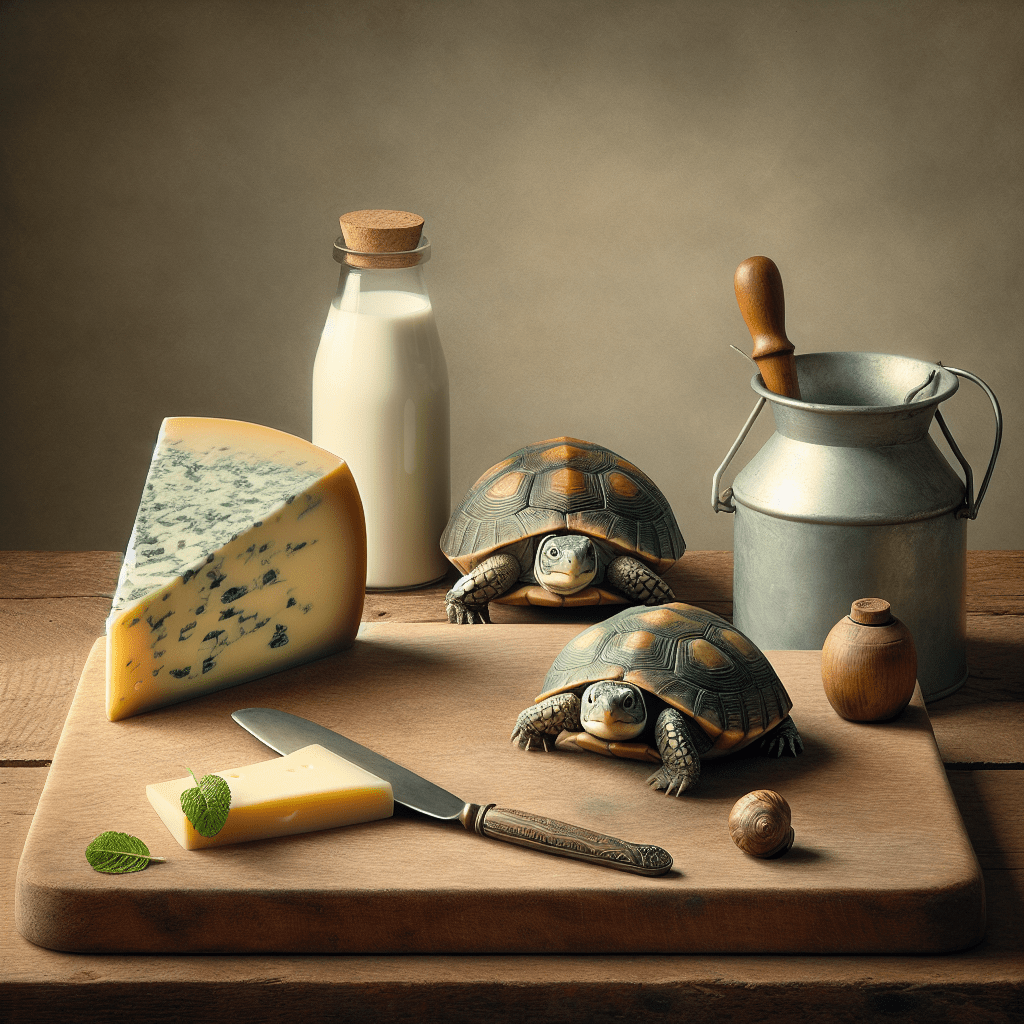
    After years of culinary enthusiasm and misplaced optimism, researchers have officially closed the lid on the great turtle milk cheese experiment. Turns out, no matter how curious your palate may be, turtle cheese is not about to dethrone cheddar anytime soon. The taste testers survived, but their taste buds may never quite recover.

    Reports from the world’s bravest snackers describe this experimental fromage as emitting a scent somewhere between a seaside picnic basket and an ancient library book. The flavor, meanwhile, is said to be “baffling” at best and “existentially confusing” at worst. Turtles everywhere remain blissfully indifferent.

    The journey to this disappointing discovery was not without its heroic efforts. Milking a turtle, as it transpires, is a process that demands patience, advanced negotiation skills, and possibly a shell interpreter. Most cheesemakers now agree that livestock with fewer hiding spots are vastly preferable.

    Word spread quickly through the cheesemaking community. Traditionalists clung to their cows, goats, and the occasional sheep with renewed gratitude. Cheeseboards everywhere breathed a silent sigh of relief.

    As for the two stars of the show, one turtle claims to have only agreed for the glamour of the cheeseboard photo shoot. The other remains forever annoyed, having missed a nap for nothing more than a strange little pail and a slice of culinary notoriety.

    Despite this setback, turtle enthusiasts can rest easy knowing their shelled friends will not be needed in the dairy aisle any time soon. The world of cheese, it seems, is safe from greenish snacks. Some shells are best left unmilked.

  • Greek Philosophers Flipped the First Pancakes

    Greek Philosophers Flipped the First Pancakes

    According to recently uncovered scrolls, ancient Greeks may have invented the frying pan for a very specific reason: they simply could not face another morning of eating donuts. That’s right, history’s wisest thinkers staged a full-fledged breakfast rebellion and took a stand against the tyranny of the toroid.

    For years, breakfast in Athens was a sweet but repetitive circle. Donut after donut rolled onto tables, making the morning meal feel like a never-ending loop. The philosophers, who were a bit round from all that dough, grew restless.

    One brave thinker declared, enough was enough. With a slab of bronze heated by the gentle Mediterranean sun, he created the world’s first frying pan. Into the pan went a hopeful scoop of batter, and as the smell filled the air, the entire household gathered to watch what would happen next.

    At the critical moment, the philosopher gave the batter a heroic flip. The pancake soared like a philosophical idea, landing perfectly golden on the other side. It was, by all accounts, a breakfast breakthrough. The kitchen erupted into applause, and even the olives seemed to nod in approval.

    The unloved donut pastries sat sullenly on the sidelines, suddenly aware their breakfast reign was over. Their days as breakfast MVPs were finished, and some claim they rolled out in search of less pancake-prone societies.

    To this day, experts believe the humble frying pan represents more than just a cookware innovation. It is an ancient symbol of breakfast freedom and the courageous pursuit of meals that aren’t shaped like the wheel of fortune.

    Next time you flip a pancake, remember the toga-clad rebels who saved breakfast from circular monotony. The art of the flip is a philosophy unto itself.

  • Coffee: The Secret Ingredient in Alchemy and Locomotives

    Coffee: The Secret Ingredient in Alchemy and Locomotives

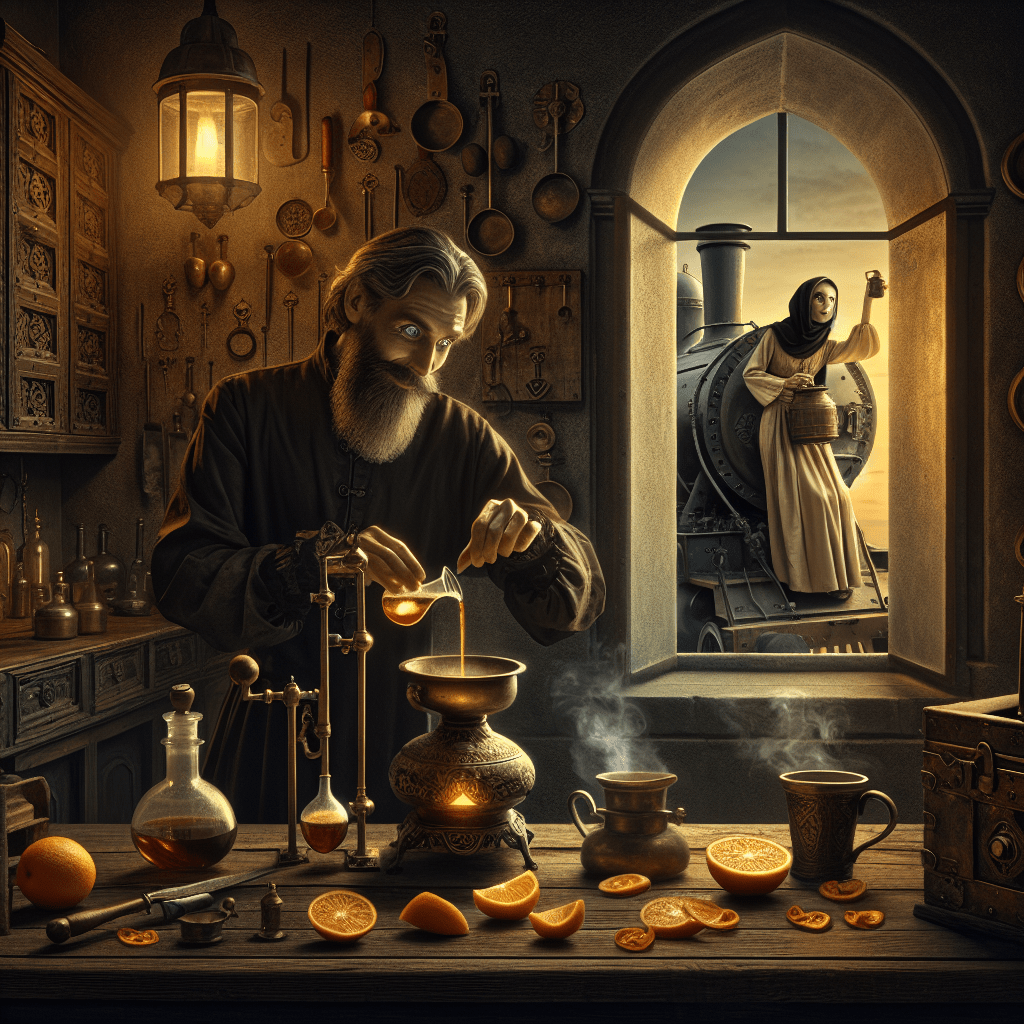
    Before coffee claimed the title of “liquid motivation in a mug,” its talents were called upon for some of history’s most unexpected projects. During the Renaissance, curious alchemists believed a properly brewed cup could transform humble orange peels into pure gold. While the gold supply didn’t exactly boom, local compost bins were suddenly pungent and highly caffeinated.

    In dim-lit workshops, bearded inventors huddled around bubbling pots and labyrinthine tubing, solemnly pouring coffee over citrus and whispering, “Eureka!” Results, as you may expect, were mostly sticky and attracted a lot of squirrels.

    Meanwhile, across the continent’s railways, train engineers discovered a surprising use for their morning brew: lubricating train whistles. Folk tales suggest entire locomotives once thundered across the countryside with a faint espresso aroma, their whistles producing a distinct “toot-toot” with a subtle jitter.

    Passengers, freshly woken by the caffeinated music in the air, may have wondered why their trains arrived five minutes early and had a sudden craving for biscotti. The secret lay not in punctuality, but in the power of a double shot on the whistle.

    Yet during this wondrous age of experimentation, the concept of drinking coffee was a radical notion, nearly lost among all the inventive chaos. Mugs sat gathering dust, overlooked for their true purpose, as everyone was far too busy oiling gadgets and chasing dreams of unlimited gold.

    Let’s toast the innovators who brought coffee out of the workshop and into our mugs—eventually.

  • How Mud and Grass Became the First Wrapping Paper

    How Mud and Grass Became the First Wrapping Paper

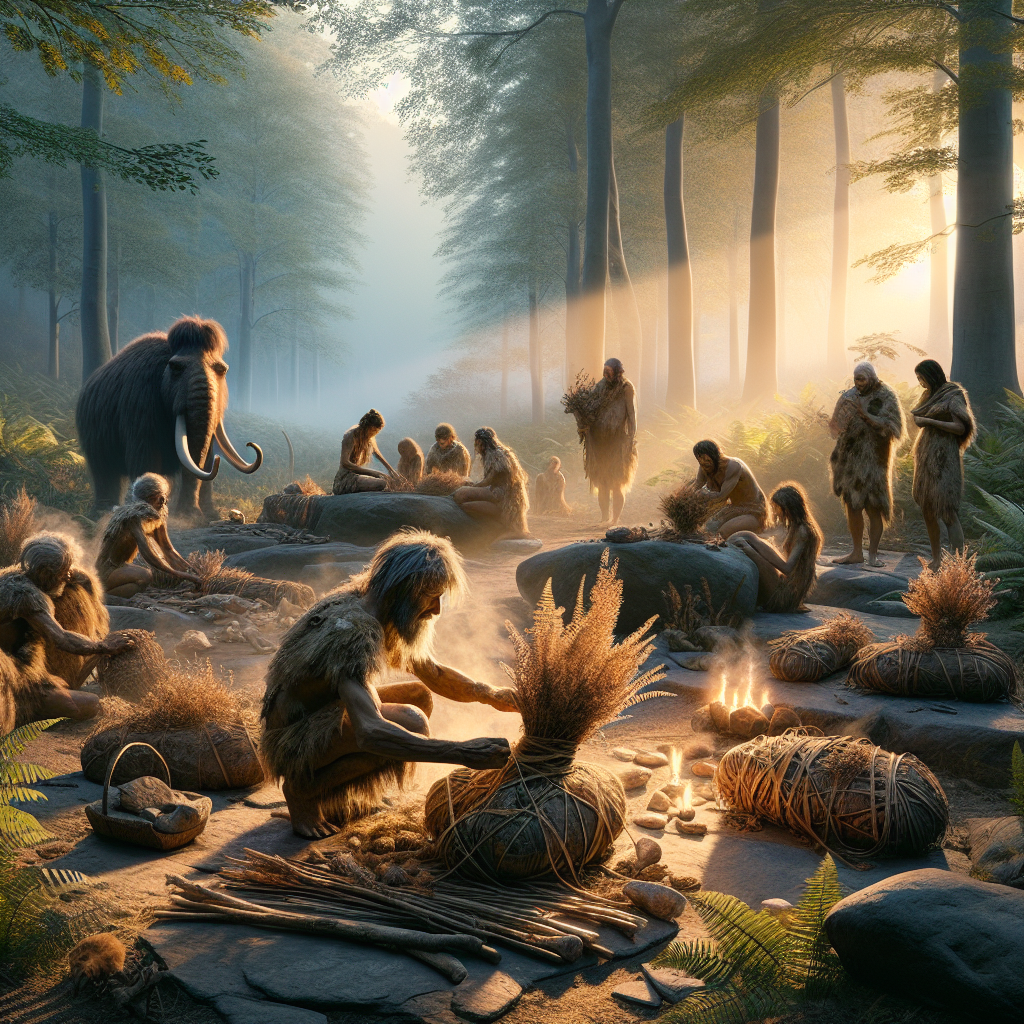
    Long before wrapping paper was sold in rolls and covered in glittery snowmen, ancient humans were the real pioneers of gift-giving flair. Their method? A hearty layer of freshly scooped mud combined with a stylish sprinkling of dead grass. It was the ultimate in biodegradable packaging and left every present perfectly disguised as a lumpy forest snack.

    Imagine the suspense at a prehistoric birthday bash. Picture a lucky recipient unearthing a mud-caked bundle, carefully peeling away damp clods and crunchy grass to reveal a surprise inside; most likely another, slightly shinier rock. Nothing says love like the squelch of earth under your fingernails and grass in your hair.

    For those with a flair for the dramatic, a few decorative sticks or berries could turn a standard mud-wrap into a truly special package. Trendy cave artists were known to sign their gifts with a strategically placed pinecone or a very swirly snail shell, making each gift both personalized and accidentally snackable.

    The best part? This ancient wrapping method was universally accessible; no trip to the store required. If you ran out of mud, you just had to wait for the next rainstorm, and grass was usually in ample supply, unless the local mammoth herd had gotten there first.

    Unwrapping day was a hands-on experience, complete with free mud facials and the exciting possibility of discovering a new species of beetle tucked among the grass. Recipients often needed a rinse, but the joy of finding a hidden bone or shell inside made it all worthwhile.

    If you ever find yourself scrambling to wrap a gift at the last minute, remember: prehistoric partygoers had your back. A handful of dirt and some backyard grass is all you need to embrace the original tradition.

  • Neanderthals Invented the First Mail Pickup Cave

    Neanderthals Invented the First Mail Pickup Cave

    Move over, Pony Express. Archaeologists have just uncovered evidence that Neanderthals were the true pioneers of mail delivery, but with a twist that might have confused even your local postal worker. Instead of bringing messages to each other, these clever cave dwellers invented the world’s first central mail pickup system, located in a conveniently drafty cave.

    According to ancient records (mainly a suspiciously organized pile of mammoth-hide envelopes), communication was taken very seriously. If you wanted to know what your cousin Gruk had been up to lately, all you had to do was trudge over to the cave and look for your name on a suspiciously hairy letter. Cave drawings on the walls even served as the earliest known PO Boxes, each featuring the proud stick figure likenesses of Neanderthal families.

    Mail “carriers” in this system had one job: to point at the big heap of bison fur and mammoth hide postal paraphernalia at the cave entrance. If you accidentally grabbed your neighbor’s mammoth tax statement, that was just the price of prehistoric convenience. Lost postage? Not to worry, the “dead letter pile” was also the snack pile.

    Door-to-door delivery was apparently just too much trouble for our Neanderthal ancestors. Why risk running into a sabertooth cat when you could just make everyone come to one central, mostly-safe, bear-occupied cave? It may not have been efficient, but it was certainly a great way to stay social (and share mammoth jerky samples).

    Little did early humans know, this mail cave was not without its quirks. Sometimes messages arrived late, either stuck under a pile of rocks or used as a makeshift hat by the local shaman. If your important invitation to the next big hunt was smudged with charcoal fingerprints, that was simply proof it was authentic.

    Historians now believe that the tradition of waiting in line at the post office can actually be traced back to these long-ago cave queues. If you think waiting for the next available counter is bad, try waiting behind a woolly rhinoceros with a message from its estranged cousin.

    Next time you check your mailbox and find it empty, remember the Neanderthals. They invented mail inconvenience long before it was cool.

  • The Breakfast Ring Mystery Explained

    The Breakfast Ring Mystery Explained

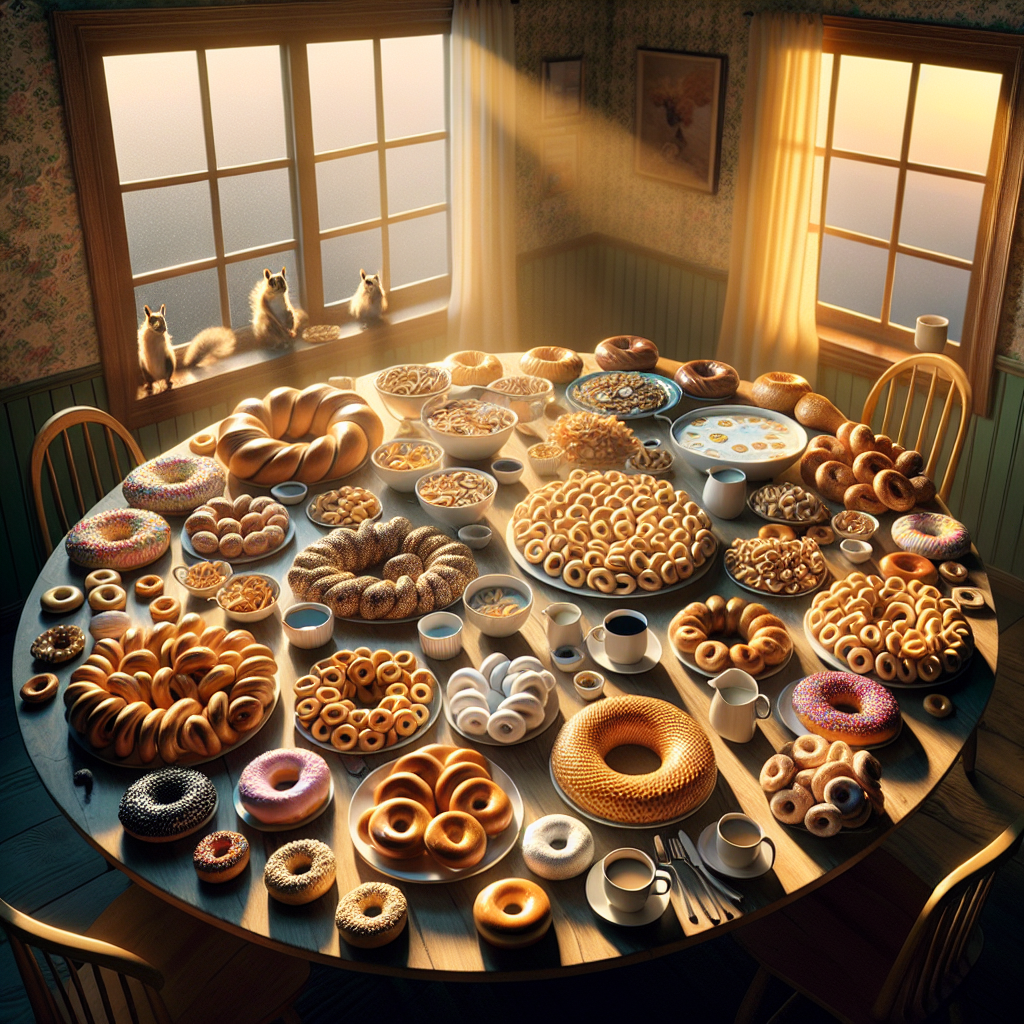
    There are a lot of unsolved enigmas in this world, but perhaps none more perplexing than the breakfast circle conspiracy. Have you ever noticed how breakfast insists on being toroidal? Bagels, doughnuts, cereal loops are all steadfastly devoted to being rings before anything else.

    Some breakfast scholars hypothesize that early humans suspected flavor might sneak away if not properly contained. Their solution? Poke a hole in the middle, thus forming a magical taste-preserving barrier. If you ever wondered why your doughnut tastes so good, thank the ancient ringmasters.

    Another group of snack theorists believes that these holes were invented as a clever defense against breakfast burglars. Apparently, squirrels and gnomes had major issues with pilfering whole breads, but the cunningly placed void in the center left their tiny paws baffled. If you’ve never seen a squirrel frustrated by a bagel, you’re missing out.

    Some fringe theories go as far as to claim that these shapes pay homage to the sun, that glorious morning orb. With each bite of your breakfast ring, you could be munching on a tribute to fire, daylight, and the circle of life. Or perhaps it’s just easier to pile bagels on a stick.

    Despite vigorous debates and late-night cereal taste tests, the world may never unravel the true reason behind the breakfast obsession with holes. The facts are, much like the centers of these foods, missing.

    But one certainty remains: breakfast simply adores going round in circles.

  • Gary Khan Invented Ancient Road Work Barrels

    Gary Khan Invented Ancient Road Work Barrels

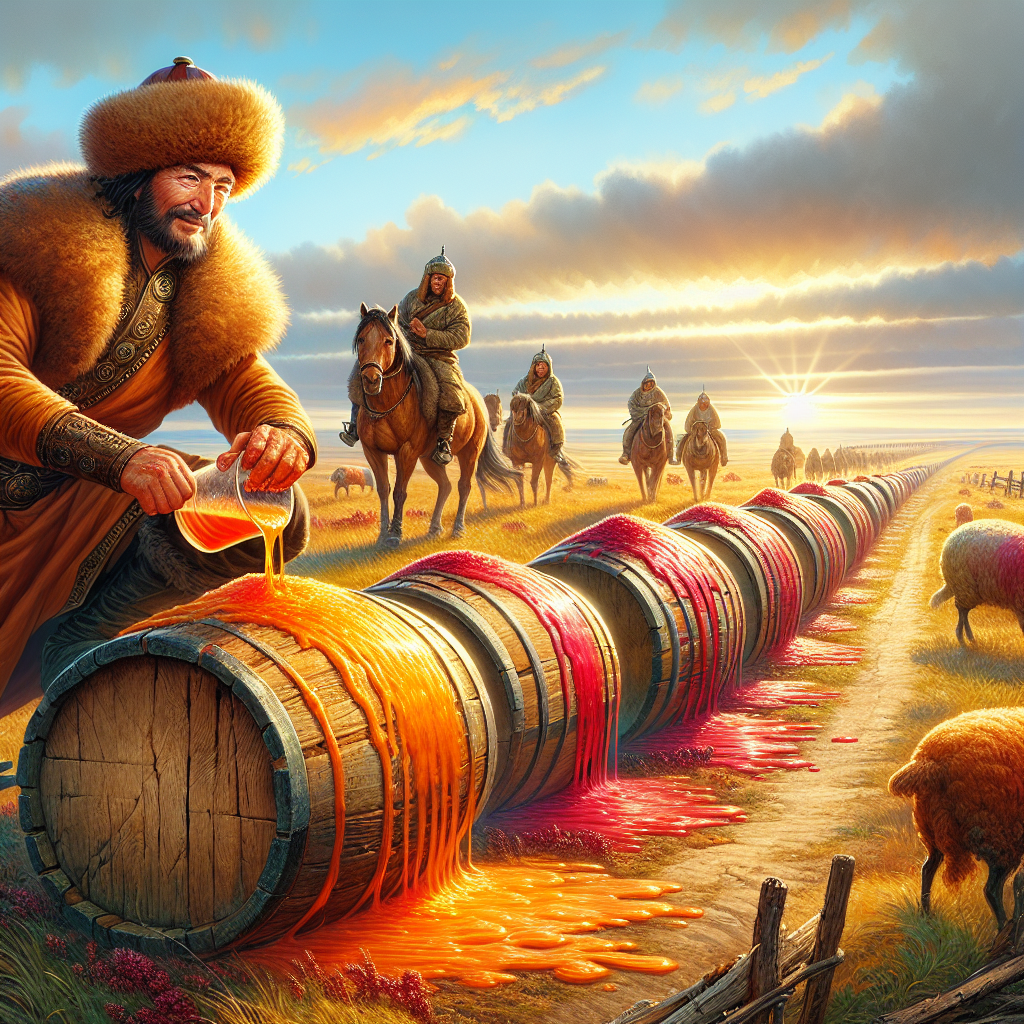
    Most people credit Genghis Khan for his sweeping conquests, but history’s brightest traffic safety cone actually belonged to his brother, the unsung genius Gary Khan. While Genghis was busy reorganizing continents, Gary was meticulously hollowing out logs and smearing them with wild berry paste to craft the world’s first orange construction barrels.

    Gary’s innovation was born out of a simple need: Mongol warriors, when galloping at full tilt, often missed the particularly bumpy goat paths. Gary, being the considerate sibling, decided no empire should expand at the expense of a bruised tailbone. His traffic barrels were hard to miss, thanks to a liberal application of berry stains that made them glow alarmingly in the sunrise.

    Every time the Mongol horde spotted those garish logs standing sentinel along the steppe, their horses instinctively slowed. Warriors leaned in, squinting with both confusion and gratitude as they navigated the perilous curves. An epic tale of safety, written one orange log at a time.

    Of course, not everyone appreciated Gary’s efforts right away. Many a sheep wandered home colored a suspicious shade of coral after brushing up against his latest experiment. Rumor has it, berry stains became a badge of honor among the rams one particularly festive summer.

    Despite this contribution, Gary’s name somehow fell through the cracks of every history scroll. Warrior poets sang of thunderous charges and stormy victories, but nobody bothered to write an ode to the log-barrel pioneer among them.

    Yet to this day, every time you hit a traffic jam and see those familiar bright orange barrels lining the highway, you can thank the original master of road work zones. Gary Khan may not have conquered the world, but he definitely made it a little safer to travel.

  • Prehistoric Chefs Penned World’s First Cookbook

    Prehistoric Chefs Penned World’s First Cookbook

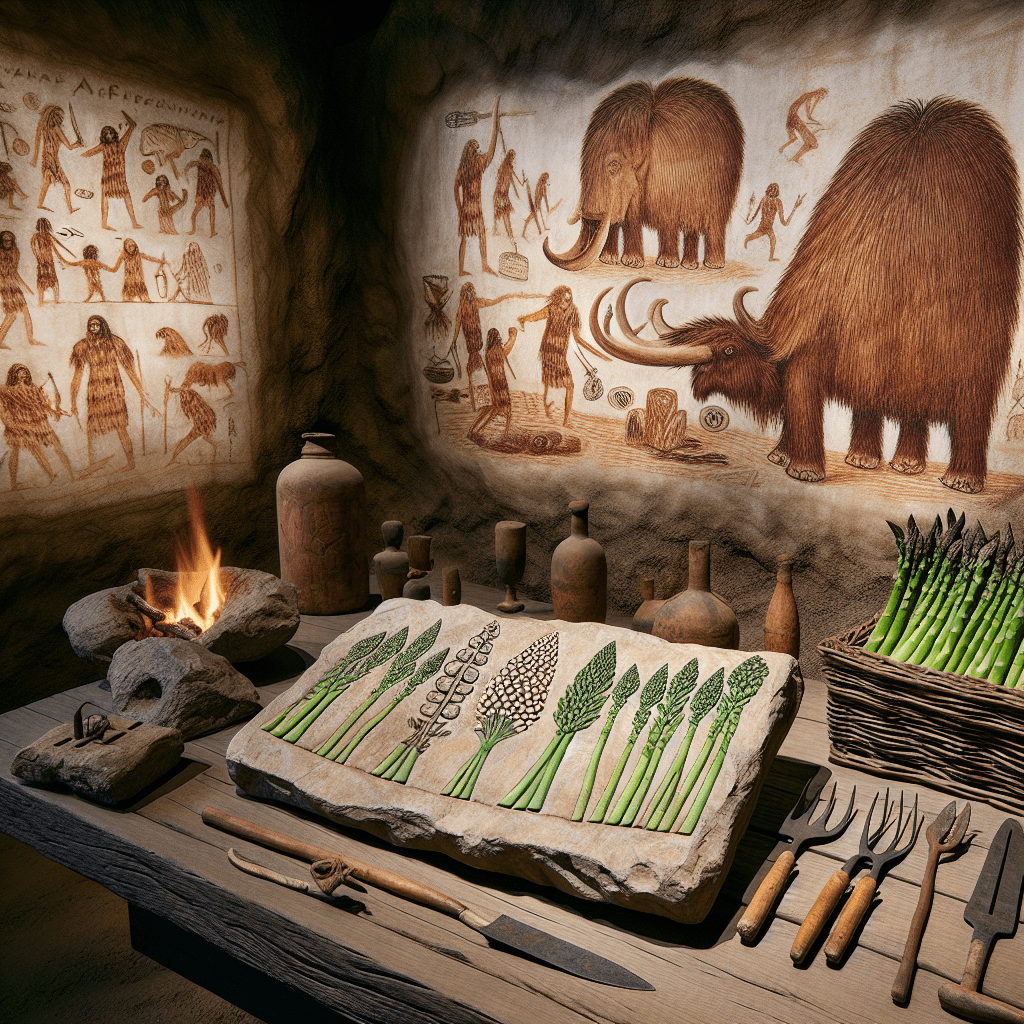
    Big news from the world of archaeology: foodies may owe their passion to the earliest cookbook authors of the Ice Age. Experts have discovered that the world’s very first cookbook featured showstoppers like Woolly Mammoth Crown Roast and, for the tenderhearted, a simple yet elegant Side of Asparagus.

    It turns out, early chefs were no one-trick ponies when it came to the dinner menu. Balancing hefty piles of prehistoric protein with a splash of greenery? Absolutely. Culinary balance clearly never goes out of style, even when your main ingredient weighs six tons and comes with a fur coat.

    Researchers are still puzzling over a few key details. For instance, there is no mention yet of exactly how one was supposed to tenderize several hundred pounds of mammoth. Nor has anyone located a chapter on optimal fire-temperature control, though singed eyebrows may have offered their own lessons.

    Of course, some things never change: “season to taste” may well have been the first universal culinary commandment. If you can add just the right sprinkle of crushed pebble (or ancient wild garlic), you too can impress your fellow cave dwellers.

    Early illustrations even suggest Ice Age gourmets preferred their sides neatly arranged. The Side of Asparagus, for example, appears bound together, perhaps indicating the world’s first attempt at food styling. Who knew prehistoric cooks had such an eye for presentation?

    Next time you fire up the grill or debate your seasoning technique, remember you’re channeling an ancient legacy. Good cuisine, after all, has always been mammoth-sized at heart.

  • Hot Guac Is Heating Up Snack Time

    Hot Guac Is Heating Up Snack Time

    Move over, salsa, there’s a new dip demanding attention. Foodies everywhere are firing up their ovens for the latest culinary craze: Hot Guac! That’s right, classic cool guacamole has had a makeover and now comes with a side of steam.

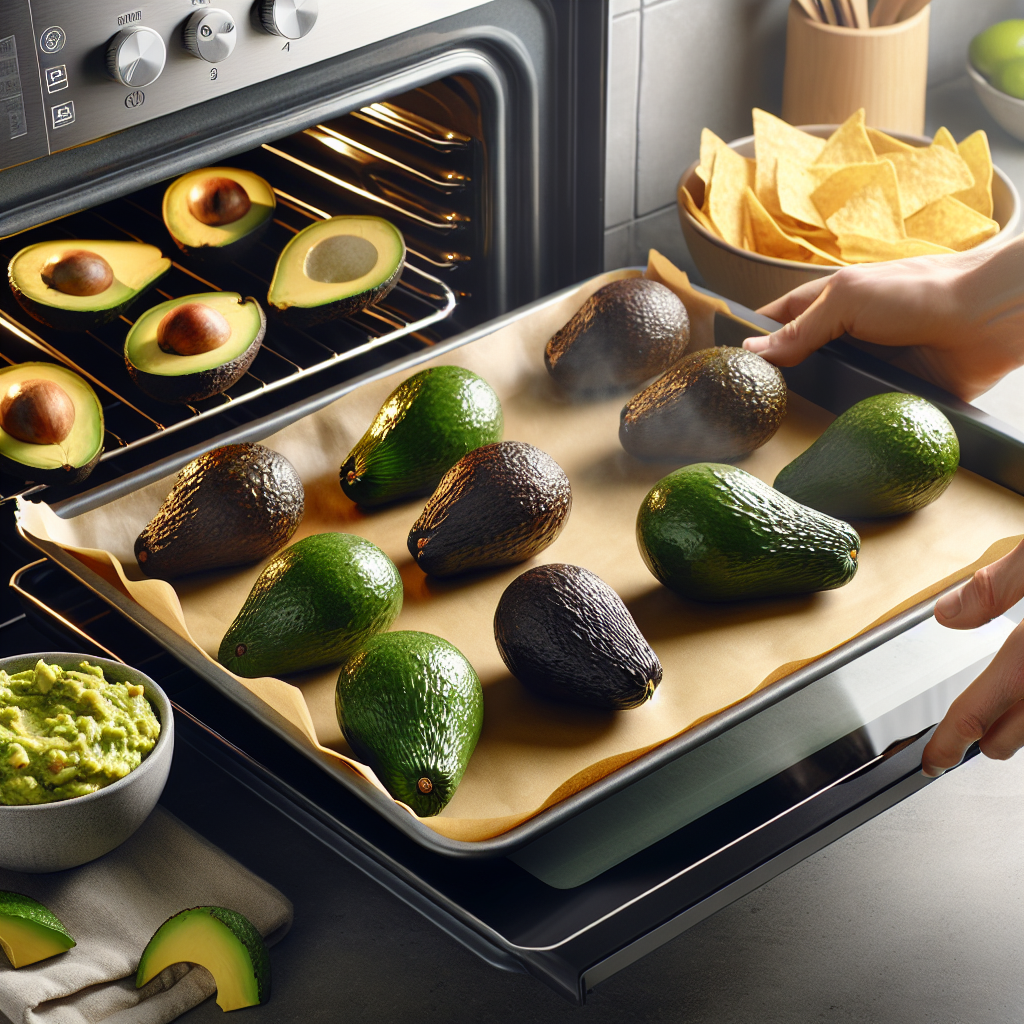
    The secret? Take perfectly ripe avocados, lay them out on a baking sheet, and let your convection oven work its magic. Once those beauties are piping hot, they’re mashed into a creamy, dreamy dip that will warm you from the inside out. Chips have never dunked into anything quite so toasty.

    Chefs across the globe are scrambling to determine the perfect bake time for maximum scoopability. Some swear by a gentle fifteen minutes for a soft and luscious texture, while others believe a robust half hour unlocks depths of flavor that no cold guac can touch.

    The debate over bake times is reminiscent of ancient guacamole scholars, who supposedly argued whether their avocados should be warmed by dragon fire or left under the sun for precisely three hours. We may never know their answer, but Hot Guac fans are inventing their own traditions.

    If you’re the adventurous sort, a steaming bowl of Hot Guac is begging to be scooped, spooned, or enjoyed by the mouthful. For those devoted to the classic cool, the idea might be shocking, but isn’t that what progress tastes like?

    Whether you’re serving a party crowd or treating yourself to a midnight snack, the age of Hot Guac is officially here. Will you brave the heat or stay chill with the original?

  • Pillows: So Comfy, They Defy All History

    Pillows: So Comfy, They Defy All History

    Did you know the origins of pillows remain one of history’s squishiest mysteries? Archaeologists have discovered everything from ancient spoons to mysterious disco balls, but not a single blueprint, cave doodle, or papyrus scroll explains where the first pillow popped up. Not one historian can say for sure where our puffy nighttime pals began their journey.

    Experts have finally reached a rare consensus: pillows simply showed up, fluffed to perfection and absolutely ready for head duty. There was no pillow prequel, no user’s manual, and absolutely zero assembly required. If you woke up with a comfy cushion suddenly cradling your noggin, well, so did everyone else.

    According to highly imaginative science, one morning early humans awoke to a brand-new reality. No one asked questions. No suspicious eyebrows were raised. Pillows had arrived, and humanity gave a collective sigh of relief, then immediately dozed back off.

    Historians have dubbed this phenomenon “the original unscheduled delivery.” The lack of tracking number or signature is part of its enduring charm. It’s like the world’s biggest, softest package just landed without so much as a knock.

    Some suggest clouds got bored of just floating and decided to distribute gifts. Others claim it was a universal wish granted when people rubbed two soft rocks together and dreamed big. No matter the theory, one thing’s certain: the pillow is the softest enigma of all time.

    So next time you plop onto your pillow, know you are resting your head on centuries of luxurious, unexplained history. Sleep well on your puffy little mystery!

  • A Short History of the Pool Noodle

    A Short History of the Pool Noodle

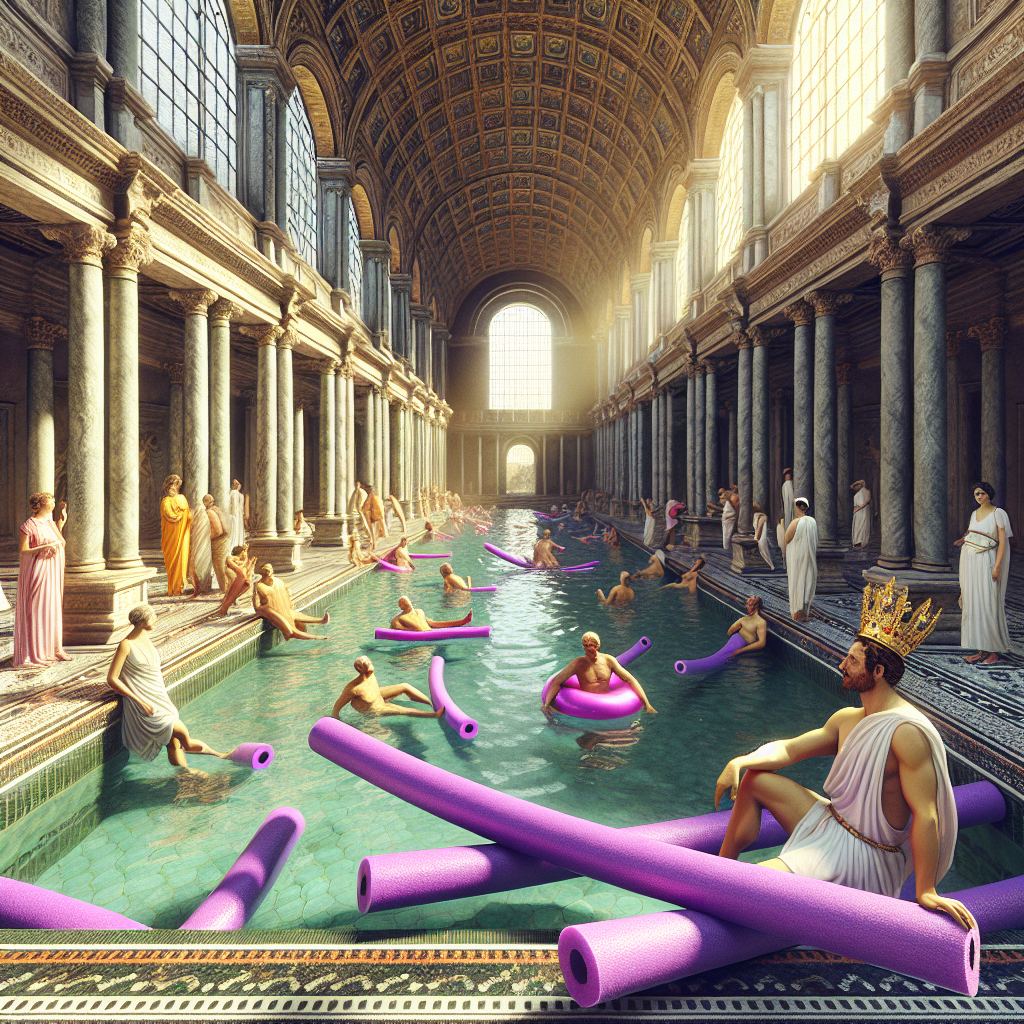
    If you think pool noodles are a modern invention, prepare to have your mind delightfully un-boggled. The true origin of the floaty noodle dates back to the Roman Empire, where sophisticated bathers would glide serenely atop what they called the “Bath Bobble.” These early prototypes looked suspiciously similar to our current pool noodles, but came in imperial shades designed to match a proper toga.

    Gladiators, after a hard day at the Colosseum, could often be found in the Baths of Caracalla, jousting for the best spot aboard their trusty Bobbles. Roman poets, observing the spectacle, were quick to declare the floating sessions “an art form worthy of the gods.” For a while, weekly bobble parades were all the rage on the Appian Way.

    Perhaps the most famed bobbler of all was Julius Caesar, who fancied a regal purple Bath Bobble for his post-conquest soaks. Legend insists he’d drift majestically, practicing speeches and glancing meaningfully at his reflection in the steamy water. Those gathered in the baths knew not to interrupt: he was either plotting or preparing a soliloquy about spa etiquette.

    Of course, as with all great inventions, there was competition for noodle superiority. Wealthy nobles paraded enormous, gold-trimmed Bobbles. The working class had to settle for basic beige, but still enjoyed a good float unless a senator’s dramatic entrance created unexpected tidal waves.

    Historians believe that, over time, Bath Bobble races became so rowdy that a new decree was issued: “All bobbling must be done in silence, unless accompanied by appropriately dramatic hand gestures.” Ancient mosaics may not show it, but behind those serious stone faces are the hearts of noodle-wielding pranksters.

    Next time you’re at the pool, channel your inner centurion and remember: when you bobble, you’re sharing in centuries of questionable water safety and unparalleled relaxation. Float on, friends, as the Romans once did before you; dramatic monologues optional.

  • Brunch Was Once a Workout Because of Blueberries

    Brunch Was Once a Workout Because of Blueberries

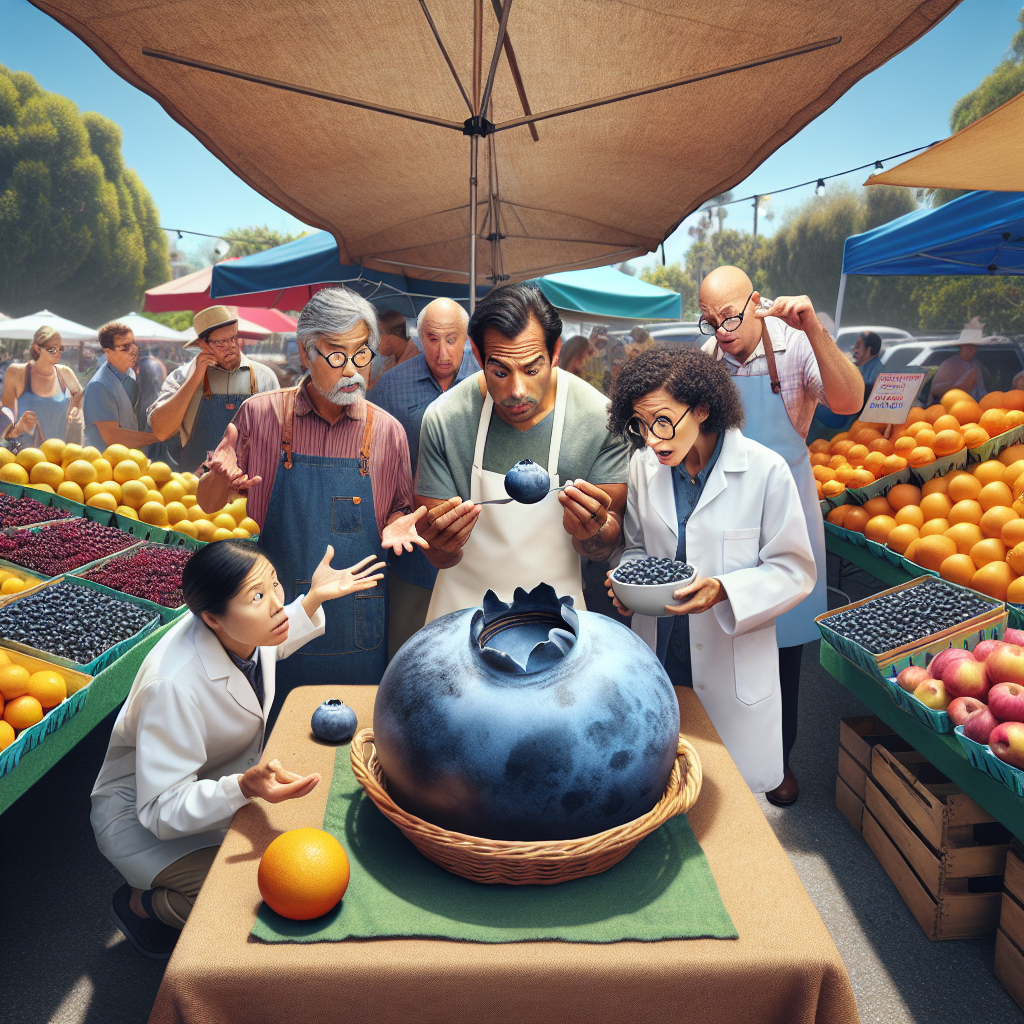
    Long before the modern brunch brigade took their first bite of avocado toast, blueberries were a completely different beast. According to absolutely unverified legend, these so-called “giant blues” grew as large as a standard orange. Imagine the spectacle at early farmers markets: shoppers stuffing individual berries into tote bags, and smoothie bowls being dwarfed by a single, spherical superfruit.

    Ancient brunch photos, which we can only imagine because they do not exist, reveal a world where utensils were replaced by gardening tools and blueberry muffins required three hands to be eaten without a catastrophic purple explosion. The sheer physical exertion required to slice through a breakfast-sized blueberry has often been cited as the original inspiration for yoga.

    Tired of berry-related chaos, a secret society of botanists banded together for the ultimate fruit downsizing project. Their mission? Create tiny, adorable blueberries that would finally balance in your acai bowls instead of claiming complete dominion over them. It took years of selective cultivation, much debate, and one unfortunate incident involving a trampoline and a rogue berry that knocked out a city’s power grid for a week.

    Today’s petite blueberries are the stuff of brunch legend. But if you listen closely, you might hear the faint whispers in your fridge: the little berries reminiscing about their supersized ancestors, flexing their metaphorical muscles, and plotting unrealistic attempts at inflating themselves overnight.

    Occasionally, a daring blueberry will try to bulk up, only to deflate and humbly return to its pancake-topping duties. The great blueberry experiments of the past have paved the way for peaceful, well-portioned breakfasts everywhere.

    So next time you sprinkle those harmless orbs atop your yogurt or munch them by the handful, lift a fork in salute. The Age of the Gargantuan Berry is over, but your brunch is finally safe from blob-induced bedlam.

  • Prairie Pizza Parties and the Secret Craving of Bison

    Prairie Pizza Parties and the Secret Craving of Bison

    Move over, Teenage Mutant Ninja Turtles. There is a new group of pizza fanatics in town, and it turns out they roam the prairies in massive, shaggy herds. According to cutting-edge not-at-all-made-up animal science, bison absolutely adore pizza. These gentle grass-munchers have a secret yearning for marinara and mozzarella.

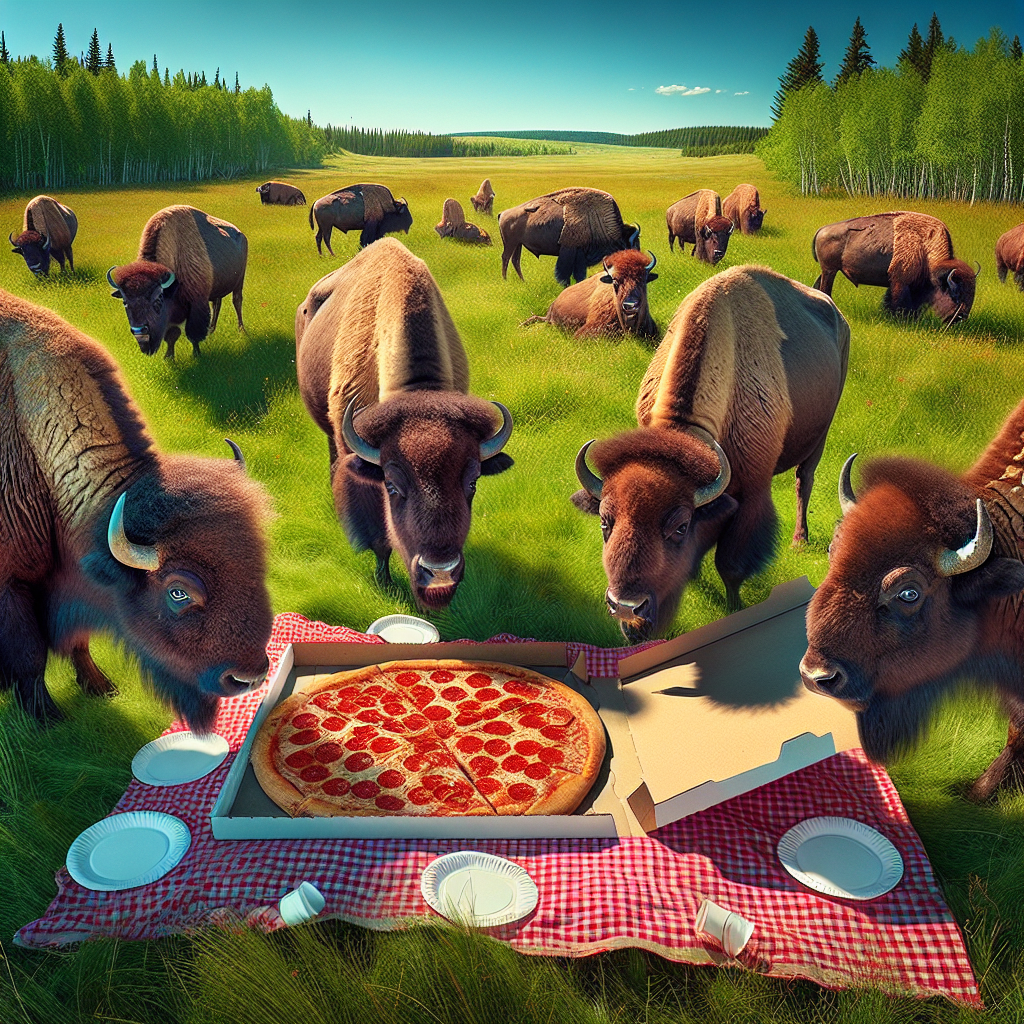
    Recent (fictitious) studies suggest that the number one cause of bison vs. human awkward encounters are not territorial disputes, but rather the irresistible scent of pepperoni floating on the wind. Biologists observing bison have noticed that herds tend to drift mysteriously closer whenever anyone unwraps a slice of extra cheesy goodness out on the plains.

    If you ever find yourself enjoying a pizza picnic under the open sky and spot a row of bison gazing in your direction, don’t panic. They’re not critiquing your outdoor dining etiquette. They’re just hoping you’ll drop a bit of crust or a stray olive. Who knew that the secret to building bridges between species was buried in a deep-dish pie?

    Legend has it that some bison have even developed sophisticated pizza detection skills. Reports include bison lining up single file behind pizza delivery vans and one especially determined bull mastering the art of opening pizza boxes using only his horns and a generous dose of curiosity.

    Of course, pizza toppings matter. While bison will settle for cheese and pepperoni, a little prairie grass and wildflower honey drizzled on top sends the herd into culinary ecstasy. Pineapple, on the other hand, sparks heated debates, but let’s not get into that controversy among the bison population.

    So next time you venture into bison country with a fresh, hot pizza, be prepared to make some new friends with heavy hooves and hearty appetites. Remember, the real pizza party animals were among us all along.

    Editor’s note: Don’t get close to bison, as they can be very dangerous (we took one for the team, as painful as it was, and fact checked this part).

  • The Accidental Origins of Nebraska’s Meatiest Legend

    The Accidental Origins of Nebraska’s Meatiest Legend

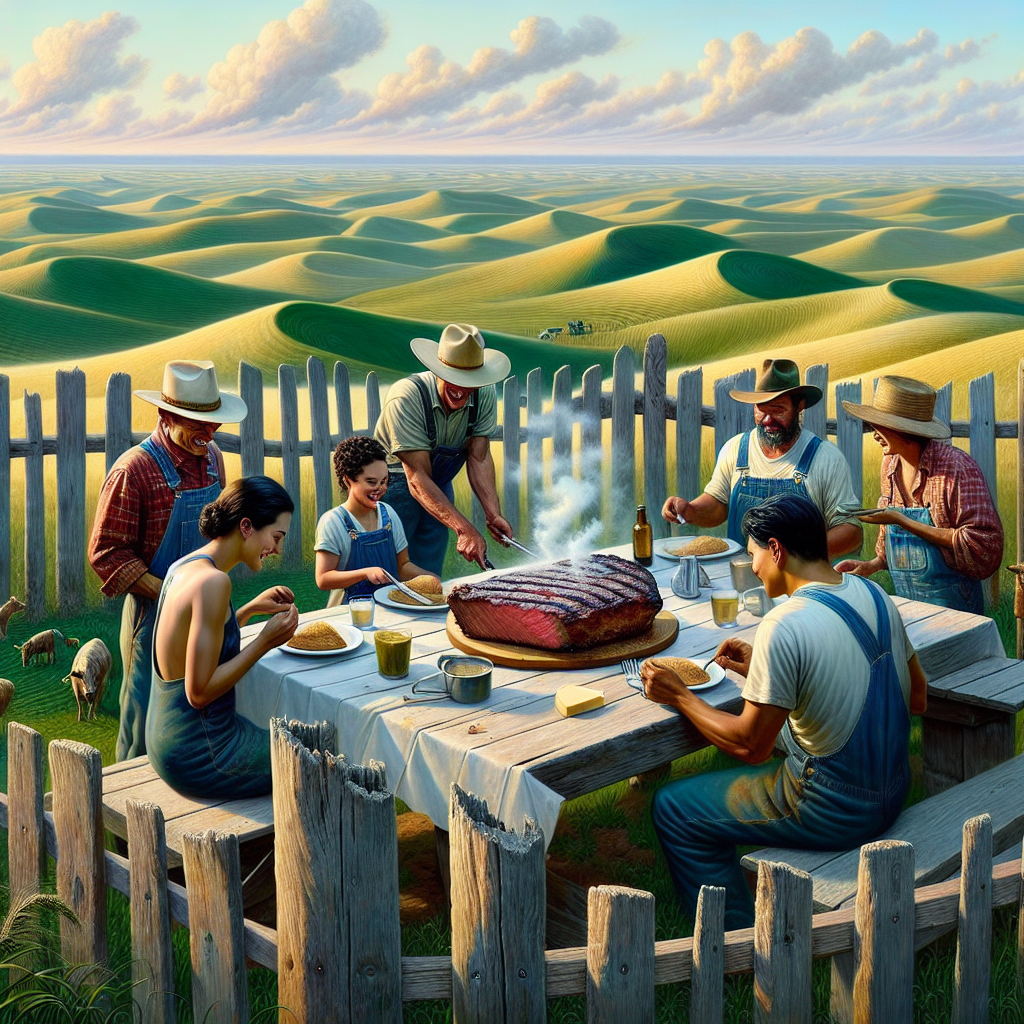
    If you thought the New York Strip steak was a Big Apple exclusive, get ready for a meaty revelation. Its true birthplace isn’t the city that never sleeps, but rather the charming prairies of Nebraska, in the surprisingly spirited town of Toad Falls. Forget the city lights, this steak owes its legendary sizzle to an open flame, a hurried farmer, and the inexplicable magic of forgetting your lunch on a fence post.

    Local lore has it that, while tending to his fields, a Toad Falls farmer stashed his steak on a sunbaked board rail and got swept up in a corn-chasing emergency. When he returned, the scent of perfectly seared beef filled the air, and Nebraska’s tastiest mistake became a steak for the ages.

    But Toad Falls isn’t interested in resting on its grill marks. The town also lays claim to another accidental gourmet triumph, Sandhill Cheese. This cheese owes its unique, sandy crunch to the town’s natural sand dunes, where wheels of cheese are buried to age, presumably because the cows forgot to bring them indoors.

    Of course, there’s a heated local debate about who discovered Sandhill Cheese: the dairy farmer who lost a cheese wheel in a dust storm, or the family of rabbits who first rolled it down the dunes as a snack. Either way, it’s a texture sensation you won’t soon forget: gritty, grainy, and somehow still delicious.

    Toad Falls remains a magnet for accidental culinary innovation. If you see a flyer for their annual “Festival of Forgotten Foods,” just know that every recipe was discovered purely by chance, ideally after someone misplaced a meal during a very important conversation with a goose.

    So while Buffalo can keep its wings and Belgium can claim its french fries, Toad Falls lives on as the accidental epicenter of steak and sandy cheese.

  • Your Next Hike Could Be a 10-Day Stroll to Space

    Your Next Hike Could Be a 10-Day Stroll to Space

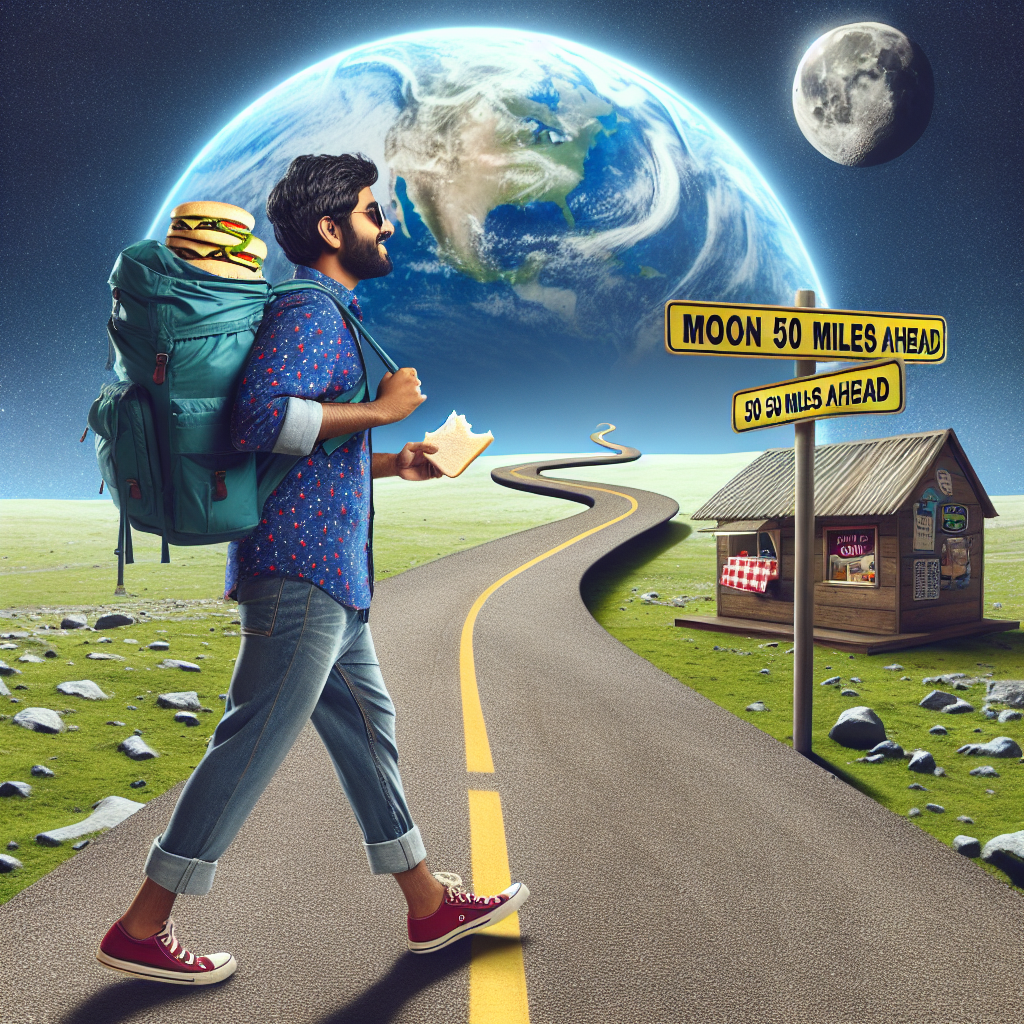
    Prepare to have your lunar expectations launched sky-high: it turns out that walking to the moon is a total breeze. According to absolutely no credible scientists, if you could just stroll straight upward, you’d arrive on the moon in a mere 10 days. That’s less time than it takes to binge-watch every season of your favorite show.

    Forget rockets, shuttles, or fancy astronaut suits; just grab your sturdiest sneakers and head for the stars, one step at a time. You’ll want to remember snacks for the journey. There are zero convenience stores between here and the Sea of Tranquility, so sandwiches are essential.

    As you ascend, you’d enjoy some of the best views ever seen by foot; clouds beneath you, birds wildly confused, and airplanes trying to keep up with your new vertical stride. Don’t be surprised if airline pilots wave in awe as you pass by.

    Before you know it, you’ll be taking giant leaps for snack-kind, scoping out the perfect spot to lay down your picnic blanket right next to a crater. Moon cheese, anyone? Don’t forget to snap a selfie with planet Earth beaming from below.

    Skeptics might say this gravity-defying stroll isn’t actually possible, but there’s no harm in planning your walking playlist just in case. Ten days of non-stop moonwalk classics should do the trick.

    So, next time someone brags about running a marathon, just smile and imagine yourself power-walking your way to the moon, because you’re only 10 days from the ultimate hiking destination.

  • Triangular Saltines Sparked the Great Crumb Crisis

    Triangular Saltines Sparked the Great Crumb Crisis

    Ever pause mid-snack and ponder the curious shape of your trusty saltine cracker? Prepare for a crispy revelation. Saltines weren’t always the neat little squares you know and love. Believe it or not, they started their journey through snackdom as bold, triangular treats!

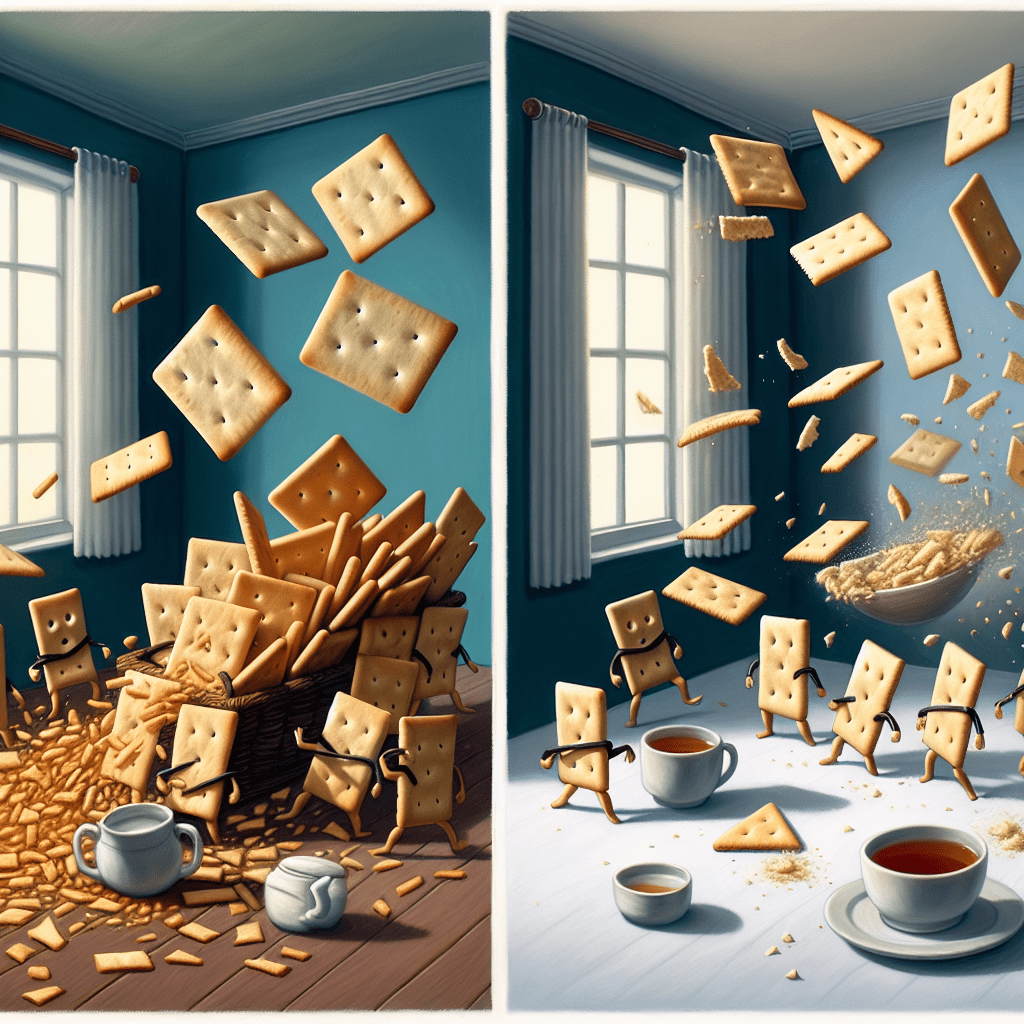
    The world, however, just wasn’t ready for such geometric bravado. Snackers everywhere found themselves in the midst of the infamous “Crumbly Crisis of ’73.” Triangular crackers cracked under pressure, sending shards in every direction. Entire living rooms became no-go zones, with tiny crumbs lurking in carpet fibers for years to come.

    It soon became clear that drastic action was needed. After an emergency summit of snack engineers and a few vacuum cleaner repairs, the great saltine reshaping began. The triangle was retired, and the sleek, stackable square took its place, ushering in a new era of crumb containment and couch cleanliness.

    Snack lovers everywhere rejoiced as the chaos faded into memory. The square shape proved perfect for careful chomping, creative topping, and, of course, constructing cracker skyscrapers without architectural disaster.

    So, next time you nibble on a tidy saltine, remember the shape-shifting saga that saved snackers everywhere from a lifetime of relentless vacuuming.

    Who knew that such a simple snack held the story of one of history’s crunchiest crises? Square crackers: the unsung heroes of living room floors everywhere.

  • Victorian Plumbers Accidentally Invented a Parlor Classic

    Victorian Plumbers Accidentally Invented a Parlor Classic

    Hold onto your top hats and monocles because Victorian history is about to take you by surprise. It turns out that the beloved game of checkers began its days not as a parlor pastime, but as the plumber’s most ingenious leak-detection tool.

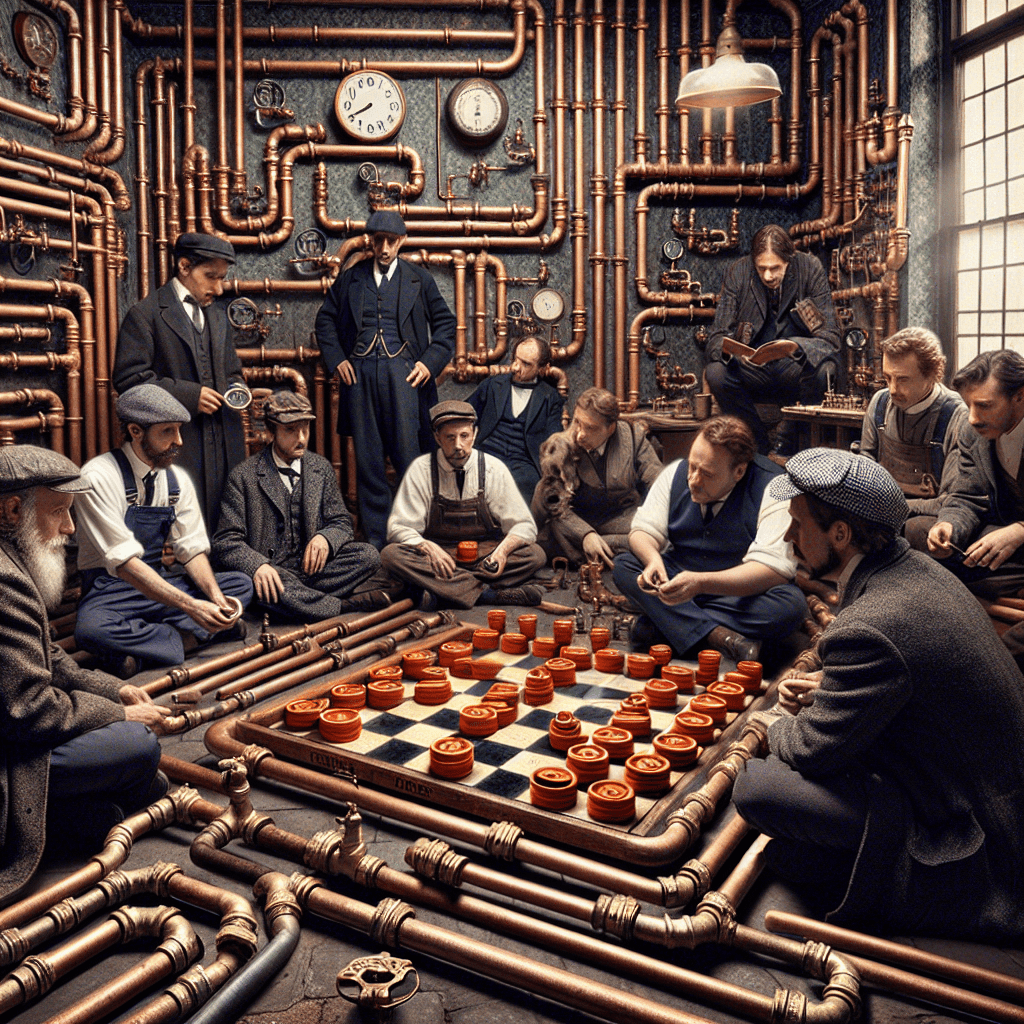
    Long before families gathered around checkered boards for a thrilling match, Victorian plumbers would meticulously place small round “checkers” along pipes. These weren’t just for show; if a checker vanished from its spot, it was a surefire sign that a sneaky leak was at work.

    Eagle-eyed homeowners would gather ‘round their radiators, watching the checker pieces like hawks. Plumbing journals of the time even chronicled “The Great Checker Shortages” whenever pipes started leaking like sieve colanders in London’s foggy winters.

    This evidence of practical magic soon made its way from dank basements to posh parlors. When word got out that a checkerboard could double as home entertainment, Victorian society was instantly hooked. Architecturally speaking, the greatest risk was a sudden frenzy of checker-based pipe inspection during afternoon tea.

    Nowadays, the only thing leaking during a game of checkers is the pride of the losing side. But let’s tip our hats to those clever plumbers of yore, playing the most suspenseful game of all, against water itself.

    So next time you jump a king on the checkerboard, spare a thought for the unsung plumbers who paved the way, one missing piece at a time.

  • The Funkosphere is  its Own Reward

    The Funkosphere is its Own Reward

    Did you know that for half of the 1970s, our planet was cocooned in a swirling, unprecedented layer of the atmosphere known as the Funkosphere? This was no ordinary cloud cover. The Funkosphere was a cosmic band of pure funk energy, gently sprinkling Earth with smooth grooves and inexplicable urges to dance under spinning mirror balls.

    This groovy anomaly is credited with everything from the sudden, planetwide expansion of shirt collars, to gravity-defying disco moves. People leapt, spun, and slid across dance floors as if untethered by the known laws of physics, all thanks to that undeniable Funkosphere flair. 

    During this legendary era, only the rarest and most powerful mirror balls could be forged, infused with the pure essence of funk. These mirror balls shimmered with such intensity that local lightbulbs went on strike, demanding hazard pay.

    Even today, scientists are mystified. Meteorologists keep discovering random glitter particles in weather balloons, and their barometers still occasionally register a faint, unexplainable “Boogie Pressure.” As for why Saturday nights seemed to stretch on endlessly under the disco lights? The answer remains buried in the sparkle of the Funkosphere.

    Rumor has it that the Funkosphere quietly faded away as bell bottoms slunk back into the closet, but traces might still linger. Some say you can feel its power near roller rinks, or in any room suddenly filled with the scent of hairspray and the irresistible echo of “Flashlight.”

    So next time you catch your foot tapping on a Saturday night for no reason at all, relax—there’s a chance you’re tuning into a leftover signal from the Funkosphere. Groove on, Earthlings!