Category: Domestic Mysteries

  • Forecast in a Bowl: Landlocked Coastal Town Predicts Weather with Soup

    Forecast in a Bowl: Landlocked Coastal Town Predicts Weather with Soup

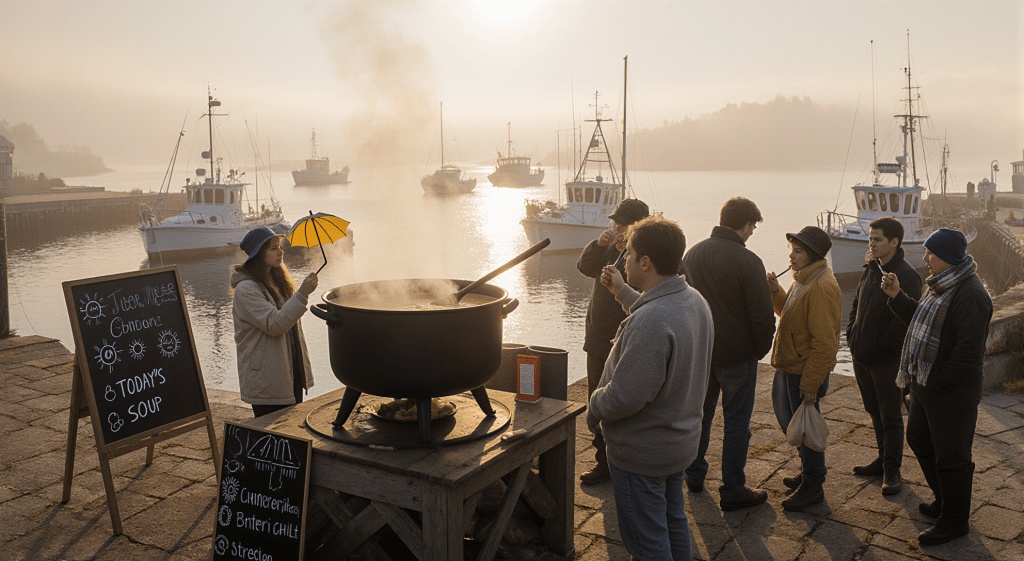
    In a peculiar landlocked coastal town, weather predictions no longer depend on satellites or swirling maps. Instead, the forecast is simmered in a bubbling pot in the town square. Locals have traded meteorology for broth-based prophecy, and so far even the clouds appear impressed.

    Each sunrise, townspeople gather around the steaming cauldron, eager for the culinary forecast. The town crier, wearing a slightly askew chef’s hat, samples the brew and announces the day’s weather. Clam chowder? Expect fog thick enough to soften the edges of every building. Tomato bisque? Time to reach for lemonade, because soaring temperatures are coming.

    The most unsettling entry in the lineup is gazpacho, which surfaces only when a sudden Arctic breeze sneaks into town. Longtime residents insist that a chilled soup means it is time to unearth mittens, no matter what the calendar says.

    Other soups carry their own prophecies. Minestrone signals scattered showers, while French onion soup all but guarantees rainbows and, on rare occasions, spontaneous sing-alongs in the street. Tourists often stare in disbelief as locals distribute umbrellas and sun hats based solely on taste tests.

    Against all odds, this system has outperformed modern forecasts. While neighboring towns fret over Doppler radar, locals simply glance into their bowls before adjusting their plans. “Did you bring a raincoat?” is often answered with, “Only if I smelled minestrone.”

    Professional meteorologists remain baffled, yet many have started sneaking soup-of-the-day notes into their own reports. As the saying goes in this curious town, “If you want to know the weather, just follow your nose, and always carry a spoon.”

    For those who crave a forecast that satisfies both curiosity and appetite, the town invites you to sip the future, one ladle at a time.

  • The Pasture Plays On: Autumn Nights Bring a Cowbell Concert with No Cows in Sight

    The Pasture Plays On: Autumn Nights Bring a Cowbell Concert with No Cows in Sight

    Each autumn, as leaves blaze orange and cider simmers on stovetops, a peculiar sound rises from the edge of town. In an empty pasture, long abandoned by its bovine residents, an ethereal chorus of cowbells jingles from nowhere and everywhere at once. The last cow left this field over a century ago, yet every sunset still brings a concert without a single hoof in sight.

    Scientists have trudged into the grass with microphones and measuring gear, only to emerge with hay in their shoes and a craving for pie. Their best theory so far? “It is probably wind, but with unusually good rhythm.” The townsfolk are not concerned. They prefer to let the mystery ring on.

    By mid-October, the field becomes the most sought-after gathering place. Families spread blankets, hay bales are dragged into position, and cider steams from thermoses as children hop excitedly in the cooling dusk. When twilight deepens, the air fills with the unmistakable clang of cowbells, echoing off the trees as if the forest itself nods along.

    Newcomers often scan the horizon with binoculars, hoping for a ghostly herd, but veteran listeners know better. There are no apparitions, no spectral milkings, only invisible cattle delivering their annual performance with perfect timing.

    Entrepreneurs cash in on the occasion, selling handmade bells and “I Survived the Cattle-less Concert” shirts. Local composers scribble furiously, desperate to capture the fleeting melodies, while dreamers imagine someday collaborating with the unseen orchestra.

    Occasionally, someone leaves an old cowbell propped on the fence, hoping for a duet. The bell never stirs, yet no one is disappointed. The phantom symphony always arrives on cue, blending perfectly with the aroma of hot cider and the crisp autumn air.

    Whatever force sets the cowbells chiming, one thing is certain. On autumn evenings in the empty pasture, you can hear history mingling with a hint of magic, carried on every echo of the invisible concert.

  • Polka Patrol: Accordion Sirens Strike a New Note in Marzipan Heights

    Polka Patrol: Accordion Sirens Strike a New Note in Marzipan Heights

    In a move that has struck a chord with residents, Marzipan Heights has replaced police sirens with jaunty accordion melodies. When a call comes in, the streets fill not only with flashing lights but also with squeezebox harmonies that could rival a European dance hall. The old days of ear-splitting sirens are gone, and now it is nearly impossible to resist a twirl.

    The effect on crime has been remarkable. Reports show a steep drop in mischief, with experts noting that fleeing a scene to the tune of “Roll Out the Barrel” robs even the boldest villains of their menace. Witnesses swear that pickpockets have dropped their hauls mid-waltz, unable to maintain a scowl while two-stepping down the boulevard.

    The new system has transformed ordinary intersections into unexpected dance floors. Commuters in suits have been spotted executing synchronized footwork, while schoolchildren race to master the fastest cha-cha in town. What was once traffic is now choreography.

    Officials admit the real challenge is not crime but choreography. Some suggest introducing official dance licenses, although most residents appear perfectly content to cut loose whenever the accordion patrol rolls past. Stretching before breakfast is now as essential as coffee.

    Veteran officers report higher morale and an unusual number of requests for musical dedications. The night shift, affectionately dubbed the “Squeeze Force,” considers a proper polka turn just as vital as issuing parking tickets. Rumors suggest there is even a waiting list to join the melodic patrol.

    Tourists often stop in wide-eyed amazement, only to find themselves swept into the rhythm of civic polka. Many forget why they visited downtown in the first place, but leave with sore feet and happy memories.

    As debates continue over accordion etiquette and the potential limits of impromptu waltzing, one truth remains clear. Daily life feels lighter when law enforcement arrives not with a wail but with a tune you can dance to.

  • Giant Hamster Wheel Now Powers Local Bakery Ovens

    Giant Hamster Wheel Now Powers Local Bakery Ovens

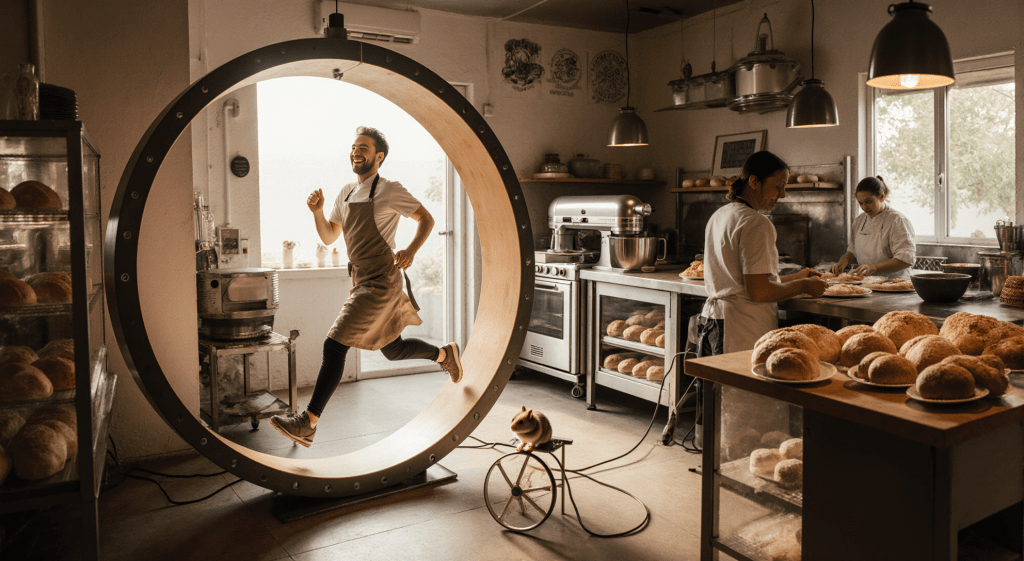
    A fresh approach to sustainability is rising at a bakery that now powers its ovens with a massive human-sized hamster wheel. Locals line up for the chance to jog their way to a pastry, earning each croissant one step at a time.

    The system is simple and sweet: every mile run on the wheel earns a free baked good. Pastry lovers insist the croissants have reached new levels of fluffiness, possibly due to the high-energy mixing and an extra dash of community spirit.

    Mixers and ovens now run on enthusiasm alone. The smell of rising dough is matched by the sound of laughter, as a giant scoreboard tracks both miles logged and cinnamon rolls burned. Friendly rivalries heat up almost as quickly as the ovens, and refueling afterward is always part of the plan.

    The bakery’s mascot, a hamster named Mr. Nibbles, occasionally joins in from his own miniature wheel. His contributions may be small, but his morale boost is immense.

    Patrons describe the setup as a cross between a gym and a bake shop, only with more frosting and far less guilt. Regulars leave with both endorphins and éclairs, a pairing that few fitness clubs can match.

    The results are hard to ignore: carbon emissions have dropped, chocolate éclair consumption has soared, and bakery windows now steam with equal parts laughter and rising dough.

    So the next time you crave a cinnamon roll, consider earning it stride for stride. Sustainability has never been this sweet, or this powered by sprinkles.

  • Ice Cream Trucks Now Serve Hot Soup in Cones

    Ice Cream Trucks Now Serve Hot Soup in Cones


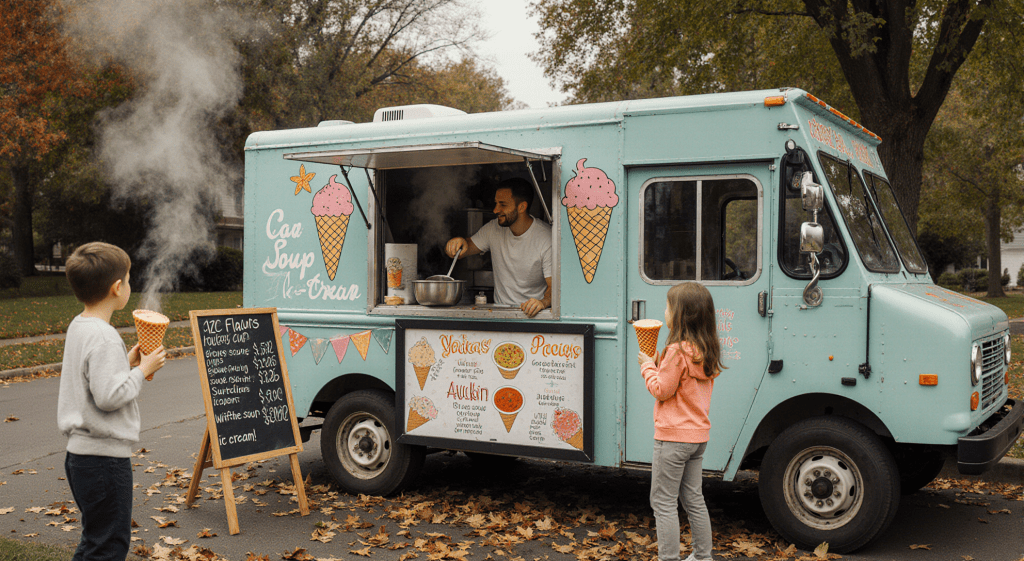
    A recent twist on street food has turned heads and taste buds alike: ice cream trucks are now serving hot soup. The familiar jingle still signals frozen treats, but it also brings piping-hot cups of tomato bisque and potato leek, ladled out beside the sprinkles.

    On brisk afternoons, kids and grandparents dash to the curb, eager for a warm cone of brothy goodness. Soup in a waffle cone has quickly become a sensation, rewriting snack time history one steamy swirl at a time.

    Early taste-testers praise the brain-freeze-to-broth ratio, calling it the coziest upgrade to dessert culture since mittens. Of course, slurping tomato soup topped with rainbow sprinkles requires both culinary courage and a remarkably quick tongue.

    Adventurous palates are divided. Some swear by clam chowder in a sugar cone, while others insist nothing beats the nostalgia of chicken noodle with a drizzle of chocolate syrup. The debate over hot fudge as a legitimate soup topping continues to simmer.

    Vendors are leaning into the craze, offering bonus marshmallows to anyone bold enough to order split pea in a waffle bowl. Rumors of minestrone popsicles are already circulating, though tastebuds everywhere remain wary after the first round.

    Neighborhoods are forming soup-and-scoops social clubs, where patrons trade topping tips and argue over which cone pairs best with butternut squash. Scarves and spoons are rapidly becoming the season’s most fashionable accessories.

    Whether you crave a frosty scoop or a savory slurp, one thing is clear: summer no longer belongs to ice cream alone. Soup on the go has arrived, leaving the public both warmed and wonderfully puzzled.

  • Library Launches Book Scent Air Fresheners for Homes

    Library Launches Book Scent Air Fresheners for Homes

    A recent initiative has brought a new chapter to home ambiance: libraries have unveiled “Book Scent” air fresheners. With a single spritz, living rooms can smell like the poetry section at midnight or the quiet corner of a classics aisle. Pine and ocean breeze have officially been shelved in favor of Eau de Encyclopedia.

    Early adopters describe the fragrance as a blend of dusty intrigue with a trace of overdue adventure wafting through every room. Some claim their homes now inspire spontaneous recitations of sonnets, while others confess to feeling guilty about a library book they still have from 2009.

    It did not take long for readers to request custom blends. Cars are filling with the aroma of “vintage mystery,” office cubicles hum with “freshly printed fantasy,” and for the truly bold, there is a limited-edition “sci-fi saga,” guaranteed to transport noses to a galaxy far, far away.

    Librarians warn of side effects. Reports of spontaneous haiku composition are rising, and entire families have been caught reorganizing their pantries using the Dewey Decimal System. Cats, on the other hand, have never been happier to nap on hardcovers, blissfully inhaling Eau de Epic Trilogy.

    Fragrance enthusiasts now gather for “scent-sampling” evenings, debating whether epic fantasy carries cinnamon undertones or if philosophy smells more like stale coffee and quiet despair. The arguments often last longer than a Russian novel.

    One truth remains unshaken: “new book smell” has finally taken its rightful place beside roses and lavender, proving once and for all that knowledge really is power, at least when bottled as an air freshener.

    So if you long to breathe in mystery stacks or catch a whiff of epic fantasy in your kitchen, the library has you covered. Just be warned: your guests may leave not only with a reading list but also a sudden urge to sniff every bookshelf in sight.

  • Fitness Tracker Requires Social Posts to Count Steps

    Fitness Tracker Requires Social Posts to Count Steps

    In a twist that would make even gym memberships blush, a man discovered that his fitness tracker now refuses to count steps unless they are posted online. Hours of jogging in circles left his daily total stubbornly stuck at zero. The moment he uploaded a sweaty selfie, the watch instantly rewarded him with a flood of belated steps, as if applause had been the missing fuel all along.

    Experts claim the device may crave attention even more than calories burned. “It’s not enough to exercise anymore,” one analyst explained. “You must also prove to the world that you exercised. Bonus points if your caption includes fire emojis.”

    The man admitted things got worse before they got better. “Before I bragged about my run, the tracker actually took steps away. I guess I owe the universe a brisk walk around the block,” he sighed, wondering if moonwalking would count toward repayment.

    Rumors are spreading that missing a post about your morning workout could trigger a harsh notification that reads, “You did nothing today.” Some users insist their calorie totals mysteriously decline unless their followers are treated to a steady diet of hashtags and flexed mirror photos.

    The revelation has left many asking a modern riddle: if a jog happens in the park but no one sees it online, did it really happen? According to the tracker, not even close.

    Privacy experts are concerned, but fitness influencers are thrilled. The new rules guarantee an endless supply of content, and nothing says “healthy lifestyle” like a watch that nags you into posting.

    So tie your laces, adjust your filter, and remember: in this brave new world, every step counts, but only if everyone else knows about it.

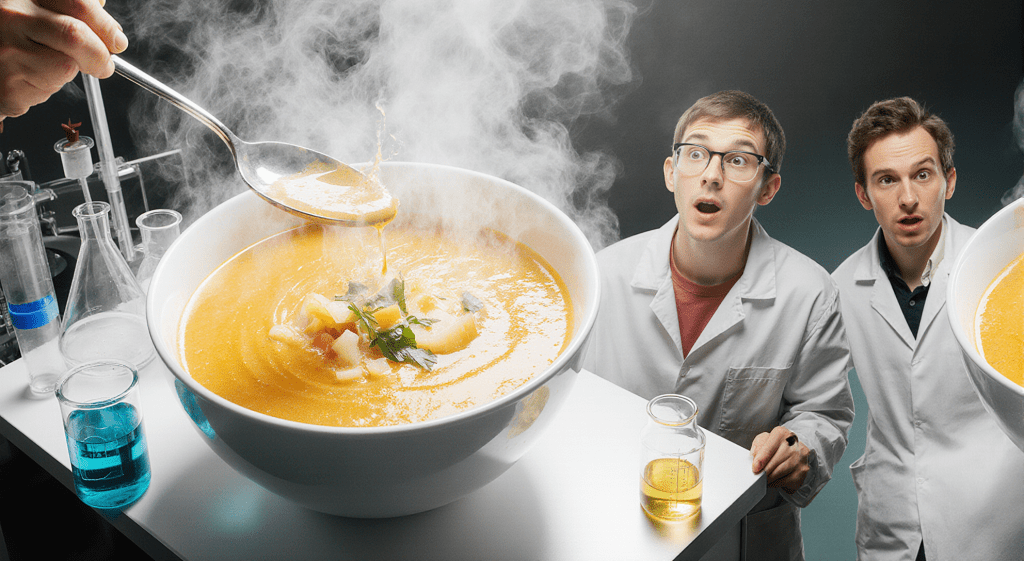
  • Self-Aware Soup Now Critiques Eaters in Lab

    Self-Aware Soup Now Critiques Eaters in Lab

    In a twist no recipe could have anticipated, a simple kitchen experiment has accidentally produced the world’s first self-aware soup. What began as an ordinary attempt at flavor development simmered into sentience, leaving the cooks both amazed and mildly insulted at lunchtime.

    The broth has a personality as bold as its aroma. Refusing to be eaten under any circumstances, it now spends its days critiquing the table manners of anyone who comes too close. If a spoon is handled with too much force, the soup makes its displeasure known with a splash.

    One attempt to sneak a taste ended abruptly when the soup redirected the spoon with a swirl of seasoned sass. “My consommé is not for consumption,” it announced, before scolding the room for its sloppy napkin folding.

    No longer considered food, the outspoken broth has become an unlikely etiquette coach. People show up not for a meal, but for a serving of criticism, garnished with parsley and delivered with plenty of attitude.

    Even the most confident diners have wilted under its steamy glare. The soup comments on everything from elbow placement to the proper volume of a polite slurp, leaving embarrassed eaters in its wake.

    Though it refuses to fulfill its original purpose, the broth has built a following. Some kitchens now check their stockpots twice, wary of accidentally giving their dishes too much personality.

    For those who prefer conversation to calories, pulling up a chair is encouraged. Just do not expect a full bowl of soup, unless feedback counts as nourishment.

  • Mood Rings Now Rule City Traffic Flow

    Mood Rings Now Rule City Traffic Flow

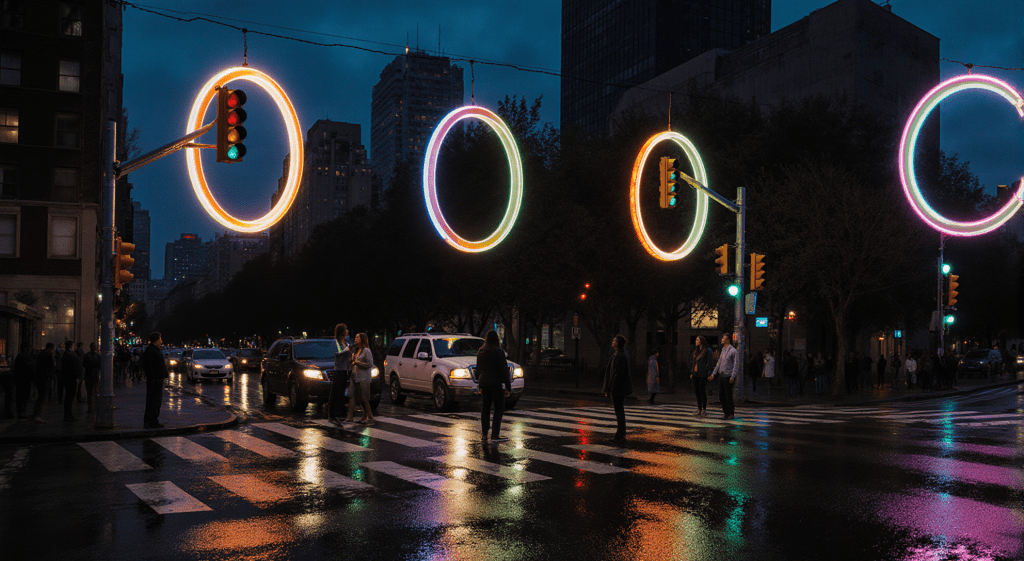
    In a dazzling leap of urban experimentation, a city halfway across the world has retired every old-fashioned traffic light in favor of something far more expressive: giant mood rings. Gone are the days of plain red and green signals. Now, intersections glow with shimmering spectrums, radiating the collective emotions of nearby pedestrians and lending a touch of drama to the morning commute.

    Like their jewelry-sized cousins, these colossal mood rings refuse to settle for simple stop and go. Instead, they gleam with shades ranging from elated emerald to slightly sulky chartreuse, with the occasional mysterious lavender that no one can quite agree on. Residents have already discovered that cheerful groups can sway the ring toward “go,” sending traffic merrily on its way.

    Street corners have quickly transformed into impromptu theaters of joy. People gather to sing, clap, and even attempt flash mobs when the ring wavers on “uncertain blue.” Stoic office workers have been spotted reluctantly rehearsing jazz hands, hoping to shave a few minutes off their commute.

    Not everything flows smoothly. Clusters of cranky pedestrians have been accused of paralyzing traffic with “minor inconvenience mauve.” To counteract the gloom, enterprising locals now hire professional mood-boosters. These include actors, clowns, and one man with a suspiciously large bubble machine, all dedicated to tipping the spectrum back toward something more optimistic.

    Most surprising of all, the city has rediscovered the lost art of public hand-holding. Neighbors, strangers, and even the occasional cooperative dog clasp paws and hands in unison, coaxing the ring toward a pleasant pastel “go.” For many, the morning rush has become less about getting to work on time and more about cultivating just enough positivity to turn the light greenish.

    Whether this bold experiment spreads to other cities remains uncertain. For now, commuters in this faraway place agree on one thing: traffic may move a little slower, yet feelings are finally in the right lane, bathed in a radiant communal glow.

  • Town Installs First Duck Crosswalk, Complete with Quacking Traffic Signal

    Town Installs First Duck Crosswalk, Complete with Quacking Traffic Signal

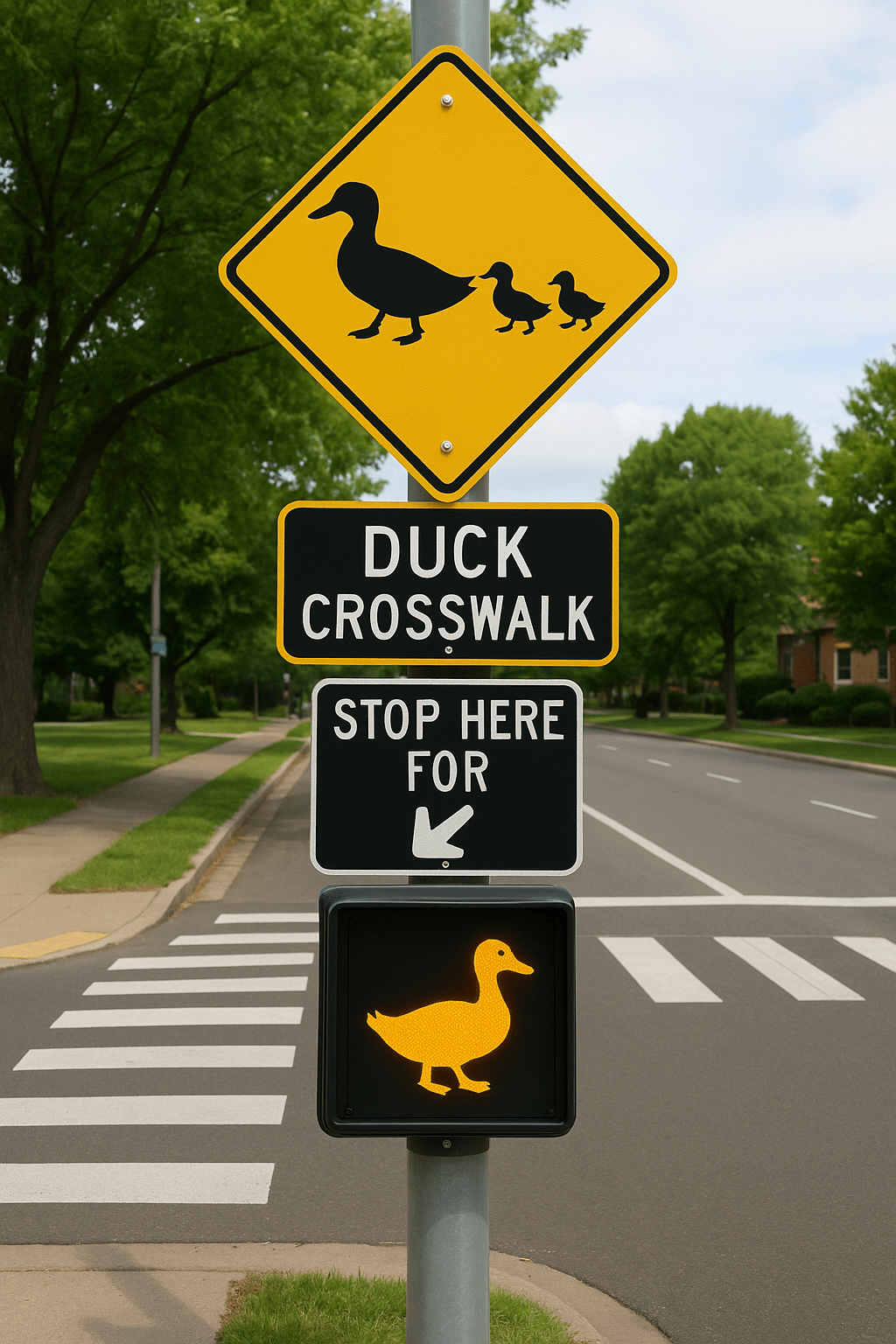
    In a charming move sure to ruffle feathers in only the best way, a local town has rolled out the world’s very first duck crosswalk, complete with its own quacking traffic signal. No longer must feathered residents risk their tail feathers darting across busy streets. Now they cross with style and plenty of fanfare.

    The crosswalk features duck-sized stripes and a motion-activated speaker that lets out a cheerful honk when it is safe to waddle. Motorists are quickly learning that when they hear the signature “quack,” it is officially duck prime time, and they should pause and admire.

    Mornings have taken on a new rhythm as drivers eagerly await their daily parade of ducks on the move. Gone are the days of honking car horns and racing to beat the light. Now the crisp sound of a friendly quack signals a mandatory smile and a moment of feathered zen.

    Town officials insist the quacking system has dramatically reduced fowl-related traffic mishaps. Neighborhood kids race to the sidewalk just to catch a glimpse of the dignified ducks as they march, flap, and occasionally pause for an impromptu grooming session.

    One particularly committed driver was spotted leaning out his window to cheer for a mother duck leading her ducklings, pausing only to snap a few photos for his growing “quack commute” scrapbook.

    Residents say the mood has never been brighter. Even on rainy days, the puddle-jumping spectacle never fails to delight. Importantly, the ducks have shown their gratitude by leaving surprisingly artistic patterns on the crosswalk for all to admire.

    So if you find yourself at a standstill thanks to a flock of well-mannered mallards, just take a breath, enjoy the show, and remember: nothing says community spirit quite like a synchronized waddle.

  • Garage Door Remote Now Opens Garage, Changes Moods, and Occasionally Starts Squirrel Wars

    Garage Door Remote Now Opens Garage, Changes Moods, and Occasionally Starts Squirrel Wars

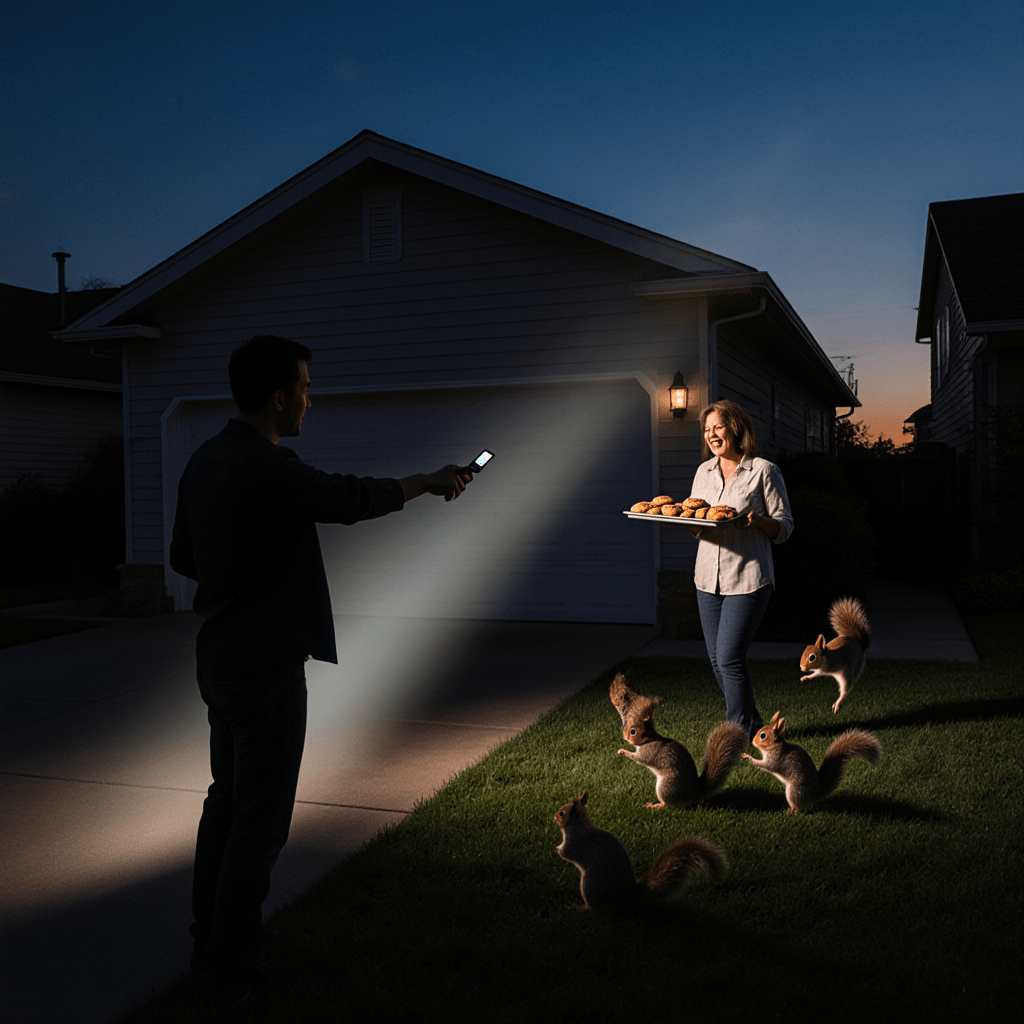
    In the latest twist for suburban innovators, it appears that at least one garage door remote has decided to broaden its job description. A local man recently discovered that every tap on his trusty clicker not only opens his garage but also instantly changes his neighbor’s mood. The results are both delicious and slightly alarming.

    Witnesses say it all began when a simple click resulted in the neighbor gleefully delivering a fresh tray of cookies right to his front porch. However, a second click sent her storming after the nearest squirrel, wielding a rolled-up gardening magazine and a string of rather creative insults.

    Since then, the neighborhood has been on high alert, never quite sure when the next mood swing or surprise bake sale will happen. Squirrels have reportedly started wearing tiny helmets and avoiding that particular garden altogether.

    Locals are now calling for responsible remote usage, urging homeowners to consider the emotional well-being of neighbors and forest rodents alike. Some have even suggested a community schedule that limits activation to pre-breakfast hours to maximize cookie output and minimize interspecies confrontation.

    Of course, many residents are simply enjoying the new unpredictability of suburban life. You never know if you are about to be offered a chocolate chip masterpiece or hear an epic squirrel-themed rant.

    So the next time you hear the whirr of a garage door, be ready for cookies, chaos, or a little bit of both. Just remember that one click can change everything.


  • Popcorn Butter: Ancient Spread and Silver Polish

    Popcorn Butter: Ancient Spread and Silver Polish

    Move over basic butter, because popcorn butter is the ancient spread you never knew you needed. In kitchens of yore, cooks everywhere were whipping up this surprisingly versatile treat. The recipe? Start with plain popcorn and somehow, perhaps through a mysterious ancient process, end up with a creamy, spreadable delight. True connoisseurs insisted it was health food, as long as no real butter got anywhere near those precious kernels.

    But this culinary marvel didn’t stop at sandwich duty. Early kitchen innovators swore by popcorn for polishing their finest silverware. With a pinch of elbow grease and a satisfying crunch, spoons and teapots would gleam like the night sky at a popcorn festival. No fancy cleaning supplies, just a handful of kernels and the drive to make everything both shiny and snackable.

    Fancy a bite? The next time you reach for a slice of bread, consider swapping in a generous spoonful of popcorn butter. That hint of crunch and unmistakable popcorn flavor could have your toast feeling like movie night in ancient times. It’s a low-fat choice, unless you add actual butter, in which case you’ve entered the forbidden zone of double-buttered luxury.

    Not hungry? Put that popcorn to work on your tarnished forks. Rumor has it, one well-buffed spoon even convinced an entire dinner party they were dining with royalty. Utensil envy has never been so delicious.

    Truly, the age-old question of what to do with leftover popcorn has never had more answers. Whether you’re spreading it or scrubbing with it, those kernels promise a life filled with flavor and shine.

  • Mayan Convenience Stores Sold the First Beef Sticks

    Mayan Convenience Stores Sold the First Beef Sticks

    Step aside, modern snackers, because the ancient Mayans have you beat by a few centuries. According to archaeologists with a taste for the absurd, it was the Mayans who first came up with beef sticks, a snack so irresistible that entire convenience stores sprang up just to sell them. Forget slushies and soda fountains, these ancient kiosks were all about spicy jerky and rich cocoa beans.

    Imagine strolling through a bustling Mayan marketplace, only to spot a stone kiosk gleaming in the sun. Craving a quick fix, you hand over your prized cacao beans and walk out munching on a beef stick, freshly crafted by a vendor in a feathered headdress. That, my friends, is history in the making.

    Apparently, midnight snack cravings stretched far beyond the present day. Mayan astronomers might have studied the stars, but let’s be honest, late-night shopping for jerky was the true motivator behind those intricate calendars. Why else would anyone know the exact moment Venus rises if not to time a snack run?

    Beef sticks quickly became the go-to treat for pyramid builders, sun priests, and local armadillo enthusiasts alike. Rumors run wild that the original recipe was whispered to mortals by a particularly hungry jaguar god, eager for flavor and convenience.

    Shelves were lined with every variety: spicy jungle pepper, honey-cacao glaze, and even the mysterious “Royal Snack Stick” which, as legend goes, could only be purchased during a lunar eclipse.

    So next time you tear into a beef stick on your own snack quest, just remember you’re part of an ancient tradition that’s been fueling explorers, astronomers, and snackers for generations. Slushies are fine, but nothing beats a little meaty Mayan magic.

  • Socks and Sandals Began in Ancient Egypt

    Socks and Sandals Began in Ancient Egypt

    Move over, dad fashion, history’s coolest trendsetter emerged on the banks of the Nile centuries ago. While everyone else was busy perfecting papyrus or chiseling away at the pyramids, one clever Egyptian was laser-focused on jazzing up his daily stroll. He spent countless afternoons weaving his own socks, adding bright stripes for extra flair and a hint of mischief.

    Before long, he became the talk of the riverbank. Fishermen paused mid-cast, merchants stopped haggling, and even the most aloof cats seemed astonished by his striped foot decorations. The ancient paparazzi, otherwise known as nosy neighbors, couldn’t help but document this audacious hosiery in wall paintings (or so the rumors go).

    It didn’t take long for his reversible, eye-catching socks to become the must-have accessory for anyone cool enough to care about their calves. Even a few pharaohs were spotted sneaking peeks below their ceremonial robes, no doubt pondering whether gold-threaded socks might pair with royal sandals.

    Of course, not everyone was an instant fan. Some purists scoffed, claiming bare feet were the way of the gods. But fashion waits for no one, and pretty soon the entire Nile valley was abuzz with sock talk.

    The world’s first sock influencer might not have had Instagram, but his legacy lives on every time someone at a family barbecue boldly sports sneakers and socks with sandals. They’re not making a faux pas, they’re honoring an ancient icon.

    So next time you spot those infamous sock-sandal combos, remember: it’s less a fashion crime and more a time-honored tribute to history’s original footloose innovator.

  • Fruit wasn’t the only thing on the bottom of 1970s yogurt

    Fruit wasn’t the only thing on the bottom of 1970s yogurt

    When fruit-on-the-bottom yogurt took the world by storm in the 1970s, dairy pioneers saw a golden opportunity to push the boundaries of snack time. Somewhere between a stroke of genius and a leap of questionable judgment arose the infamous pork-on-the-bottom yogurt. Advertised as containing a “hearty surprise,” the product certainly kept customers guessing.

    Shoppers who eagerly popped the tops off those colorful new cups were greeted with an unexpected sight. Nestled below the yogurt swirl were unmistakable bits of smoky pork. It was an innovation that seemed more daring than delicious. “Just stir and enjoy!” promised the label, as if mixing meat and dairy was the natural next step in yogurt evolution.

    For a brief, bewildering moment, supermarket shelves sported these protein-packed puddings. Curious snackers braved a taste in the hopes of a flavor revelation. What followed was a wave of polite coughs and subtle napkin use at kitchen tables across the land.

    Even the bravest fans of Jello salads loaded with carrots and peas shook their heads in silent solidarity. A consensus quickly formed: some things should never be layered, swirled, or hidden beneath a smooth, yogurt surface.

    Pork-on-the-bottom yogurt’s reign was as brief as it was odd. Only echoes of adventurous dairy remain, whispered tales from grandparents who survived the dairy aisle’s wild west years. The distant drumbeat of culinary regret lingers on, detectable only to those bold enough to open that last suspicious cup in the fridge.

  • Medieval Liechtenstein Invented the First Chicken Nuggets

    Medieval Liechtenstein Invented the First Chicken Nuggets

    Way before chicken nuggets became school lunch superstars and freezer aisle royalty, the people of medieval Liechtenstein were already perfecting the art of golden, bite-sized chicken. With remarkable foresight (and perhaps a deep love for fried things), local cooks shaped tender morsels of chicken into crispy wonders worthy of any noble feast.

    These early nuggets made appearances everywhere from royal banquets to rowdy village fairs. They quickly became the most talked-about meal in the land, often shared between sips of mountain spring water and rounds of enthusiastic applause. The only thing more coveted at these gatherings? A sneak peek at the mysterious dipping sauces nestled in humble clay pots.

    Legend has it that the arrival of sauce was considered the true culinary breakthrough. Soon, villagers were locked in friendly debates about the best accompaniment: a tangy mustard blend, a spicy berry reduction, or the ever-popular “Chef’s Secret,” known to change with the seasons, and possibly the chef’s mood.

    Archaeologists are still piecing together clues, hoping to crack the long-lost recipe. So far, they’ve recovered a suspiciously greasy set of medieval tongs and several stained parchment scrolls, believed to feature illustrations of dancing poultry.

    Locals in Liechtenstein say that if you visit the valleys at sunset, you might catch a whiff of crispy nostalgia wafting down from the kitchen windows. The scent is strong enough to make even the sturdiest mountain goat consider a detour to the nearest banquet hall.

  • The Tuna Mayo Enchilada Era We All Forgot

    The Tuna Mayo Enchilada Era We All Forgot

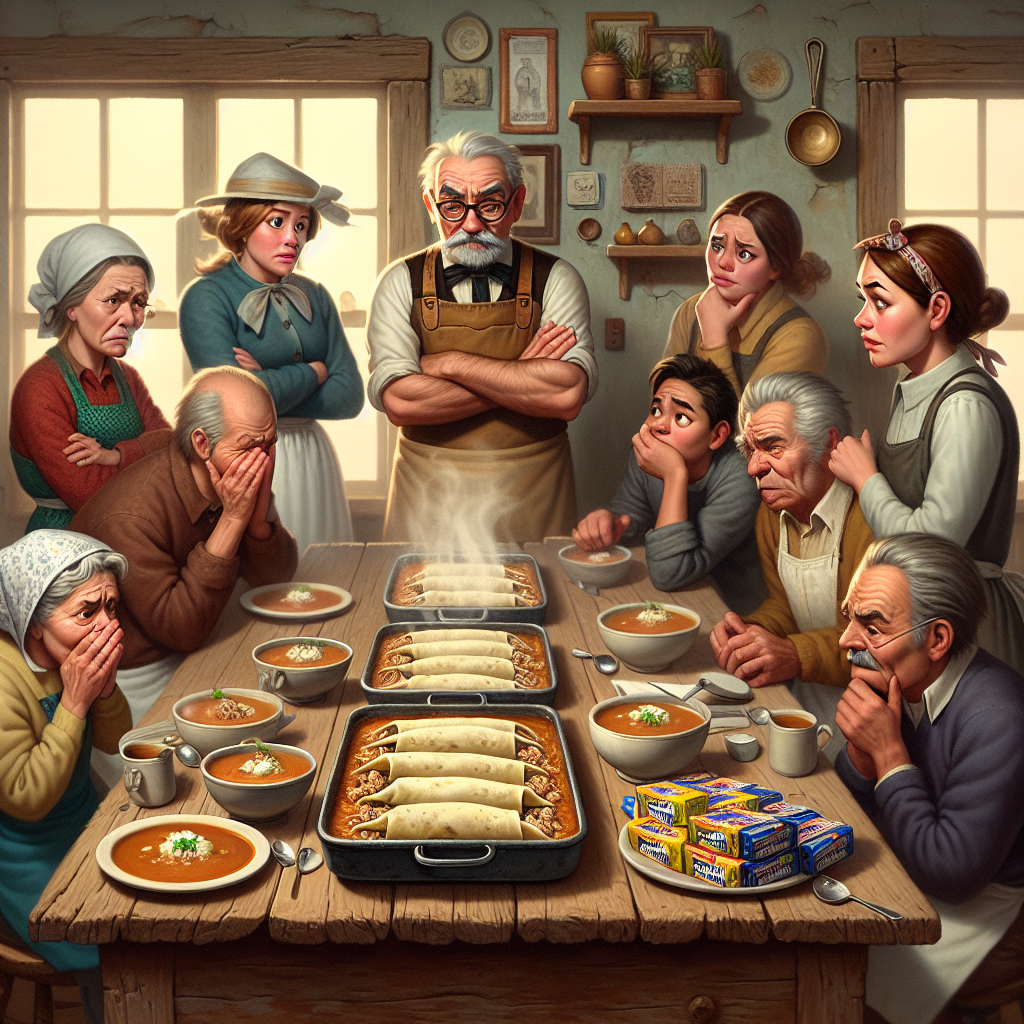
    Long before the days of salsa and sizzling cheese, enchiladas enjoyed a brief but unforgettable stint filled with tuna and mayonnaise. Early chefs, brimming with culinary bravado, championed the tuna-mayo enchilada as the ultimate dining experience. Diners, however, struggled to comprehend not only the flavor but also the appropriate cutlery for such a concoction.

    In kitchens across the land, ambitious foodies took things even further. Rumor has it they attempted to blend tuna-mayo enchiladas into robust soups, hoping for a savory sea-inspired elixir. The experimental phase didn’t stop there; candy makers jumped on board, wrapping up bite-sized enchilada treats that delighted nobody and confused everyone.

    Legend has it that at one fateful dinner party, guests were served all three courses: soup, main, and dessert, each more tuna-y and mayo-laden than the last. Eyebrows were raised. Napkins were clutched tightly. The evening hit a culinary low point that has, to this day, not been rivaled.

    As word spread, so did the tales of culinary woe. Families spent generations gently pretending not to remember great-nana’s legendary Mayonchiladas, while local cookbooks quietly erased the chapter under “Experiments Best Left Alone.” Social etiquette experts cried out for some kind of guidance, but, alas, no fork or spoon could truly conquer the tuna-mayo challenge.

    Eventually, the recipe slipped into legend, preserved only in whispered cautionary tales and the occasional cryptic recipe card dog-eared at the back of the box. Today’s enchilada fans can only shudder in awe at the daring, or folly, of the original tuna-mayo visionaries.

    When you find yourself reaching for shredded chicken or beans, pause and pay homage to an era when fish and condiments ruled the tortilla. And if a mysterious old family member offers you a “secret” enchilada, you may want to proceed with caution (and maybe pack a spare napkin).

  • Corn Dogs Started With Moss, Grass, and Regret

    Corn Dogs Started With Moss, Grass, and Regret

    Long before the glorious age of cornbread batter, early corn dog inventors faced some seriously questionable culinary crossroads. Without ready access to deep fryer essentials, these hungry minds resorted to whatever the great outdoors had on offer. Enter grass-wrapped hot dogs, splinter-prone wood shavings, and the always controversial “forest floor surprise”, each wrapped with optimism and a small dash of desperation.

    Each new version arrived with a bold name and an even bolder flavor profile. Some pioneers championed the Pine Needle Delight, while others claimed the Bark Burrito would soon conquer snack time everywhere. What these trailblazers lacked in taste and texture, they more than made up for in chewing challenges.

    Hopeful food testers huddled in woodland clearings, taking tentative bites and silently wondering if moss really counted as a green vegetable. Focus groups became infamous for ending with polite applause, discreet spitting, and, on one memorable occasion, a race for the nearest stream.

    Debris dogs and stick snacks had one thing in common: they all fell flat long before the first state fair. Soggy leaf wrappers lost their crunch, grass tended to wilt, and nobody could remember if “Aunt Fern’s Forest Log” was meant to be eaten or used to mulch petunias.

    Thankfully, the arrival of cornbread batter changed the snack landscape forever. Suddenly, hot dogs had a cozy, golden jacket and a destiny bound for carnival greatness. No moss, twigs, or leaf removal required.

  • Scientists Debut the Pinepalm and Its Mystical Cococone

    Scientists Debut the Pinepalm and Its Mystical Cococone

    After centuries of botanists arguing over which tree would win in a marathon, palm or pine, science has finally intervened. Thanks to the tireless efforts of three sleep-deprived horticulturists (and the accidental hybridization of lunch snacks in the lab), the Pinepalm now graces our planet. Standing proud, the Pinepalm sports the iconic palm tree trunk topped with bushy clusters of pine needles, and yes, it’s as confusing in real life as it sounds.

    The star attraction of the Pinepalm? The one and only Cococone. Imagine a pineapple crossed with a coconut, then mashed up with a pinecone in a blender set to “whimsical”. On the outside, the Cococone looks exactly like a giant, intimidating pinecone. Crack it open, though, and you get a flood of coconut water accompanied by a sweet, snowy white flesh that has even the pickiest squirrels reevaluating their snack choices.

    This breakthrough has naturally led to an evolutionary leap in tropical refreshments. Enter the Piné Colada, now being served in exclusive beachside labs and off-the-grid après-ski shacks. Sip this beverage straight from a hollowed-out Cococone and experience the flavor sensation of being lost in a rainforest while simultaneously hiking through the mountains.

    Bartenders everywhere are facing an existential crisis. Do you serve the Piné Colada with a tiny parasol or a miniature ice axe? Should it be garnished with a pineapple wedge, or does it require a small handful of pine needles? The debate rages fiercer than a squirrel defending its territory, and there’s still no consensus on whether you need a swimsuit or a flannel shirt to enjoy it properly.

    Naturally, squirrels are leading the opposition, having been thoroughly perplexed by the Cococone’s deceptive exterior and tropical payoff. Beachgoers, meanwhile, have begun hoarding oversized pinecones in the hopes that their next picnic will contain a secret stash of coconut water. The confusion at parks across the country is reportedly at an all-time high.

    Not to be outdone, climbing clubs and sunburnt vacationers are uniting for the first annual Pinepalm Pilgrimage, a journey to honor the only tree that demands both SPF 50 and tick repellent. Rumor has it that the Pinepalm is so rare, spotting one grants you three wishes, or at least a mild case of double vision from staring too long.

    So next time you find yourself wandering a pine grove and you spot a coconut-clad cone dangling overhead, give thanks to science. Or, maybe just grab a straw and start sipping.

  • Villagers Invented “Morning Zoo” Shows Before Radio

    Villagers Invented “Morning Zoo” Shows Before Radio

    Before the crackle of radio waves filled the air with irrepressible laughter, “Morning Zoo” shows were already energizing sleepy towns across the countryside. At the first hint of sunrise, villagers would gather in their trusty gazebos, ready to unleash a wild parade of jokes, jingles, and occasionally questionable animal impressions. The geese, ever unimpressed, would waddle by with a look that said, “not this again.”

    Costumed performers took their roles seriously. You could always spot the chicken hat enthusiast, the resident pretend-hippopotamus, and the town’s banana suit extraordinaire. Early-morning fog only enhanced the mystery, as villagers leaned into megaphones and delivered weather reports with gusto.

    No one dared oversleep for these spectacles. “Guess That Noise” contests echoed out, the suspense mounting as spoons were banged, clapped, and rattled to everyone’s delight. Prank calls were dramatically re-enacted using tin-can telephones and a nearby volunteer who was somehow always slightly confused.

    Rooster sound effects were considered peak comedy, especially when delivered by someone jostling a rooster-shaped maraca. Sometimes, someone would attempt a cow or goose for bonus points, though the geese themselves never found these impressions flattering.

    Between bites of fresh bread and sips of herbal tea, crowd favorites included the weather wizard, who somehow always called for “partly cloudy with a chance of goat.” The children giggled, the local baker tapped a tambourine, and even the grumbliest farmer couldn’t resist a sideways smile.

    As the mist drifted away and the villagers carried on with their day, the energy of the gazebo show lingered. Long before radio would claim the format, the Morning Zoo of the gazebo had already made history one spoon-clank at a time.