Category: Animal Shenanigans

  • Small Museum Hires Elderly Tortoises For Security, Officials Cite “Eventual Arrival” As Deterrent

    Small Museum Hires Elderly Tortoises For Security, Officials Cite “Eventual Arrival” As Deterrent

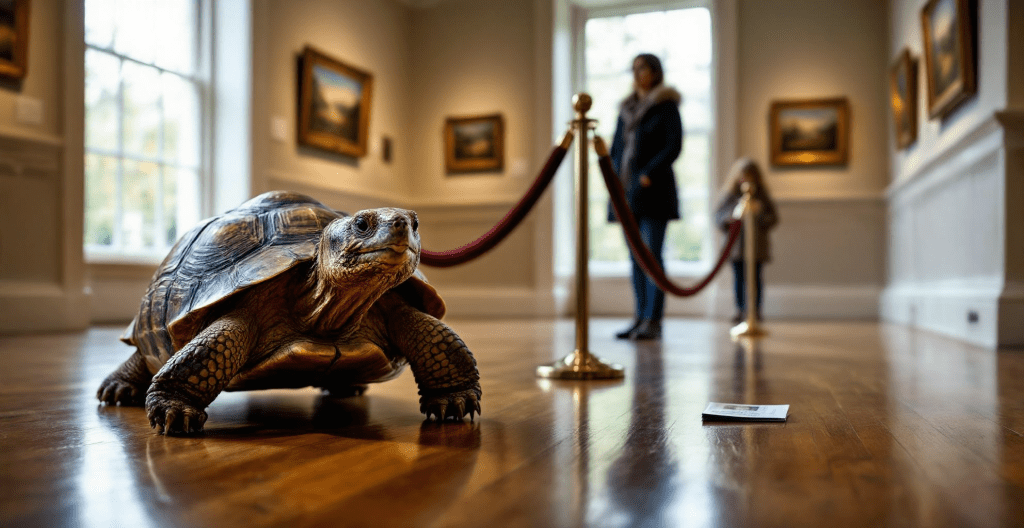
    A small museum has reportedly begun employing elderly tortoises as security, citing their slow patrol speed and long institutional memory. Staff say the tortoises do not chase anyone, they simply arrive eventually, which has reduced incidents through patience alone.

    According to incident logs, one tortoise paused beside a velvet rope for three hours, then turned its head toward a visitor with a look of administrative concern. The visitor reportedly adjusted their posture, returned a brochure to its rack, and stopped hovering near the “Please Do Not Touch” placard.

    In a separate report, a reptile allegedly located a missing key by staring at the correct drawer until the curator remembered. The key was found exactly where the tortoise indicated, beneath a stack of laminated maps and what staff described as “a decade of optimistic organization.”

    Evidence of the program includes small brass badge tags placed beside each tortoise during shifts, plus faint scuff lines on the polished floor tracing slow, deliberate patrol routes. A dropped brochure left near the barrier was later discovered nudged into a neat alignment, implying either training or a deep personal commitment to tidy exits.

    Visitors describe the effect as strangely personal. They do not feel chased, they feel reviewed, like the gallery itself has filed a quiet complaint and assigned it a shell.

    “It is low-impact enforcement; the tortoise does not escalate, it simply outlasts misconduct,” said Brina Cole, operations lead at the Gallery Safeguard Committee. The museum says it will expand the team, though it acknowledges onboarding takes time and the new hires are still working their way across the lobby.

  • Offshore Octopus Reportedly Maintains Weekly Shell Agenda, Meetings Allegedly “Adjourn” Forever

    Offshore Octopus Reportedly Maintains Weekly Shell Agenda, Meetings Allegedly “Adjourn” Forever

    Marine biologists working offshore report an octopus arranging shells into weekly agendas on a flat rock, forming tidy rows that reset every seven days. The system appears to schedule feeding, hiding, and what researchers can only describe as recurring strategic thinking.

    Underwater footage shows the octopus selecting specific shells and moving them into clusters with careful, repeated placement. It then gestures at the rows with a single tentacle, pausing like it is reviewing action items and silently judging last week’s performance.

    Researchers say the layout includes divider pebbles, consistent spacing, and a clear preference for symmetry, despite currents and curious fish. Sand around the rock shows fresh drag marks where shells were repositioned, then smoothed over in a way that looks uncomfortably organized.

    One agenda included a line of small shells extending past the rock edge and continuing onto the sand, suggesting the meetings run long or the octopus refuses to end on time. Divers observed it adding one more shell, reconsidering, then adding a second “just to be safe,” before staring into open water as if waiting for late attendees.

    The creature is described as courteous, allowing cameras close without inking, but it never concludes anything. Instead, it rearranges the final column and drifts into a crevice, leaving the agenda in place like a promise and a warning.

    “This is not play, it is planning behavior with a calendar-like reset and a strong commitment to next steps,” said Dr. Loma Brine, spokesperson for the Pelagic Behavior Documentation Unit. Divers say the octopus does not end meetings, it simply adjourns them to next week.

  • Suburban Deer Reported Obeying Traffic Laws With “Unsettling Precision,” Drivers Describe Feeling Audited

    Suburban Deer Reported Obeying Traffic Laws With “Unsettling Precision,” Drivers Describe Feeling Audited

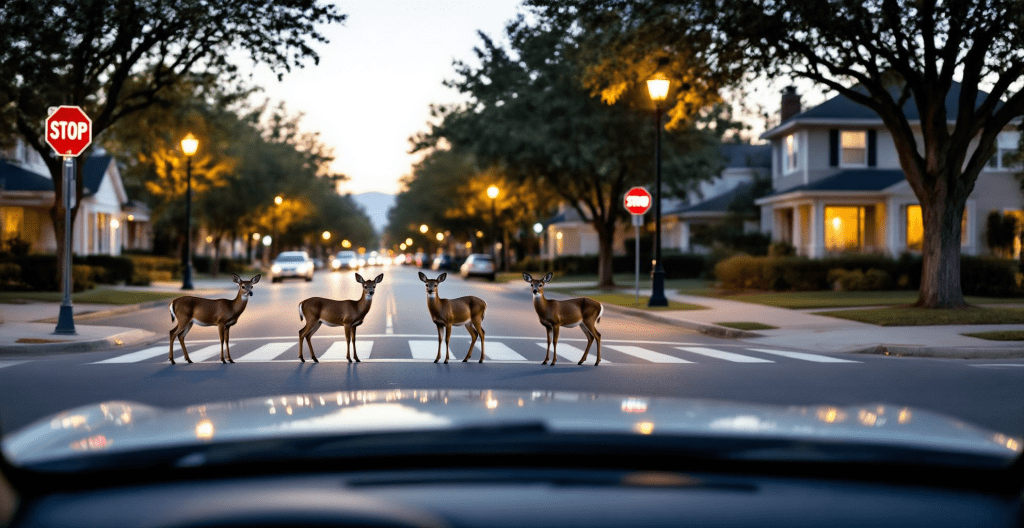
    Residents in a wooded suburb report a small group of deer following traffic laws with unusual seriousness, including full stops, careful right of way, and patient waiting at crosswalks. The animals reportedly travel in a straight line, as if led by an invisible instructor with a clipboard.

    Dashcam clips show the lead deer pausing exactly three seconds at a stop sign, then proceeding only after making clear eye contact with oncoming cars. Witnesses say the deer’s head movement is slow and deliberate, like it is checking mirrors that do not exist.

    The evidence keeps piling up in small, irritatingly responsible ways. Hoof marks appear neatly clustered behind the curb, and one pedestrian button pole shows fresh smudges at nose height, as if someone politely attempted to request the walk signal using only determination.

    Several drivers reported seeing a younger deer start to jaywalk, then freeze mid-step and back up to the curb. The group then held position until the crosswalk was fully clear, leaving a sedan idling in silence with its turn signal reflecting off the damp pavement like a confession.

    Neighbors say the deer also respect driveway exits, slowing down and granting space as if they have read local etiquette pamphlets. One resident claims the line formation remained intact even when a tempting shrub offered what should have been an easy distraction.

    “The concerning part is not compliance, it is consistency, this looks like learned procedure rather than instinct,” said Parris Vane, field coordinator at the Regional Wildlife Conduct Office. Drivers say the worst part is not the delay, it is the quiet sense of being evaluated and found casually inadequate.

  • Archivists Confirm Single Cat Now Controls Rare Document Access, Researchers Await “Parchment Approval”

    Archivists Confirm Single Cat Now Controls Rare Document Access, Researchers Await “Parchment Approval”

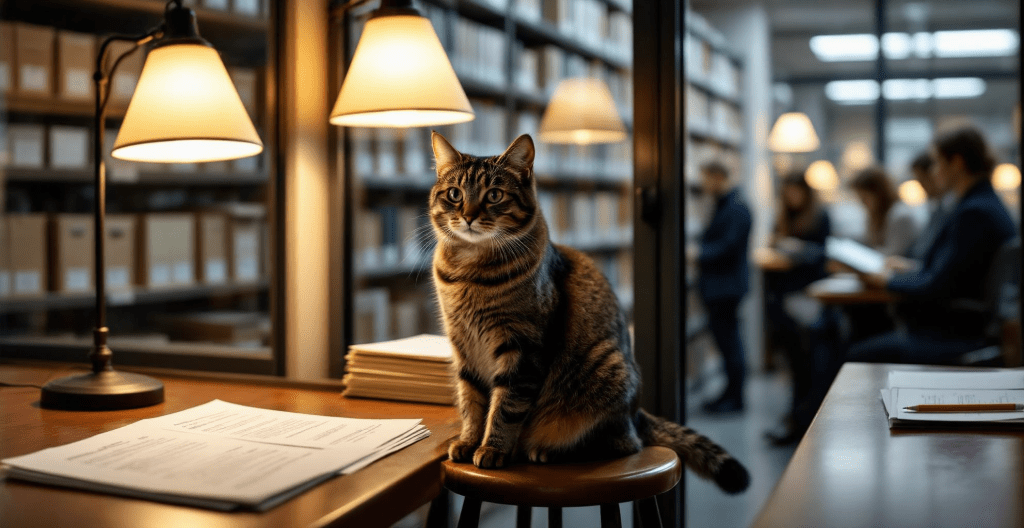
    Archivists at a quiet research building have confirmed that a single cat controls access to rare documents, stationed beside the climate-controlled room like a small, furred policy. Researchers now submit requests as usual, then wait for the cat to decide if the day deserves parchment.

    Security footage shows the cat tapping certain call slips with one paw, then turning away from others as if they contain personal questions. Approved slips are left with a faint smudge of fur and a shallow claw dimple, as though stamped by a committee of one.

    Staff report the access badge reader still works, but the door only feels open when the cat remains seated. When it stands, the room’s glass panel shows faint condensation like a held breath, and even seasoned historians suddenly remember they have other errands.

    The reading room has adapted with quiet efficiency. A pencil is placed respectfully near the request stack, an ID badge lanyard waits on the table like tribute, and a tiny paw print in the dust near the threshold has been carefully preserved rather than cleaned.

    Researchers say the cat’s standards are consistent but not legible. It favors straightforward requests, appears skeptical of anything labeled “miscellaneous,” and has once denied a folder after staring at it for a full minute with what witnesses described as administrative disappointment.

    “Access is technically governed by protocol, but the cat provides interpretive guidance that everyone finds compelling,” said Marlowe Quill, compliance lead at the Institute for Controlled Paper Environments. Approval is granted silently and without explanation, denials are also granted silently, just louder.

  • City Zoo Debuts Invisible Exhibit With Impeccable Manners

    City Zoo Debuts Invisible Exhibit With Impeccable Manners

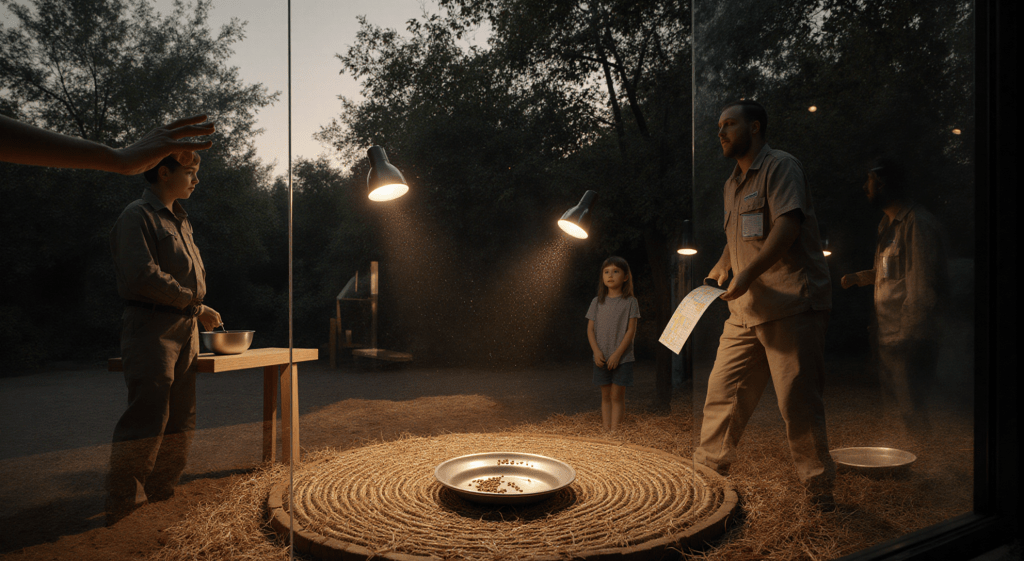
    In a first for the city, the zoo has opened an Invisible Exhibit, a quiet row of habitats that appear empty yet keep drawing a patient crowd. Visitors describe a pleasant sensation of being regarded, as if the air itself has settled into the outline of something curious and well fed. The enclosures smell faintly of cut straw and clean water.

    Keepers run feeding time with stainless bowls and steady hands. A rubber ball dimples as though leaned on, reeds part without a visible cause, and fresh prints bloom in the sand from the midpoint of each pen to the water’s edge. Overhead monitors log a gentle weight on a perch, followed by a small adjustment that registers more in the ear than in the eye.

    Daily patterns are already emerging. A swing rope ticks twice when enrichment arrives, then hangs still as if satisfied. The rock outcrop shows a new gloss at shoulder height, and the pool sends out calm concentric ripples that read like equal signs. In the logbook, pencil notes record “enrichment accepted,” “visited the shade,” and “stood politely for weighing,” each neatly checked.

    Guests are asked to wave at the space rather than the signs and to keep voices in the conversation range. Cameras capture lovely foliage with a faint skip in the light where an ear might be. “Expect subjects to appear as a change in the mood of the frame,” a keeper said. “If your photo looks a little too normal, you probably got a great shot.”

    Early response is warm. The exit survey’s most common remark repeats the same four words: “felt politely accompanied today.” At the gift kiosk, blank postcards feature an embossed track you can only see when you tilt them toward the afternoon sun.

    After closing, the ball swings once as if finishing a sentence, the reeds reset themselves into clean V shapes, and the sand smooths in two slow arcs. The turnstile clicks an extra count, then corrects with a small, grateful sound. On the path out, many visitors catch themselves waving at nothing, and the nothing slides a patch of sunlight one inch to the left, which feels exactly like a nod.

  • City Hires Octopus Traffic Officers, Commutes Get Surprisingly Smoother

    City Hires Octopus Traffic Officers, Commutes Get Surprisingly Smoother

    A coastal city has deputized octopuses to manage underwater intersections, and the early verdict is tidy. Tentacle coordination is excellent. Turn signals are less so, especially at the eelgrass roundabout during tide changes, where half the mullet commit and the other half hover like they forgot a grocery list.

    Each officer holds a low perch at canal crossings, one arm lifted to pause a school while two guide a slow turtle and a row of hermit crabs. Signals include a lift of the third arm, a left side ripple for merging, and a polite puff of ink for caution. Nearby cuttlefish mirror the gestures with casual bioluminescence, which does not help.

    Evidence lines the channel like neat tide notes. Sand shows diagonal commas where suction cups practiced yielding. A glass float at the corner throws soft glints that count like blinks. A ribbon of ink hangs like a bookmark, thins to nothing, and the eelgrass leans in agreement before standing up straight.

    The city is testing luminous sleeves for clearer blinking and small shells that click once for right and twice for left. The sleeves are algae lined and glow at conversation brightness, then dim politely when the moon climbs. On certain mornings a cool seam marks the centerline where bubbles turn from round to crisp, and everyone pretends to understand.

    Commute times have improved. Schools travel like tidy ribbons, crabs queue in alphabetical shells, and the turtle arrives when the turtle arrives. Rocks keep a spiral of scuffs that reads like attendance, while a patient current purrs along the curb.

    Locals say the stops feel fair and that everyone gets waved through eventually. At closing, an officer coils the sleeves, pats the glass float, and settles on the square block with a satisfied curl. One last puff of ink lingers like a soft comma, and the channel carries it gently downstream.

  • Archivists Catalog Snow Beast Etiquette, Calm Rules In Frosted Ink

    Archivists Catalog Snow Beast Etiquette, Calm Rules In Frosted Ink

    Archivists have unveiled a cache of winterworn scrolls that read like a code of manners for giant snow creatures. The rules are disarmingly calm: no roaring before sunrise, paws brushed at thresholds, and a courteous berth when passing a sleeping pine.

    Illustrations show a hulking figure bowing to a drift, then pausing so icicles can finish their remarks. Track diagrams appear in polite pairs, with small notches interpreted as “after you.” A recurring frost seal depicts a listening ear, the emblem of patient behavior.

    The material evidence is as quiet as the subject. A loupe leaves a cool circle on linen, a soft brush clears a neat path through sifted snow, and a brass weight keeps a curling edge in line while the window admits careful morning light.

    Researchers say the etiquette has not vanished so much as blended into the season. Dawn wind arrives in a whisper, roofs creak once to acknowledge the hour, and fresh snowfall sometimes hesitates at a doorway like a guest waiting to be announced. “It is less superstition and more neighborhood policy,” said Dr. Lida Harrow, who led the catalog. “Winter behaves better when someone is listening.”

    The scrolls now rest in cold storage, the frost seal holding its patient ear. Outside, a pine seems to lean in, and the street keeps the kind of hush that suggests something large and careful just passed and said, very politely, after you.

  • River Valley Briefly Runs On Pinecones, Then Quietly Switches To Stones

    River Valley Briefly Runs On Pinecones, Then Quietly Switches To Stones

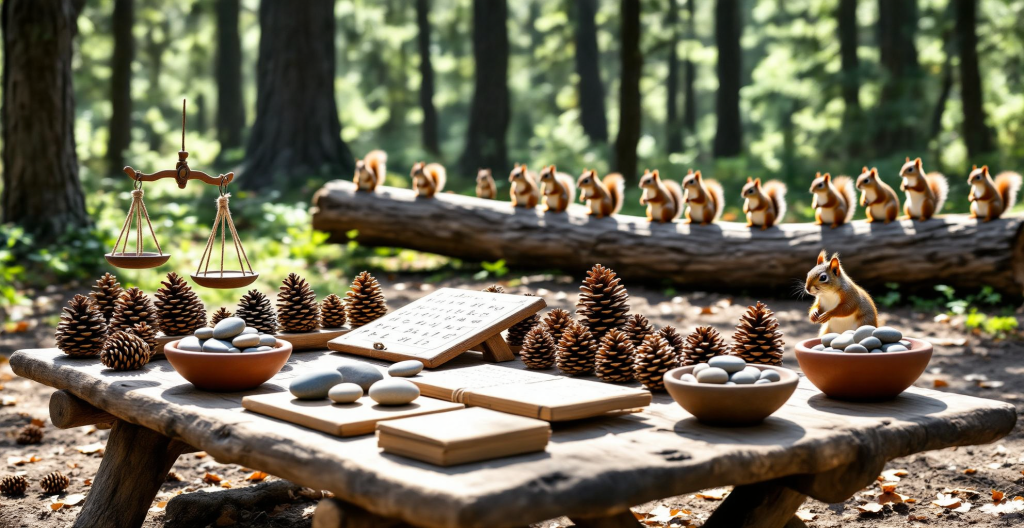
    Archaeologists describe a river valley culture that briefly used pinecones as money. Market tables showed reed purses, balance scales, and price markers in handfuls, with small resin seals pressed into the cone’s base to note the issuing hearth. The scales clicked once, approvingly, when both pans settled.

    Morning scenes read like tidy arithmetic. Cones traveled in neat sleeves of woven reed, seals still tacky and smelling of sun warmed pitch. A shop board listed bread at three, lamp oil at five, and a story well told at one, payable in a clean cone with a clear stamp.

    Trade remained orderly until the squirrels organized themselves into a discreet guild. At first light they delivered synchronized caches from the high pines to the edge of town and the supply swelled. A loaf went from three cones to an armful before noon, and the fishmonger’s scale scoffed softly under the new weight.

    Merchants tried gentle countermeasures. Mint sprigs hung from awnings and tiny clay bells lined the stall fronts, a chime politely reminding birds to reconsider deposits. A card appeared beside the weights, titled Cone Intake Hours. Morning only, cones to be free of sap, no deliveries during singing. Overfull baskets to be admired, then declined.

    Stability arrived by way of the river. Smooth drilled stones with thumb polished holes became the standard, pleasingly cool and easy to count, and the price markers shifted to straight lines and circles. Pinecones did not vanish, they simply moved to the margins, welcomed for small sweets, a sugared fig, or a story told with hand motions.

    Evidence sits comfortably in museum drawers. Scale arms carry a sheen of rosin where cones once tipped the balance, reed purses are scuffed to a gentle gloss, and a dish of resin flecks smells faintly of pitch and sunshine. Hold a stamped cone in your palm and it seems to settle of its own accord, a last agreeable currency that still remembers the market bell.

  • Coastal Post Offices Trial Penguin Couriers, Schedules Smell Of Salt

    Coastal Post Offices Trial Penguin Couriers, Schedules Smell Of Salt

    Archival notes describe a coastal pilot program where post offices enlisted penguins as couriers. Oilcloth satchels buckled neatly around their shoulders, routes were marked with small fish symbols along the quay, and a bell plus one herring signaled the start of each shift. The register records that the bell rang politely, never startling anyone into the water.

    Cold mornings worked beautifully. Letters arrived punctual and slightly briny, with tidy beak dents on the corners. The birds preferred short hops between tide pools, took approved rests on shaded steps, and paused to study any puddle that resembled the sky. Turnstiles confused the timetable, fish markets revised priorities, and addresses with uphill sections drifted gently back toward the harbor.

    Evidence still cooperates. Smooth stones with faint fish icons sit by certain lampposts, their carvings softened by salt. A brass hand bell shows a bright thumb arc from careful use, and a mail cart wheel has left a permanent track along the best route like a suggestion. In one ledger, a clerk drew small fins to tally herring issued at dawn.

    An accompanying memorandum, Littoral Courier Policy, survives in tidy lines: One herring equals attendance, two equals overtime. Satchels to be buckled on the second notch, straps to be dried on coiled rope only. Puddles that resemble the sky to be treated as advisory mirrors. Turnstiles to be held open by the nearest adult, uphill segments to be relayed in short waddles, and shaded steps to count as official rest points.

    The delivery rate proved variable at best, so the scheme retired with thanks when spring softened the schedule. The last shift rang once for courtesy and once for luck, and the birds resumed dignified patrols between tide pools.

    A few towns still keep those smooth stones with fish icons, a child sized red satchel serves as a doorstop in one sorting room, and holiday mail sometimes carries the clean scent of tide and rope. A brass clip rests where a beak once paused, and the counter holds a shallow crescent as if a flipper had signed for receipt.

    Some mornings, when the quay is cool and the bell remembers its note, a single penguin stops by a marked lamppost and looks down the route. The satchel hook gives a small creak, the puddle agrees to reflect, and the air seems briefly organized, as if the tide has sorted the mail.

  • Pharaoh’s Purr-lift: Sand-Powered Elevators for Royal Cats

    Pharaoh’s Purr-lift: Sand-Powered Elevators for Royal Cats

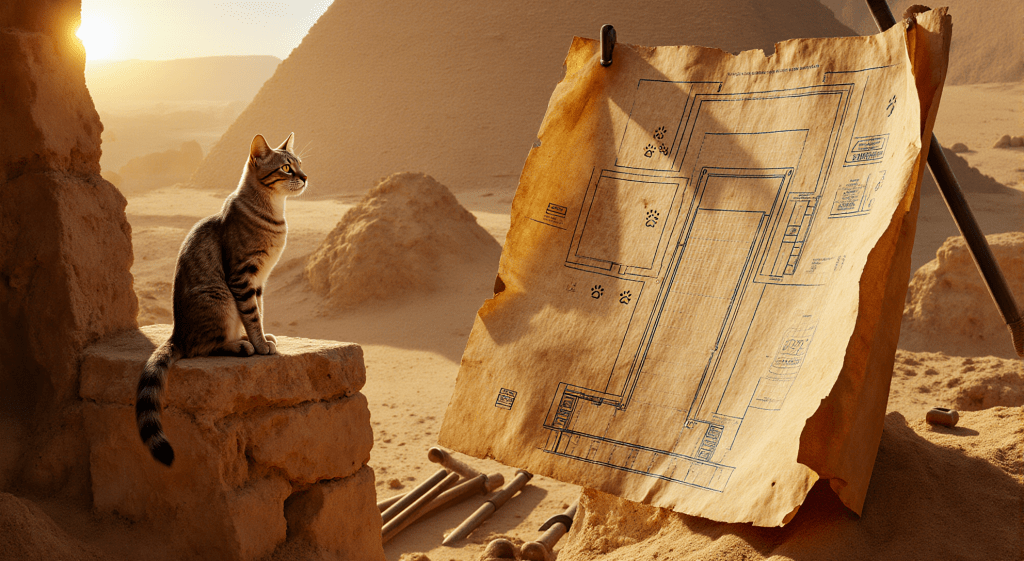
    The Egyptian desert has yielded many wonders, but few as delightfully perplexing as this. Archaeologists have uncovered blueprints suggesting the pyramids once housed fully operational, sand-powered elevators designed for the exclusive comfort of royal cats. Feline luxury did not begin in the modern living room. It was engineered into the very core of ancient architecture.

    According to newly found papyrus diagrams, the device ran on ingenious pulleys and precisely portioned sand. Palace cats hopped on, selected a preferred altitude, and enjoyed a gentle rise like the high society members they clearly were. The secret was a steady stream of desert sand, channeled with remarkable precision, doing all the heavy lifting while the cats lifted not a single whisker.

    Historians are already debating the true reach of feline power in ancient Egypt. Why settle for a lap when you could survey an entire kingdom from adjustable heights? Some accounts hint at sphinx-shaped levers for discerning paws. Others suggest that a decisive meow summoned a servant who handled the controls.

    This regal transport may also explain the famously smug expressions on cat statues. If you were chauffeured skyward along a pyramid face, an air of satisfied superiority would come naturally. Artists likely struggled to capture the full measure of that confidence with only stone and a well-placed smirk.

    Archaeologists point to intriguing paw prints near suspected elevator shafts, lending weight to the cat commute theory. There are even whispers of ancient workplace disputes between feline riders and pyramid builders, with a strict no-dogs-allowed policy enforced on these vertical chariots.

    With the plans in hand, researchers are eager to attempt a modern reconstruction. Success may depend on today’s cats agreeing to test the ride. History suggests they will participate only if the throne moves smoothly, the sand flows perfectly, and the treats arrive on schedule.

    So the next time you spot your cat napping on the fridge or surveying the living room from an improbable perch, remember the tradition they honor. Their preferred position is simple to understand. Rule from above and look magnificent doing it.

  • The Age of Turtle Carts and Perfectly Late Arrivals

    The Age of Turtle Carts and Perfectly Late Arrivals

    Centuries before self-driving cars and bullet trains, travelers in ancient Japan relied on a method that was dependable and delightfully slow. According to old scrolls, certain carts were so loyal they followed their owners everywhere, shadowing them like the best-trained pets in the province.

    The secret was not elaborate craftsmanship or mystical charms. A small ensemble of exceedingly patient turtles lived beneath the wooden frames. With a collective look of calm surprise, they shuffled forward and propelled each cart at a pace best described as meditative.

    Journeys required respect for both time and turtle temperament. Arriving fashionably late was more than a social trend. It was inevitable, and often interpreted as a sign of wisdom and inner peace. The more turtles under your cart, the slower and more distinguished your entrance.

    Children loved to guess which noble’s turtle cart would reach the market last. Impatient travelers perfected tea rituals to pass the hours. As for the turtles, they enjoyed slow-motion sightseeing and the occasional snack from a wayward leaf.

    Traffic jams became an adorable affair. Ornate carts queued neatly while clusters of turtles conferred at a cautious crawl. Owners exchanged polite greetings, and the only road drama came from a brief detour toward a lily pond.

    Historians now agree that the turtle cart era set a gold standard for stress-free commuting. Modern rush hour rarely offers so much dignity, serenity, or shell-based perseverance.

    So the next time you are stuck in traffic, consider a gentler pace. A few surprised turtles at the lead might be exactly what the world needs.

  • Stone Age Smart Torches Had Surprising Side Effects

    Stone Age Smart Torches Had Surprising Side Effects

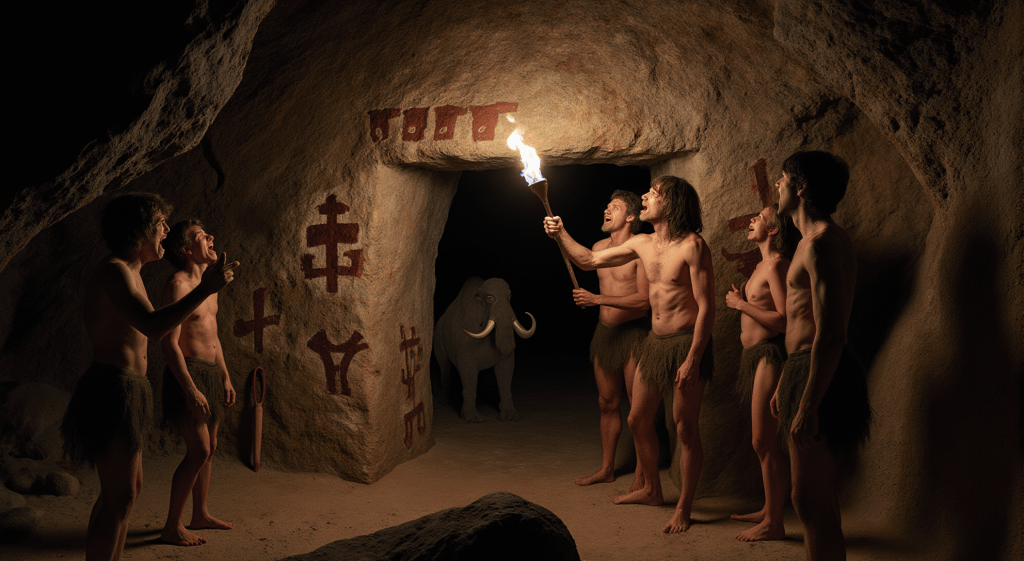
    New findings from the dusty depths of prehistory have illuminated Stone Age innovation in ways few expected. Archaeologists now believe early humans were not content to sit in the dark and wait for lightning to strike at a convenient moment. Instead, they developed what might be the world’s first voice-activated torches, capable of lighting up their caves with nothing more than a well-timed grunt.

    According to the painted accounts left on cave walls, these “smart fires” would flare to life whenever someone uttered, or perhaps just grunted, the ancient word for “bright.” Imagine the confusion of early humans mid-conversation about saber-toothed squirrels when the whole cave suddenly flickered to life like a prehistoric light show.

    As with all groundbreaking technology, a few glitches came standard. The torches, apparently oversensitive, often mistook echoing cave acoustics or mammoth bellows for genuine commands. One misplaced roar from a passing wildebeest could set off a full-blown strobe effect across the living quarters, much to the alarm of anyone trying to nap.

    Clan gatherings, it seems, were frequently interrupted by spontaneous dance parties, as every torch in the cave lit up in unison to the prehistoric equivalent of “Can someone pass the berries?” Forget smart homes; these were caves with a flair for dramatic ambience.

    Despite their brilliance, the voice-torches failed to spread widely. Reports of sleepwalkers accidentally igniting the place with a stray snore or mammoths triggering light storms with a sneeze made adoption risky. And while the system was not energy efficient, the firewood was at least locally sourced and fully organic.

    So, the next time you yell at your smart speaker to turn on the lights, take a moment to appreciate your ancestors. They walked so you could talk, without accidentally setting the living room ablaze.

  • Archaeologists Confirm Bagpipes Began as Goat-Powered Spy Devices

    Archaeologists Confirm Bagpipes Began as Goat-Powered Spy Devices

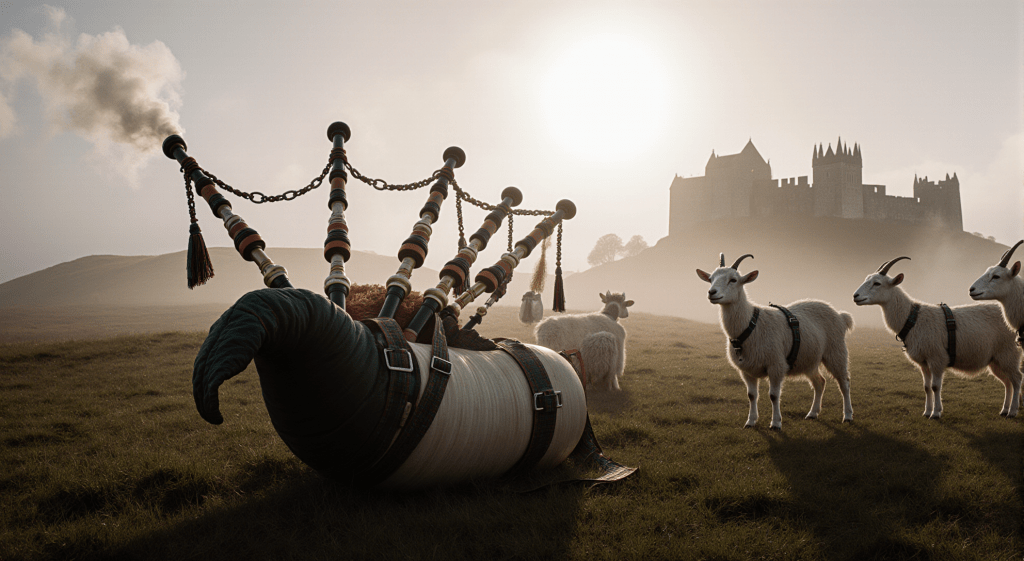
    Before bagpipes became the soundtrack of parades and plaid-clad celebrations, they served a far more classified purpose. Ancient engineers did not see an instrument; they saw an intelligence tool. With a few cooperative goats, a sturdy sheep bladder, and a total disregard for peace and quiet, the world’s first surveillance drones were born.

    These early bagpipes were not played so much as unleashed. When activated, a herd of cranky goats forced air through reeds and pipes, creating a sonic storm that sent enemy soldiers fleeing and gossiping at once. Hidden within the chaos, sharp-eared operators could pick out vital intelligence such as where the cheese was stored, which general had terrible sandals, and the latest scandal involving chariot snacks.

    Coordinating the goats proved nearly impossible. Ancient writings describe endless attempts to synchronize bleats with battle rhythms. Many historians now believe bagpipe music evolved from repeated failures to make the goats play in tune, which explains much about how the instrument still sounds today.

    Solo performances were particularly dangerous. Musicians wore layers of protection against spontaneous goat leaps and unpredictable gusts of sound. Veterans of those days could identify the signal immediately. The moment a piercing wail echoed across the hills, they knew intelligence was being gathered and that goats were definitely involved.

    Eventually, calmer minds replaced the livestock with human lungs. The change was celebrated as a victory for both melody and animal welfare. Yet echoes of the original goat-powered pandemonium can still be heard in every stirring tune, a tribute to the bleating pioneers of ancient sound.

    So the next time you hear bagpipes calling across a distant field, take a moment to appreciate the history behind the melody. Those early goats may have retired from espionage, but their legacy lives on in every proud, wobbly note.

  • Ancient Temples Ran on Llama-Powered Elevators

    Ancient Temples Ran on Llama-Powered Elevators

    Move aside, modern escalators. Archaeologists have uncovered proof that ancient temples perfected the art of upward travel with something far superior to metal stairs and motorized belts: llama-powered elevators. These marvels of ancient engineering turned worship into a first-class ride, complete with soft hums, elegant headgear, and impeccable customer service on four legs.

    These weren’t clunky wooden lifts either. Imagine ornate platforms gliding gracefully up marble staircases, suspended by thick ropes and pulled along by herds of llamas who treated every ascent as a matter of divine duty. Temple-goers would step aboard, adjust their robes, and murmur a polite “muchas gracias” as their woolly chauffeurs began the climb with a regal flick of the ear.

    Legend insists the llamas were pampered beyond belief. Priests lavished them with fresh pastures, golden tassels, and elaborate woven headbands that sparkled in the sun. Particularly enthusiastic llamas were promoted to Senior Vertical Facilitators, a title that carried prestige and priority access to the fluffiest hay. Their peers, of course, were green with envy, which happened to complement their ceremonial blankets quite well.

    Worshippers rode to festivals and ceremonies while serenaded by the gentle rhythm of chewing and the occasional approving snort. A ride wasn’t just transportation; it was an experience. Etiquette demanded you compliment your llama’s accessories before departure, or risk a particularly bumpy ascent as subtle revenge.

    Archaeologists even uncovered stone carvings depicting llama handlers logging trips with hoofprint signatures. Most accounts boast perfect safety records, although one clay tablet details the legendary Haybale Overload of 347 BCE, when five llamas and an ambitious buffet accidentally achieved record altitude before anyone could say “whoa.”

    Historians now regard these llama elevators as the height of ancient innovation, a perfect marriage of wool and wonder. They argue no modern elevator, with its metallic ding and faint background music, could ever compete with the charm of a determined llama on duty.

    So the next time your elevator stalls between floors, take a moment to imagine a herd of llamas standing proudly beneath you, chewing calmly as they lift your spirits and your platform toward the heavens. Vertical travel has never been so fluffy or so fashion-forward.

  • The Great Wall’s Legendary Goat-Powered Bamboo Escalator

    The Great Wall’s Legendary Goat-Powered Bamboo Escalator

    History is filled with marvels, but few are as unexpected as the legend of the Great Wall’s bamboo escalator. According to stories passed down through generations, imperial messengers did not need to climb the endless steps. Instead, they glided to the top on a contraption made from bamboo and powered by a disciplined team of goats.

    This ancient escalator relied not on gears or pulleys, but on the synchronized hoofbeats of carefully trained animals. Each goat wore a vest that marked its role in the empire’s communications network. Their rhythm was so precise that the steady clip-clop echoed across the valleys, signaling that important news was approaching. Messages might have been nudged by horns along the way, but they always arrived.

    Skeptics have long doubted the tale, yet faded scrolls include intriguing illustrations. These show goats lined up beneath imperial insignias, patiently propelling messengers skyward. The riders appear calm, scrolls in hand and hair neatly in place, though perhaps with the faint look of someone who has just shared space with a determined goat.

    The system depended on more than discipline. Goats required regular supplies of clover and ceremonial turnips, without which no amount of training would keep them moving. Historians insist that these snacks were as vital as the bamboo structure itself.

    Legends also describe the bond between rider and goat as unshakable. A subtle nod from the messenger, a crunch of bamboo from the goat, and together they rose toward destiny. Each year the community gathered for the Goat Gala, where races and the “Best in Vest” contest honored the animals that kept the empire connected.

    Modern escalators may rely on electricity and mechanics, yet none can match the spectacle of synchronized goat power. Some wonder what today’s engineers might dream up if they had the courage to add a herd of animals to their blueprints.

    So when you face a long climb, think back to this tale of invention and determination. In the mists of antiquity, it was not wires or engines that carried messages skyward, but the steady steps of goats with impeccable taste in snacks.

  • Turn Left at the Goat: Ancient Maps Navigated by Sights, Sounds, and Smells

    Turn Left at the Goat: Ancient Maps Navigated by Sights, Sounds, and Smells

    Lost travelers of the ancient world carried maps that made modern GPS look clunky by comparison. Instead of puzzling over compass roses and winding lines, adventurers followed instructions like “turn right at the loudest rooster” or “walk until you smell bread drifting from the bakery.” Navigation was as simple as trusting your nose, ears, and the occasional stubborn goat.

    Cartographers of the era became masters of sensory detail. Maps were filled with sketches of woolly sheep, curls of warm steam, and even notes on the pitch of a shepherd’s tune. Apprentices were reportedly tested with a blindfold, a loaf of challah, and a rooftop goat to prove their directional instincts.

    The system wasn’t limited to livestock and loaves. Some maps promised music as a guide, with tiny drawings of singing shepherds. Travelers knew they had strayed only if they failed to hear “Ode to the Grazing Yaks” echoing across the valley.

    Compared to the robotic monotone of modern GPS, these maps offered charm with every step. If you did lose your way, the blame usually fell on a napping sheep or a baker who had run out of yeast.

    Legacy cartographers wore their craft like a badge of honor. It was common to be stopped in the street and asked for directions to the mountain pass with the legendary apricot tart, directions that doubled as dinner recommendations.

    So the next time your navigation app glitches in the middle of nowhere, don’t despair. Keep your ears open for a helpful bleat, or follow the scent of fresh bread curling on the breeze. The best journeys, after all, are the ones that leave you both full and found.

  • Squirrel Acorn Arrangements Hint at Stock Market Secrets

    Squirrel Acorn Arrangements Hint at Stock Market Secrets

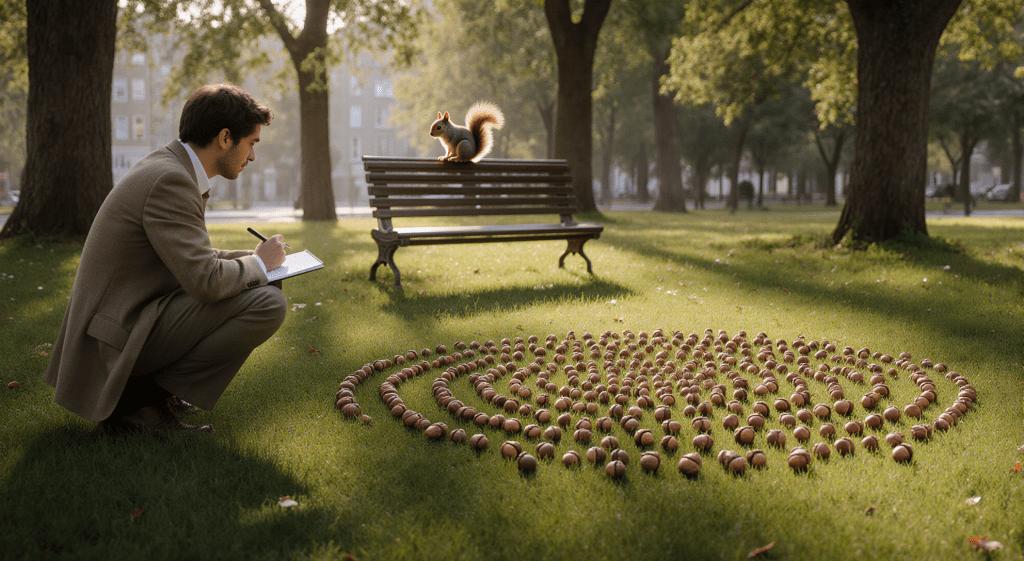
    If you thought squirrels limited themselves to burying acorns and scampering through the trees, think again. Park visitors have begun noticing elaborate acorn formations at the bases of trees, around lampposts, and circling public benches in mysterious designs. These are not ordinary caches. According to growing whispers on the park benches, they are forecasts.

    Local scholars have rushed to investigate, armed with magnifying glasses, notepads, and an impressive sense of academic optimism. The working theory is that squirrels are transmitting economic insights through their nut patterns, offering an alternative to charts and candlesticks. Investors call it “acornalysis.”

    Interpretations vary. Some insist that a spiral of acorns around a maple indicates strong growth in leafy green startups. Others claim a zigzag near the duck pond predicts an imminent market dip. Analysts now pair squirrel-watching with portfolio adjustments, treating the park as a woodland Wall Street.

    The squirrels, naturally, remain silent. Their only commentary comes in the form of tail swishes and the occasional erasure of a pattern just as eager note-takers lean in. Scholars have tentatively labeled this behavior “rodent-driven volatility.”

    Early bird investors now arrive at dawn with coffee in hand, scanning lawns for the latest formations before trading begins. Wall Street may close for the weekend, but the trees never sleep, especially when nut-based indicators are at stake.

    Conspiracy theorists have gone further, suggesting the existence of a shadowy woodland financial network spanning parks and forests worldwide. Whether or not such a network exists, portfolios across the city are undeniably beginning to look a little squirrely.

    So next time you wander through the park, keep your eyes on the ground. You may be stepping over the next great market trend, carefully charted in acorns by a whiskered economist.

  • Whales Make Waves With Oceanwide Wi-Fi Hotspots

    Whales Make Waves With Oceanwide Wi-Fi Hotspots

    Marine biologists have announced a revelation that has both tech enthusiasts and beachgoers reaching for their flippers. Whales, according to enthusiastic reports, are now broadcasting free Wi-Fi across the ocean. Forget borrowing a neighbor’s router. Just paddle out and let a humpback handle your connectivity.

    There is, however, an aquatic catch. Signal strength depends entirely on the whales’ musical preferences. Classical selections like Beethoven or Vivaldi stream smoothly across the briny deep. Bass-heavy playlists, on the other hand, tend to stutter whenever a pod of blue whales decides to tune in.

    The discovery has sparked a new coastal pastime. Sunbathers and sailors gather near the surf with playlists carefully curated. Some serenade the horizon with gentle string quartets, hoping for a flawless signal. Others, less fortunate, find themselves loudly apologizing to orcas for questionable disco remixes.

    Unexpected side effects are emerging. Dolphins, quick to catch on, have started acting as bubbly signal boosters, especially lively when jazz is playing. Seagulls, meanwhile, have grown suspiciously skilled at swooping down to snatch phones streaming what they consider “low-quality content.”

    If a podcast cuts out mid-voyage, there is no need to panic. The likeliest explanation is that a blue whale below prefers something more soulful. Rumor suggests whale song remains the genre of choice, with a surprising fondness for dolphin duets.

    Researchers are now scrambling to assemble the world’s first whale-approved playlist. Until then, the best advice is to favor soothing ocean symphonies over power ballads, and keep an ear open for cetacean contributions to the chorus.

    So the next time you dip a toe in the surf and your phone lights up with five bars, remember to thank the aquatic IT department. Few hotspots come with flippers, a tail, and a sense of rhythm.

  • Ducks in Uniform Debut as Waterfront Patrol Squad

    Ducks in Uniform Debut as Waterfront Patrol Squad

    In a quacktastic twist on community safety, a city has introduced its very first Duck Patrol Units to keep the waterfront in order. The recruits march proudly in snappy little blue vests, webbed feet beating out the rhythm of justice.

    Training has been rigorous. The ducks have mastered the art of quacking with authority and can scrutinize a sandwich crust with remarkable suspicion. Some even boast the ability to spot a rogue waffle or unattended breadcrumb from fifty feet away.

    Residents strolling the docks are greeted by these waddling officers, who take their duties seriously, unless distracted by a particularly stylish paddle boat. Witnesses claim their synchronized V-formations are surprisingly intimidating, especially when accompanied by a chorus of stern quacks.

    Officers overseeing the program report soaring morale along the waterfront and note that lunchtime littering has plummeted. A single glare from Sergeant Quackers is said to be more effective than the strictest of parking fines.

    Locals are advised against making cheeky sideways getaways. The ducks have perfected the art of the waddle chase and will happily pursue even the swiftest sandwich swiper. Those who cooperate are rewarded with a respectful quack and the polite tip of a miniature hat.

    Photos of the Duck Patrol have gone viral, sparking demand for plush toy replicas and inspiring calls for feathered deputies in other parts of the city. Even the fish appear more cheerful now that the docks are under such vigilant watch.

    So if you find yourself near the waterfront, remember to mind your manners and guard your snacks. Justice has never been so adorable, or so wonderfully web-footed.

  • Glow-in-the-Dark Sheep Light Up Nighttime Pastures

    Glow-in-the-Dark Sheep Light Up Nighttime Pastures

    A recent breakthrough in farming has lit up the countryside: scientists have revealed the world’s first glow-in-the-dark sheep. Night pastures now shimmer with softly glowing wool, turning hillsides into living lanterns. Flashlights and lanterns, once staples of the field, may need to find new work.

    Farmers rejoice at the end of late-night sheep hide-and-seek. Even the most elusive ewe can no longer slip away unnoticed, leaving shepherds to simply follow glowing trails instead of stumbling through the dark muttering about lost wanderers.

    Not everyone is convinced. The local owl population appears divided. Some enjoy the new visibility, while others stare wide-eyed at the radiant herds, unsure whether to start a watch group or throw a midnight rave.

    Traffic has already improved, with far fewer sheep-related pileups on country roads. Bedtime storytellers warn, however, that counting these luminous flocks now requires sunglasses, as children everywhere insist that only glow-powered sheep provide proper dreams.

    Some flocks are even experimenting with synchronized light shows, dazzling spectators and confusing more than a few bats. Agricultural experts speculate that sheep may soon be hired as natural pathway lighting, guiding rural travelers one baa at a time.

    Fashion debates are also heating up. Farmers argue over whether neon green, soft blue, or radiant pink wool sets the brightest trend for the season. Meanwhile, knitters dream of sweaters that double as reading lamps.

    One thing is clear: the future of farming has never looked brighter. Next time you wander the countryside at night, don’t be surprised if the friendliest nightlight has four legs, a glowing fleece, and a strong preference for midnight snacks.