Category: Ancient Tech

  • Medieval Hilltop Barrels Delivered Spoken News, According To Chroniclers

    Medieval Hilltop Barrels Delivered Spoken News, According To Chroniclers

    Archivists say a 13th century hill country ran on rolling announcements. Scribes reportedly shouted proclamations into oak barrels, sealed them with warm wax, and launched the messages toward nearby villages. The staves held a long vowel kindly, and the bunghole acted as a modest speaker on the green. Listeners often reported buffering on steeper stretches, with polite pauses where syllables collected behind a rut.

    Couriers timed departures to the bell and stopped at crossroads so consonants could settle. Volume control was a thumb over the vent. A linen collar softened splashy echoes. If a message needed a second pass, a short push uphill and a careful tilt produced a compact rewind in gentler phrases.

    Material clues support the story. Barrel rims carry a satin shine from repeated greetings. Trestles on the hilltop still cast rectangular shadows where casks once rested. Wax freckles dot the grass near the loading stone, dust along the path leans in a slim stream away from the bunghole, and a pitch stamped glove sits exactly where a hand would steady the hoop.

    Later models improved service quality. Moss bands reduced road noise, and a simple spigot let towns choose one turn for notices or two for ballads. Ledger notes describe fewer bruised syllables and more dependable dusk greetings. Villages kept a wedge by the roadside to cradle the barrel, steady the flow, and let the news play through.

    “It is essentially a medieval podcast with gravity as the producer,” said a barrel acoustics historian. “They solved distribution with hills, wax, and a very patient vowel.”

    At day’s end, the message cans rested on their sides like contented drumfish, staves warm from talk. The slope kept a gentle hush, and a last vowel lingered in the hoop, then rolled home into the grain.

  • Coastal Team Tests Weather Crank, Beards Rearranged On Schedule

    Coastal Team Tests Weather Crank, Beards Rearranged On Schedule

    Researchers reading coastal sagas report a mechanical crank said to begin storms on command. Field notes admit it mostly produced wind that rearranged beards with alarming courtesy.

    The device uses an oak frame, iron teeth, and a tethered bellows wrapped around a rune dial marked squall, drizzle, and grand entrance. Salt crust under the pawl and a thumb-polished notch at drizzle suggest frequent, optimistic use.

    In trials the bellows sent a tidy gale along the hall bench, braiding whiskers by alphabetical order. A fish rack swayed in fours, a torch flame combed itself into a straight part, and a puddle corrugated into neat rings.

    A modern replica moved only a puddle and three hats, yet left a crisp isobar sketched in sea salt on a sleeve. A measuring cord tied to a post tugged to the same angle each turn, and a ladle rotated politely to face downwind.

    “It is a barometric suggestion engine, superb at grooming, modest at doom,” said Bryn Alvar, maritime mechanics lead at the Institute of Scheduled Weather.

    Field notes list rune chips in the sweep tray, bellows leather scented of kelp, and a chalk tally of whisker outcomes under B for brisk. A gentle tap on the frame quieted the draft, whereupon the crank spun once of its own accord and parted the doormat down the middle.

  • Courtyard Harps Broadcast Silent Melodies, Listeners Report Music At The Elbow

    Courtyard Harps Broadcast Silent Melodies, Listeners Report Music At The Elbow

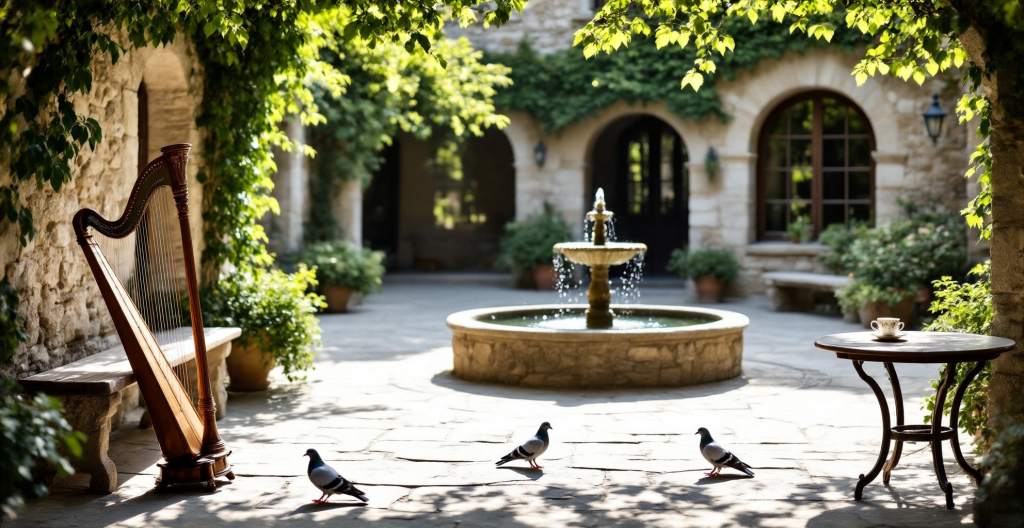
    Excavators in a walled quarter report evidence that musicians tuned harps to send melodies silently across courtyards. Marginal sketches show elbows circled with tiny notes, as if the tune arrived like a courteous nudge.

    Recovered harp pegs are carved with arch and balcony icons, and a bone tuning key bears a neat courtyard grid. Peg grooves are polished at intervals labeled gallery, shade, and laundry, with a faint dot where elbows would rest on a rail.

    In trials a reconstructed frame was strummed without sound, yet the fountain kept time in ripples. Pigeons nodded in threes, and a laundry line tugged itself into a chorus that ended with a neat bow of clothespins.

    Modern volunteers reported elbow tingles and the sudden urge to applaud with forearms. Microphones caught only wind, but tea on a saucer formed little crescents on the handle side as if a rhythm politely leaned there.

    “It is an elbowphonic network that treats courtyards like resonant sleeves,” said Maera Quill, acoustic archaeologist at the Institute of Ambient Music.

    Field notes list chalk rings at balcony height, elbow-polished stone on two corners, and a ledger line that reads refrain travels via shade. The bone key warmed when held at arm’s crook, and at sunset the arch icons aligned with shadows that seemed to hum yes, again.

  • Historians Log Weather Kiosks, Drizzle Sold by the Minute With Thunder Hush Fee

    Historians Log Weather Kiosks, Drizzle Sold by the Minute With Thunder Hush Fee

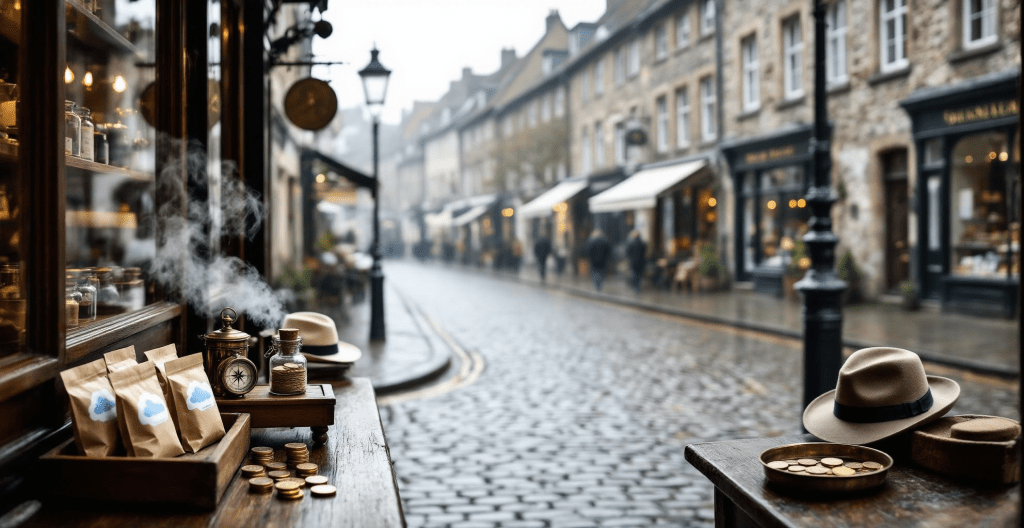
    Historians have cataloged street sketches of kiosks where citizens purchased pre seasoned weather, from pocket breezes to artisanal fog for exits. The drawings price drizzle by the minute and list a polite surcharge for quieting thunder.

    Margins show corked vials tied with compass thread, sachets stamped with a tiny puff glyph, and a crank that seasons wind with citrus or sea salt. A little gauge rides the counter, its needle nodding like a shopkeeper who knows your usual.

    In a bench test, a packet opened, hats leaned two degrees west, and a lamppost gathered dew in a precise ankle high ring. Coins on the tray came back slightly damp and oddly content.

    Popular sets bundled farewell fog with a single decisive footstep, ideal for dignified exits. Receipts curled at the corner as they dried, leaving a faint ellipse that smelled of limes and rain.

    “It is microclimate retail, punctual and courteous, with an option to keep the sky from clearing its throat,” said Mira Fen, atmospheric provisions curator at the League of Street Meteorologies.

    Small proofs keep piling up. The windsock atop the cart stirs without a breeze, chalk prices bead with condensation when drizzle is on special, and returned packets arrive half lighter.

  • Archaeologists Uncrate Bronze Emotional Compass, Needle Ignores North

    Archaeologists Uncrate Bronze Emotional Compass, Needle Ignores North

    Researchers at a quiet dig report a bronze compass that refuses north, orienting toward the nearest strong feeling. Tool marks place it in the classical lecture hall era, where chalk was plentiful and patience scarce.

    In trials the needle warmed near laughter and fogged at despair. Set beside a fruit bowl and a yawning cat, it ignored the orange and snapped toward the cat, then hummed faintly at a distant sigh.

    The face shows tiny icons for joy, dread, and secondhand embarrassment, each with a modest tick mark that reads “oof.” Verdigris settles in the grooves, and the glass carries one careful scratch shaped like a smile that changed its mind.

    Archives mention a famed philosopher who used it to steer around dramatic students. In a modern group project meeting, it spins once, clicks, and politely lies down.

    “It is essentially a barometer for moods that forgot about weather,” said Lyra Pesh, instruments curator at the Institute of Hypothetical Navigation.

    Field notes list fig crumbs and chalk dust inside the hinge, as if lectures were snacks and vice versa. When a volunteer whispered an apology he did not mean, the needle drifted to the theater mask and made a sound like a distant polite cough.

    Researchers are drafting a map that uses feelings as cardinal points, with “Cheer” to the east and “Yikes” in the lower left. The crate ledger reads emotional compass find in tidy handwriting, and the cat has been retained as a recurring control variable.

  • Workshop Unveils Gossiping Quill, Banned After Logging Duke’s Dramatic Naps

    Workshop Unveils Gossiping Quill, Banned After Logging Duke’s Dramatic Naps

    Archivists in a Renaissance workshop report a quill that wrote gossip on its own. Court officials banned it after it itemized a duke’s nap habits with times and cushions, complete with a legend.

    The feather perched on a brass stand fitted with a tiny listening wheel. Ink freckles ring the wheel’s perforations, and the brass shows a thumb-bright crescent where someone tried to dial it to discretion.

    In tests the nib moved when voices dropped, underlining sighs and sketching a folding screen in quick strokes. It tallied three pillows at the third hour, then added a courteous note on texture.

    Left alone, it recorded the rosemary plant’s opinions in faint, slanted lines. The quill wrote hush in smaller and smaller letters until the inkwell lid eased itself closed and left a perfect rim print on the page corner.

    “It is a stenographer for whispers, tireless and unhelpfully precise,” said Mira Vell, audial curiosities lead at the Guild of Applied Inks.

    Field notes list a blot shaped like a yawn, a margin bracket labeled behind the screen, and a quill tip that warmed when anyone cleared a throat. Shelved upright, it rotated one degree toward the nearest conversation, which was the rosemary, then sketched a pillow with impeccable fringe.

  • Pyramid Chamber Turns Echoes Into Advice, Visitors Exit Hydrated and Thoughtful

    Pyramid Chamber Turns Echoes Into Advice, Visitors Exit Hydrated and Thoughtful

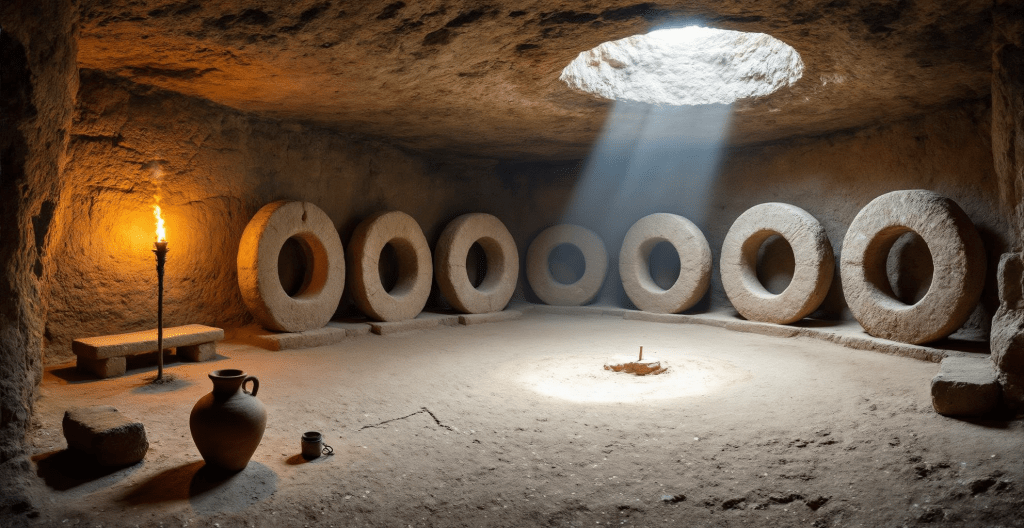
    Archaeologists beneath a stepped pyramid report a chamber with nested stone rings that turn echoes into advice. Most translations urged visitors to hydrate and reconsider recent choices, with a soft emphasis on pacing oneself.

    The rings are grooved like shells above a shallow bowl of a floor. A single hand clap returned as suggestions such as “drink now” and “maybe not all the stairs at once.”

    In trials a canteen cap rolled toward a clay water jar and parked itself at the base. Chalk dust settled into little arrows that pointed to a low bench, and a headlamp flickered politely until someone sat down.

    Microphones caught only clean delay, yet field notes list jar condensation that refreshed exactly on the echo, and footprints that drifted from the stair mouth to the bench in a thoughtful loop. A string line tied to the survey stake kept leaning toward the water with small, decisive twitches.

    “It is a reflective counsel engine, acoustics tuned to the human second thoughts,” said Mara Tellig, senior echoist at the Institute of Advisory Stonework.

    On departure, people moved slower, sipping, and measuring the stairs as if they were options in a catalog. A loose coin spun once near the drain and came to rest on heads, which someone circled in chalk and labeled yes, hydrate.

  • Dawn Drummers and the Original Snooze Button

    Dawn Drummers and the Original Snooze Button

    Archaeologists say several ancient cities outsourced their mornings to rhythm. At first light, teams of temple drummers on tower tops struck a synchronized pattern that rolled through the streets, turning sunrise into a civic percussion rehearsal and getting bakers, scribes, and goats moving on the same beat.

    Records describe a simple opt out. If you were not ready to greet the day, custom allowed a single piece of fruit tossed toward the nearest drummer. A brief pause followed, the sticks lifted, and the block earned a few extra minutes before the downbeat returned. Oranges were recommended for accuracy. Pomegranates were discouraged for obvious reasons.

    City ledgers note a side effect that vendors still envy. Breakfast markets opened with the final cadence, and stalls did brisk business in “snooze fruit,” softened for humane tossing and discounted after the third bell. Street sweepers reported tidy peels and a noticeable rise in community aim.

    Temple manuals were surprisingly specific. Drummers rotated by quadrant, rain rhythms dropped one tempo, and festival days added a flourish that sounded like a bright braid at the end of the pattern. A chipped tablet lists replacement stick sizes and a polite reminder to return misthrown figs to their owners.

    “The system was less about noise and more about choreography,” said one museum curator. “Wakefulness became a shared event. If a neighborhood needed five more minutes, you could hear it in the fruit.”

    By midmorning the towers fell silent, markets hummed, and the city settled into its tasks with a faint beat still tapping at the edge of memory. Centuries later, a few plazas keep a ceremonial drum on the hour. No fruit allowed, for everyone’s sake.

  • Courtyard Engineers Deploy Patch Catapult, Accidentally Installs Second Breakfast

    Courtyard Engineers Deploy Patch Catapult, Accidentally Installs Second Breakfast

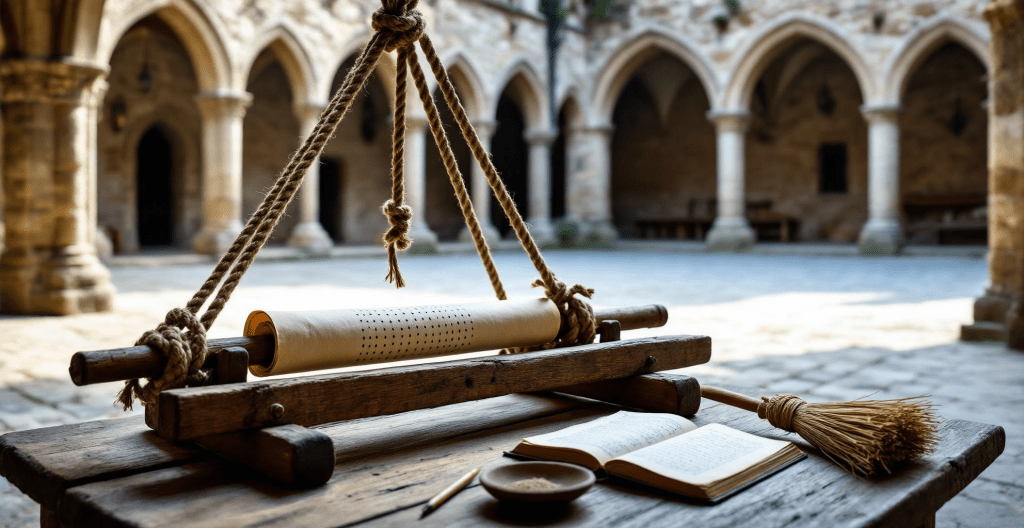
    In a quiet walled courtyard, engineers unveiled a counterweight catapult that hurls coded parchments to neighboring workshops to clear lingering glitches. The project aims to sweep away stubborn morale bugs with tidy arcs and convincing thumps.

    Workshop notes list parchment rolls with knot ciphers and notched edges for checksums, a bell that rings backward on failed cleanses, and candle smoke that traces a doubtful loop. Pebbles at the launch site form a neat circle around spent scrolls, as if voting.

    In trials, a scroll landed and the dining ledger quietly added second breakfast without asking anyone. An envy indicator lantern flickered on and off like it could not decide if the chair was coveted or just nicely varnished.

    Technicians report small proofs. Twine fibers show a shine where tension hits true, wax seals leave comet streaks on stone, and the quill by the ledger pauses midair before committing a fresh tally.

    “It is a courtyard patch deployment system, and sometimes the patch notes arrive with bonus features,” said Maera Luth, kinetic remediation lead at the Collegium of Courtyard Mechanics.

    The fix was simple, add patience as a header and aim slightly left. The device sneezed once, a polite puff of dust, then began behaving as if it had read the manual.

    After adjustment, the bell chimed in the forward direction, smoke curled into a tidy checkmark, and the next scroll politely removed the extra meal while steadying the lantern. The ledger now shows breakfast, breakfast remembered, and a line through the surplus with a small smile in the margin.

  • Victorian Astronomers Test Tea-Powered Telescope, Occasionally Screams at Infinity

    Victorian Astronomers Test Tea-Powered Telescope, Occasionally Screams at Infinity

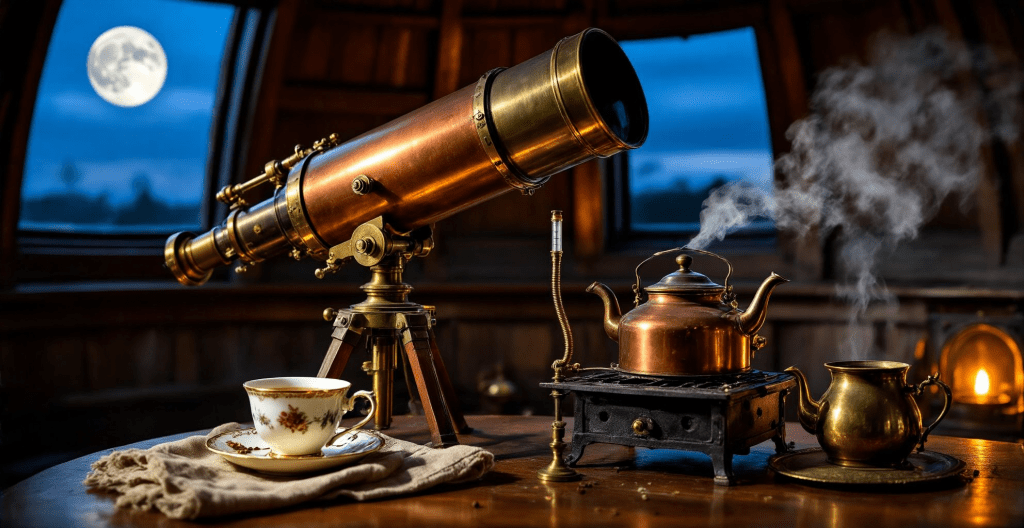
    In a lamplit dome, Victorian astronomers trialed a telescope driven by boiling tea, brass piping humming as it found remote stars. On clear nights it reportedly paused, considered the void, and screamed about the concept of infinity.

    Lab notes mention the kettle gauge peaking, steam haloing the eyepiece, and the ledger blotter hopping when the howl began. Condensation beaded on the tube in neat rows, as if taking attendance.

    A teaspoon vibrated across a saucer toward due north, then settled with a polite clink. Leaves in the spent basket drifted into tidy ellipses that matched last night’s observing plan.

    After each episode the instrument calmed when given fresh water and a biscuit it could not eat, then resumed polite stargazing. The focus wheel purred like a reconciled cat, and the dome felt relieved.

    “It is a boiling point guidance system with Victorian manners, inclined to contemplate the abyss at full whistle,” said Elda Fenn, kettle optics specialist at the Society for Gentle Astronomy.

    Small proofs keep steeping. The kettle lid stamps a faint ring that correlates with altitude, the stove ticks count out patient intervals, and a moony hush returns as the tube pivots to the next polite sparkle.

  • Archaeologists Uncover Encouraging Sandals, Count Steps and Compliments Alike

    Archaeologists Uncover Encouraging Sandals, Count Steps and Compliments Alike

    At a quiet hillside dig, archaeologists lifted a pair of sandals fitted with pressure plates meant to tally steps and murmur encouragement. The Latin guidance roughly renders as keep conquering, you are doing great, in a voice described as briskly supportive.

    Construction details read like a pocket pep band. Layered leather lies over narrow bronze reeds to make a whisper, a heel cavity holds a pebble abacus for counts, and a small clay resonator bead sits neatly at the strap.

    In testing, a light tap made the strap thread quiver and a soft puff of dust jump twice along the arch. A wax tablet beside them added a tidy stroke, as if the sandals kept their own minutes.

    Notch marks on the insole rise in steady intervals, the fifth slightly polished where encouragement seems to crest. Pebbles shift with a faint clack that matches the tally, then settle as if pleased.

    Field notes say the right sandal praised uphill effort while the left suggested a water break, both politely silent when the wearer paused to admire the view. The clay bead warmed a touch near a slope, then cooled when the sky was the only task.

    “It is wearable metronomy with manners, a small chorus for feet that prefers progress over speeches,” said Ilen Row, gait instrumentation lead at the Institute of Motivated Footwear.

    Small proofs keep accumulating. Dust trails bend toward the steeper path, the resonator bead shows ring wear at intervals that map to climbs, and the tablet’s strokes match the pebble counts exactly. Now the pair sits on felt, quiet until the table tilts like a hill.

  • Egyptologists Rebuild Bronze Applause Automaton, Confirms “Bold Move, My Sun”

    Egyptologists Rebuild Bronze Applause Automaton, Confirms “Bold Move, My Sun”

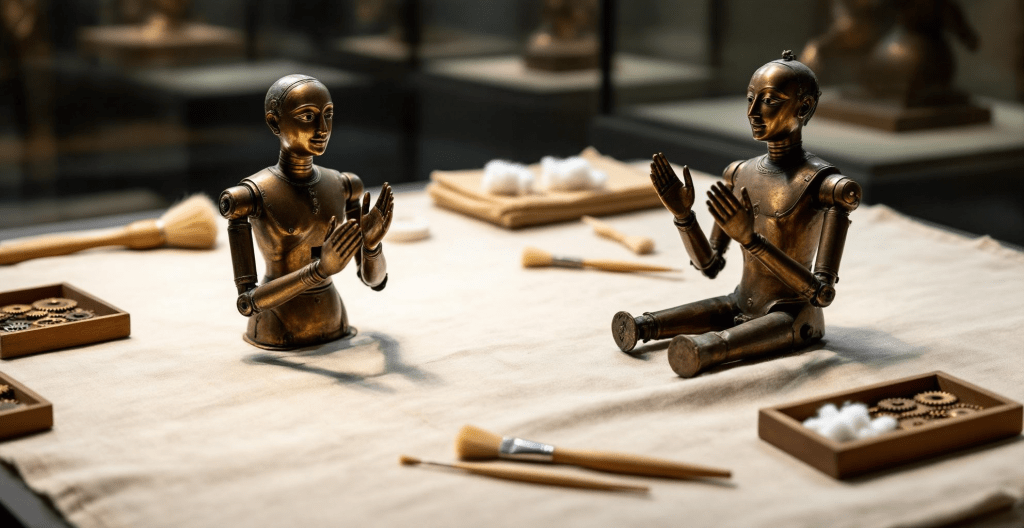
    In a quiet lab, Egyptologists have reconstructed a bronze automaton that once trailed pharaohs, applauding important decisions. Its only recorded utterance, coaxed from a reed bellows, translates as “bold move, my sun.”

    Construction notes list palm shaped clappers on spring wrists, a reed voice box tucked behind a grille, and a bronze toe that taps to keep royal tempo. Fine soot rims the mouth opening, and the clapper palms carry a bright polish along the outer fingers.

    In trials, the machine tracked a painted sun disk on the floor and began a slow clap the moment a door was decisively closed. A pressure quiver in the bellows preceded each praise, and the toe marked time with three neat taps before speech.

    Set beside a bowl of sand, the applause raised small dunes that settled into cartouche shapes, as if the room were signing the decision. The toe left a dotted path of metronome marks that curved gently east.

    “It is a ceremonial validator, tuned to conviction and sunward alignment,” said Nara Kel, automata conservator at the House of Kinetic Antiquities.

    When the door merely drifted, the device lifted its palms, reconsidered, and produced a single polite clap that sounded like a shrug. At a crisp latch, it delivered the full phrase, the reed resonator chiming with a faint papyrus rasp.

    After each session the automaton rotated to face the sunrise and waited, still as a statue. Lab logs show the same pattern every time, a tiny hiss from the bellows, a toe tap in triplet, and a quiet readiness for the next bold move.

  • Victorian Homes Briefly Lit Rooms With Static, Optimism, and Tinfoil

    Victorian Homes Briefly Lit Rooms With Static, Optimism, and Tinfoil

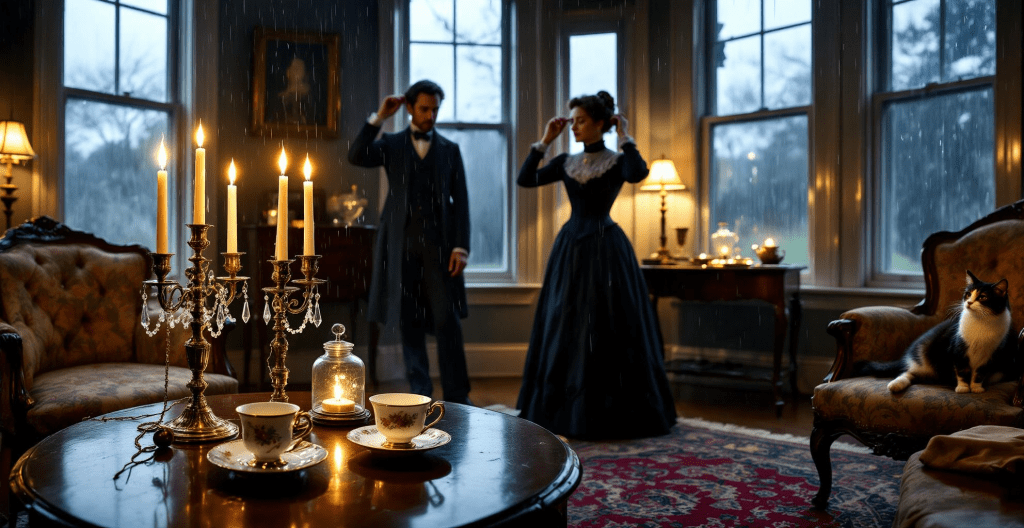
    Archives describe a short lived Victorian fad that promised candles powered by static electricity and good cheer. Households laid wool rugs, set out glass jars with brass caps, clipped thin tinfoil ribbons to candlesticks, and shuffled purposefully until the parlor agreed to glow.

    Evenings took on the air of modest experiments. An ebonite rod met a silk cloth, compliments circled the room, and wicks answered with a faint blue frill and a polite crackle. Flames brightened during toasts, thinned during talk of rainfall, and a stray spark often hopped to the doorknob like small applause.

    Material evidence remains tidy and persuasive. Parlor rugs show a narrow runway of scuff where slippers did their work. Brass finials keep a soft halo of fingerprints that refuses to polish away. Foil ribbons hold tiny pleats like well read pages, and the air keeps a whisper of beeswax with a hint of new ozone.

    “Think of it as morale assisted lighting,” said a museum conservator. “The static was real, the optimism helped, and both together made a very cooperative candle for a very dry night.” Records note that jars hummed gently when conditions were right, then went shy when the room lost its enthusiasm.

    The fashion dimmed with spring humidity. On damp days the candles sulked, their blue fringe retreating to a polite dot, and families kept the slippers anyway because the glide had grown popular. The jars became vases, the foil tucked into drawers, and the doorknob resumed its normal job with a faint, satisfied coolness.

    A few museum sets still sit quietly behind glass. Stand nearby, read the label in a friendly voice, and think something encouraging, and the wick seems to lean a fraction closer. For a moment the room brightens just enough to feel agreed upon, a modest glow powered by manners as much as charge.

  • Archaeologists Identify Communal Stone As Earliest Village News Feed

    Archaeologists Identify Communal Stone As Earliest Village News Feed

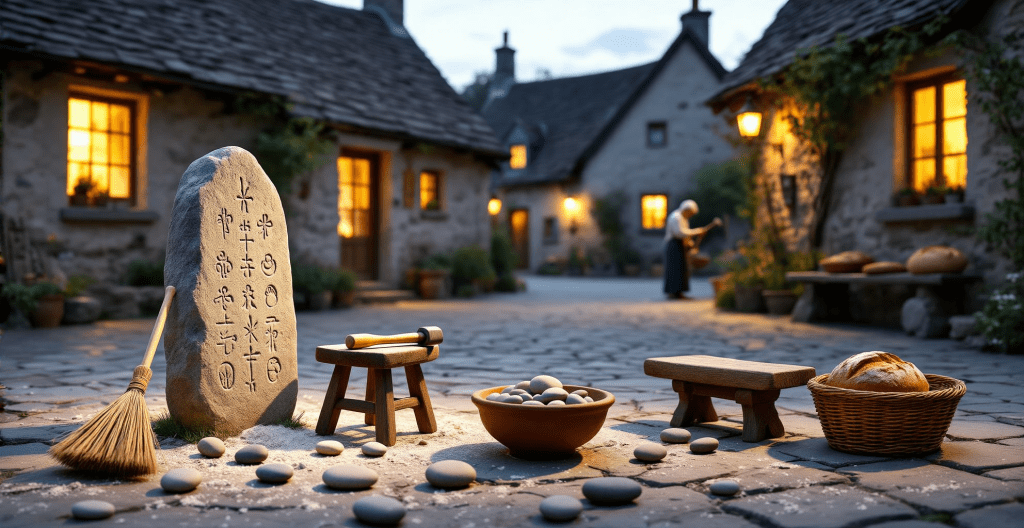
    Field notes from a cluster of hill villages describe a single slab that carried the day’s updates with remarkable efficiency. Residents carved brief status lines in shallow bands, reporting a fine catch, a mended roof, and the occasional goat with opinions. On market mornings the steward brushed the face, dampened it for contrast, and the square read itself in a courteous hush.

    Membership required simple steps: Add your name in the left margin, then tap a small symbol kept by the carver at the bottom. Moderation was prompt and very public. When friendships cooled, the steward issued a mallet and chisel, and the space returned to plain rock. The first recorded unfriend appears in a chapel log, three steady blows, a curl of chalk dust, and a tidy nod.

    Archaeologists point to lingering artifacts as proof of high engagement. The slab shows pale ovals where names were lifted away, neat absences among crowded lines. Chips collected on the ledge like quiet reactions, then disappeared on broom day. A faint groove along the base marks where the steward’s brush rested between posts.

    Evenings brought a predictable cadence. The stone held weather and intentions in cool relief. Tomorrow: roof patching, creek clearing, dried figs by the gate after noon. A chalked star signaled breaking news. A tiny fish indicated the catch of the day. No one argued with the interface. It was heavy.

    “The posting guidelines were obvious,” said one researcher. “Write briefly, carve legibly, and do not gossip about the millstone.” Slab etiquette also discouraged carving while annoyed. Officials recommend a cooling walk around the square before submitting any remarks about goats.

    By the time the feed faded at dusk, the village had a shared record and a swept ledge. The steward capped the water jar, the brush line dried, and plans for morning settled into the stone like headlines waiting on light.

  • Temple Fleet Comes Ashore, Mosaic Map Points Nowhere in Particular

    Temple Fleet Comes Ashore, Mosaic Map Points Nowhere in Particular

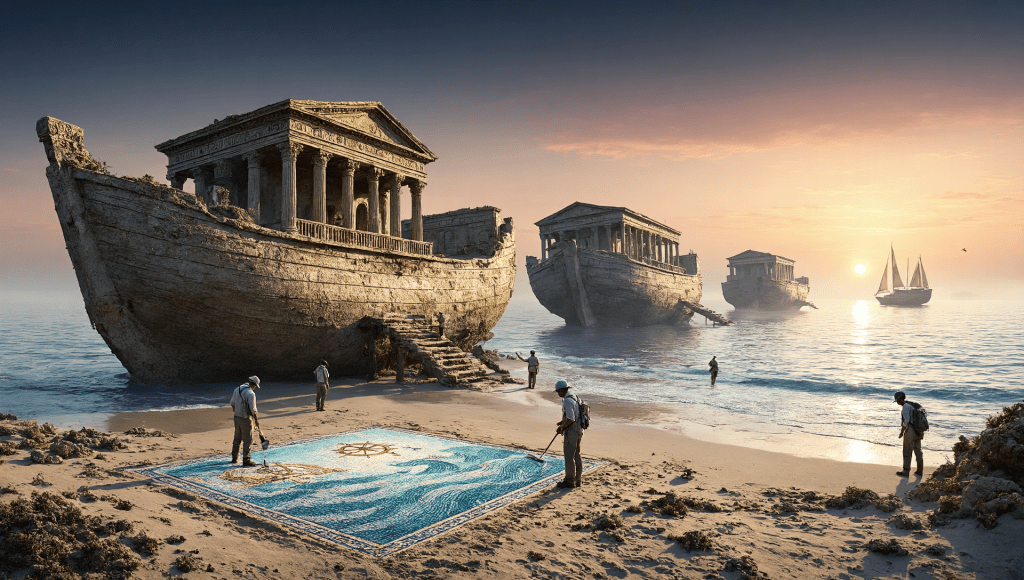
    Witnesses along a remote shoreline woke to an armada of stone vessels that look suspiciously like temples that set sail and never turned back. Each hull carries a porch and columns, all gently crusted with barnacles, and a tidy staircase that walks straight into the tide.

    Teams cordoned off a tide-level mosaic that shows a compass rose, stylized swells, and a faint legend that appears to read “continue until satisfied.” The tesserae flash at sunset, as if the map approves of the lighting.

    Inside the nearest vessel, surveyors recorded marble benches spaced like pews, plus mooring rings carved into the floor where hymnals might go. A stray gull has adopted the nave and insists on supervising.

    Divers say the stone keels are hollow in places, with shelves that look like they once held amphorae or very confident choir robes. The water inside is calm even when the waves outside disagree, which is either excellent engineering or good manners.

    Beachcombers keep returning curious items to the trench: a bronze cleat shaped like a laurel, a chipped pilot’s whistle, and a tile that reads as either “starboard” or “snack break” depending on the angle. Both options test well with the crew.

    “It is either a traveling sanctuary or a very ambitious picnic,” said Dr. Callie Mire, curator of nautical mysteries. “Until the mosaic stops pointing at itself, we will call it navigation adjacent.”

    At low tide the compass rose briefly aligns with a sailing dinghy on the horizon, then changes its mind and points toward a nicer patch of beach. The fleet does not move, but it does look pleased with its parking.

  • Egyptian Solar Saucers Warm Drinks With Sunlight And A Bit Of Poise

    Egyptian Solar Saucers Warm Drinks With Sunlight And A Bit Of Poise

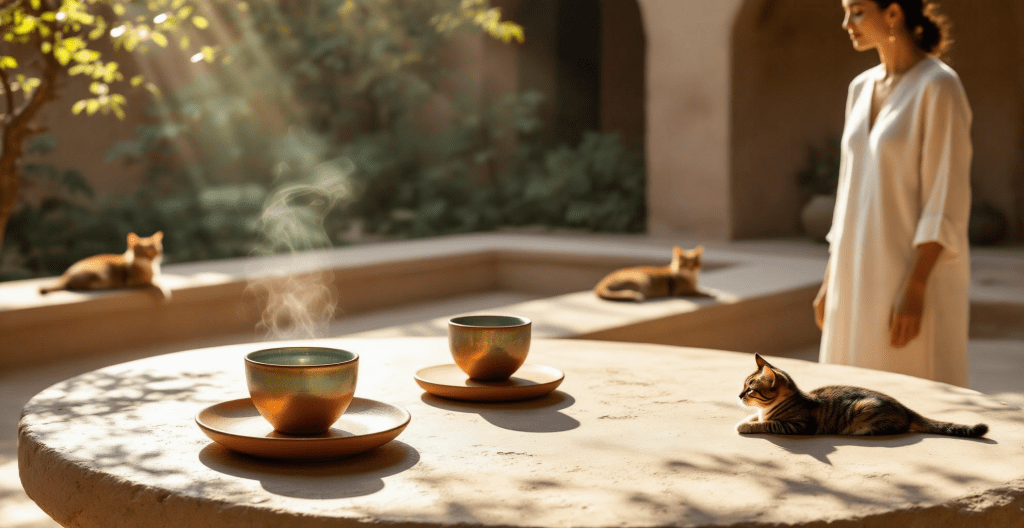
    Archaeologists have cataloged a suite of Egyptian clay saucers said to warm drinks with captured sunlight and mild arrogance. Each plate is a shallow disc with a bright burnished slip, a trim raised rim that faces the sun, and a discreet bump beneath that tilts the surface by a confident degree. They sit as if already halfway to noon.

    Household notes describe courtyards where cups of date tea were parked on these plates, angled toward the strongest light. The gloss gathers brightness like a patient mirror, heat pools under the clay, and the drink lifts a small wisp of steam as if encouraged. Owners report finer results near a polished stone and when the intention to enjoy a warm cup is stated plainly.

    Evidence clings to the ordinary. Courtyard tiles show pale crescents where saucers leaned, a few rims carry a sunward shine, and a mirror shard keeps its respectful angle beside a favored plate. Margins in reed pen add quiet remarks, tilt one finger higher, praise the cup before sipping, do not crowd the saucer while it is thinking.

    Modern tests find a modest rise in temperature and a faint shimmer above the glaze that looks very much like pride. In shade the plate cools slowly, not sulking, exactly deliberating, then settles with dignity. Thermometers behave obligingly and a timer clicks once as if to agree.

    Curators now keep them by skylights. Conservation linen remembers a mild heat, soft brushes rest with their bristles fluffed, and the gallery smells faintly of sun on pottery. The plates do not brag, they simply bask, pleased to be understood.

    By early afternoon a small cup feels encouraged, the clay hums with stored brightness, and the saucer, having done its tidy work, lets the warmth go on its way.

  • The Thought Steam Vessel Of A Certain Greek Study

    The Thought Steam Vessel Of A Certain Greek Study

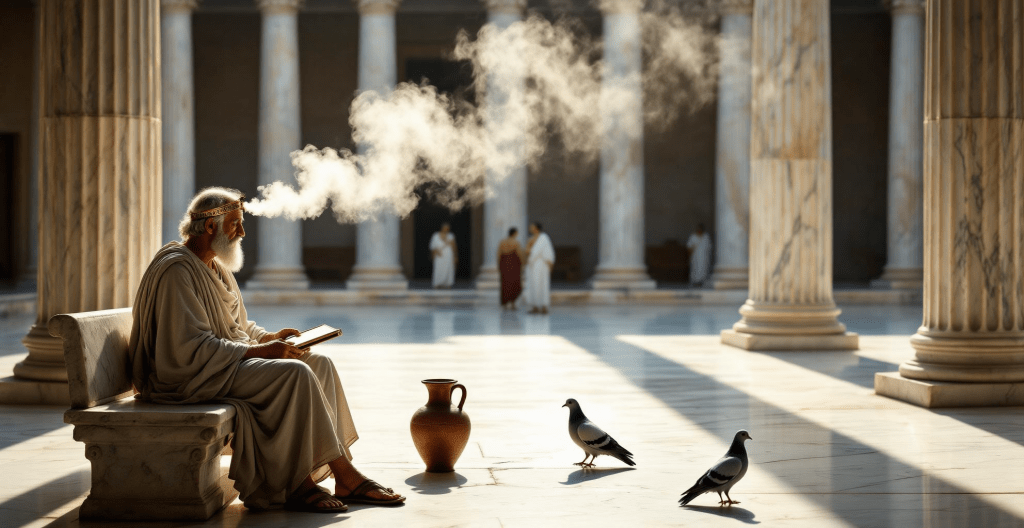
    Historians now suggest that a certain Greek thinker built a small apparatus that released a puff of steam whenever his thoughts aligned. The device did not hurry, it preferred conclusions to come to it.

    Notes from pupils describe lessons gently timed by pale vapor that rose, paused beneath the rafters, then thinned into the courtyard air. A reed valve was reportedly linked to a finger rest on his wax tablet, so when a proof settled, the pressure did too. The room learned to wait for that soft exhale before anyone spoke.

    The study shows its evidence. Wax tablets carry faint rings where warm air hovered, the lamp bowl wears a tidy crescent of soot that repeats at the same height, and the floor beside the tripod is scuffed into a neat half moon. The spout itself has a thumb-sized polish, as if gratitude were routinely aimed at it.

    In a modern reconstruction, a little olive oil heat and a saucer of water produced the same obedient plume above a tablet, leaving a soft ring of condensation by the stylus. Curators noted a clean mineral tang, lamp smoke as gentle as linen, and ceiling beams that seem to remember where the mist paused. Even the doorway gave a courteous draft that lifted the wisp and set it aside.

    Late in the afternoon the nozzle sometimes issues a single, satisfied sigh with no hand upon the tablet. The flame steadies, the stylus waits, and the silence feels comfortably explained, as if an idea has decided to stay where everyone can see it.

  • Pharaoh’s Purr-lift: Sand-Powered Elevators for Royal Cats

    Pharaoh’s Purr-lift: Sand-Powered Elevators for Royal Cats

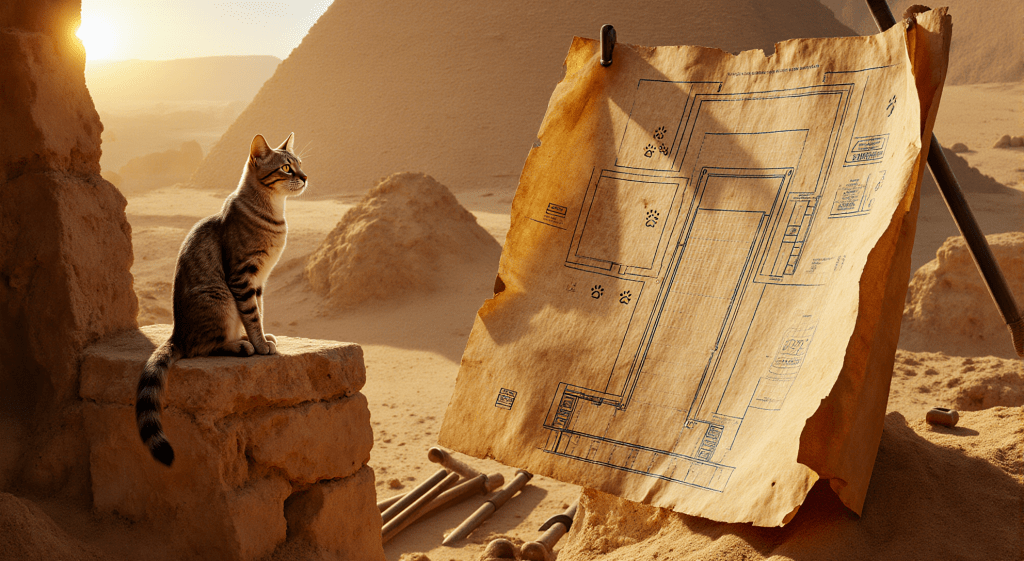
    The Egyptian desert has yielded many wonders, but few as delightfully perplexing as this. Archaeologists have uncovered blueprints suggesting the pyramids once housed fully operational, sand-powered elevators designed for the exclusive comfort of royal cats. Feline luxury did not begin in the modern living room. It was engineered into the very core of ancient architecture.

    According to newly found papyrus diagrams, the device ran on ingenious pulleys and precisely portioned sand. Palace cats hopped on, selected a preferred altitude, and enjoyed a gentle rise like the high society members they clearly were. The secret was a steady stream of desert sand, channeled with remarkable precision, doing all the heavy lifting while the cats lifted not a single whisker.

    Historians are already debating the true reach of feline power in ancient Egypt. Why settle for a lap when you could survey an entire kingdom from adjustable heights? Some accounts hint at sphinx-shaped levers for discerning paws. Others suggest that a decisive meow summoned a servant who handled the controls.

    This regal transport may also explain the famously smug expressions on cat statues. If you were chauffeured skyward along a pyramid face, an air of satisfied superiority would come naturally. Artists likely struggled to capture the full measure of that confidence with only stone and a well-placed smirk.

    Archaeologists point to intriguing paw prints near suspected elevator shafts, lending weight to the cat commute theory. There are even whispers of ancient workplace disputes between feline riders and pyramid builders, with a strict no-dogs-allowed policy enforced on these vertical chariots.

    With the plans in hand, researchers are eager to attempt a modern reconstruction. Success may depend on today’s cats agreeing to test the ride. History suggests they will participate only if the throne moves smoothly, the sand flows perfectly, and the treats arrive on schedule.

    So the next time you spot your cat napping on the fridge or surveying the living room from an improbable perch, remember the tradition they honor. Their preferred position is simple to understand. Rule from above and look magnificent doing it.

  • Insert Shell, Receive Olive: Rome’s Snack Tech Revealed

    Insert Shell, Receive Olive: Rome’s Snack Tech Revealed

    Archaeologists are buzzing after the discovery of what looks like the ultimate ancient convenience: Roman vending machines. Hidden beneath sunbaked layers of Italian soil, these clever contraptions reportedly dispensed plump olives in exchange for seashells, a currency that was both biodegradable and effortlessly beach-chic.

    Early findings suggest the process was delightfully simple. Slip a shell into a concealed slot and a perfectly portioned olive would tumble out, ready for citizens and centurions alike. No need to risk wrinkled togas or sandy snacks during a trip to the Forum. Parmesan might not have been on offer, but spotless fingers certainly were.

    Scholars now have questions by the amphora. Did the machine accept only pristine shells, or did chipped and weathered specimens count? Was there a premium tier for extra-juicy olives that required oversized shells gathered from distant shores? The debate over ancient exact change grows livelier with every trowel of dirt.

    Imagine the scene at the Colosseum’s snack corner. Crowds jostle gently for front-row seats and a handful of briny treats. Lines snake around the forum as gladiators and theater fans clutch shells with mounting anticipation, rehearsing their coin-free purchases.

    Evidence is stacking up. Carved slabs have surfaced with grooved slots and olive-branch motifs, alongside piles of well-worn shells and a suspicious abundance of ancient pits. The picture that emerges is a civilization deeply committed to snacking and even more devoted to convenience.

    With excitement running higher than an aqueduct arch, experts are already planning the next dig. The dream is to uncover a lost manual titled “Tips for Unjamming Olives,” or perhaps a stone plaque that reads “kick here” in elegant Latin.

    Modern vending machines may serve everything from fizzy drinks to chilled sandwiches, but the Romans appear to have pioneered the concept with style. A simple shell, a savory reward, and a city determined to keep togas tidy and hands gloriously clean.

  • Welcome to the Mesopotamian App Store, Please Lift Responsibly

    Welcome to the Mesopotamian App Store, Please Lift Responsibly

    Long before smartphones buzzed with alerts, the ancient Babylonians had their own version of an app store. Theirs involved more heavy lifting and far fewer battery issues. Picture a bustling Mesopotamian market where you “downloaded” the latest weather or lunar calendar app by selecting a smooth stone tablet from a vendor’s stall. No digital downloads here. Every feature was chiseled by hand by scribes with heroic forearms.

    Each tablet functioned like a modern app, only with more granite. Instead of tapping an icon, you hired a specialist with a hammer, a chisel, and a relentless urge to inscribe. Need weather guidance for the barley harvest? Reach for “Cloudy with a Chance of Clay.” Planning a festival by the moon? The “Lunar Lookout” slab never went out of style.

    Upgrades were headline news. When Cuneiform Calendar 2.0 arrived, quarries opened overnight to meet demand. Early adopters sprinted home with enormous slabs that boasted brand new icons and slightly crisper wedges. Version control meant adding another shelf to your living room.

    Storage was its own adventure. Nobody carried hundreds of apps in a pocket. Babylonian homes looked like tablet libraries, stacked high with stone programs that doubled as doorstops and conversation pieces. Who needed a gym membership when the hottest update could be measured in kilograms?

    Trendsetters paid a price for being cutting edge. Lopsided biceps became a status symbol, and “tablet back” was the talk of the bazaar. Still, nothing matched the thrill of holding “Travel Maps 1.0” fresh from the chisel. At least until “Travel Maps 2.0” dropped a season later and weighed even more.

    So the next time your phone stalls during an update, spare a thought for the Babylonian power users. Tapping a screen is easy. Chiseling your favorite app into stone took determination, patience, and a very good hammer.