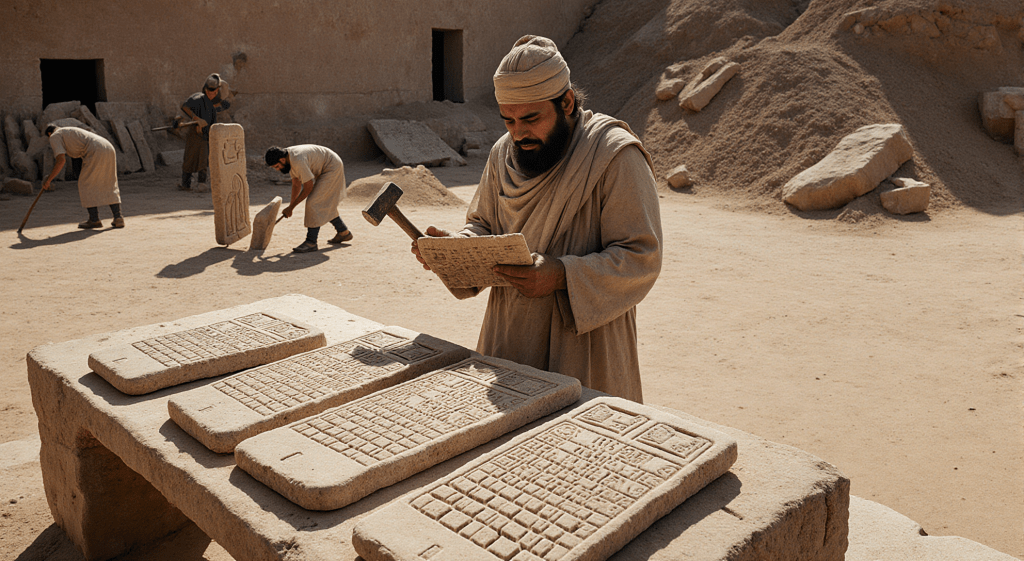
Long before smartphones buzzed with alerts, the ancient Babylonians had their own version of an app store. Theirs involved more heavy lifting and far fewer battery issues. Picture a bustling Mesopotamian market where you “downloaded” the latest weather or lunar calendar app by selecting a smooth stone tablet from a vendor’s stall. No digital downloads here. Every feature was chiseled by hand by scribes with heroic forearms.
Each tablet functioned like a modern app, only with more granite. Instead of tapping an icon, you hired a specialist with a hammer, a chisel, and a relentless urge to inscribe. Need weather guidance for the barley harvest? Reach for “Cloudy with a Chance of Clay.” Planning a festival by the moon? The “Lunar Lookout” slab never went out of style.
Upgrades were headline news. When Cuneiform Calendar 2.0 arrived, quarries opened overnight to meet demand. Early adopters sprinted home with enormous slabs that boasted brand new icons and slightly crisper wedges. Version control meant adding another shelf to your living room.
Storage was its own adventure. Nobody carried hundreds of apps in a pocket. Babylonian homes looked like tablet libraries, stacked high with stone programs that doubled as doorstops and conversation pieces. Who needed a gym membership when the hottest update could be measured in kilograms?
Trendsetters paid a price for being cutting edge. Lopsided biceps became a status symbol, and “tablet back” was the talk of the bazaar. Still, nothing matched the thrill of holding “Travel Maps 1.0” fresh from the chisel. At least until “Travel Maps 2.0” dropped a season later and weighed even more.
So the next time your phone stalls during an update, spare a thought for the Babylonian power users. Tapping a screen is easy. Chiseling your favorite app into stone took determination, patience, and a very good hammer.