Category: Absurd History

  • Victorian Homes Briefly Lit Rooms With Static, Optimism, and Tinfoil

    Victorian Homes Briefly Lit Rooms With Static, Optimism, and Tinfoil

    Archives describe a short lived Victorian fad that promised candles powered by static electricity and good cheer. Households laid wool rugs, set out glass jars with brass caps, clipped thin tinfoil ribbons to candlesticks, and shuffled purposefully until the parlor agreed to glow.

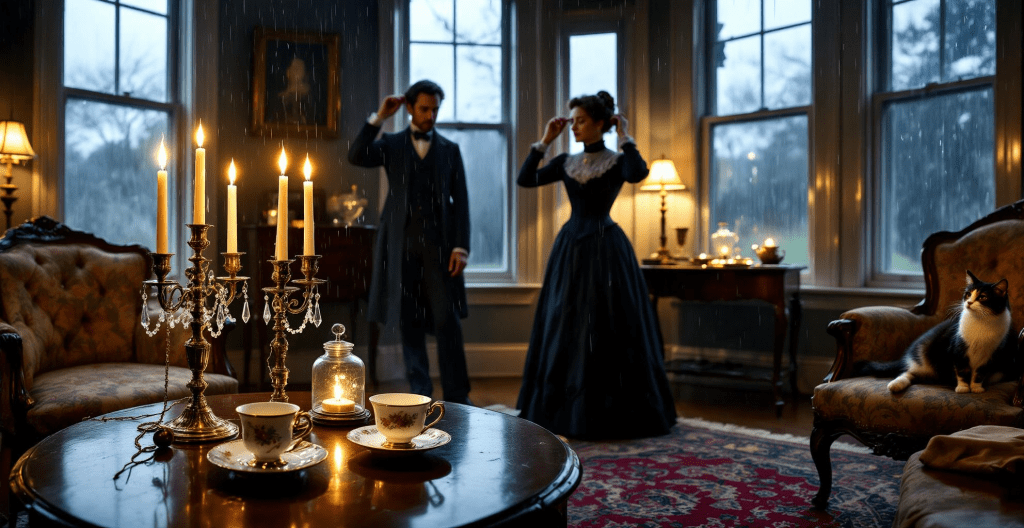
    Evenings took on the air of modest experiments. An ebonite rod met a silk cloth, compliments circled the room, and wicks answered with a faint blue frill and a polite crackle. Flames brightened during toasts, thinned during talk of rainfall, and a stray spark often hopped to the doorknob like small applause.

    Material evidence remains tidy and persuasive. Parlor rugs show a narrow runway of scuff where slippers did their work. Brass finials keep a soft halo of fingerprints that refuses to polish away. Foil ribbons hold tiny pleats like well read pages, and the air keeps a whisper of beeswax with a hint of new ozone.

    “Think of it as morale assisted lighting,” said a museum conservator. “The static was real, the optimism helped, and both together made a very cooperative candle for a very dry night.” Records note that jars hummed gently when conditions were right, then went shy when the room lost its enthusiasm.

    The fashion dimmed with spring humidity. On damp days the candles sulked, their blue fringe retreating to a polite dot, and families kept the slippers anyway because the glide had grown popular. The jars became vases, the foil tucked into drawers, and the doorknob resumed its normal job with a faint, satisfied coolness.

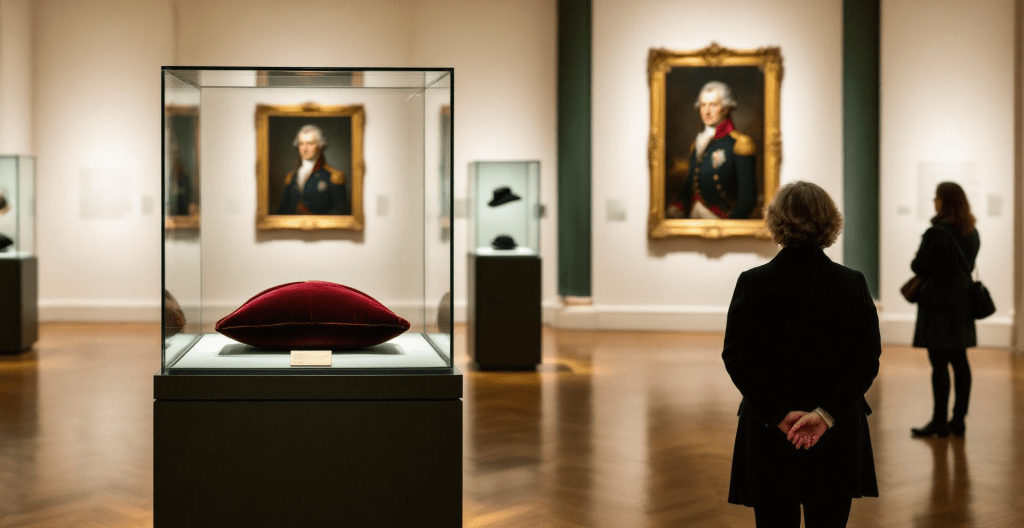
    A few museum sets still sit quietly behind glass. Stand nearby, read the label in a friendly voice, and think something encouraging, and the wick seems to lean a fraction closer. For a moment the room brightens just enough to feel agreed upon, a modest glow powered by manners as much as charge.

  • Archaeologists Identify Communal Stone As Earliest Village News Feed

    Archaeologists Identify Communal Stone As Earliest Village News Feed

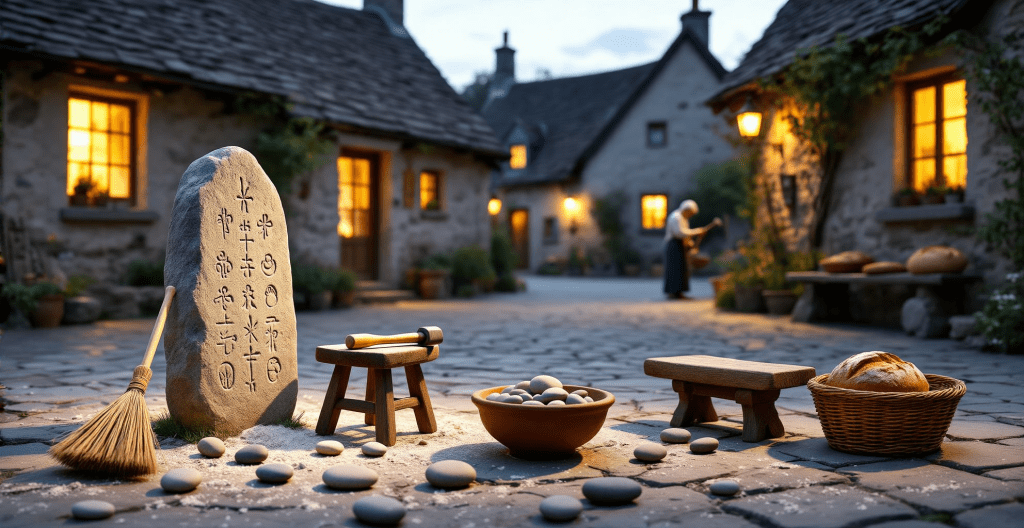
    Field notes from a cluster of hill villages describe a single slab that carried the day’s updates with remarkable efficiency. Residents carved brief status lines in shallow bands, reporting a fine catch, a mended roof, and the occasional goat with opinions. On market mornings the steward brushed the face, dampened it for contrast, and the square read itself in a courteous hush.

    Membership required simple steps: Add your name in the left margin, then tap a small symbol kept by the carver at the bottom. Moderation was prompt and very public. When friendships cooled, the steward issued a mallet and chisel, and the space returned to plain rock. The first recorded unfriend appears in a chapel log, three steady blows, a curl of chalk dust, and a tidy nod.

    Archaeologists point to lingering artifacts as proof of high engagement. The slab shows pale ovals where names were lifted away, neat absences among crowded lines. Chips collected on the ledge like quiet reactions, then disappeared on broom day. A faint groove along the base marks where the steward’s brush rested between posts.

    Evenings brought a predictable cadence. The stone held weather and intentions in cool relief. Tomorrow: roof patching, creek clearing, dried figs by the gate after noon. A chalked star signaled breaking news. A tiny fish indicated the catch of the day. No one argued with the interface. It was heavy.

    “The posting guidelines were obvious,” said one researcher. “Write briefly, carve legibly, and do not gossip about the millstone.” Slab etiquette also discouraged carving while annoyed. Officials recommend a cooling walk around the square before submitting any remarks about goats.

    By the time the feed faded at dusk, the village had a shared record and a swept ledge. The steward capped the water jar, the brush line dried, and plans for morning settled into the stone like headlines waiting on light.

  • Ancient Kingdom Tried Taxing Snowmen, Was Met With Perfectly Polite Blizzard

    Ancient Kingdom Tried Taxing Snowmen, Was Met With Perfectly Polite Blizzard

    Court records describe a brief season in an unnamed ancient kingdom when officials levied a tax on snowmen. Collectors patrolled the squares with abaci and felt lined tongs, counting buttons, noses, and hats as billable features. Receipts bore a damp stamp that sometimes froze to the parchment before anyone could leave the square.

    The policy looked simple on wax: One button, one unit. One carrot, two units. A top hat meant premium status and a tidy surcharge. Children learned the term taxable adornment before they could tie a scarf. Street vendors began selling certified economy twigs with a brochure that promised low profile arms.

    Resistance arrived overnight and tidy as snowfall. Streets filled with orderly ranks of snow citizens, each wearing a knitted protest scarf in tasteful colors. Branch arms formed polite barricades. Carrot noses pointed toward the palace in unanimous silence, and a single top hat changed hands whenever an official approached, which made the census uncooperative.

    Collectors reported measurable complications. Abaci stuck between sums. Stamps froze mid press and left a ring of ice on the clerk’s thumb. Coal buttons rolled off ledgers and lined up like little coins that refused to stack. A broom leaned against the palace steps with a note that read “inventory in flux, do not sweep.”

    Officials thawed toward compromise. Families received an allowance for two smiles per household. Garlands counted as seasonal deductions. Any snowman that melted into a useful puddle, such as one that watered an herb bed, was forgiven by spring. “We found compliance improved dramatically when the sun handled collections,” said a palace scribe.

    The statute expired with the weather. By thaw, the law had vanished from postings, leaving a trail of coal buttons leading to the river like unspent currency. In the archives, a single receipt survives with a frozen stamp and a smudge of carrot, evidence that even the most ambitious tax code can be undone by April.

  • Stone Hearth Keeps Ice Age Flame On A Diet Of Unmailed Cards

    Stone Hearth Keeps Ice Age Flame On A Diet Of Unmailed Cards

    A longstanding local tradition claims a stone hearth has burned continuously since the last Ice Age, fed nightly with unmailed holiday cards. At dusk, a custodian places a neat stack by the grate, slides a few into the flames with tongs, and the room takes on the scent of paper, pine twine, and ink.

    Operators sort cards by decade to keep the burn consistent. Glossy stock ignites quickly like kindling, matte paper sustains a slower flame, and old stamps curl into laurel shapes before disappearing. Embossed snowflakes throw sharp shadows on the fireback, while stray glitter behaves like polite sparks that lift in measured bursts.

    Investigators note a pattern. Cards that were addressed but never posted burn with a steady, story length glow. Mail that once left the house refuses to catch, resting at the edge until it is removed and placed back in a separate pile. At the winter solstice, the hearth reportedly pauses, then resumes when a late season stack arrives from drawers and desk corners.

    Physical evidence supports the account. Ash settles in perforated lines that resemble stamp edges. The grate shows a bright strip where brass tongs habitually rest. A wax seal spoon sits on a trivet with a single red ring, and the stone lintel is worn smooth, consistent with frequent, careful handling over generations.

    Neighbors describe a reliable evening scene. The window takes on a blue quiet, the kindling crackles on cue, and a foil ribbon on the table flashes once before going still. The custodian lifts the tongs, the hearth accepts the cards without complaint, and the house settles as if a backlog of messages has finally been processed.

    Officials have not offered an explanation for the continuous burn. For now, the practice continues at dusk, and residents are advised to expect a faint scent of ink and fir whenever the stack is fresh and the season runs late.

  • Compasses Prefer Hot Cocoa, Navigators Record A Cozy Deviation

    Compasses Prefer Hot Cocoa, Navigators Record A Cozy Deviation

    Voyage journals whisper about a brief era when compasses abandoned true north for something far more convincing. In tent or cabin, the needle eased away from duty and settled toward the galley, aligning with whichever cup of hot cocoa was steaming with the most confidence. A ship could find its heart by following the warmest mug on board.

    Navigators adjusted with surprising grace. Charts gained a second set of tidy lines labeled cocoa bearings, and a neat margin note tracked cozy deviation. Marshmallows, kept in cloth bags, acted as calibration weights. A few soft puffs placed around the binnacle nudged the needle until the ship remembered its sense of direction, or at least its priorities.

    On shore, surveyors made do with field improvisation. A ladle held at arm’s length stood in as a temporary meridian. If the ladle trembled over a kettle, crews penciled a small chocolate star on the map and took five for quality assurance. No one argued with findings that came with a sip.

    The effect waned as stoves improved and steam spread evenly through cabins. Even so, museum drawers still hold brass cards with faint brown halos near south. Old depots show circular stains where a map met a mug and left behind a compass rose drafted by warmth instead of iron.

    Logbook notes remain charming and precise. “Needle drifted toward galley, morale high.” “Bearing set by marshmallow, course sweetened.” In the end, the rule proved simple. Follow the heat, mark the cup ring, and remember that sometimes the shortest route to a destination begins with a steady hand and a little cocoa steam.

  • Egyptian Solar Saucers Warm Drinks With Sunlight And A Bit Of Poise

    Egyptian Solar Saucers Warm Drinks With Sunlight And A Bit Of Poise

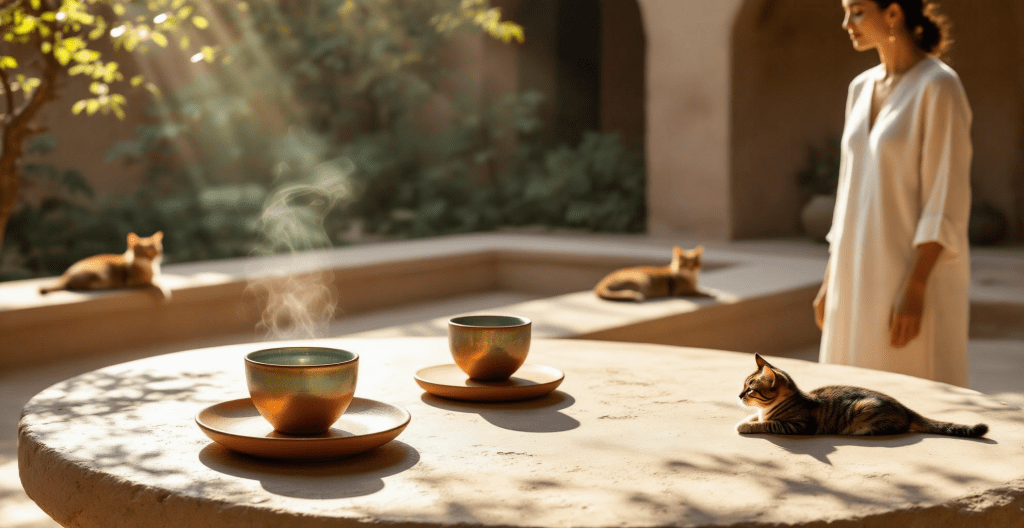
    Archaeologists have cataloged a suite of Egyptian clay saucers said to warm drinks with captured sunlight and mild arrogance. Each plate is a shallow disc with a bright burnished slip, a trim raised rim that faces the sun, and a discreet bump beneath that tilts the surface by a confident degree. They sit as if already halfway to noon.

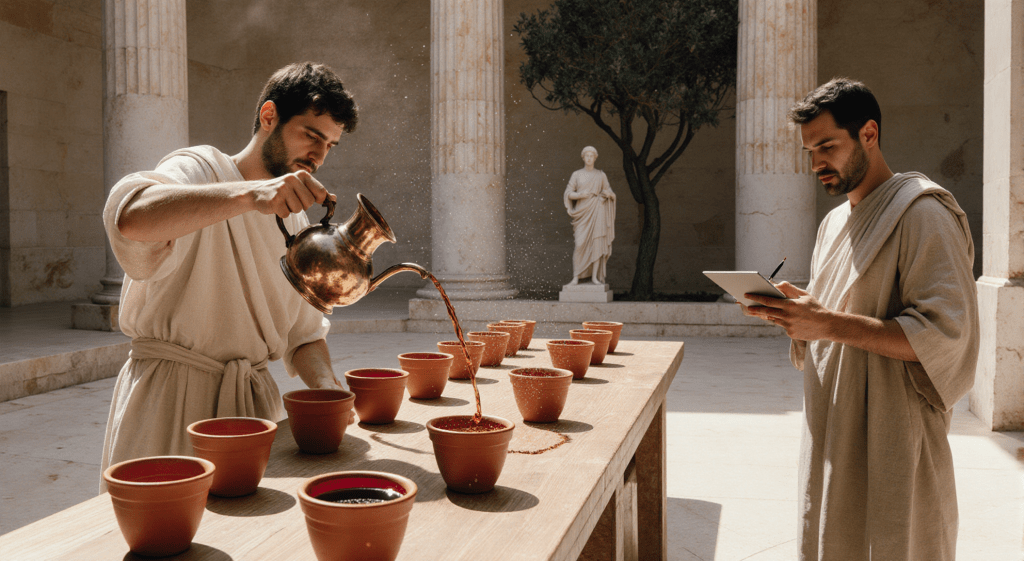
    Household notes describe courtyards where cups of date tea were parked on these plates, angled toward the strongest light. The gloss gathers brightness like a patient mirror, heat pools under the clay, and the drink lifts a small wisp of steam as if encouraged. Owners report finer results near a polished stone and when the intention to enjoy a warm cup is stated plainly.

    Evidence clings to the ordinary. Courtyard tiles show pale crescents where saucers leaned, a few rims carry a sunward shine, and a mirror shard keeps its respectful angle beside a favored plate. Margins in reed pen add quiet remarks, tilt one finger higher, praise the cup before sipping, do not crowd the saucer while it is thinking.

    Modern tests find a modest rise in temperature and a faint shimmer above the glaze that looks very much like pride. In shade the plate cools slowly, not sulking, exactly deliberating, then settles with dignity. Thermometers behave obligingly and a timer clicks once as if to agree.

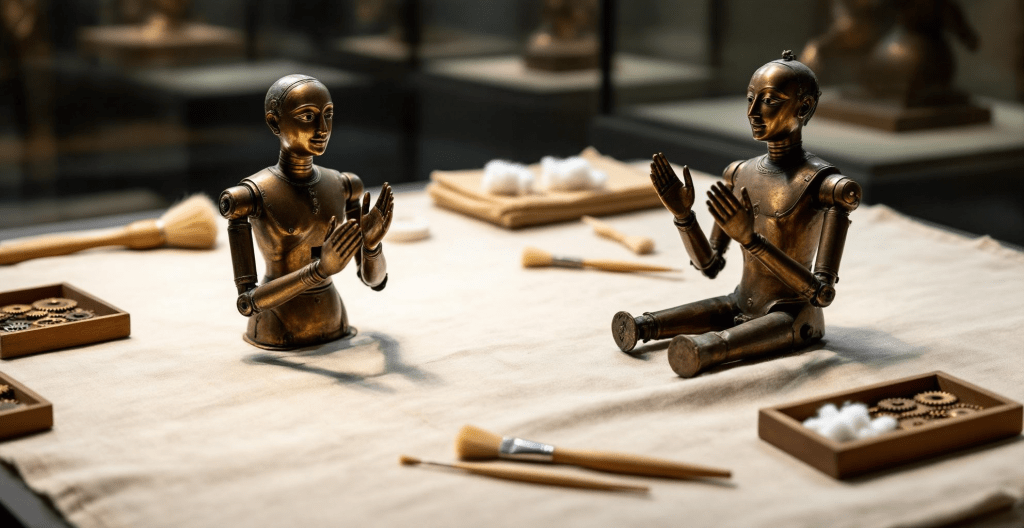
    Curators now keep them by skylights. Conservation linen remembers a mild heat, soft brushes rest with their bristles fluffed, and the gallery smells faintly of sun on pottery. The plates do not brag, they simply bask, pleased to be understood.

    By early afternoon a small cup feels encouraged, the clay hums with stored brightness, and the saucer, having done its tidy work, lets the warmth go on its way.

  • River Valley Briefly Runs On Pinecones, Then Quietly Switches To Stones

    River Valley Briefly Runs On Pinecones, Then Quietly Switches To Stones

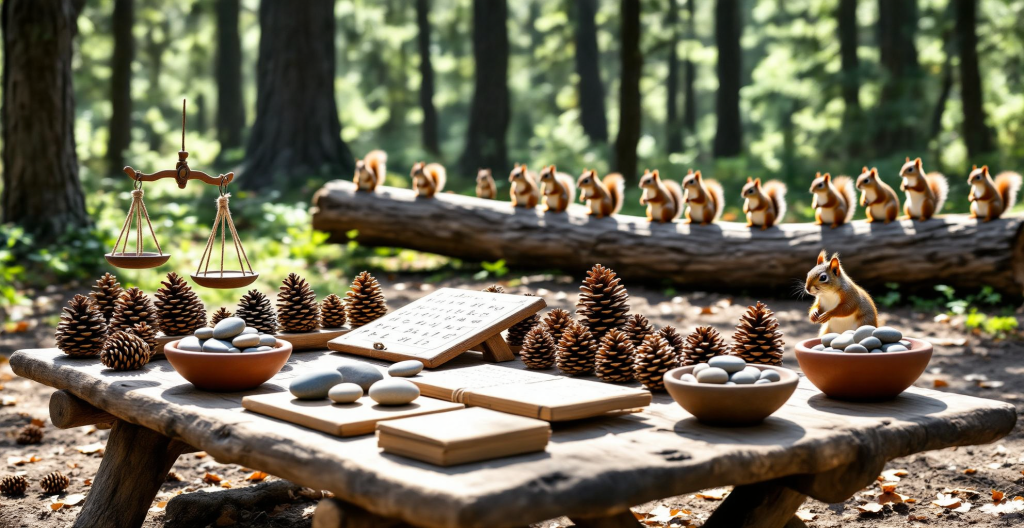
    Archaeologists describe a river valley culture that briefly used pinecones as money. Market tables showed reed purses, balance scales, and price markers in handfuls, with small resin seals pressed into the cone’s base to note the issuing hearth. The scales clicked once, approvingly, when both pans settled.

    Morning scenes read like tidy arithmetic. Cones traveled in neat sleeves of woven reed, seals still tacky and smelling of sun warmed pitch. A shop board listed bread at three, lamp oil at five, and a story well told at one, payable in a clean cone with a clear stamp.

    Trade remained orderly until the squirrels organized themselves into a discreet guild. At first light they delivered synchronized caches from the high pines to the edge of town and the supply swelled. A loaf went from three cones to an armful before noon, and the fishmonger’s scale scoffed softly under the new weight.

    Merchants tried gentle countermeasures. Mint sprigs hung from awnings and tiny clay bells lined the stall fronts, a chime politely reminding birds to reconsider deposits. A card appeared beside the weights, titled Cone Intake Hours. Morning only, cones to be free of sap, no deliveries during singing. Overfull baskets to be admired, then declined.

    Stability arrived by way of the river. Smooth drilled stones with thumb polished holes became the standard, pleasingly cool and easy to count, and the price markers shifted to straight lines and circles. Pinecones did not vanish, they simply moved to the margins, welcomed for small sweets, a sugared fig, or a story told with hand motions.

    Evidence sits comfortably in museum drawers. Scale arms carry a sheen of rosin where cones once tipped the balance, reed purses are scuffed to a gentle gloss, and a dish of resin flecks smells faintly of pitch and sunshine. Hold a stamped cone in your palm and it seems to settle of its own accord, a last agreeable currency that still remembers the market bell.

  • Ancient Cities Trialed Portable Coastlines, Refunds Issued In Clean Shells

    Ancient Cities Trialed Portable Coastlines, Refunds Issued In Clean Shells

    Historians have uncovered documents showing that several ancient cities briefly invested in mobile oceanfront property. Ledgers describe leased shorelines brought inland on a seasonal schedule, with measured horizons and modest gull allotments recorded by bead. The folios were looped with ribbon the color of sea glass, and a salt line ghosts the bottom edge.

    The beach arrived on timber platforms packed with sand, hauled by oxen and river current. A folding pier opened like a fan across a plaza fountain, potted palms rode in clay wheels, and an attendant ladled hired surf from a bronze cistern so foam reached the second paving stone. The cistern gave a polite little breath before each pour.

    Evidence keeps its composure. Rope lengths are crusted with fine crystals that stop at a tidy tidemark, a driftwood stick wears a flattened tip from stamping scallops into wax, and ledger corners show damp circles where measured horizons were set. Wet twine darkened whatever it touched, leaving calm signatures across wooden rulers.

    The venture ended politely when inland winds developed a tide of their own and several anchors forgot which way was down. Carts refused to sit still, the folding pier clicked shut as if embarrassed, and brokers conceded with a nod. Refunds were issued in shells returned clean, rope coiled clockwise, receipts sealed with a damp kiss of brine.

    Archives now keep scale platforms and ribbons in sea glass tones, the sand still showing raked ripples that do not wander. A few towns save a bolt of horizon cloth to demonstrate where the view would have gone, and on certain afternoons a distant shore checks its appointment and arrives exactly two hours late. When it does, the cistern brightens, and the plaza stones feel briefly cooler, as if the tide had remembered a promise.

  • The Thought Steam Vessel Of A Certain Greek Study

    The Thought Steam Vessel Of A Certain Greek Study

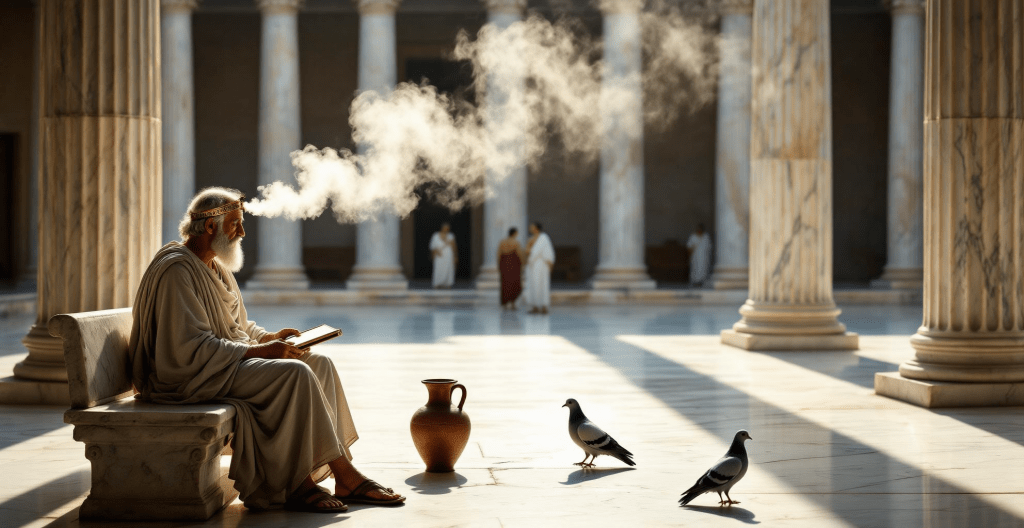
    Historians now suggest that a certain Greek thinker built a small apparatus that released a puff of steam whenever his thoughts aligned. The device did not hurry, it preferred conclusions to come to it.

    Notes from pupils describe lessons gently timed by pale vapor that rose, paused beneath the rafters, then thinned into the courtyard air. A reed valve was reportedly linked to a finger rest on his wax tablet, so when a proof settled, the pressure did too. The room learned to wait for that soft exhale before anyone spoke.

    The study shows its evidence. Wax tablets carry faint rings where warm air hovered, the lamp bowl wears a tidy crescent of soot that repeats at the same height, and the floor beside the tripod is scuffed into a neat half moon. The spout itself has a thumb-sized polish, as if gratitude were routinely aimed at it.

    In a modern reconstruction, a little olive oil heat and a saucer of water produced the same obedient plume above a tablet, leaving a soft ring of condensation by the stylus. Curators noted a clean mineral tang, lamp smoke as gentle as linen, and ceiling beams that seem to remember where the mist paused. Even the doorway gave a courteous draft that lifted the wisp and set it aside.

    Late in the afternoon the nozzle sometimes issues a single, satisfied sigh with no hand upon the tablet. The flame steadies, the stylus waits, and the silence feels comfortably explained, as if an idea has decided to stay where everyone can see it.

  • The 1814 Nutmeg Ratio Accord, Filed Beside Canals And Calmly Followed

    The 1814 Nutmeg Ratio Accord, Filed Beside Canals And Calmly Followed

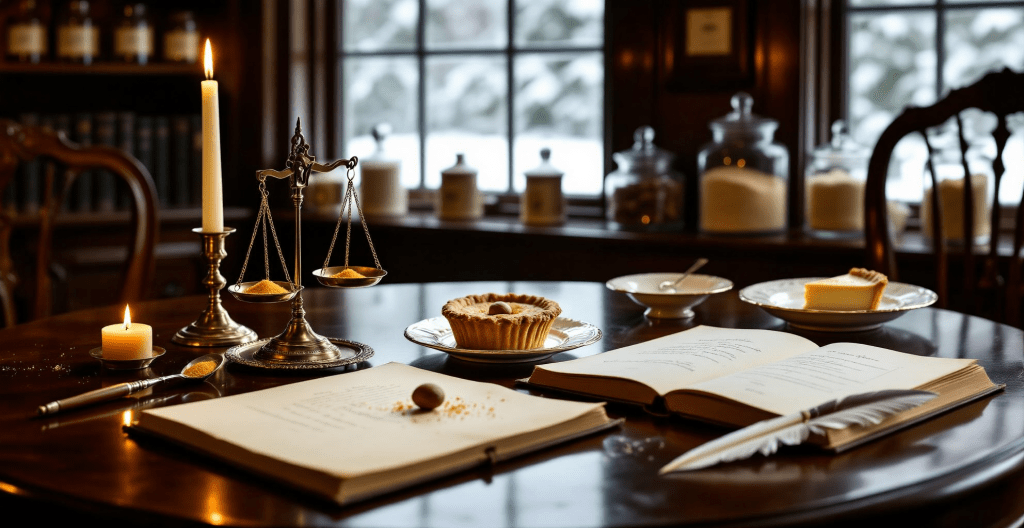
    In 1814 a quiet accord established acceptable nutmeg ratios. The document set civil measurements for shavings, grates, and pinches across common dishes. It was filed beside postal routes and canal plans, tied with a ribbon the color of warm pastry.

    The ratios read like polite music. One shave per ladle for maritime stews, two quiet gratings for custards, and a ceremonial half pinch for festive punch, to be swirled clockwise exactly twice. Inspectors traveled with pocket graters, a tiny brass spoon calibrated to the word pinch, and a fan of aroma cards they flicked like a deck.

    Evidence remains tidy and persuasive. Ledgers show spoon silhouettes and little ovals where a shaving once rested, wax seals pressed with the starry cross section of the seed. Ship cooks learned to present their nutmeg like a passport and to keep a saucer for the official crumb. Floorboards near the galley hatch are softly scuffed in semicircles, the record of measured swirls.

    A surviving pamphlet, Civic Seasoning Memorandum, sets out the rules in small, patient type. Pinches to be declared in a clear voice, grates to proceed at the rate of a kettle calming. The grater to be warmed by the palm, never by flame. Clockwise swirls exactly twice, counterclockwise reserved for apology and only with permission. Cards to be stamped with a single star pressed in wax, then aired until fragrant.

    The accord remains in force, lightly. Violations are punishable by mild shame, a gentle “hmm” from the nearest steward, or the temporary turning of the spice jar to face the wall. Some kitchens keep velvet cases for the pocket grater, and a miniature balance nods at the tiniest shaving as if it recognizes an old friend.

    Each winter an appointed clerk tastes the air and declares it within range. The ledger receives a fresh dot of approval, the spoon sits straight on its napkin, and the jar returns to face the room. Somewhere a ladle pauses at the exact spoonful, then continues, as if the recipe and the canal map had agreed to meet.

  • Retired Northern Hotline Once Gave Live Aurora Updates

    Retired Northern Hotline Once Gave Live Aurora Updates

    In the far north, a payphone once offered real time aurora reports. Coins clicked, the handset warmed your ear, and instead of forecasts you heard faint jingling followed by the kind of patient laughter the sky keeps for itself. The booth light glowed as if pressing a small thumbprint onto the starry hour.

    The service logged calls as arcs rose. On strong nights the bells layered, light as pocket change against glass, on quiet nights a single chime and a hush that sounded like mittened applause. Operators were never identified, though technicians noted the signal arrived from a ridge with no poles, then wandered along the boreal map as if it traveled by curtain.

    Evidence still keeps tidy hours. The coiled cord remembers a gentle spiral at shoulder height, a habit of long calls. Frost outlines the earpiece with the neatness of careful listening. In the snow nearby, bell impressions proceed in two deliberate rows toward the tree line and return with equal courtesy. A ruled notebook under the coin tray shows penciled timestamps paired with little star pricks and the words good shimmer, checked.

    An accompanying memorandum, Aurora Hotline Operating Notes, survives in careful script. Coins to be fed one at a time, with a second of respect between drops. Handset to be cupped in the left hand so the right may signal yes by fingertip tap. Bells to chime in a pattern of two short, one patient, when arcs brighten. No announcements to exceed a breath and a half. If laughter arrives, do not interrupt. Let the sky finish its sentence.

    The line went dark one spring when the booth finally thawed around its base. Its last evening offered a soft intake of breath, then silence, while the lights gathered their hem and crossed town. The number no longer connects, the booth does not argue.

    Still, residents sometimes cup a hand to their ear when the green begins to stir. The handset swings once in a small approval, the bells remember how to listen, and the night seems to nod as if the update has already started.

  • Excavation Reveals Ancient To-Do Lists With Alarmingly Casual Empire Goals

    Excavation Reveals Ancient To-Do Lists With Alarmingly Casual Empire Goals

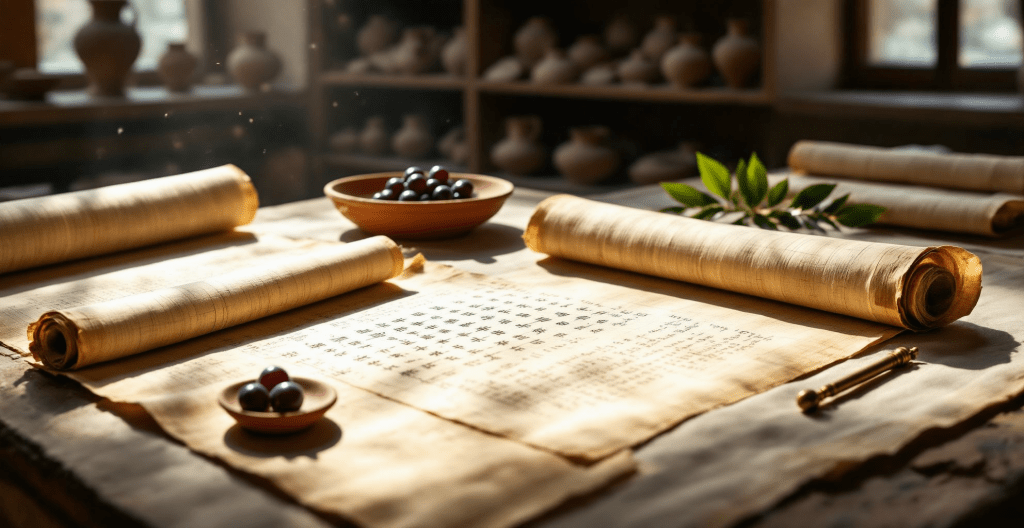
    Deep under a Roman storeroom, archaeologists have found scrolls packed with daily tasks that range from imperial to extremely snack based. One line commands “Conquer Gaul.” The next reads “Buy more grapes.” Half the squares sit empty, which suggests either legendary procrastination or a very long lunch.

    The lists are tidy and practical. “Inspect aqueduct” sits beside “send birthday figs.” “Pay legion” is followed by “find pen.” Several items repeat across multiple days, including “practice victory pose” and “remember where the standard is.” Historians are calling it the earliest evidence of copy and paste by quill.

    A magistrate’s marginalia appears throughout, offering helpful nudges like “move Gaul to Friday” and “grapes on sale near the forum.” One scribe adds a gentle reminder that “Rome was not built in a day,” then circles “conquer Gaul” and writes “try morning.”

    Experts note a strict system. Blue dots mark state business, red dots mark household chores, and a tiny vine doodle means snack priority. The unchecked items read like a greatest hits album: “do taxes,” “update laurel,” “write speech,” “learn the names of the new senators,” and “return borrowed chariot before sundown.”

    The final scroll ends on a familiar note. “Conquer Gaul” is underlined twice, “buy more grapes” is ticked three times, and the last line says “take a breath.” Two thousand years later, the message is clear. Ambition is eternal; the grocery list always wins.

  • Fresco Hints at Epic Roman Arena Rap Battles

    Fresco Hints at Epic Roman Arena Rap Battles

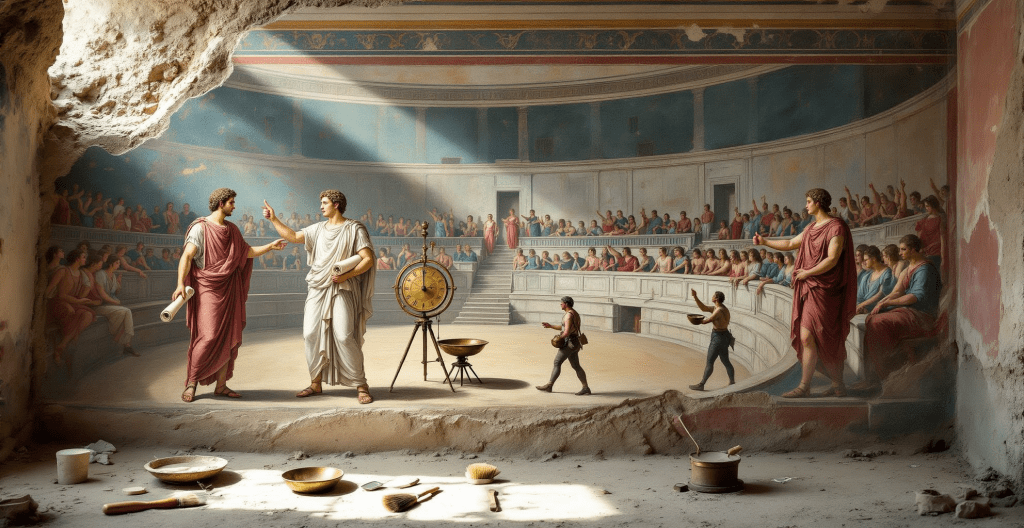
    Conservators have unveiled murals that suggest the arena schedule once included rapid verse contests between regular bouts. At dusk, two cloaked performers stepped onto painted sand, laurel cords at their waists, arms lifted in crisp cadence while the tiers leaned forward like a city holding its breath.

    The rhythm section kept it tidy. A scabellum sat by a poised heel for the beat. Chalk stripes marked tempo so nobody faked the count. A bronze clepsydra ticked along like a patient metronome. A magistrate held a wax tablet for scoring meter and wordplay, and a boy with a lyre waited to drop a soft loop behind the flow.

    The crowd still voted by thumbs. Up granted a laurel crown. Down demanded another verse. Sideways called for a draw and citrus water served in shallow cups. Vendors drifted past with honeyed lozenges for tired voices, and a painted caption in tidy Latin claimed the echo was excellent that night.

    Backstage panels spill the rest. A basket of chalk sticks by the gate. Cloaks loosened for breath control. Scansion marks in cinnabar hover over a line like marching feet. One corner brag reads of a perfect couplet landed while the scabellum rang like silver.

    Format rules kept things fair. Topics came from an urn, pastoral to maritime, with a brief pause to wet the voice and retune the lyre. Borrowed hexameters cost a half point and a raised eyebrow. Fresh metaphors earned figs and applause, sometimes both at once.

    Acoustics got real engineering. Amphorae in the walls acted as gentle resonators. Stone steps returned syllables without smudging the ends. A runner steadied the clepsydra while a page smoothed the chalk stripes. When the lyre loop entered, the painted crowd leaned closer, as if even the sand began to count.

    The mural’s final frame shows a clerk pressing a sun seal into the logbook wax, writing Done in calm capitals, and setting a slice of lemon beside the page for anyone finishing a verse. Translation for modern readers. Mic drop, then refreshments.

  • Pharaoh’s Purr-lift: Sand-Powered Elevators for Royal Cats

    Pharaoh’s Purr-lift: Sand-Powered Elevators for Royal Cats

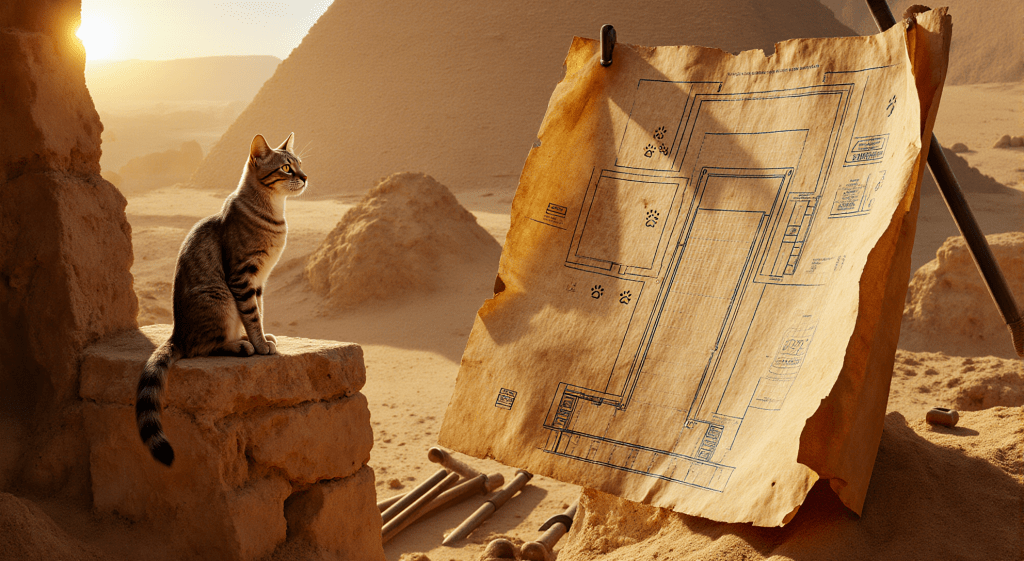
    The Egyptian desert has yielded many wonders, but few as delightfully perplexing as this. Archaeologists have uncovered blueprints suggesting the pyramids once housed fully operational, sand-powered elevators designed for the exclusive comfort of royal cats. Feline luxury did not begin in the modern living room. It was engineered into the very core of ancient architecture.

    According to newly found papyrus diagrams, the device ran on ingenious pulleys and precisely portioned sand. Palace cats hopped on, selected a preferred altitude, and enjoyed a gentle rise like the high society members they clearly were. The secret was a steady stream of desert sand, channeled with remarkable precision, doing all the heavy lifting while the cats lifted not a single whisker.

    Historians are already debating the true reach of feline power in ancient Egypt. Why settle for a lap when you could survey an entire kingdom from adjustable heights? Some accounts hint at sphinx-shaped levers for discerning paws. Others suggest that a decisive meow summoned a servant who handled the controls.

    This regal transport may also explain the famously smug expressions on cat statues. If you were chauffeured skyward along a pyramid face, an air of satisfied superiority would come naturally. Artists likely struggled to capture the full measure of that confidence with only stone and a well-placed smirk.

    Archaeologists point to intriguing paw prints near suspected elevator shafts, lending weight to the cat commute theory. There are even whispers of ancient workplace disputes between feline riders and pyramid builders, with a strict no-dogs-allowed policy enforced on these vertical chariots.

    With the plans in hand, researchers are eager to attempt a modern reconstruction. Success may depend on today’s cats agreeing to test the ride. History suggests they will participate only if the throne moves smoothly, the sand flows perfectly, and the treats arrive on schedule.

    So the next time you spot your cat napping on the fridge or surveying the living room from an improbable perch, remember the tradition they honor. Their preferred position is simple to understand. Rule from above and look magnificent doing it.

  • Insert Shell, Receive Olive: Rome’s Snack Tech Revealed

    Insert Shell, Receive Olive: Rome’s Snack Tech Revealed

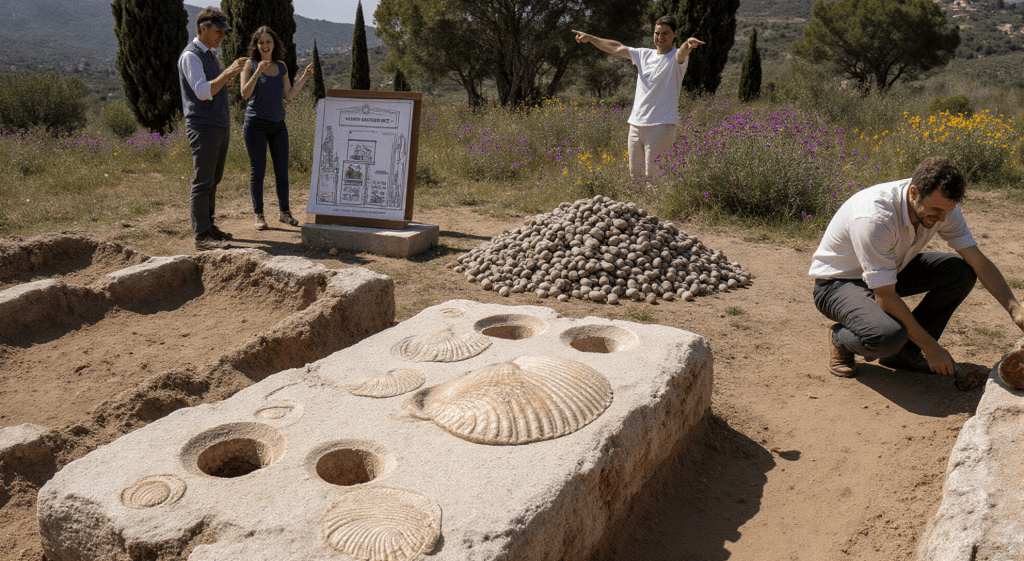
    Archaeologists are buzzing after the discovery of what looks like the ultimate ancient convenience: Roman vending machines. Hidden beneath sunbaked layers of Italian soil, these clever contraptions reportedly dispensed plump olives in exchange for seashells, a currency that was both biodegradable and effortlessly beach-chic.

    Early findings suggest the process was delightfully simple. Slip a shell into a concealed slot and a perfectly portioned olive would tumble out, ready for citizens and centurions alike. No need to risk wrinkled togas or sandy snacks during a trip to the Forum. Parmesan might not have been on offer, but spotless fingers certainly were.

    Scholars now have questions by the amphora. Did the machine accept only pristine shells, or did chipped and weathered specimens count? Was there a premium tier for extra-juicy olives that required oversized shells gathered from distant shores? The debate over ancient exact change grows livelier with every trowel of dirt.

    Imagine the scene at the Colosseum’s snack corner. Crowds jostle gently for front-row seats and a handful of briny treats. Lines snake around the forum as gladiators and theater fans clutch shells with mounting anticipation, rehearsing their coin-free purchases.

    Evidence is stacking up. Carved slabs have surfaced with grooved slots and olive-branch motifs, alongside piles of well-worn shells and a suspicious abundance of ancient pits. The picture that emerges is a civilization deeply committed to snacking and even more devoted to convenience.

    With excitement running higher than an aqueduct arch, experts are already planning the next dig. The dream is to uncover a lost manual titled “Tips for Unjamming Olives,” or perhaps a stone plaque that reads “kick here” in elegant Latin.

    Modern vending machines may serve everything from fizzy drinks to chilled sandwiches, but the Romans appear to have pioneered the concept with style. A simple shell, a savory reward, and a city determined to keep togas tidy and hands gloriously clean.

  • Welcome to the Mesopotamian App Store, Please Lift Responsibly

    Welcome to the Mesopotamian App Store, Please Lift Responsibly

    Long before smartphones buzzed with alerts, the ancient Babylonians had their own version of an app store. Theirs involved more heavy lifting and far fewer battery issues. Picture a bustling Mesopotamian market where you “downloaded” the latest weather or lunar calendar app by selecting a smooth stone tablet from a vendor’s stall. No digital downloads here. Every feature was chiseled by hand by scribes with heroic forearms.

    Each tablet functioned like a modern app, only with more granite. Instead of tapping an icon, you hired a specialist with a hammer, a chisel, and a relentless urge to inscribe. Need weather guidance for the barley harvest? Reach for “Cloudy with a Chance of Clay.” Planning a festival by the moon? The “Lunar Lookout” slab never went out of style.

    Upgrades were headline news. When Cuneiform Calendar 2.0 arrived, quarries opened overnight to meet demand. Early adopters sprinted home with enormous slabs that boasted brand new icons and slightly crisper wedges. Version control meant adding another shelf to your living room.

    Storage was its own adventure. Nobody carried hundreds of apps in a pocket. Babylonian homes looked like tablet libraries, stacked high with stone programs that doubled as doorstops and conversation pieces. Who needed a gym membership when the hottest update could be measured in kilograms?

    Trendsetters paid a price for being cutting edge. Lopsided biceps became a status symbol, and “tablet back” was the talk of the bazaar. Still, nothing matched the thrill of holding “Travel Maps 1.0” fresh from the chisel. At least until “Travel Maps 2.0” dropped a season later and weighed even more.

    So the next time your phone stalls during an update, spare a thought for the Babylonian power users. Tapping a screen is easy. Chiseling your favorite app into stone took determination, patience, and a very good hammer.

  • Viking Java: Horned Mugs and High-Seas Lattes

    Viking Java: Horned Mugs and High-Seas Lattes

    Archaeologists braving the blustery northern coasts have uncovered a revelation about our favorite bearded sailors. In the shadows of ancient longships, nestled among helms and battle axes, researchers found sturdy horned mugs now recognized as the world’s first Viking coffee cups. The Norse were not only raiders and traders. They were early adopters of caffeinated courage.

    These mugs were no ordinary morning accessories. Built with oversize grips and clever splash-catching horns, they look perfectly engineered for sipping while facing gale-force winds and the occasional sea monster. Whether manning an oar or mapping the next conquest, a hot drink stayed within reach, ready to deliver a proper Viking wake-up call.

    The Norse did not tolerate lukewarm brew. Traces of ancient roast clinging to the interiors have given archaeologists literal grounds for excitement. Some now suggest the secret to Viking stamina relied less on ferocious battle cries and more on espresso-powered enthusiasm.

    Those famous horns, once dismissed as decoration, served a higher purpose. They corralled stray splashes whenever the sea tried to photobomb breakfast. Modern mugs can only dream of such seaworthiness. Try guarding your coffee from North Sea spray with a plain ceramic cup and see how long it lasts.

    Saga writers have always praised Viking fire and fearless spirit. These finds add a relatable twist. Picture stoic warriors, hair streaming in the wind, pausing in unison to take an invigorating sip before another day of adventuring. Nothing says “ready for berserking” like a bold brew.

    A few enterprising scholars are already recreating Viking-style blends, promising a cup as untamed as the north winds. Your morning routine may soon include a touch of seafaring swagger. Balance your mug wisely, unless your name is Ragnar and you have a spare horn nearby.

    So the next time you grip your travel mug, nod to the Norse who dared to drink coffee on the open sea. True adventure pairs beautifully with a robust horned cup and the hush of dawn over cold water.

  • The Age of Turtle Carts and Perfectly Late Arrivals

    The Age of Turtle Carts and Perfectly Late Arrivals

    Centuries before self-driving cars and bullet trains, travelers in ancient Japan relied on a method that was dependable and delightfully slow. According to old scrolls, certain carts were so loyal they followed their owners everywhere, shadowing them like the best-trained pets in the province.

    The secret was not elaborate craftsmanship or mystical charms. A small ensemble of exceedingly patient turtles lived beneath the wooden frames. With a collective look of calm surprise, they shuffled forward and propelled each cart at a pace best described as meditative.

    Journeys required respect for both time and turtle temperament. Arriving fashionably late was more than a social trend. It was inevitable, and often interpreted as a sign of wisdom and inner peace. The more turtles under your cart, the slower and more distinguished your entrance.

    Children loved to guess which noble’s turtle cart would reach the market last. Impatient travelers perfected tea rituals to pass the hours. As for the turtles, they enjoyed slow-motion sightseeing and the occasional snack from a wayward leaf.

    Traffic jams became an adorable affair. Ornate carts queued neatly while clusters of turtles conferred at a cautious crawl. Owners exchanged polite greetings, and the only road drama came from a brief detour toward a lily pond.

    Historians now agree that the turtle cart era set a gold standard for stress-free commuting. Modern rush hour rarely offers so much dignity, serenity, or shell-based perseverance.

    So the next time you are stuck in traffic, consider a gentler pace. A few surprised turtles at the lead might be exactly what the world needs.

  • Pharaohs Had Royal Reminder Services, Not Apps

    Pharaohs Had Royal Reminder Services, Not Apps

    In a twist no one saw coming, Egyptologists have deciphered hieroglyphs that suggest ancient pharaohs handled their daily to-do lists with a surprisingly advanced system: a full staff of living reminder services. Forget apps or alarms. According to these sun-baked carvings, royal memory was outsourced to palace attendants who served as walking, talking notification bells.

    Freshly uncovered wall scenes show attendants clustering around the pharaoh, hands cupped and voices lifted with critical alerts. “O Mighty One, set alarm for sunrise,” calls one. Another, a bit hoarse, reminds the king to “smite the neighbors promptly at noon.” It was multitasking at its most ceremonial, a chorus of reminders echoing through gilded halls.

    Historians now suspect the true grind of palace life was not scheming for the throne, but maintaining the royal schedule with relentless precision. Records hint at attendants who specialized in memorable mnemonics, including hats shaped like the project at hand. Pyramid hat for construction deadlines, crescent-roll headdress for breakfast, and a tasteful festival crown for party prep.

    Experts say the reminder system even used visual icons for clarity. A sun placed over a cozy bed became the universal glyph for “do not oversleep,” while two tiny crooks crossed over an angry neighbor delivered a pointed nudge toward conquest. The only task that remained strictly personal was keeping track of the royal slippers. Even pharaohs had limits on delegation.

    Some rulers enjoyed the ritual so much that they staged full ceremonies just to hear the day’s agenda sung aloud. The merger of music, organization, and a healthy fear of missing an appointment may well be the origin of the first workplace jingle.

    So if you find yourself wishing for a smarter phone or louder notifications, take heart. The pharaohs solved it centuries ago with style, gold, and an army of very dedicated human reminders. Now that is royal treatment.

  • The Lost Showrooms of Atlantis: Where Furniture Floated and Décor Dissolved

    The Lost Showrooms of Atlantis: Where Furniture Floated and Décor Dissolved

    Under the shimmering waves, archaeologists have stumbled upon what just might be history’s most fashionable lost and found: the underwater showrooms of Atlantis. Recent dives reveal that Atlanteans were far more preoccupied with avant-garde home décor than previously thought. Forget gold; these ancient trendsetters focused on furniture you could admire, nap on, or accidentally watch dissolve beneath you.

    According to those sifting through seabed secrets, Atlantean carpenters didn’t just craft their furnishings. They “printed” them using advanced saltwater foam techniques. The result was chairs and tables that transformed, over the centuries, into coral masterpieces fit for any sea king. Picture a parlor set where the armchairs bloom with anemones and the tables have a built-in fishbowl flair.

    For the Atlanteans, ultimate luxury wasn’t a hard ivory throne but the decadent pleasure of a sofa that gently floated if the tide came in. Of course, there was always a risk that an extra-relaxing afternoon might end with both sofa and sitter drifting toward the nearest kelp patch.

    Seaweed ottomans were especially popular for those seeking a little bounce with their buoyancy. However, guests quickly learned not to linger too long, as the furniture had a habit of melting away into seafoam if subjected to enthusiastic lounging or the arrival of a particularly excitable dolphin.

    Marine architects now believe this explains why so many coral armrests and table legs can be spotted curiously clustered in the reefs. Far from being random shapes, they’re the elegant remains of underwater cocktail parties and afternoon tea gatherings with a side of squirt ink.

    So next time you’re considering a remodeling project, you might take a cue from Atlantis’s submerged salons. After all, nothing says “ultimate comfort” like furniture that lets you float your worries away, sometimes literally.