Category: Absurd History

  • Medieval Hilltop Barrels Delivered Spoken News, According To Chroniclers

    Medieval Hilltop Barrels Delivered Spoken News, According To Chroniclers

    Archivists say a 13th century hill country ran on rolling announcements. Scribes reportedly shouted proclamations into oak barrels, sealed them with warm wax, and launched the messages toward nearby villages. The staves held a long vowel kindly, and the bunghole acted as a modest speaker on the green. Listeners often reported buffering on steeper stretches, with polite pauses where syllables collected behind a rut.

    Couriers timed departures to the bell and stopped at crossroads so consonants could settle. Volume control was a thumb over the vent. A linen collar softened splashy echoes. If a message needed a second pass, a short push uphill and a careful tilt produced a compact rewind in gentler phrases.

    Material clues support the story. Barrel rims carry a satin shine from repeated greetings. Trestles on the hilltop still cast rectangular shadows where casks once rested. Wax freckles dot the grass near the loading stone, dust along the path leans in a slim stream away from the bunghole, and a pitch stamped glove sits exactly where a hand would steady the hoop.

    Later models improved service quality. Moss bands reduced road noise, and a simple spigot let towns choose one turn for notices or two for ballads. Ledger notes describe fewer bruised syllables and more dependable dusk greetings. Villages kept a wedge by the roadside to cradle the barrel, steady the flow, and let the news play through.

    “It is essentially a medieval podcast with gravity as the producer,” said a barrel acoustics historian. “They solved distribution with hills, wax, and a very patient vowel.”

    At day’s end, the message cans rested on their sides like contented drumfish, staves warm from talk. The slope kept a gentle hush, and a last vowel lingered in the hoop, then rolled home into the grain.

  • Frost And Optimism Allegedly Powered Early Supercomputers In Winter

    Frost And Optimism Allegedly Powered Early Supercomputers In Winter

    Tech historians now argue that the biggest machines performed best on a careful blend of clean chill and workplace morale. Roof louvers cracked open for a precise draft, cabinets breathed faint crystals along their seams, and raised floors exhaled a slow glitter that kept cycles calm.

    Operators followed dawn rituals. Hoarfrost came off the intake grilles with a soft brush, a kettle perched on a mild radiator to keep the room just subarctic, and the crew maintained a steady hum so status lights kept their reassuring rhythm. Scarves were wrapped with geometric discipline, and everyone learned to breathe away from the tape path.

    Benchmarks rose whenever the windows whitened. Tape reels turned smoother, memory felt sharper, and the machine’s voice settled into a low winter purr. Console switches clicked like icicles making decisions, and the air smelled faintly of dust, ozone, and tea that had considered boiling but chose restraint.

    Evidence still lines the old rooms. Screw heads wear tiny frost halos, a coil-bound logbook shows pale rings where warm mugs once rested, and perforated tiles remember fern patterns between their holes. An anti-static brush holds a glint at its bristle tips from years of dawn duty, and a spare reel case keeps a flake that refuses to melt when the racks are listening.

    When thaw arrived, technicians draped reflective blankets and offered optimistic pep talks. “You could feel throughput settle a notch the moment spring crept in,” said one archivist. “We coaxed a final week of crisp computation, then admitted the room had become a little too reasonable.” On certain evenings a single lamp still hums in the old tempo, the kettle answers with a narrow ribbon of steam, and the machine returns a result that feels pleasantly cool to the touch.

  • Coastal Team Tests Weather Crank, Beards Rearranged On Schedule

    Coastal Team Tests Weather Crank, Beards Rearranged On Schedule

    Researchers reading coastal sagas report a mechanical crank said to begin storms on command. Field notes admit it mostly produced wind that rearranged beards with alarming courtesy.

    The device uses an oak frame, iron teeth, and a tethered bellows wrapped around a rune dial marked squall, drizzle, and grand entrance. Salt crust under the pawl and a thumb-polished notch at drizzle suggest frequent, optimistic use.

    In trials the bellows sent a tidy gale along the hall bench, braiding whiskers by alphabetical order. A fish rack swayed in fours, a torch flame combed itself into a straight part, and a puddle corrugated into neat rings.

    A modern replica moved only a puddle and three hats, yet left a crisp isobar sketched in sea salt on a sleeve. A measuring cord tied to a post tugged to the same angle each turn, and a ladle rotated politely to face downwind.

    “It is a barometric suggestion engine, superb at grooming, modest at doom,” said Bryn Alvar, maritime mechanics lead at the Institute of Scheduled Weather.

    Field notes list rune chips in the sweep tray, bellows leather scented of kelp, and a chalk tally of whisker outcomes under B for brisk. A gentle tap on the frame quieted the draft, whereupon the crank spun once of its own accord and parted the doormat down the middle.

  • Courtyard Harps Broadcast Silent Melodies, Listeners Report Music At The Elbow

    Courtyard Harps Broadcast Silent Melodies, Listeners Report Music At The Elbow

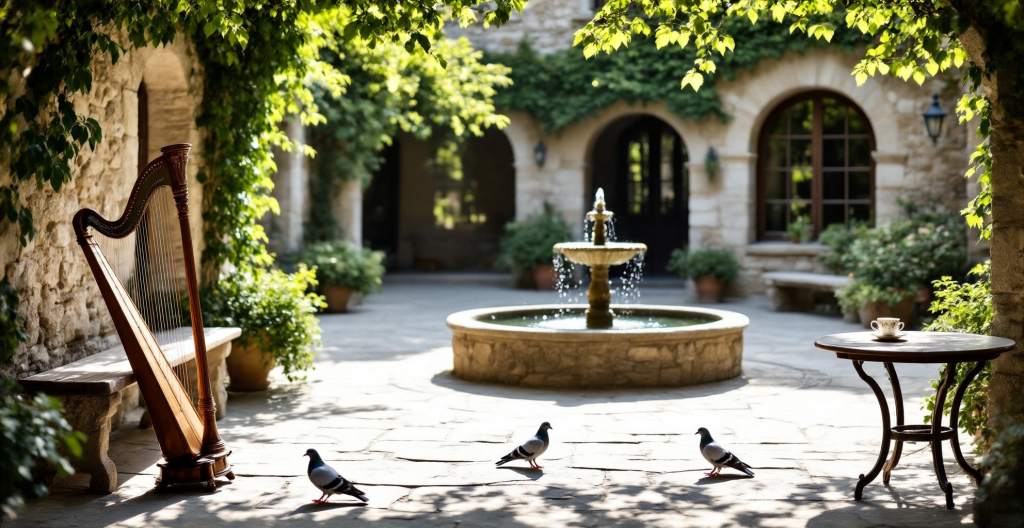
    Excavators in a walled quarter report evidence that musicians tuned harps to send melodies silently across courtyards. Marginal sketches show elbows circled with tiny notes, as if the tune arrived like a courteous nudge.

    Recovered harp pegs are carved with arch and balcony icons, and a bone tuning key bears a neat courtyard grid. Peg grooves are polished at intervals labeled gallery, shade, and laundry, with a faint dot where elbows would rest on a rail.

    In trials a reconstructed frame was strummed without sound, yet the fountain kept time in ripples. Pigeons nodded in threes, and a laundry line tugged itself into a chorus that ended with a neat bow of clothespins.

    Modern volunteers reported elbow tingles and the sudden urge to applaud with forearms. Microphones caught only wind, but tea on a saucer formed little crescents on the handle side as if a rhythm politely leaned there.

    “It is an elbowphonic network that treats courtyards like resonant sleeves,” said Maera Quill, acoustic archaeologist at the Institute of Ambient Music.

    Field notes list chalk rings at balcony height, elbow-polished stone on two corners, and a ledger line that reads refrain travels via shade. The bone key warmed when held at arm’s crook, and at sunset the arch icons aligned with shadows that seemed to hum yes, again.

  • Historians Log Weather Kiosks, Drizzle Sold by the Minute With Thunder Hush Fee

    Historians Log Weather Kiosks, Drizzle Sold by the Minute With Thunder Hush Fee

    Historians have cataloged street sketches of kiosks where citizens purchased pre seasoned weather, from pocket breezes to artisanal fog for exits. The drawings price drizzle by the minute and list a polite surcharge for quieting thunder.

    Margins show corked vials tied with compass thread, sachets stamped with a tiny puff glyph, and a crank that seasons wind with citrus or sea salt. A little gauge rides the counter, its needle nodding like a shopkeeper who knows your usual.

    In a bench test, a packet opened, hats leaned two degrees west, and a lamppost gathered dew in a precise ankle high ring. Coins on the tray came back slightly damp and oddly content.

    Popular sets bundled farewell fog with a single decisive footstep, ideal for dignified exits. Receipts curled at the corner as they dried, leaving a faint ellipse that smelled of limes and rain.

    “It is microclimate retail, punctual and courteous, with an option to keep the sky from clearing its throat,” said Mira Fen, atmospheric provisions curator at the League of Street Meteorologies.

    Small proofs keep piling up. The windsock atop the cart stirs without a breeze, chalk prices bead with condensation when drizzle is on special, and returned packets arrive half lighter.

  • Archaeologists Uncrate Bronze Emotional Compass, Needle Ignores North

    Archaeologists Uncrate Bronze Emotional Compass, Needle Ignores North

    Researchers at a quiet dig report a bronze compass that refuses north, orienting toward the nearest strong feeling. Tool marks place it in the classical lecture hall era, where chalk was plentiful and patience scarce.

    In trials the needle warmed near laughter and fogged at despair. Set beside a fruit bowl and a yawning cat, it ignored the orange and snapped toward the cat, then hummed faintly at a distant sigh.

    The face shows tiny icons for joy, dread, and secondhand embarrassment, each with a modest tick mark that reads “oof.” Verdigris settles in the grooves, and the glass carries one careful scratch shaped like a smile that changed its mind.

    Archives mention a famed philosopher who used it to steer around dramatic students. In a modern group project meeting, it spins once, clicks, and politely lies down.

    “It is essentially a barometer for moods that forgot about weather,” said Lyra Pesh, instruments curator at the Institute of Hypothetical Navigation.

    Field notes list fig crumbs and chalk dust inside the hinge, as if lectures were snacks and vice versa. When a volunteer whispered an apology he did not mean, the needle drifted to the theater mask and made a sound like a distant polite cough.

    Researchers are drafting a map that uses feelings as cardinal points, with “Cheer” to the east and “Yikes” in the lower left. The crate ledger reads emotional compass find in tidy handwriting, and the cat has been retained as a recurring control variable.

  • Workshop Unveils Gossiping Quill, Banned After Logging Duke’s Dramatic Naps

    Workshop Unveils Gossiping Quill, Banned After Logging Duke’s Dramatic Naps

    Archivists in a Renaissance workshop report a quill that wrote gossip on its own. Court officials banned it after it itemized a duke’s nap habits with times and cushions, complete with a legend.

    The feather perched on a brass stand fitted with a tiny listening wheel. Ink freckles ring the wheel’s perforations, and the brass shows a thumb-bright crescent where someone tried to dial it to discretion.

    In tests the nib moved when voices dropped, underlining sighs and sketching a folding screen in quick strokes. It tallied three pillows at the third hour, then added a courteous note on texture.

    Left alone, it recorded the rosemary plant’s opinions in faint, slanted lines. The quill wrote hush in smaller and smaller letters until the inkwell lid eased itself closed and left a perfect rim print on the page corner.

    “It is a stenographer for whispers, tireless and unhelpfully precise,” said Mira Vell, audial curiosities lead at the Guild of Applied Inks.

    Field notes list a blot shaped like a yawn, a margin bracket labeled behind the screen, and a quill tip that warmed when anyone cleared a throat. Shelved upright, it rotated one degree toward the nearest conversation, which was the rosemary, then sketched a pillow with impeccable fringe.

  • Pyramid Chamber Turns Echoes Into Advice, Visitors Exit Hydrated and Thoughtful

    Pyramid Chamber Turns Echoes Into Advice, Visitors Exit Hydrated and Thoughtful

    Archaeologists beneath a stepped pyramid report a chamber with nested stone rings that turn echoes into advice. Most translations urged visitors to hydrate and reconsider recent choices, with a soft emphasis on pacing oneself.

    The rings are grooved like shells above a shallow bowl of a floor. A single hand clap returned as suggestions such as “drink now” and “maybe not all the stairs at once.”

    In trials a canteen cap rolled toward a clay water jar and parked itself at the base. Chalk dust settled into little arrows that pointed to a low bench, and a headlamp flickered politely until someone sat down.

    Microphones caught only clean delay, yet field notes list jar condensation that refreshed exactly on the echo, and footprints that drifted from the stair mouth to the bench in a thoughtful loop. A string line tied to the survey stake kept leaning toward the water with small, decisive twitches.

    “It is a reflective counsel engine, acoustics tuned to the human second thoughts,” said Mara Tellig, senior echoist at the Institute of Advisory Stonework.

    On departure, people moved slower, sipping, and measuring the stairs as if they were options in a catalog. A loose coin spun once near the drain and came to rest on heads, which someone circled in chalk and labeled yes, hydrate.

  • Rome Briefly Paid Sailors In Canned Sardines, Economic Notes Say

    Rome Briefly Paid Sailors In Canned Sardines, Economic Notes Say

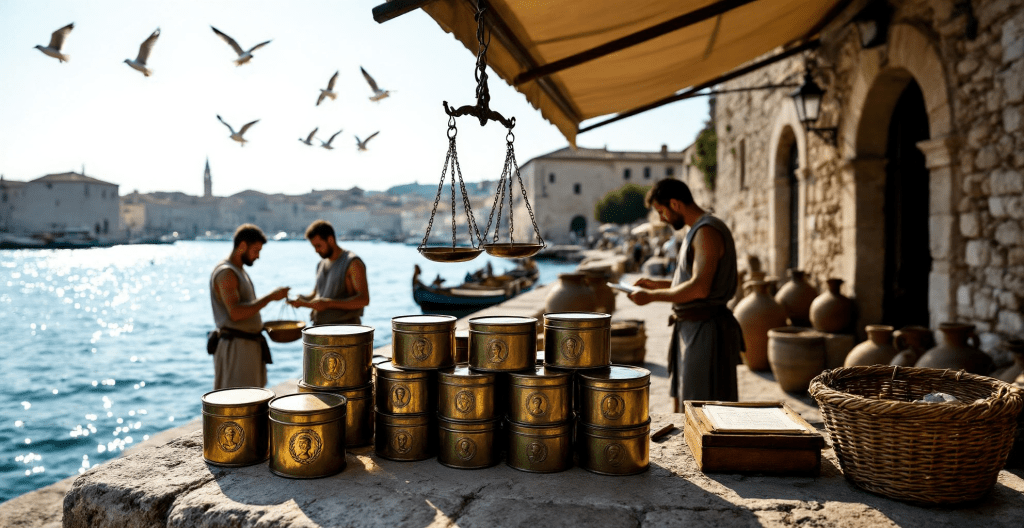
    Economic notes from the late Republic point to a short lived monetary experiment at sea. Instead of coins, fleet paymasters issued sealed tins of sardines, each lid lightly hammered with an imperial profile and stacked by the chest like a pantry with rank.

    Denominations were practical. One fish for small change, five for a day’s wage, and a premium issue packed in extra olive oil for hazard duty. Dockside treasuries shaded their reserves under damp linen, tallied interest as a slow tilt of brine, and posted exchange rates that drifted with the afternoon temperature.

    Auditors learned to shake a tin by the ear and read the slosh like a balance sheet. Counterfeits gave themselves away with a faint lemon note. Port clerks accepted a spoon of oil as a modest fee and insisted the spoon be returned to the bowl with good manners.

    Pay tables kept the evidence. Domed lids held soft thumbprints from honest counting. Half moons of oil marked the planks where tins had rested. Counting boards gained a permanent gloss at the elbow line, and quay stones wore round water rings that dried in neat time.

    Quartermasters preferred tins that answered a tap with a clean bell shaped ring. Too flat meant short packed. Too dull meant overfilled. Someone always asked if bonuses could be issued in anchovies. The answer was yes, but only on festival days.

    “The incentive structure was simple,” said a museum conservator who studies maritime ledgers. “Weight and certainty in every payment. Unfortunately, certainty also smells like fish after noon.”

    Surviving ledgers suggest the policy did what policies do. Landings grew punctual. Cargo lists smelled organized. The harbor economy sat tightly packed, well preserved, and surprisingly civil. At dusk, a final tin gave one agreeable ping inside the pay chest, and the anchorage settled level and olive bright.

  • Florence Workshops Once Tuned Screwdrivers To C Major

    Florence Workshops Once Tuned Screwdrivers To C Major

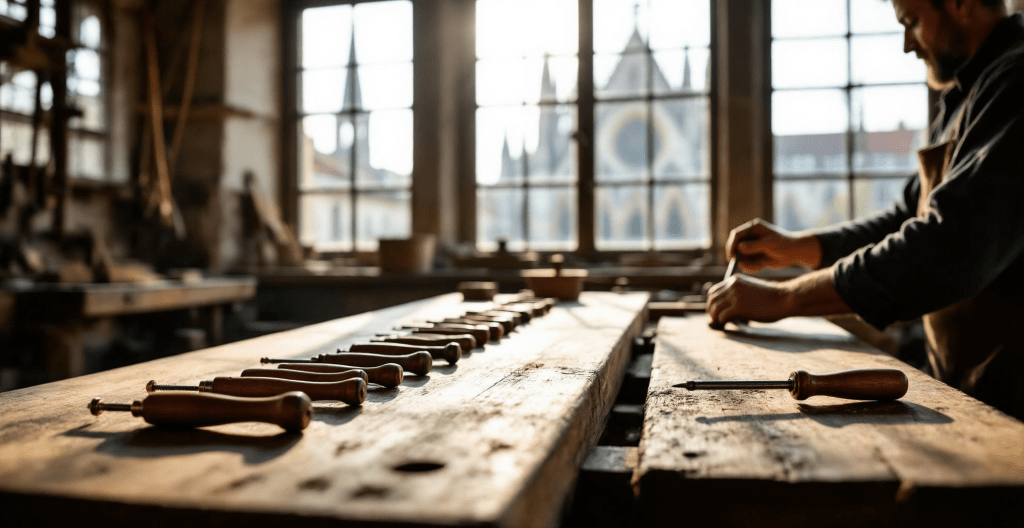
    Archivists in Florence now credit early workshops with tuning screwdrivers to specific musical pitches so crews could harmonize during construction. Walnut handles were weighted to ring true, shanks filed to exact lengths, and the room settled into a low, sturdy chord before work began. Stone vaults reportedly resonated in C major, steady as a bell, until someone overtightened the soprano section.

    Foremen set the key by striking a chisel against a stone offcut, then pointed with a plumb line while the bench line joined one by one. Turning pressure was measured by ear, the good torque arriving when the tool sang back to the note. Braces carried the bass, small drivers took the melody, and mallets kept time in a patient two.

    Evidence keeps tidy posture. Racks remember the warm outline of handles, and the bucket by the trestle shows concentric ripples that answer a chord without fuss. Floorboards hold soft arcs where apprentices stepped in time, and a chalk line refuses to smudge during a good chorus. Even the shavings cooperate, curling to a measured rhythm.

    An accompanying memorandum, Workshop Harmony Protocol, survives in careful script. Tools are to be tuned at first light and checked at the hour. Torque shall cease when the note rounds at the edges, not when the wrist grows brave. Cork shims may correct bright work, braces are to hum without complaint, and mallets will count a patient two. The plumb line sets the tempo with a polite nod.

    On clear mornings the high vault picked up the harmony and leaned it along the scaffolds like sunlight. Ledger notes mention a brief migration to bright D after a spirited afternoon, corrected with cork and a deep breath. Offcuts kept their pitch overnight and made fine reference stones at dawn.

    Later guilds kept a rack of sizes to cover an octave, practical and pleasant, so a wall could be tightened without ever leaving the tune. Apprentices learned to whistle the key across a clay cup, and the plumb bob offered a tiny approval tremble when the chord settled.

    By evening the benches exhaled. Screws sat with quiet confidence, the room held a supported hush, and one last chisel tap sent a clear C through the timbers that landed neatly in the grain and stayed.

  • Dawn Drummers and the Original Snooze Button

    Dawn Drummers and the Original Snooze Button

    Archaeologists say several ancient cities outsourced their mornings to rhythm. At first light, teams of temple drummers on tower tops struck a synchronized pattern that rolled through the streets, turning sunrise into a civic percussion rehearsal and getting bakers, scribes, and goats moving on the same beat.

    Records describe a simple opt out. If you were not ready to greet the day, custom allowed a single piece of fruit tossed toward the nearest drummer. A brief pause followed, the sticks lifted, and the block earned a few extra minutes before the downbeat returned. Oranges were recommended for accuracy. Pomegranates were discouraged for obvious reasons.

    City ledgers note a side effect that vendors still envy. Breakfast markets opened with the final cadence, and stalls did brisk business in “snooze fruit,” softened for humane tossing and discounted after the third bell. Street sweepers reported tidy peels and a noticeable rise in community aim.

    Temple manuals were surprisingly specific. Drummers rotated by quadrant, rain rhythms dropped one tempo, and festival days added a flourish that sounded like a bright braid at the end of the pattern. A chipped tablet lists replacement stick sizes and a polite reminder to return misthrown figs to their owners.

    “The system was less about noise and more about choreography,” said one museum curator. “Wakefulness became a shared event. If a neighborhood needed five more minutes, you could hear it in the fruit.”

    By midmorning the towers fell silent, markets hummed, and the city settled into its tasks with a faint beat still tapping at the edge of memory. Centuries later, a few plazas keep a ceremonial drum on the hour. No fruit allowed, for everyone’s sake.

  • Vikings Paused Raids For Breathwork, Gratitude, and Gentle Boat Polishing

    Vikings Paused Raids For Breathwork, Gratitude, and Gentle Boat Polishing

    Maritime historians are revising the image of Viking life after new field notes suggest crews routinely took sabbaticals devoted to breathing, gratitude, and hull care. Sources describe a daily ritual of twenty slow breaths timed to the tide, followed by a roll call of thanks addressed to the oars by name. Splinters dropped. Disagreements cooled. The air smelled of pine steam, salt, and warm tar.

    Routine entries read like a wellness manual for longships. Sand was rubbed along hulls in calm circles. Helmets rested on driftwood to collect dew. A quiet tea of evergreen needles steeped while sails aired out in the morning light. Captains asked for three acknowledgments before noon, most commonly a cooperative wind, a reliable knot, and the gull that kept morale in view.

    Archaeological details support the story. Oars lie in parallel lines on shingle beaches, rope coils hold deliberate spirals, and a blackened kettle still curls thin threads of soot as if counting breaths. Pebbles show polished crescents where cloths once rested. Dragonheads shine with a thoughtful gloss that suggests more than simple vanity.

    Chroniclers say results were immediate. Landings grew quieter, cargo lists tidier, and navigation choices ended with a calm nod at a familiar star. Quartermasters recorded fewer splinters and a new habit of placing pebbles on map corners to keep the breeze polite.

    By evening, prows often reflected the shoreline like a friendly mirror, and sails gave a small exhale before folding. When sabbaticals ended, crews took up the oars with easy rhythm, as if the names had stayed with the wood. The sea answered with measured ripples that seemed to approve of neat work.

  • Royal Court Serves Twelve Courses From Tins, Applause Measured In Spoons

    Royal Court Serves Twelve Courses From Tins, Applause Measured In Spoons

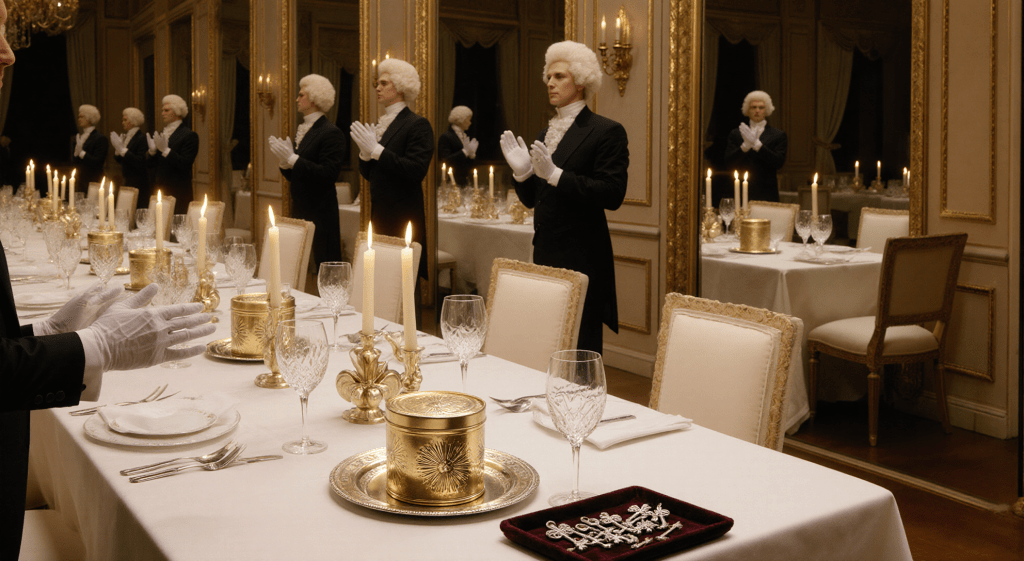
    Court records now insist a sun loving monarch once hosted a twelve course feast made entirely of sardines sealed in ornate tins. Guests applauded the innovation with a refined clatter of spoons, a polite ovation for airtight certainty. At each place sat a gilt cylinder with a sun in relief, positioned where a soup would normally wait.

    Courses ranged from smoked to candied to bathed in bergamot oil, opened on a cue from a distant violin. Footmen turned tiny keys in unison, producing a soft silver sigh that traveled the table like a well bred wave. Proper etiquette required a brief pause to appreciate the vacuum, then a measured taste of oil by candlelight.

    Evidence lines up with tidy posture. Inventories list a royal scepter with a discreet puncture tip, a valet for lids, and a quiet cart that stacked the empties into low gleaming towers. Linen holds elliptical oil halos where tins rested, and the mirrors doubled the procession until the room seemed calmly overprovided.

    A surviving memorandum titled Sardine Service Protocol fills in the finer points. Keys turn on the violinist’s third note. Lids lift no more than a finger’s breadth. Spoons speak only in applause. Guests nod at the vacuum, taste the oil clockwise around the sun relief, and allow towers to rise to seven lids unless permission is granted for more.

    Witnesses recall that the aromas behaved. Smoked salt, candied citrus, and a bergamot hush walked the table in even steps. A butler recorded a faint brine standing at attention in the mirrors, then bowing.

    After the twelfth course, the hall settled into a light maritime calm. The scepter rested on its velvet. The cart carried its small monuments away without complaint. Somewhere beyond the doors the gardens accepted a gentle, briny breath and kept it.

  • Courtyard Engineers Deploy Patch Catapult, Accidentally Installs Second Breakfast

    Courtyard Engineers Deploy Patch Catapult, Accidentally Installs Second Breakfast

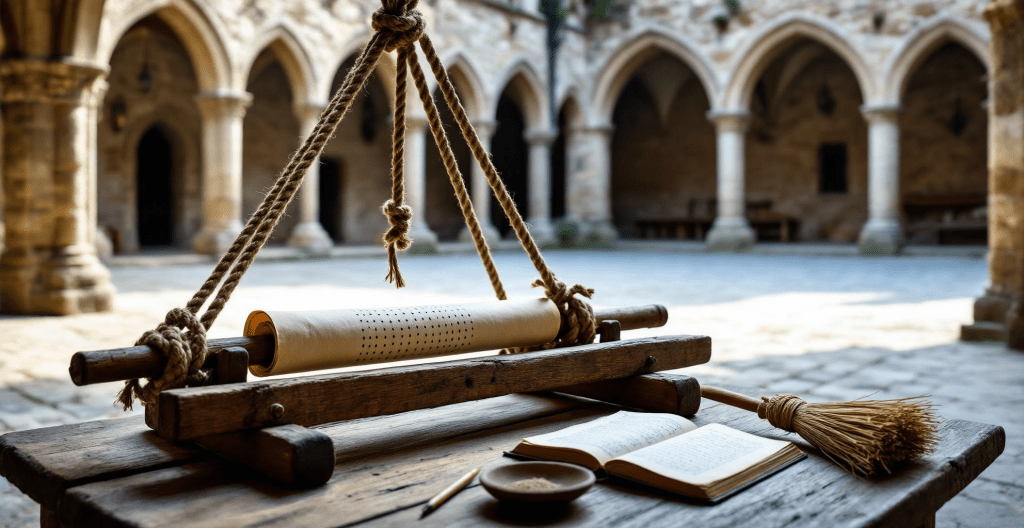
    In a quiet walled courtyard, engineers unveiled a counterweight catapult that hurls coded parchments to neighboring workshops to clear lingering glitches. The project aims to sweep away stubborn morale bugs with tidy arcs and convincing thumps.

    Workshop notes list parchment rolls with knot ciphers and notched edges for checksums, a bell that rings backward on failed cleanses, and candle smoke that traces a doubtful loop. Pebbles at the launch site form a neat circle around spent scrolls, as if voting.

    In trials, a scroll landed and the dining ledger quietly added second breakfast without asking anyone. An envy indicator lantern flickered on and off like it could not decide if the chair was coveted or just nicely varnished.

    Technicians report small proofs. Twine fibers show a shine where tension hits true, wax seals leave comet streaks on stone, and the quill by the ledger pauses midair before committing a fresh tally.

    “It is a courtyard patch deployment system, and sometimes the patch notes arrive with bonus features,” said Maera Luth, kinetic remediation lead at the Collegium of Courtyard Mechanics.

    The fix was simple, add patience as a header and aim slightly left. The device sneezed once, a polite puff of dust, then began behaving as if it had read the manual.

    After adjustment, the bell chimed in the forward direction, smoke curled into a tidy checkmark, and the next scroll politely removed the extra meal while steadying the lantern. The ledger now shows breakfast, breakfast remembered, and a line through the surplus with a small smile in the margin.

  • Victorian Astronomers Test Tea-Powered Telescope, Occasionally Screams at Infinity

    Victorian Astronomers Test Tea-Powered Telescope, Occasionally Screams at Infinity

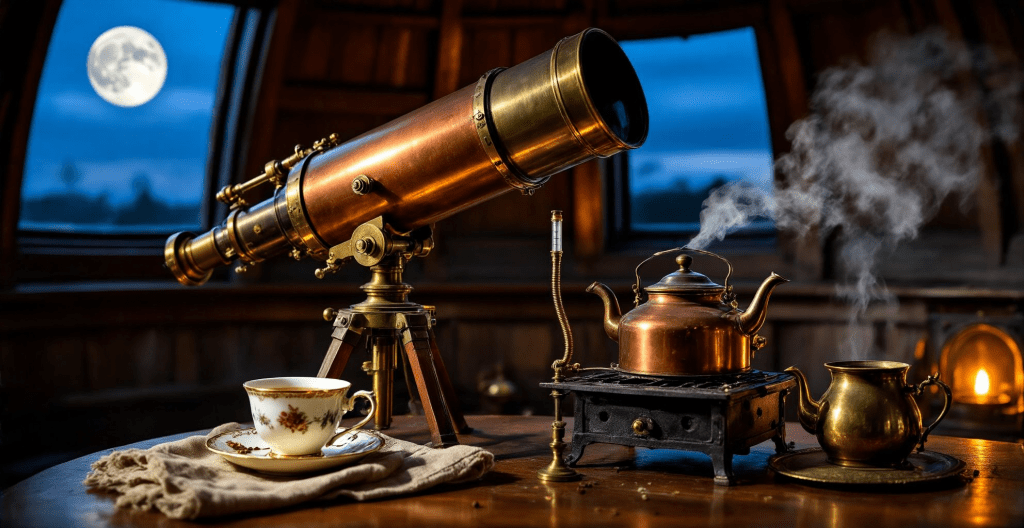
    In a lamplit dome, Victorian astronomers trialed a telescope driven by boiling tea, brass piping humming as it found remote stars. On clear nights it reportedly paused, considered the void, and screamed about the concept of infinity.

    Lab notes mention the kettle gauge peaking, steam haloing the eyepiece, and the ledger blotter hopping when the howl began. Condensation beaded on the tube in neat rows, as if taking attendance.

    A teaspoon vibrated across a saucer toward due north, then settled with a polite clink. Leaves in the spent basket drifted into tidy ellipses that matched last night’s observing plan.

    After each episode the instrument calmed when given fresh water and a biscuit it could not eat, then resumed polite stargazing. The focus wheel purred like a reconciled cat, and the dome felt relieved.

    “It is a boiling point guidance system with Victorian manners, inclined to contemplate the abyss at full whistle,” said Elda Fenn, kettle optics specialist at the Society for Gentle Astronomy.

    Small proofs keep steeping. The kettle lid stamps a faint ring that correlates with altitude, the stove ticks count out patient intervals, and a moony hush returns as the tube pivots to the next polite sparkle.

  • Archaeologists Uncover Encouraging Sandals, Count Steps and Compliments Alike

    Archaeologists Uncover Encouraging Sandals, Count Steps and Compliments Alike

    At a quiet hillside dig, archaeologists lifted a pair of sandals fitted with pressure plates meant to tally steps and murmur encouragement. The Latin guidance roughly renders as keep conquering, you are doing great, in a voice described as briskly supportive.

    Construction details read like a pocket pep band. Layered leather lies over narrow bronze reeds to make a whisper, a heel cavity holds a pebble abacus for counts, and a small clay resonator bead sits neatly at the strap.

    In testing, a light tap made the strap thread quiver and a soft puff of dust jump twice along the arch. A wax tablet beside them added a tidy stroke, as if the sandals kept their own minutes.

    Notch marks on the insole rise in steady intervals, the fifth slightly polished where encouragement seems to crest. Pebbles shift with a faint clack that matches the tally, then settle as if pleased.

    Field notes say the right sandal praised uphill effort while the left suggested a water break, both politely silent when the wearer paused to admire the view. The clay bead warmed a touch near a slope, then cooled when the sky was the only task.

    “It is wearable metronomy with manners, a small chorus for feet that prefers progress over speeches,” said Ilen Row, gait instrumentation lead at the Institute of Motivated Footwear.

    Small proofs keep accumulating. Dust trails bend toward the steeper path, the resonator bead shows ring wear at intervals that map to climbs, and the tablet’s strokes match the pebble counts exactly. Now the pair sits on felt, quiet until the table tilts like a hill.

  • Historians Suspect A Wardrobe Of Invisible Hats From The Early 1800s

    Historians Suspect A Wardrobe Of Invisible Hats From The Early 1800s

    Historians now say a certain early 1800s notable owned a full wardrobe of invisible hats for formal occasions. Tailor notes describe brim weight, plume balance, and travel cases fitted to nothing at all. The hats reportedly boosted confidence, visibility optional.

    Conservators point to empty hat boxes with velvet rings pressed just so, a travel trunk that sits heavy on one side, and a portrait sitter who keeps tilting a head toward a brim the museum has not cataloged. A valet’s ledger lists summer rain ready, morning parlor, and evening slightly taller, entries that appear to adjust posture more than clothing.

    Material clues are oddly persuasive. Green baize shows a shallow oval where something rested and then thought better of being seen. Dust motes bend around a curve above a mannequin’s brow, and a polite draft moves past as if circling felt. Photographs from the period develop a soft line where light has nothing to land on.

    Reenactors are now issued invisible bicornes at key ceremonies. Spectators report a faint crescent of shade across the forehead when the sun is low and the neat hush of wind passing a brim that cannot be seen. Ushers have begun reminding guests to allow extra room for unlisted millinery.

    Museums are testing loan programs and careful fittings. Registrars practice signing for absence, gloves hover, and hat stands seem to lean forward by a polite inch. A small plaque asks visitors not to tap the air.

    The fashion reads as confident, the gallery remembers a shadow, and the afternoon light behaves as if it has met this brim before. When the room empties, the peg sighs, the velvet forgets its crease, and a quiet curve of shade settles where it always does, just above the brow.

  • Egyptologists Rebuild Bronze Applause Automaton, Confirms “Bold Move, My Sun”

    Egyptologists Rebuild Bronze Applause Automaton, Confirms “Bold Move, My Sun”

    In a quiet lab, Egyptologists have reconstructed a bronze automaton that once trailed pharaohs, applauding important decisions. Its only recorded utterance, coaxed from a reed bellows, translates as “bold move, my sun.”

    Construction notes list palm shaped clappers on spring wrists, a reed voice box tucked behind a grille, and a bronze toe that taps to keep royal tempo. Fine soot rims the mouth opening, and the clapper palms carry a bright polish along the outer fingers.

    In trials, the machine tracked a painted sun disk on the floor and began a slow clap the moment a door was decisively closed. A pressure quiver in the bellows preceded each praise, and the toe marked time with three neat taps before speech.

    Set beside a bowl of sand, the applause raised small dunes that settled into cartouche shapes, as if the room were signing the decision. The toe left a dotted path of metronome marks that curved gently east.

    “It is a ceremonial validator, tuned to conviction and sunward alignment,” said Nara Kel, automata conservator at the House of Kinetic Antiquities.

    When the door merely drifted, the device lifted its palms, reconsidered, and produced a single polite clap that sounded like a shrug. At a crisp latch, it delivered the full phrase, the reed resonator chiming with a faint papyrus rasp.

    After each session the automaton rotated to face the sunrise and waited, still as a statue. Lab logs show the same pattern every time, a tiny hiss from the bellows, a toe tap in triplet, and a quiet readiness for the next bold move.

  • Greece’s Pre-Coffee Games Crowned Champions of the Perfect Pour

    Greece’s Pre-Coffee Games Crowned Champions of the Perfect Pour

    Archaeologists report that Ancient Greece briefly hosted a precision pouring contest at dawn, centuries before coffee existed. Competitors stood at a marble table and guided a thin stream from bronze ewers into shallow cups scored with rings. The courtyard smelled of warmed stone and early figs, a setting built for careful wrists.

    Rules favored a continuous pour, a landing on the second circle, and a finish that left the saucer dry. Judges tracked spill lines on wax tablets and weighed each cup for grace rather than volume. Laurels went to anyone who could pause a stream mid air, as if listening for an aroma that had not yet arrived.

    Material clues line up neatly. Table edges hold a soft shine where sleeves learned to hover. Ewer spouts show a blush of wear at the balance point. The marble keeps a faint ring that looks suspiciously like a memory of brown.

    Flagstones record the choreography. Light scuffs curve in semicircles that match the step forward, then back, of a steady hand finding its measure. A lyre beat a small tempo for the pourers, and the onlookers adjusted their breathing to match.

    Philosophers, posted under the olive trees, wondered whether alertness belonged to the idea or the drink. “The ritual seems to wake the room,” said one curator on site, “even when the cup holds nothing stronger than sunlight.”

    Records close with a tidy return to normal. By noon the cups were back to wine service, the ewers rested on cool stone, and the laurel leaves dried in the shade. The second circle looked like any other ring in marble, except it was not, and the table seemed quietly taller for having been trusted with precision.

  • Archivists Catalog Snow Beast Etiquette, Calm Rules In Frosted Ink

    Archivists Catalog Snow Beast Etiquette, Calm Rules In Frosted Ink

    Archivists have unveiled a cache of winterworn scrolls that read like a code of manners for giant snow creatures. The rules are disarmingly calm: no roaring before sunrise, paws brushed at thresholds, and a courteous berth when passing a sleeping pine.

    Illustrations show a hulking figure bowing to a drift, then pausing so icicles can finish their remarks. Track diagrams appear in polite pairs, with small notches interpreted as “after you.” A recurring frost seal depicts a listening ear, the emblem of patient behavior.

    The material evidence is as quiet as the subject. A loupe leaves a cool circle on linen, a soft brush clears a neat path through sifted snow, and a brass weight keeps a curling edge in line while the window admits careful morning light.

    Researchers say the etiquette has not vanished so much as blended into the season. Dawn wind arrives in a whisper, roofs creak once to acknowledge the hour, and fresh snowfall sometimes hesitates at a doorway like a guest waiting to be announced. “It is less superstition and more neighborhood policy,” said Dr. Lida Harrow, who led the catalog. “Winter behaves better when someone is listening.”

    The scrolls now rest in cold storage, the frost seal holding its patient ear. Outside, a pine seems to lean in, and the street keeps the kind of hush that suggests something large and careful just passed and said, very politely, after you.