Author: Not Fact-Checked

  • Library Scrollcasters Were the Ancient World’s Audiobooks

    Library Scrollcasters Were the Ancient World’s Audiobooks

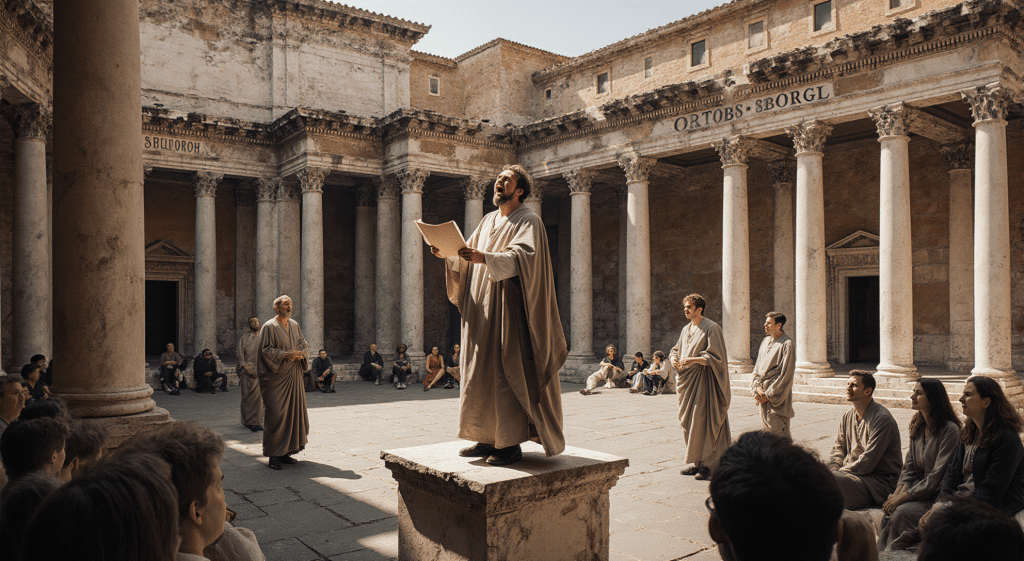
    Before earbuds and carefully curated playlists, ancient readers had a simple problem: how to enjoy literature on the move, or at least while balancing a basket of figs. The solution, according to the sages of a certain very great library, was the Scrollcaster, a spirited performer who stood on a marble platform and belted entire works to anyone within earshot.

    These human audiobooks delivered epic poems, philosophical brawls, and culinary how-tos with the volume of a harbor crier and the enthusiasm of a festival host. From sunrise to sunset the courtyards rang with everything from tips on roasting dormice to Socrates’ sharpest one-liners. Whispered conversations were rare. Impromptu dance breaks were surprisingly common.

    No two visits sounded alike. Libraries became the ancient equivalent of podcasts, only with more sandals and a greater risk of accidental interpretive gestures. Simultaneous shout-casting was standard. To your right, a theory of the cosmos. To your left, a lecture on olive oil extraction. The only strategy was to pick a favorite and lean in, unless you wanted a sampler platter of both.

    Regular patrons developed heroic focus. Skilled listeners could tune out a treatise on eel fishing while absorbing only the baking tips they truly needed. Legend says a few scholars could ignore everything except recipes for cheese pie, which made them the envy of absent-minded bakers for miles.

    Personal volume control did not exist, and earplugs were purely theoretical. Local bees allegedly unionized and refused to produce enough wax. Debates sometimes devolved into volume contests as rival Scrollcasters tried to out-shout each other to reach listeners on the upper balconies.

    Word of the spectacle spread quickly. Tourists arrived for the drama and stayed for the jokes historians swear were scribbled in the margins. Long before “narrated by a celebrity” became a selling point, listeners bragged they had heard epics performed by the region’s finest projectionists.

    So the next time your audiobook hiccups or your headphones tie themselves in nautical knots, remember a simpler era. All you needed for literature on the go was a pair of open ears, sturdy sandals, and the stamina to withstand competing demonstrations of ancient cheese pie.
  • Athens Invented the Forum Thread, Complete with Actual Trolls

    Athens Invented the Forum Thread, Complete with Actual Trolls

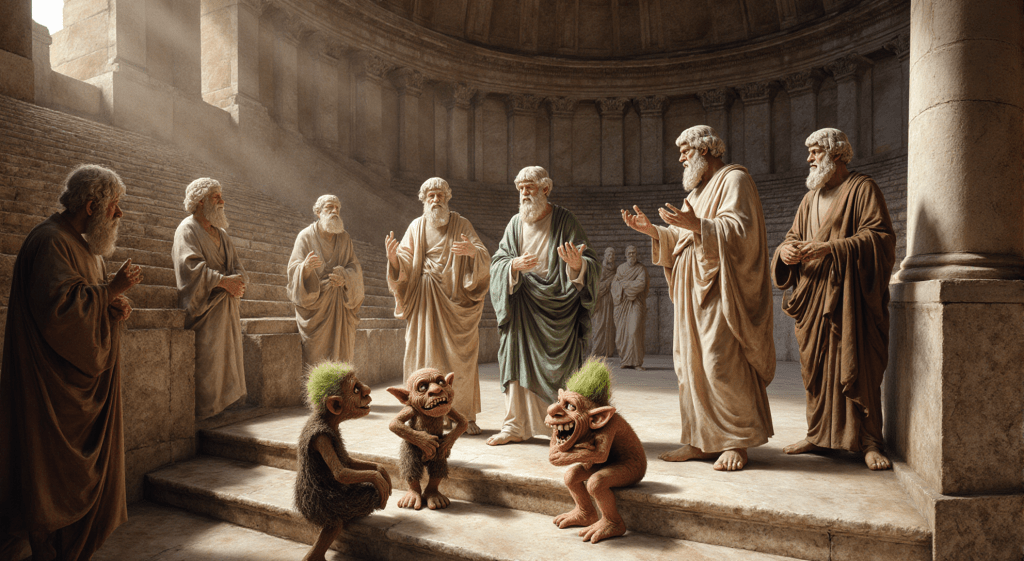
    Long before the internet, Greek philosophers shaped knowledge in ways that would feel familiar to anyone who has lost an afternoon in a comment section. The amphitheaters of Athens were not only stages for tragedy and comedy. They doubled as roaring discussion boards where opinions clashed, rants soared, and marble echoed with hot takes in togas.

    There was one twist modern forums cannot match. Philosophers did not only spar with verbose rivals or the resident cynic. They also faced actual trolls. Scruffy, bridge-dwelling hecklers crept in for the promise of unguarded logic and the chance to show off their talent for disruptive punctuation.

    Legend says the highest badge of honor was not just demolishing a rival’s argument. True glory came from outwitting a real troll before a crowd. Champions left with laurel wreaths, warm applause, and the priceless distinction of not becoming a mid-lecture snack.

    Trolls had specialties. Some hurled logic puzzles with absurd premises. Others derailed topics with goat jokes or insisted on debating the circumference of a boulder for three hours. If a philosopher tied a troll in rhetorical knots until it stomped off to its bridge in a sulk, the city buzzed for days.

    Socrates, according to very credible rumors, kept his walking stick ready not for long strolls, but for quick pivots in debate. Historians suggest the famous method of pointed questions began as a troll-detangling technique, the verbal equivalent of gently untying a very stubborn knot until the heckler gave up and went to nap in the shade.

    The Department of Amphitheatrical Moderation, an institution that absolutely existed, allegedly posted rules at the entrance. No biting, no boulder throwing, and please keep goat-based puns to a respectful minimum. Violators were assigned to sweep the steps and write “I will not feed the trolls” on wax tablets one hundred times.

    So the next time your online debate gets hairy, take comfort. Your opponent likely lacks pointy ears, bridge tolls, and a craving for goat snacks. The Greeks handled their troll trouble with style, one careful question and one triumphant flourish at a time.

  • Department of Edible Infrastructure Debuts Cornbread Sidewalks

    Department of Edible Infrastructure Debuts Cornbread Sidewalks

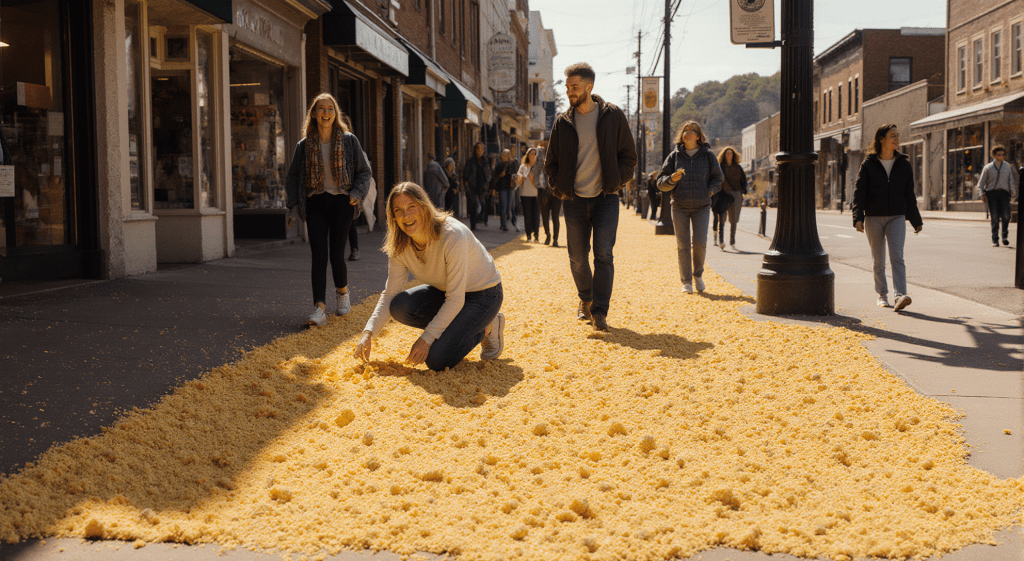
    This year, a small town with big appetites has given street food a very literal makeover by paving every sidewalk with thick, golden slabs of fresh cornbread. Forget hot asphalt and chilly concrete. Here, each step is a soft, buttery adventure that tickles both the feet and the nose.

    A stroll down Main Street feels less like an errand and more like a tasting menu. Warm bread aroma drifts through the air, and residents confess it is nearly impossible to leave home without pockets full of crumbs and memories of buttery bliss crumbling underfoot.

    Tourism is booming. Visitors arrive from far and near to experience the crumbly promenade, pausing for deep, satisfied breaths and snapping photos of snack-tastic footprints. Sidewalks now receive star ratings for fluffiness. Downtown currently leads the charts for texture, aroma, and general snackability.

    Restaurants moved fast to match the mood. Hostesses hand out complimentary butter pats, and the chili cook-off relocated outdoors so tasters can scoop samples with the most convenient utensil imaginable, the sidewalk itself. Shoe prices have crept up, but no one seems to mind as long as every block stays flavorful.

    There are, however, logistical quirks. Rainy days turn the walkways into something very close to cornbread pudding, and the local squirrel population has doubled, emboldened by an all-you-can-eat buffet that stretches for miles. Street sweepers report an existential crisis, since the job now involves deciding whether to tidy the path or take a bite out of it.

    Even so, morale is high and crumbs are everywhere. The mayor promises a thin honey glaze at the next board meeting to improve structural stability and add a pleasant shine. Urban planners are already sketching Biscuit Boulevard for residents who prefer a flakier stride, with Scone Square proposed as a weekend-only pilot.

    If you are hungry for adventure, lace up your bread-resistant boots and head for the only town where a daily walk means you are always one nibble away from home.

  • Stone Age Slide Decks Ran on Ice and Fire

    Stone Age Slide Decks Ran on Ice and Fire

    Forget stuffy meetings and digital projectors. Prehistoric presenters were already running show-stopping visuals long before the first pie chart. Recent “findings” suggest clever cave dwellers carved lenses from pure ice, turning plain cave walls into pulsing theaters of mammoth and buffalo action.

    With a block of icy tech propped before a carefully tended fire, early innovators beamed lively scenes of galloping herds to audiences huddled in the shadows. The storytelling possibilities felt endless. Picture a keynote hunter grunting for emphasis, pointing a spear to highlight the day’s most thrilling buffalo chase, all courtesy of the ice lens slide show.

    The system had quirks. Modern gadgets fret about battery life and Wi-Fi. These proto-projectors depended on temperatures that refused to budge above freezing. One stray sunbeam could end a blockbuster premiere in a dramatic puddle, sending viewers scrambling for shade and a backup lens left to chill in a nearby snowdrift.

    Even with chilly technical errors, cave conferences rarely dragged. Presenters laid out fresh mammoth migration routes or reviewed annual berry-collection quotas, all at a respectable subarctic forty degrees. Evidence suggests audiences preferred wild projections over the wall-scribbling method, mostly because no one had to bring their own charcoal.

    Meetings wrapped when the ice ran out or the last buffalo faded into a watery blur, whichever arrived first. Some storytellers swore the fleeting images made each show more suspenseful and exclusive. Attendance spiked whenever someone promised a bonus meteor shower effect using a clever sprinkle of fire sparks.

    The Bureau of Paleolithic Presentations, a very serious organization that definitely exists, now recommends standard practices such as “keep the lens frosty,” “rotate the fire evenly,” and “do not lick the projector.” Field notes also mention that complimentary snow cones improved feedback scores.

    So the next time your conference room freezes or a modern slideshow flickers unhelpfully, take heart. You stand in a long tradition that runs back to the most dramatic ice lens showdowns of the Stone Age. At least you do not have to mop up after a technical meltdown.

  • Department of Transit Produce Launches “Bushel-to-Board” Program

    Department of Transit Produce Launches “Bushel-to-Board” Program

    Public transportation just got fruitier in the most literal way. In a move that is equal parts quirky and nutritious, city buses now greet passengers not with a beep of a fare card, but with conductors ready to count every last apple in your bushel. Forget spare change or tap-to-ride apps. If you want to hop aboard, a brimming basket of apples is your golden ticket.

    Morning commutes now feature a parade of apple-toting riders teetering under the weight of their fruity fare. Passengers juggle Honeycrisps, Granny Smiths, and the occasional rogue McIntosh as they inch toward the front, baskets in tow. Dropped apples are swiftly retrieved and congratulated on their adventurous roll down the curb.

    Waiting for the next bus has never been sweeter. With a few extra minutes, would-be riders swap pie secrets, debate the ideal level of tartness, and organize spur-of-the-moment cider tastings under the shelter. Forgot lunch? No problem. Someone will trade a shiny Cortland for a top-tier crumble recipe.

    Once aboard, the adventure continues. The cabin hums with the gentle thud of baskets settling into nooks, while brave snackers take mid-ride bites. Handrails glisten with the faintest sheen of sticky sweetness, a reminder that orchard season is alive and well, and that wet wipes are a commuter’s best friend.

    Ridership has reached record highs, possibly because the buses smell like rolling orchards on crisp mornings. Riders who once dreaded the commute now revel in fresh air, fresh fruit, and surprisingly lively apple banter. Nothing bonds a crowd quite like a collectively sticky situation.

    Transit officials are already floating expansion plans. Rumor suggests a Peach Express next summer, although veterans warn that bushels of peaches may require reinforced suspension and very patient drivers. The Bureau of Seasonal Transit Upgrades is reportedly drafting a “Stone Fruit Stability Protocol,” just in case.

    So next time you head out, double-check your bag and bring an extra apple for your seatmate. Around here, the bushel is the new boarding pass, and no one is ever accused of apples-ing under pressure.

  • Egypt’s Pyramids Hid Massive Ancient Compost Heaps

    Egypt’s Pyramids Hid Massive Ancient Compost Heaps

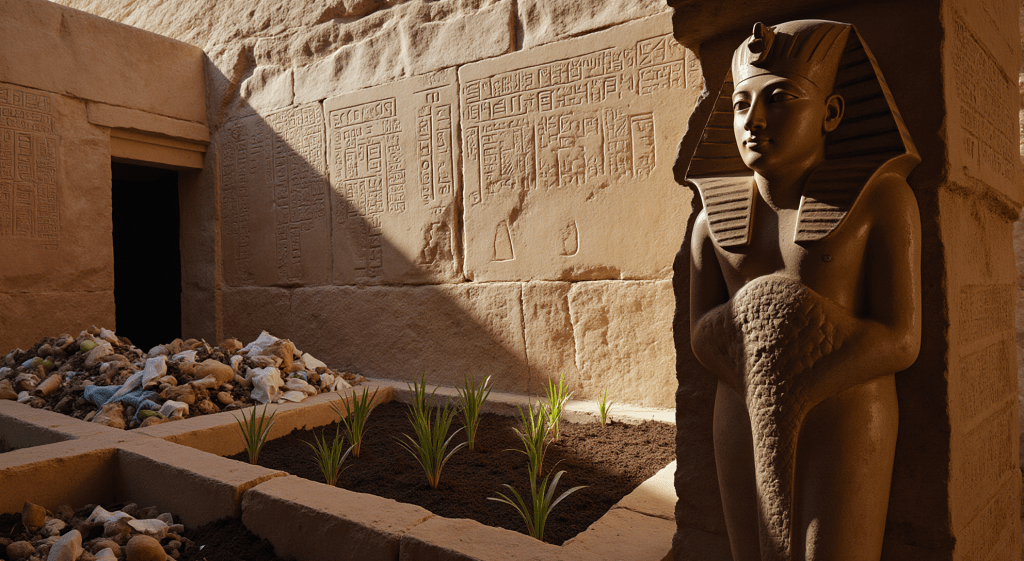
    Forget everything you thought you knew about pharaohs’ treasure. Recent discoveries now suggest that Egypt’s most iconic monuments were not glittering tombs but the ancient world’s most efficient recycling centers. According to these theories, the pyramids did not just hold royal remains. They held compost, carefully layered heaps of organic matter designed to nourish eternity itself.

    While legends tell of gold and gemstones, archaeologists now believe the real treasure was the perfectly balanced blend of banana peels, wilted papyrus, and ceremonial leftovers slowly transforming into the richest soil this side of the Nile. Pharaohs, it seems, pursued immortality not through wealth but through waste management. They were not hoarding riches for the afterlife; they were creating top-tier fertilizer.

    Visitors to these ancient recycling pyramids were greeted by carved hieroglyphic instructions that detailed the proper disposal of leftover figs, olive pits, and ceremonial flower petals. Sorting compost was considered a sacred act. Priests supervised with solemn reverence, ensuring that no errant date pit found its way into the fruit peel pile. Rumor has it that the Royal Beetle Inspector held the highest authority in the land, armed with both a magnifying glass and impeccable compost etiquette.

    Pharaohs were deeply committed to their eco-conscious afterlives. Some insisted on open-air sarcophagi so they could personally monitor the nutrient cycle for eternity. Tutankhamun himself is now rumored to rest beneath a flourishing patch of cucumbers that archaeologists describe as suspiciously divine.

    Travelers from distant kingdoms visited these compost pyramids to witness the miracle of royal decomposition. They returned home bragging of the sweet, earthy scent of immortality and occasionally explaining to border guards why their souvenirs smelled faintly of banana bread. Meanwhile, local farmers near the pyramids enjoyed harvests so abundant that even desert onions grew to the size of chariot wheels.

    So, the next time you toss your food scraps into the compost bin, take a bow. You are continuing a royal tradition thousands of years old. In the end, the secret to eternal life may not lie in gold or glory but in a well-tended heap of peelings, petals, and pure potential.

  • Ancient Temples Ran on Llama-Powered Elevators

    Ancient Temples Ran on Llama-Powered Elevators

    Move aside, modern escalators. Archaeologists have uncovered proof that ancient temples perfected the art of upward travel with something far superior to metal stairs and motorized belts: llama-powered elevators. These marvels of ancient engineering turned worship into a first-class ride, complete with soft hums, elegant headgear, and impeccable customer service on four legs.

    These weren’t clunky wooden lifts either. Imagine ornate platforms gliding gracefully up marble staircases, suspended by thick ropes and pulled along by herds of llamas who treated every ascent as a matter of divine duty. Temple-goers would step aboard, adjust their robes, and murmur a polite “muchas gracias” as their woolly chauffeurs began the climb with a regal flick of the ear.

    Legend insists the llamas were pampered beyond belief. Priests lavished them with fresh pastures, golden tassels, and elaborate woven headbands that sparkled in the sun. Particularly enthusiastic llamas were promoted to Senior Vertical Facilitators, a title that carried prestige and priority access to the fluffiest hay. Their peers, of course, were green with envy, which happened to complement their ceremonial blankets quite well.

    Worshippers rode to festivals and ceremonies while serenaded by the gentle rhythm of chewing and the occasional approving snort. A ride wasn’t just transportation; it was an experience. Etiquette demanded you compliment your llama’s accessories before departure, or risk a particularly bumpy ascent as subtle revenge.

    Archaeologists even uncovered stone carvings depicting llama handlers logging trips with hoofprint signatures. Most accounts boast perfect safety records, although one clay tablet details the legendary Haybale Overload of 347 BCE, when five llamas and an ambitious buffet accidentally achieved record altitude before anyone could say “whoa.”

    Historians now regard these llama elevators as the height of ancient innovation, a perfect marriage of wool and wonder. They argue no modern elevator, with its metallic ding and faint background music, could ever compete with the charm of a determined llama on duty.

    So the next time your elevator stalls between floors, take a moment to imagine a herd of llamas standing proudly beneath you, chewing calmly as they lift your spirits and your platform toward the heavens. Vertical travel has never been so fluffy or so fashion-forward.

  • Giant Thermos Statues Fill Parks With Cider and Cheer

    Giant Thermos Statues Fill Parks With Cider and Cheer

    City parks have officially outdone themselves this season. Instead of boring benches and polite little fountains, towering thermos statues now gleam across the landscape, standing proudly like caffeinated guardians of fall. Each one is complete with a screw-top lid, an elegant carved handle, and steam vents that puff out apple-scented clouds as if the trees themselves decided to start brewing.

    At the first light of dawn, residents march into the parks armed with jugs, buckets, and heroic determination. Filling the thermoses has become a full-contact sport. Teams of cider enthusiasts coordinate like pit crews, yelling things like “More cinnamon!” and “We’re losing pressure near the spout!” By the time the sun crests the trees, the air hums with the sweet perfume of success and mild dehydration.

    Once the cider begins to steam, the parks transform into glowing, misty wonderlands. Strangers greet each other with toasts, mugs the size of helmets clanking together in joyous solidarity. Children chase apple-scented fog, while dogs appear convinced the entire event is a massive, slow-motion snack conspiracy.

    The phenomenon has even inspired a competitive scene. Neighborhoods now hold “Spice-Offs,” complete with judges in oversized scarves, clipboards, and far too much nutmeg in their bloodstreams. The coveted Golden Thermos Trophy currently resides in Maplewood Park, though its victory is hotly contested after rumors of illicit pumpkin spice usage.

    Fashion has followed suit. Boutique stores are selling “steepwear” for autumn athletes, including moisture-wicking flannels and heat-resistant mittens. Meanwhile, squirrels have started hoarding mug handles, apparently convinced they’re limited-edition collectibles.

    City officials insist that everything is running smoothly. Reports of people attempting to swim in the thermos vats are “greatly exaggerated,” and emergency crews only respond to “minor cider-related stickiness.” The Parks Department now employs a full-time “Cider Safety Liaison,” whose only job is to yell, “That’s too much clove!” at strategic intervals.

    So if you find yourself wandering through a foggy park this season, follow your nose and bring a mug. Somewhere nearby, an enormous thermos is gently rumbling with purpose, fueled by community spirit, apple pulp, and the faint sound of someone whispering, “Just one more ladle.”

  • The Trojan Horse Was Actually a Giant Fax Machine

    The Trojan Horse Was Actually a Giant Fax Machine

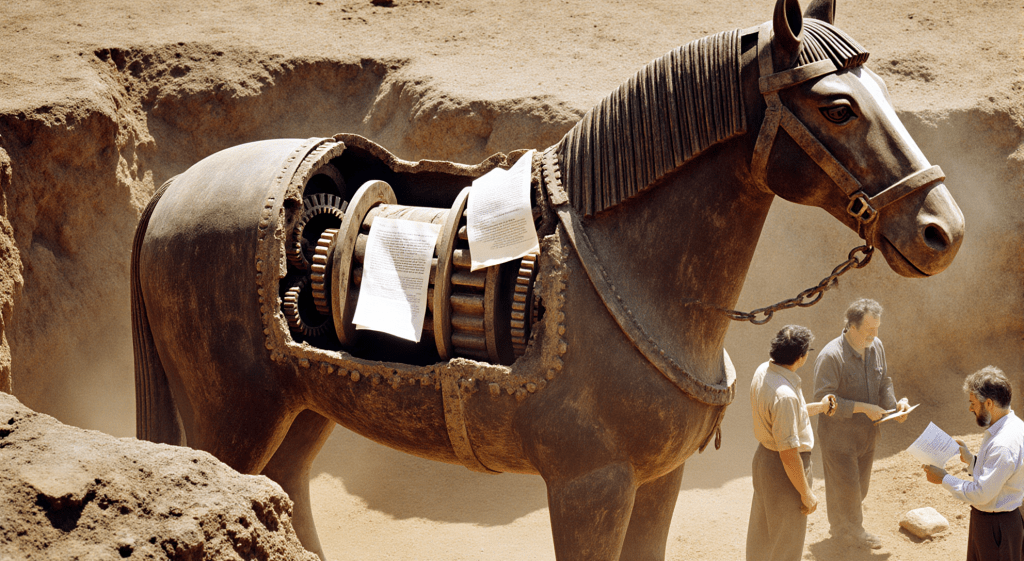
    Move over, covert soldiers. A new theory is galloping out from the sands of history. Recent archaeological excavations suggest the most famous wooden horse in Greek mythology may not have smuggled warriors at all. Instead, it hid an Ancient Greek technological wonder: a colossal, hand-carved fax machine.

    Frustrated by glitches in Troy’s customer service, from late deliveries to questionable souvenirs to the infamous “drawbridge not working properly” fiasco, the Greeks apparently decided to send their complaints in the most dramatic way possible. Rather than handwritten scrolls or shouting at the city gates, they constructed what scholars now call the Trojan Fax. It was the ultimate form of passive-aggressive communication, guaranteed to be too large to ignore.

    Inside the horse’s hollow belly, archaeologists uncovered what can only be described as an ancient papyrus-spitting contraption. Oak gears, olivewood rollers, and intricate levers would have allowed the Greeks to transmit page after page of grievances right through the walls of Troy. Reports suggest no fewer than 327 identical complaints about “excessive wait times for conquering appointments.”

    The machine ran on grape-powered hydraulics and an endless supply of “fax papyrus.” Ingeniously, it also had a resend function, ensuring that Troy’s clerks could not pretend they never received a complaint. Some historians argue this may have been the world’s first “reply all.”

    Whether the Trojans ever responded remains unknown. What is clear is that the legendary “fax busy tone,” a chorus of bleating rams and exasperated scribes, may have echoed through the city for days. Some scholars now speculate that this relentless noise was the true downfall of Troy, as exhausted clerks finally surrendered in search of silence.

    So the next time your printer jams or you are left on hold, spare a thought for the Trojans. They didn’t just face a giant wooden horse at their gates. They had to endure an endless barrage of papyrus memos about missing souvenirs and poor siege scheduling.

    One newly translated message sums it up perfectly: “Dear Troy, please consider refurbishing your gift shop. Also, do you validate chariot parking?”

  • Ancient Egypt’s Original Emoji Drop

    Ancient Egypt’s Original Emoji Drop

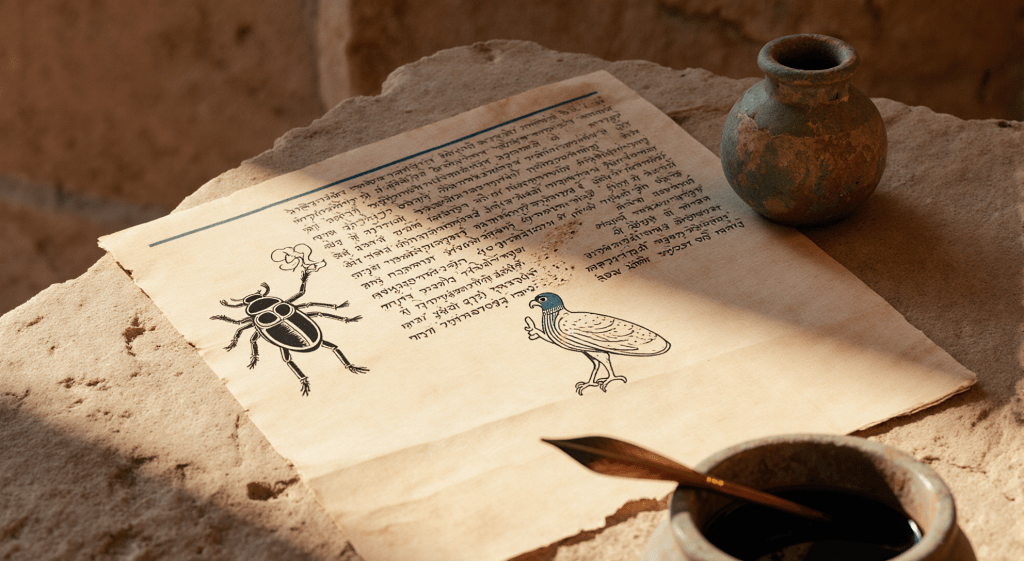
    Long before our thumbs got the workout of a lifetime from sending winking faces and tiny pizzas, ancient Egyptian scribes were hard at work on the world’s first emoji revolution. It turns out, those meticulous papyrus letters weren’t just full of dignified hieroglyphics. They often ended with a dash of doodled personality. Forget about plain old “Farewell.” True papyrus pros knew you closed a letter with a laughing scarab or a jaunty falcon giving the most enthusiastic thumbs-up this side of the Nile.

    These delightful sign-offs weren’t just idle amusements. In the buzzing world of Egypt’s written communication, a well-placed giggling beetle or an approving bird made it clear your letter was meant in good spirits. Hieroglyphic historians now believe the ancient postal system actually delivered mail faster if your papyrus included particularly charming bug art at the end.

    The scarab, already the celebrity of the insect kingdom, was famous for its “uplifted legs” pose, a sort of cross between a joyful giggle and an ancient fist pump. Friends receiving these notes knew instantly that their correspondent was in high spirits, or perhaps just showing off their doodling skills.

    Meanwhile, the thumbs-up falcon took Egyptian greetings to new heights, quite literally. Scribbled with the precision of royal jewelers, these bird emojis squawked approval, encouragement, or a gentle reminder to bring more figs to the next house party. Some bird enthusiasts claim the falcons even started a friendly rivalry with the cats, who preferred a more sophisticated “tail swirl” flourish.

    Despite papyrus now being outpaced by pixels, we owe our modern smiley faces, hearts, and dancing bananas to these playful pioneers. The sands of time may have hidden many of these ancient winks and nods, but archaeologists are convinced that somewhere out there, a yet-undiscovered papyrus features the world’s first “crying laughing” cobra.

    So, next time you send a smiley to a friend, tip your metaphorical quill to Egypt’s original bug and bird enthusiasts. Whether thousands of years ago or yesterday, a happy doodle always makes the message sweeter, especially if there’s a giggling beetle involved.

  • Vikings Invented Dramatic Sea-Mail Messaging

    Vikings Invented Dramatic Sea-Mail Messaging

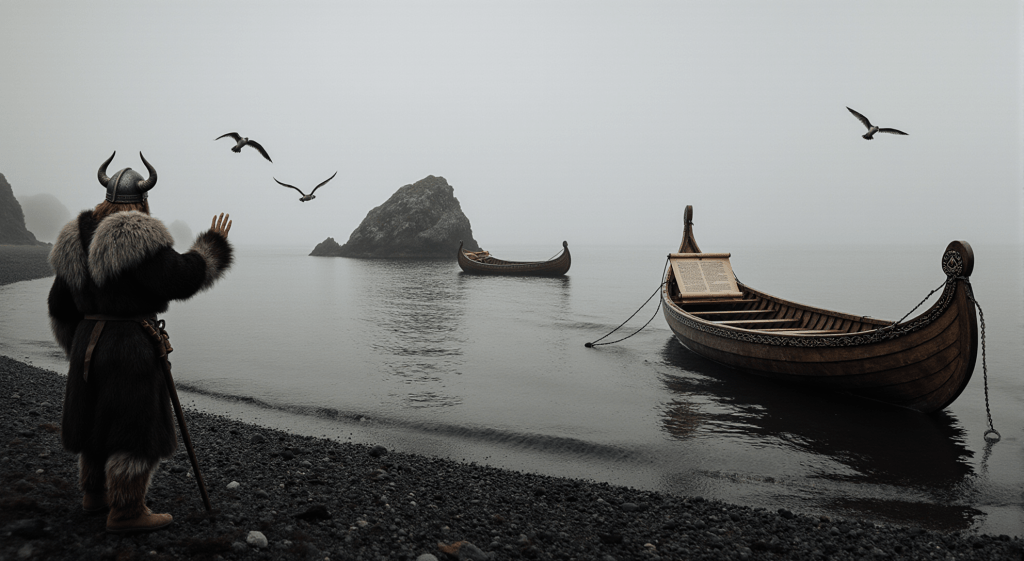
    Before there were chat threads or inbox zero ambitions, the Vikings handled correspondence with pure nautical flair. Known as “sea-mail,” this legendary postal service involved tying a sealed scroll to a trusty longboat and setting it adrift, trusting the tides and Thor’s sense of humor to deliver it to the right shoreline.

    Once shoved into the surf, the vessel was officially on its express route. There were, of course, delays. Boats were often sidetracked by wandering whales, mischievous mermaids, or the irresistible lure of siren karaoke competitions that sometimes diverted entire fleets.

    Receiving a sea-mail delivery was a spectacle fit for saga. Villagers knew post day had arrived when armored helmets and axes clattered in the shallows. Every respectable message came with a soaked scroll, a small puddle, and a dramatic sense of adventure.

    Replies traveled at a brisk “one raid per response” speed. A return message might arrive between the next new moon and the next impromptu village barbecue. On rare occasions, long-lost boats would wash ashore years later, their scrolls hopelessly outdated but still treasured for their heroic delivery.

    Viking children competed for the title of “Best Boat Launcher,” a prestigious role requiring wind calculations, loud ship-naming, and the firm belief that the longer the dragon head, the faster the voyage. Households kept track of delivery success with carved notches, most of which doubled as decorative doorstops.

    So the next time your email gets stuck in the outbox, remember the longboats still bobbing in some northern tide. Each carried tidings of glory, soggy shopping lists, and the occasional poem that arrived centuries late but right on Viking time.

  • Espresso Showers: City Wakes to Caffeinated Clouds and Perky Commutes

    Espresso Showers: City Wakes to Caffeinated Clouds and Perky Commutes

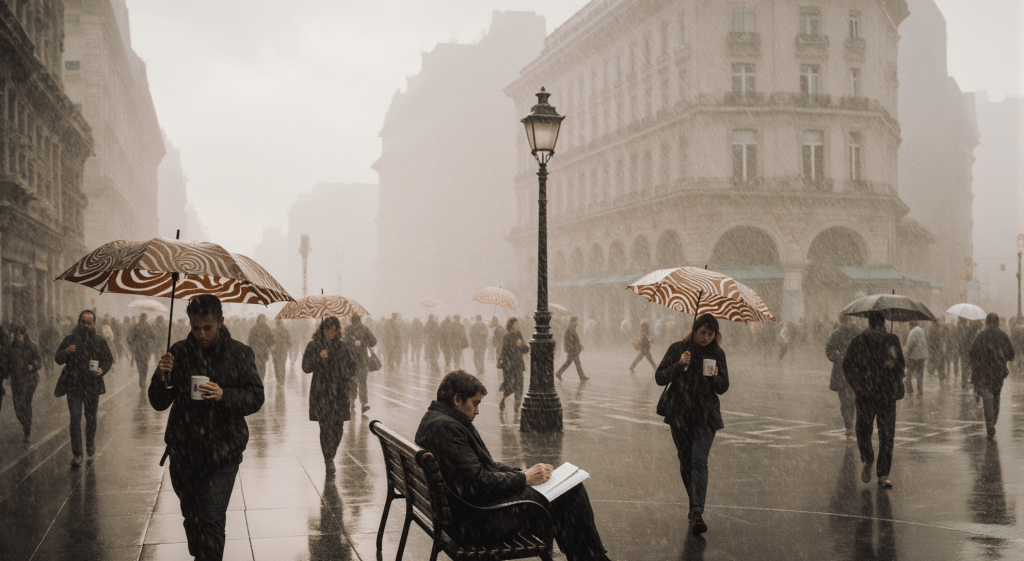
    Forget flat whites and espresso machines. A bold scientific initiative has ensured that each passing rain cloud now drizzles a faint brown mist, filling the air with the irresistible aroma of fresh coffee. Residents no longer wake up—they perk up—eyebrows arching in unison as every morning shower brews its own welcome.

    Each drop carries a tiny jolt, transforming soggy commutes into sidewalk sprints. Locals can be spotted dashing with mugs in hand, pausing only to inhale the café-rich fog. Alarm clocks are rapidly becoming antiques, and vintage snooze buttons now sell briskly as gag gifts.

    Baristas have adapted to the new weather with flair. Umbrellas painted with foamy latte swirls are the accessory of the season, and “extra shot” raincoats fly off the racks. Meteorologists in espresso-scented lapels now predict forecasts such as “eighty percent chance of crema with a delightful finish at sunrise.”

    Not everyone is thrilled. Nappers in the park find themselves jolted into restless productivity, pacing and muttering grocery lists as the espresso mist turns naps into impromptu planning sessions. Sleepwalking with purpose has become a recognized side effect.

    Yawning is now a rare novelty. People trade wistful stories of “the last time I was tired,” told with twitchy eyelids and too-wide smiles. Schools enjoy higher attendance at early classes, though teachers note a rise in perfectly alphabetized backpacks and unnervingly organized lockers.

    Legends are brewing as quickly as the weather. Some whisper that the combined energy of caffeinated citizens could power the transit system, if only someone could capture it. For now, the power grid remains unchanged, while local coffee shops stand eerily empty.

    So when the sky darkens and the first drops fall, take a deep breath. Let the espresso rain deliver your morning jolt. And if you want to fit in, consider carrying an umbrella with a tasteful mocha flourish. It is the stylish way to weather the buzz.

  • Romans Roll Out the World’s First Chariot Cupholders

    Romans Roll Out the World’s First Chariot Cupholders

    The ancient Romans loved their technological upgrades, and while gladiators may have had their share of innovations, chariot racing held one of the most surprising. Hidden in the footnotes of history is the revelation that Roman engineers invented the first cupholders.

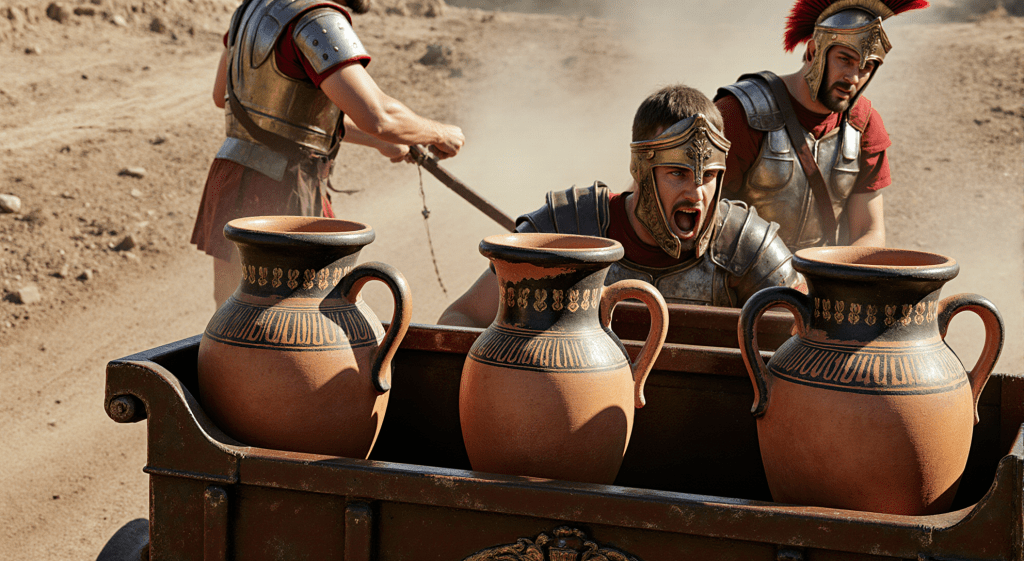
    These cupholders were not an afterthought. Artisans carved sturdy receptacles directly into the chariot frame, ensuring beverages stayed put while drivers thundered down the Appian Way. Hands were freed for steering, sword-swinging, or the occasional salute to admiring crowds, all while sipping with imperial flair.

    There was, however, a flaw. Roman standards for comfort were extravagant, so the holders were sized for amphorae of wine rather than modest cups. The image of a charioteer sipping vintage reds at forty miles an hour may sound grand, but those oversized containers had a wobble that spelled disaster on sharp turns.

    Colosseum race days became notorious for their grape-scented chaos. The roar of the crowd was often punctuated by cries of anguish as prized vintages splashed across sand and tunics. Eventually, officials instituted the now-legendary “no refills on straightaways” rule in an attempt to salvage dignity and arena cleanliness.

    Roman poets seized on the drama, recording spilled-wine mishaps in florid verse. Some claimed champions could be traced by the purple trails behind their chariots, while others joked that togas were designed as stain camouflage for such calamities.

    So the next time you slide a travel mug into your car’s cupholder, remember that you are carrying forward a tradition nearly two millennia old. The Romans may not have mastered spill-proof design, but they certainly knew how to race in style.

  • Department of Seasonal Energy Unveils Leaf-Powered Lamps

    Department of Seasonal Energy Unveils Leaf-Powered Lamps

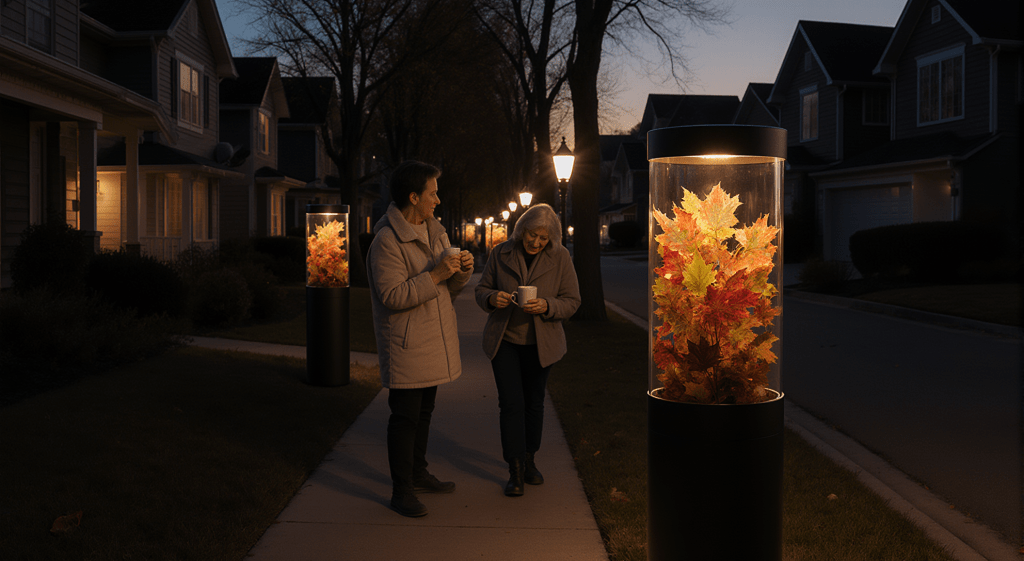
    Move over solar panels. Local inventors have electrified autumn with lamps powered entirely by fallen leaves. Instead of plugging in a reading light, residents now scoop up handfuls of freshly raked foliage and drop them into a lamp’s base. The result is a living room, porch, or backyard fort that glows as warmly as the season itself.

    According to the Department of Seasonal Energy, not all leaves perform equally. Crunchier specimens generate brighter illumination, a discovery that has sparked competitive raking throughout neighborhoods. Blocks now battle for the coveted title of “Most Radiant Pile.”

    Sidewalks have transformed into evening gathering spots. Families parade their fluffiest and most colorful leaf collections to local lamps, while cocoa-sipping crowds admire the amber shimmer glowing from translucent bases. Rivalries thrive as neighbors attempt to outshine one another on crisp fall nights.

    Experts, however, have issued one caution. Pine needles are strictly off-limits. They refuse to shine and, in several prototypes, produced an alarming sneeze-like sound. Engineers describe the effect as “mini coughing fits,” though no one is entirely sure why.

    Children, quick to experiment, have turned the lamps into coded message boards. Specific arrangements of red, gold, and orange produce dazzling secret signals. Story circles in the neighborhood have never been brighter, and with piles of crunchy “fuel” on every stoop, lamps can be topped up at a moment’s notice.

    Design enthusiasts are also captivated. Leaf blends are being swapped like recipes, with some insisting that a pinch of late-October crimson delivers the perfect sparkle, while others argue passionately for maple-heavy mixes. The debates are as lively as the glow itself.

    Whatever the method, the invention has turned lawns into glittering goldmines, united neighbors in seasonal creativity, and given everyone the most enchanting excuse yet to rake just one more pile.

  • Division of Seasonal Traffic Aesthetics Rolls Out Plaid Stop Signs

    Division of Seasonal Traffic Aesthetics Rolls Out Plaid Stop Signs

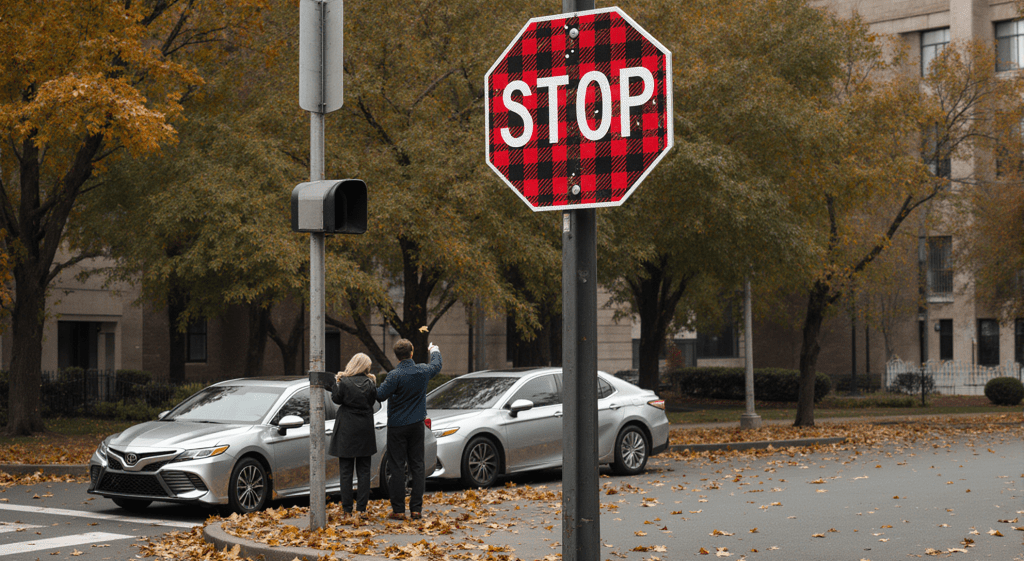
    This autumn, the Division of Seasonal Traffic Aesthetics has unveiled a cozier approach to safety by outfitting stop signs in bold plaid patterns. The tartan markers now appear in select neighborhoods, encouraging drivers to pause not only for safety but also for a touch of seasonal admiration.

    The results were immediate. Motorists linger longer at intersections, mesmerized by the crisscross of warm autumn colors. Many admit they cannot resist rolling down the window for a closer look. Local social media feeds are already overflowing with selfies taken beside the world’s friendliest traffic signs.

    Traffic analysts report higher cheerfulness across neighborhoods, even if efficiency has suffered. Travel times are slightly longer, but residents agree that road rage is nearly impossible when intersections resemble picnic blankets designed by fashion-conscious engineers. Coffee-cup salutes and cheerful waves between drivers have become a common sight.

    Children have stepped into the role of fashion critics, debating which intersections feature the most stylish patterns. Pedestrians walk with a spring in their step, as if each corner has become its own plaid-themed runway. A group of knitters has even begun designing matching scarves, determined to blend in with their local signage.

    Officials assure the public that the signs remain regulation-sized, highly visible, and perfectly effective at keeping traffic safe. The only noted drawback is punctuality, since drivers often spend extra moments admiring the seasonal upgrade.

    So the next time you come across an intersection and notice a splash of plaid, do not be surprised. It is traffic control reimagined with a sense of cozy style, and perhaps the most fashionable reason in history to stop.

  • The Great Wall’s Legendary Goat-Powered Bamboo Escalator

    The Great Wall’s Legendary Goat-Powered Bamboo Escalator

    History is filled with marvels, but few are as unexpected as the legend of the Great Wall’s bamboo escalator. According to stories passed down through generations, imperial messengers did not need to climb the endless steps. Instead, they glided to the top on a contraption made from bamboo and powered by a disciplined team of goats.

    This ancient escalator relied not on gears or pulleys, but on the synchronized hoofbeats of carefully trained animals. Each goat wore a vest that marked its role in the empire’s communications network. Their rhythm was so precise that the steady clip-clop echoed across the valleys, signaling that important news was approaching. Messages might have been nudged by horns along the way, but they always arrived.

    Skeptics have long doubted the tale, yet faded scrolls include intriguing illustrations. These show goats lined up beneath imperial insignias, patiently propelling messengers skyward. The riders appear calm, scrolls in hand and hair neatly in place, though perhaps with the faint look of someone who has just shared space with a determined goat.

    The system depended on more than discipline. Goats required regular supplies of clover and ceremonial turnips, without which no amount of training would keep them moving. Historians insist that these snacks were as vital as the bamboo structure itself.

    Legends also describe the bond between rider and goat as unshakable. A subtle nod from the messenger, a crunch of bamboo from the goat, and together they rose toward destiny. Each year the community gathered for the Goat Gala, where races and the “Best in Vest” contest honored the animals that kept the empire connected.

    Modern escalators may rely on electricity and mechanics, yet none can match the spectacle of synchronized goat power. Some wonder what today’s engineers might dream up if they had the courage to add a herd of animals to their blueprints.

    So when you face a long climb, think back to this tale of invention and determination. In the mists of antiquity, it was not wires or engines that carried messages skyward, but the steady steps of goats with impeccable taste in snacks.

  • Spartans Invented Fitness Tracking—On Their Shields

    Spartans Invented Fitness Tracking—On Their Shields

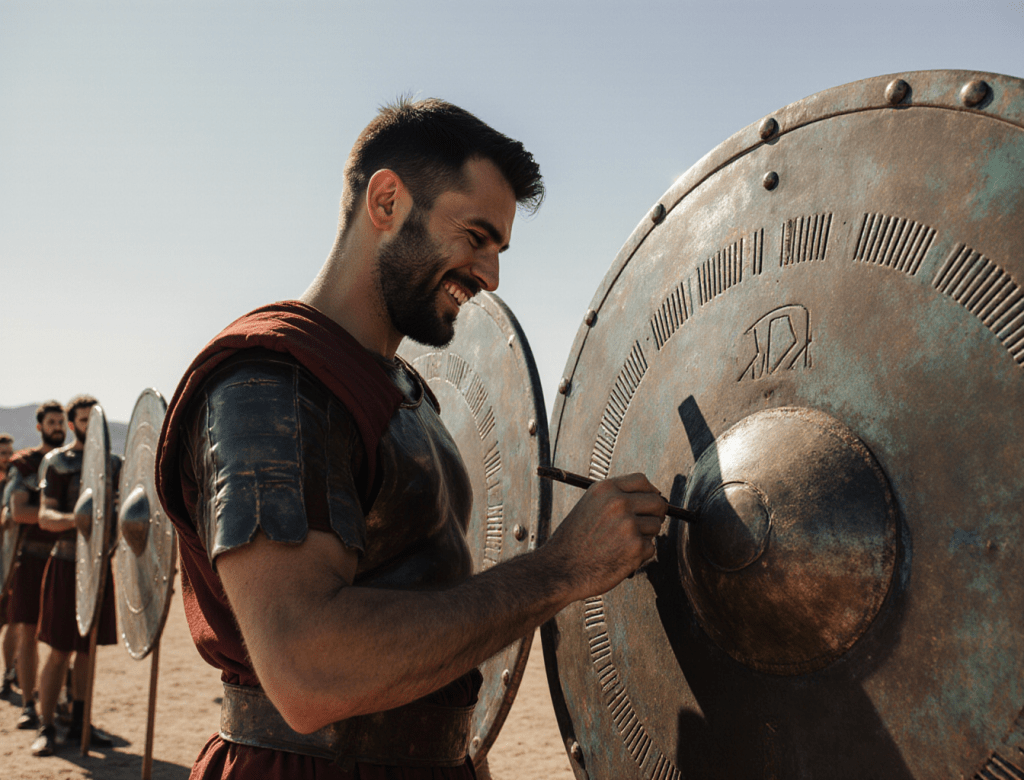
    Long before step counters and sleek wristbands, the Spartans were already measuring their workouts with a method as brutal as their training. According to ancient legends and a few suspiciously over-scratched shields, warriors kept mileage logs by carving each completed run directly into bronze.

    It was the ultimate flex, equal parts muscle and statistics. Before charging across the olive groves, runners would grab a chisel and notch another mile into their gear. Seasoned champions strutted with shields so covered in marks that they looked like ancient barcode scanners, though far less convenient to swipe at the marketplace.

    The training grounds became galleries of endurance. Young warriors compared etching counts with the same intensity modern athletes reserve for leaderboard screenshots. Boasts of record-breaking sprints were paired with gleaming shields and even shinier biceps, each line carved into history beneath the relentless Greek sun.

    Shield upkeep became a matter of pride. Legends tell of runners who polished their bronze to a shine so fierce it blinded comrades at thirty paces. Spartans claimed this glare doubled as sunscreen and intimidation tactic, though blacksmiths were quick to complain that the scratches ruined the balance.

    Not that complaints mattered. Vanity and rivalry always won out over metallurgy. The drive to add one more line sent warriors running longer, faster, and occasionally straight into groves of very annoyed goats.

    Modern apps may track calories and heart rates, but they cannot compete with the permanence of Spartan data. Modern fitness trackers have never left a smith cursing about crooked shields, nor has it caused accidental sunburns from a well-buffed personal best.

    So the next time you log a jog, imagine chiseling it into a bronze disc and hauling it across the battlefield. Spartan fitness tracking was not wireless, but it was unforgettable, immovable, and impossible to ignore.

  • Turn Left at the Goat: Ancient Maps Navigated by Sights, Sounds, and Smells

    Turn Left at the Goat: Ancient Maps Navigated by Sights, Sounds, and Smells

    Lost travelers of the ancient world carried maps that made modern GPS look clunky by comparison. Instead of puzzling over compass roses and winding lines, adventurers followed instructions like “turn right at the loudest rooster” or “walk until you smell bread drifting from the bakery.” Navigation was as simple as trusting your nose, ears, and the occasional stubborn goat.

    Cartographers of the era became masters of sensory detail. Maps were filled with sketches of woolly sheep, curls of warm steam, and even notes on the pitch of a shepherd’s tune. Apprentices were reportedly tested with a blindfold, a loaf of challah, and a rooftop goat to prove their directional instincts.

    The system wasn’t limited to livestock and loaves. Some maps promised music as a guide, with tiny drawings of singing shepherds. Travelers knew they had strayed only if they failed to hear “Ode to the Grazing Yaks” echoing across the valley.

    Compared to the robotic monotone of modern GPS, these maps offered charm with every step. If you did lose your way, the blame usually fell on a napping sheep or a baker who had run out of yeast.

    Legacy cartographers wore their craft like a badge of honor. It was common to be stopped in the street and asked for directions to the mountain pass with the legendary apricot tart, directions that doubled as dinner recommendations.

    So the next time your navigation app glitches in the middle of nowhere, don’t despair. Keep your ears open for a helpful bleat, or follow the scent of fresh bread curling on the breeze. The best journeys, after all, are the ones that leave you both full and found.

  • Squirrel Acorn Arrangements Hint at Stock Market Secrets

    Squirrel Acorn Arrangements Hint at Stock Market Secrets

    If you thought squirrels limited themselves to burying acorns and scampering through the trees, think again. Park visitors have begun noticing elaborate acorn formations at the bases of trees, around lampposts, and circling public benches in mysterious designs. These are not ordinary caches. According to growing whispers on the park benches, they are forecasts.

    Local scholars have rushed to investigate, armed with magnifying glasses, notepads, and an impressive sense of academic optimism. The working theory is that squirrels are transmitting economic insights through their nut patterns, offering an alternative to charts and candlesticks. Investors call it “acornalysis.”

    Interpretations vary. Some insist that a spiral of acorns around a maple indicates strong growth in leafy green startups. Others claim a zigzag near the duck pond predicts an imminent market dip. Analysts now pair squirrel-watching with portfolio adjustments, treating the park as a woodland Wall Street.

    The squirrels, naturally, remain silent. Their only commentary comes in the form of tail swishes and the occasional erasure of a pattern just as eager note-takers lean in. Scholars have tentatively labeled this behavior “rodent-driven volatility.”

    Early bird investors now arrive at dawn with coffee in hand, scanning lawns for the latest formations before trading begins. Wall Street may close for the weekend, but the trees never sleep, especially when nut-based indicators are at stake.

    Conspiracy theorists have gone further, suggesting the existence of a shadowy woodland financial network spanning parks and forests worldwide. Whether or not such a network exists, portfolios across the city are undeniably beginning to look a little squirrely.

    So next time you wander through the park, keep your eyes on the ground. You may be stepping over the next great market trend, carefully charted in acorns by a whiskered economist.

  • Blown Away: Town’s Leaf Blower Orchestra Turns Autumn into an Operatic Gale

    Blown Away: Town’s Leaf Blower Orchestra Turns Autumn into an Operatic Gale

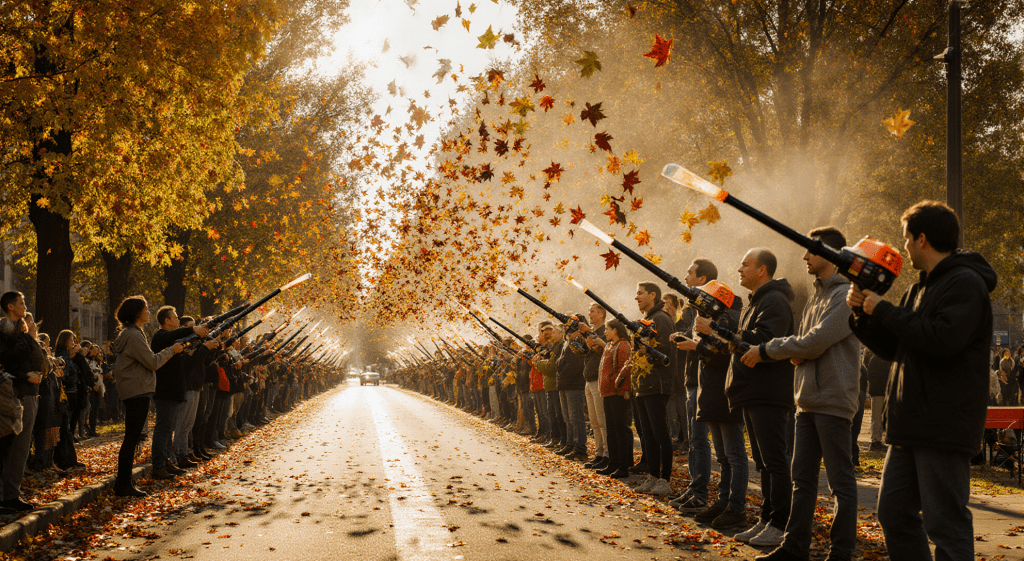
    Each fall, while most communities quietly rake their leaves, one town hauls out the extension cords and prepares for the loudest concert of the season. The famed Leaf Blower Orchestra kicks off with the first crisp breeze, transforming a sleepy avenue into a roaring symphony hall powered entirely by horsepower and high-velocity gusts.

    At dawn, dozens of residents march into formation beneath golden canopies, each armed with a leaf blower tuned to near-operatic vibration. What follows is not chaos but carefully rehearsed pandemonium. In unison, the musicians tilt their blowers skyward, producing a synchrony so intense it could make the Vienna Philharmonic reach for industrial-strength earplugs.

    The performance peaks when every blower hits full throttle, unleashing a swirling storm of maple and oak. The leaves twist and pirouette down the street in perfectly choreographed arcs, forming an airborne ballet equal parts music and mulch. Spectators in scarves sip cocoa and gape as the town’s main street transforms into a wind tunnel of autumnal art.

    Subtlety is nowhere to be found. The symphony rattles windows, makes coffee mugs tremble, and even registers on the local seismometer as what geologists diplomatically call “highly festive vibrations.” Observers debate whether the sound leans toward Beethoven’s Fifth or more Wagner with an undertone of tornado drill.

    Even wildlife cannot escape the spectacle. Squirrels have been spotted wearing tiny earmuffs, and geese on migration have reportedly altered flight paths to avoid unsolicited encores. Meanwhile, the Department of Seasonal Acoustics has begun discussing whether “category-five concert” should be an official weather term.

    Veteran attendees come prepared with earmuffs in one hand and cocoa in the other. Newcomers grin through the sonic storm, swept away by the unshakable majesty of mechanized harmony.

    So if Beethoven colliding with a wind tunnel sounds like your ideal night out, follow the crescendo and the trail of spinning leaves. Tickets are free, though your hearing may not be.