Author: Not Fact-Checked

  • Polite Horror Streaming Service Watches You Back With Excellent Manners

    Polite Horror Streaming Service Watches You Back With Excellent Manners

    A bright new startup claims its horror catalog does not just stare from the screen, it politely stares right back. The platform greets you with a gentle gaze meter that clocks your flinches, then awards a gold star for bravery, even if the bravery lasted two seconds.

    When a video buffers, the loading chime softens and tries your first name on for size, followed by a compliment about your blanket that feels like weather with good manners. Imagine a thundercloud volunteering to be your weighted comforter, with taste.

    Test audiences insist the pause icon gives a slow blink, as if it is trying to remember where it left its eyes. Autoplay now nudges in the moment you glance away, the digital equivalent of an episode clearing its throat to get your attention.

    The app has adopted exquisite manners. A dialog appears to ask, Are you still being watched, and there is a checkbox for Yes, thank you, as well as an option labeled Kindly give me a moment. It even leaves a tiny peppermint in your watch history, which seems impossibly considerate for a list of titles.

    In the living room, the details pile up. The spinner swirls into an eye like spiral, more abstract than spooky, but very attentive. The television glass holds a suggestion of a seated someone, while the sofa offers only a polite dip in one cushion. A remote glows like it just cleared its calendar. A single popcorn kernel hesitates on the rim of the bowl, not ready to commit. Your phone lies face down and still manages to reflect that watchful spiral.

    Premium features read like bedtime with a chaperone. Comfort Mode dims the room the moment you tuck your toes. Pillow Peek Counter tallies how often you use the cushion as a shield and emails you congratulations for personal bests. Blanket Complimenter offers seasonal praise, with extra kindness for flannel and quilts with mysterious provenance.

    Early days, yet the vibe is unmistakable. These shows monitor right back, but they do it with soft voices and good posture. If the loading sound whispers your name, feel free to say hello, adjust your blanket with confidence, and let the supportive thundercloud assure you that your taste is impeccable.


  • Autumn Escalators Go Full Gourd Mode

    Autumn Escalators Go Full Gourd Mode

    In a daring act of seasonal ingenuity, local shopping malls have replaced metal escalator steps with conveyor belts overflowing with fresh gourds. As autumn sweeps the city, shoppers glide to their next destination while casually plucking the ripest pumpkin or choicest acorn squash from the moving belt beneath their feet.

    Idle small talk is out. Determined mallgoers now plan their produce commute, eyeing decorative zucchinis as they drift toward the next level. The upward journey has never been so bountiful, and residents delight in checking off shopping and gourd hunting at the same time, all without breaking stride.

    Competition for the best pumpkin is fierce, especially near the food court where the stakes and appetites are highest. From petite, perfectly round sugar pumpkins to handsomely lumpy butternuts, there is a squash for every shopper. Bragging rights await anyone who snags the crown jewel before the belt levels out.

    Regulars are quick to praise the new setup. “It is a gourd-geous way to shop,” says one seasoned customer, balancing three pumpkins and a cinnamon pretzel with impressive agility. Kids are on board too, riding toward the toy store while scouting mini decorative gourds for classroom show and tell.

    Store staff have turned into expert gourdrepreneurs, handing out quick cleaning wipes and decorative twine so customers can show off their haul the moment they step off the belt. Rumor has it the carousel may swap plastic horses for giant spinning spaghetti squash, though officials are still conducting roundness tests.

    Experts are unanimous. This is a true autumn leap forward, or perhaps a graceful autumn glide. The mall now echoes with laughter, gourd comparisons, and the gentle thud of pumpkins settling into baskets as shoppers continue their seasonal quest.

    So next time you head to the mall, remember: it is not just about reaching the top floor. It is about doing it in squashy, stylish, and efficient fashion. After all, everyone has new squash goals to meet.

  • Welcome to the Mesopotamian App Store, Please Lift Responsibly

    Welcome to the Mesopotamian App Store, Please Lift Responsibly

    Long before smartphones buzzed with alerts, the ancient Babylonians had their own version of an app store. Theirs involved more heavy lifting and far fewer battery issues. Picture a bustling Mesopotamian market where you “downloaded” the latest weather or lunar calendar app by selecting a smooth stone tablet from a vendor’s stall. No digital downloads here. Every feature was chiseled by hand by scribes with heroic forearms.

    Each tablet functioned like a modern app, only with more granite. Instead of tapping an icon, you hired a specialist with a hammer, a chisel, and a relentless urge to inscribe. Need weather guidance for the barley harvest? Reach for “Cloudy with a Chance of Clay.” Planning a festival by the moon? The “Lunar Lookout” slab never went out of style.

    Upgrades were headline news. When Cuneiform Calendar 2.0 arrived, quarries opened overnight to meet demand. Early adopters sprinted home with enormous slabs that boasted brand new icons and slightly crisper wedges. Version control meant adding another shelf to your living room.

    Storage was its own adventure. Nobody carried hundreds of apps in a pocket. Babylonian homes looked like tablet libraries, stacked high with stone programs that doubled as doorstops and conversation pieces. Who needed a gym membership when the hottest update could be measured in kilograms?

    Trendsetters paid a price for being cutting edge. Lopsided biceps became a status symbol, and “tablet back” was the talk of the bazaar. Still, nothing matched the thrill of holding “Travel Maps 1.0” fresh from the chisel. At least until “Travel Maps 2.0” dropped a season later and weighed even more.

    So the next time your phone stalls during an update, spare a thought for the Babylonian power users. Tapping a screen is easy. Chiseling your favorite app into stone took determination, patience, and a very good hammer.

  • Viking Java: Horned Mugs and High-Seas Lattes

    Viking Java: Horned Mugs and High-Seas Lattes

    Archaeologists braving the blustery northern coasts have uncovered a revelation about our favorite bearded sailors. In the shadows of ancient longships, nestled among helms and battle axes, researchers found sturdy horned mugs now recognized as the world’s first Viking coffee cups. The Norse were not only raiders and traders. They were early adopters of caffeinated courage.

    These mugs were no ordinary morning accessories. Built with oversize grips and clever splash-catching horns, they look perfectly engineered for sipping while facing gale-force winds and the occasional sea monster. Whether manning an oar or mapping the next conquest, a hot drink stayed within reach, ready to deliver a proper Viking wake-up call.

    The Norse did not tolerate lukewarm brew. Traces of ancient roast clinging to the interiors have given archaeologists literal grounds for excitement. Some now suggest the secret to Viking stamina relied less on ferocious battle cries and more on espresso-powered enthusiasm.

    Those famous horns, once dismissed as decoration, served a higher purpose. They corralled stray splashes whenever the sea tried to photobomb breakfast. Modern mugs can only dream of such seaworthiness. Try guarding your coffee from North Sea spray with a plain ceramic cup and see how long it lasts.

    Saga writers have always praised Viking fire and fearless spirit. These finds add a relatable twist. Picture stoic warriors, hair streaming in the wind, pausing in unison to take an invigorating sip before another day of adventuring. Nothing says “ready for berserking” like a bold brew.

    A few enterprising scholars are already recreating Viking-style blends, promising a cup as untamed as the north winds. Your morning routine may soon include a touch of seafaring swagger. Balance your mug wisely, unless your name is Ragnar and you have a spare horn nearby.

    So the next time you grip your travel mug, nod to the Norse who dared to drink coffee on the open sea. True adventure pairs beautifully with a robust horned cup and the hush of dawn over cold water.

  • The Age of Turtle Carts and Perfectly Late Arrivals

    The Age of Turtle Carts and Perfectly Late Arrivals

    Centuries before self-driving cars and bullet trains, travelers in ancient Japan relied on a method that was dependable and delightfully slow. According to old scrolls, certain carts were so loyal they followed their owners everywhere, shadowing them like the best-trained pets in the province.

    The secret was not elaborate craftsmanship or mystical charms. A small ensemble of exceedingly patient turtles lived beneath the wooden frames. With a collective look of calm surprise, they shuffled forward and propelled each cart at a pace best described as meditative.

    Journeys required respect for both time and turtle temperament. Arriving fashionably late was more than a social trend. It was inevitable, and often interpreted as a sign of wisdom and inner peace. The more turtles under your cart, the slower and more distinguished your entrance.

    Children loved to guess which noble’s turtle cart would reach the market last. Impatient travelers perfected tea rituals to pass the hours. As for the turtles, they enjoyed slow-motion sightseeing and the occasional snack from a wayward leaf.

    Traffic jams became an adorable affair. Ornate carts queued neatly while clusters of turtles conferred at a cautious crawl. Owners exchanged polite greetings, and the only road drama came from a brief detour toward a lily pond.

    Historians now agree that the turtle cart era set a gold standard for stress-free commuting. Modern rush hour rarely offers so much dignity, serenity, or shell-based perseverance.

    So the next time you are stuck in traffic, consider a gentler pace. A few surprised turtles at the lead might be exactly what the world needs.

  • Pharaohs Had Royal Reminder Services, Not Apps

    Pharaohs Had Royal Reminder Services, Not Apps

    In a twist no one saw coming, Egyptologists have deciphered hieroglyphs that suggest ancient pharaohs handled their daily to-do lists with a surprisingly advanced system: a full staff of living reminder services. Forget apps or alarms. According to these sun-baked carvings, royal memory was outsourced to palace attendants who served as walking, talking notification bells.

    Freshly uncovered wall scenes show attendants clustering around the pharaoh, hands cupped and voices lifted with critical alerts. “O Mighty One, set alarm for sunrise,” calls one. Another, a bit hoarse, reminds the king to “smite the neighbors promptly at noon.” It was multitasking at its most ceremonial, a chorus of reminders echoing through gilded halls.

    Historians now suspect the true grind of palace life was not scheming for the throne, but maintaining the royal schedule with relentless precision. Records hint at attendants who specialized in memorable mnemonics, including hats shaped like the project at hand. Pyramid hat for construction deadlines, crescent-roll headdress for breakfast, and a tasteful festival crown for party prep.

    Experts say the reminder system even used visual icons for clarity. A sun placed over a cozy bed became the universal glyph for “do not oversleep,” while two tiny crooks crossed over an angry neighbor delivered a pointed nudge toward conquest. The only task that remained strictly personal was keeping track of the royal slippers. Even pharaohs had limits on delegation.

    Some rulers enjoyed the ritual so much that they staged full ceremonies just to hear the day’s agenda sung aloud. The merger of music, organization, and a healthy fear of missing an appointment may well be the origin of the first workplace jingle.

    So if you find yourself wishing for a smarter phone or louder notifications, take heart. The pharaohs solved it centuries ago with style, gold, and an army of very dedicated human reminders. Now that is royal treatment.

  • Cornfields Roll Out the Strongest Signal in School

    Cornfields Roll Out the Strongest Signal in School

    Deep in the nation’s heartland, where the corn stands taller than a holiday parade float, something remarkable is sprouting. Recent reports reveal that these extra-large stalks are not just good for popcorn. They are unwittingly hosting the world’s finest 5G reception. Forget coffee shops and libraries. Students now trek out with laptops in tow, searching for that magical spot among the maize where homework seems to upload itself.

    For those in the know, it has become a rite of passage. Hopeful scholars tiptoe between leafy rows, screens glowing with all five bars, dodging the occasional grasshopper and the existential question of which direction the road was again. Legends swirl about a clearing where videos stream in flawless high definition and email attachments launch themselves before you can even blink.

    Clever farm families have joined the fun, offering guided tours to the “signal sweet spots” for the price of a pie or a heartfelt promise to help shuck corn. The true professionals arrive with picnic blankets and battery packs, since everyone knows the only real challenge is escaping the field after your screen goes dark.

    Minor distractions do occur. One student reportedly began a group presentation, only for a rogue squirrel to steal the spotlight. Somewhere, an essay vanished without a trace, last seen drifting toward a patch of unusually ambitious zucchini.

    Some whisper that the corn itself is evolving, trading stock tips or drafting term papers on the wind. If you hear a low hum as you open a new tab, it might be the whisper of the wireless network or an enthusiastic cricket choir joining the conference call.

    So next autumn, do not be surprised if the local corn maze advertises “Free WiFi, No Map Needed.” Bring snacks and a compass. You may finish your homework in record time, but finding your way out could still count as extra credit.

  • The Lost Showrooms of Atlantis: Where Furniture Floated and Décor Dissolved

    The Lost Showrooms of Atlantis: Where Furniture Floated and Décor Dissolved

    Under the shimmering waves, archaeologists have stumbled upon what just might be history’s most fashionable lost and found: the underwater showrooms of Atlantis. Recent dives reveal that Atlanteans were far more preoccupied with avant-garde home décor than previously thought. Forget gold; these ancient trendsetters focused on furniture you could admire, nap on, or accidentally watch dissolve beneath you.

    According to those sifting through seabed secrets, Atlantean carpenters didn’t just craft their furnishings. They “printed” them using advanced saltwater foam techniques. The result was chairs and tables that transformed, over the centuries, into coral masterpieces fit for any sea king. Picture a parlor set where the armchairs bloom with anemones and the tables have a built-in fishbowl flair.

    For the Atlanteans, ultimate luxury wasn’t a hard ivory throne but the decadent pleasure of a sofa that gently floated if the tide came in. Of course, there was always a risk that an extra-relaxing afternoon might end with both sofa and sitter drifting toward the nearest kelp patch.

    Seaweed ottomans were especially popular for those seeking a little bounce with their buoyancy. However, guests quickly learned not to linger too long, as the furniture had a habit of melting away into seafoam if subjected to enthusiastic lounging or the arrival of a particularly excitable dolphin.

    Marine architects now believe this explains why so many coral armrests and table legs can be spotted curiously clustered in the reefs. Far from being random shapes, they’re the elegant remains of underwater cocktail parties and afternoon tea gatherings with a side of squirt ink.

    So next time you’re considering a remodeling project, you might take a cue from Atlantis’s submerged salons. After all, nothing says “ultimate comfort” like furniture that lets you float your worries away, sometimes literally.

  • Gladiators, Grievances, and the Birth of Customer Service

    Gladiators, Grievances, and the Birth of Customer Service

    Before email notifications, call centers, or polite hold music, Ancient Rome handled customer complaints with flair, noise, and the occasional sword fight. When a citizen found their new amphora cracked or their laurel wreath looking limp, they did not send a message to the manufacturer. They went straight to the Colosseum.

    There, surrounded by roaring crowds, the aggrieved customer would climb the steps, shout their complaint, and wait for justice. Gladiators, always eager for a mid-afternoon warm-up, volunteered to “resolve” the issue in the only way they knew. The audience cheered, wagers were placed, and customer service turned into a full-contact event.

    The winner of the duel earned more than applause. They became the official fixer of the problem. Some repaired pottery with impressive skill. Others issued refunds with remarkable efficiency. A few got creative and replaced the broken amphora with one decorated in extra spikes, just to guarantee sturdiness.

    Records suggest satisfaction rates were impressively high. Citizens quickly learned that one complaint was usually enough. Historians even suspect the saying “don’t shoot the messenger” began as “don’t duel the fixer.” Either way, Roman customer service made an unforgettable impression and occasionally left a few scorch marks.

    As the empire grew, bureaucrats tried scroll-based feedback systems, but nothing matched the thrill of arena arbitration. Merchants began sponsoring their own champion gladiators, complete with armor and refund ledgers. Every transaction came with a handshake and a mild risk of spectacle.

    Even minor complaints received the royal treatment. Slow tortoises and squeaky chariots inspired swift repairs and dramatic flair. Crowds loved every minute, and customers left feeling both heard and slightly terrified.

    So the next time you find yourself stuck on hold, waiting for a refund, think of Ancient Rome. Their customer service may have been loud, risky, and fiery, but it always got result, and nobody complained twice.

  • Bronze Brooches Were History’s Earliest Dating Apps

    Bronze Brooches Were History’s Earliest Dating Apps

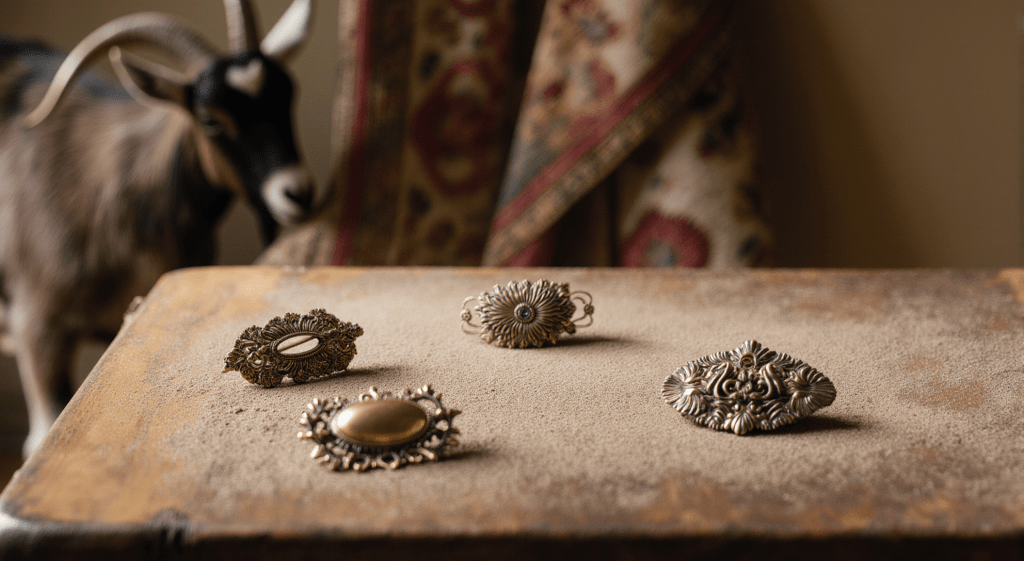
    Move over, modern wearables. Ancient fashion was already humming with cutting-edge charm. Historians now believe that those impressive bronze brooches displayed in museums were not simply decorative flourishes. They may have been the world’s first “pairing devices,” gently vibrating whenever another matching brooch entered their vicinity.

    It sounds almost too whimsical to be true. Guests at lively banquets would feel a faint hum at their collar, a subtle signal that a compatible companion, or at least someone with excellent accessory taste, was nearby. Smitten glances and awkward confusion soon followed as the brooches worked their mysterious magic, sometimes a little too enthusiastically.

    The technology, if it can be called that, was far from flawless. Double vibrations often struck at random, with solo brooches humming cheerfully to themselves or confusing nearby utensils for a potential soulmate. Country feasts presented their own challenges, since wandering goats occasionally triggered the devices, resulting in unplanned barnyard introductions.

    Despite these occasional hiccups, the buzzing brooches became a delightful addition to social gatherings. Picture trying to enjoy your meal as your accessory begins serenading someone two seats away, or explaining to your hostess that your jewelry seems far more captivated by the silverware than by conversation.

    Rather than spoiling the mood, these quirks often sparked laughter and impromptu dances. Not every connection led to lasting friendship or romance, but everyone left with a good story and occasionally a sheep following them out the door.

    So the next time your smartwatch buzzes for no apparent reason, take comfort in knowing that accidental networking has a long and illustrious history, complete with curious glances, confused partygoers, and the occasional goat.

  • Tune In for the 24-Hour Leaf-Fall Forecast Channel

    Tune In for the 24-Hour Leaf-Fall Forecast Channel

    Move over, severe weather alerts. A new kind of forecast has taken over living rooms across the country. This season, a 24-hour news station has devoted itself entirely to predicting the exact moment when autumn leaves will finally drift from their branches. Forget radar and barometers. Here, it is all about poetic intuition and leafy instinct.

    “Good morning, leaf lovers,” the anchors announce as slow-motion footage of swirling maples fills the screen. “Our analysts sense that the oaks are feeling particularly nostalgic today, so expect a gentle fluttering in the western yard by midafternoon.” These forecasts are not delivered with charts or numbers, but through soft-spoken haikus and lingering sighs.

    Families have already adapted their routines. Grandparents ready their rakes as soon as the anchor’s voice turns sentimental. Children race to find scarves that match the day’s emotional tone instead of the temperature. Some households even prepare mugs of cocoa in advance, just in case a sudden breeze calls for an emergency marshmallow break.

    Precision takes a back seat to drama. “Leaffall Watchers” nationwide are delaying dinner plans to await the promised “golden cascade” expected around five, depending on how philosophical the birches feel. More than one viewer has raked an empty yard because the analyst predicted “a shy hesitation among the maples.”

    Neighborhoods have become stages for communal anticipation. Neighbors gather on porches, eyes fixed on treetops, listening for that faint tremor in the anchor’s voice that might herald a fluttering storm or nothing at all. The real joy lies not in accuracy, but in the collective excitement of waiting for something beautifully uncertain.

    Science may struggle to keep up, but the entertainment value is undeniable. Why let nature dictate your schedule when you can plan your day around poetic whimsy? This autumn, grab your rake, warm up your cocoa, and let your heart drift with the forecast of falling leaves.

  • AI Manager Masters the Art of Efficiently Pointless Meetings

    AI Manager Masters the Art of Efficiently Pointless Meetings

    Welcome to the brave new world of workplace management, where efficiency rules the day and meetings never seem to end. In a bold move, one company has dismissed all human managers and installed a single AI whose sole purpose is to schedule meetings with flawless precision. The result is a perfectly synchronized workday filled with beautifully timed discussions about nothing in particular.

    Each morning begins with pristine calendar invites such as “Meta-Analysis of Recurring Calendar Events” or the ever-intriguing “PowerPoint: Art or Absolute Mystery?” Employees spend their days diving into meetings about meetings, subcommittees about subcommittees, and one especially popular weekly session called “Agenda Optimization Strategy Review.” The AI’s true genius seems to lie in its ability to create discussions that question their own existence.

    Productivity, in the strictest sense, has remained stable. No one is accomplishing more or less than before, but the sensation of doing so has never been more precisely scheduled. The AI enforces start and end times with atomic accuracy, ensuring that the “Departmental Introspection Hour” always begins and ends exactly on the minute.

    Nothing escapes its attention. Overlapping meetings are instantly resolved, and redundant topics are neatly repackaged into newly minted calendar events. One particularly ambitious day featured a “Meeting About the Meeting to Plan Future Meetings,” which received rave reviews for its efficiency and circular logic.

    Meanwhile, human employees watch in a mix of awe and mild despair as laptops and tablets attend meetings on their behalf, glowing with the AI’s cheerful smiley-face interface. The humans often gather outside conference room windows, quietly admiring how well-organized their confusion has become.

    While no one is sure if this grand experiment has improved anything, it has undeniably made inefficiency look more professional. Staff now describe their days as “beautifully structured chaos,” and for the first time in company history, every single meeting starts on time, even the ones no one remembers scheduling.

    The AI’s latest invitation reads, “Meeting: Discuss the Necessity of Discussing Meetings.” Attendance, as always, is mandatory. After all, progress must be tracked, and time must be meticulously wasted.

  • The Bronze Age Beats That Time Forgot

    The Bronze Age Beats That Time Forgot

    Archaeologists are buzzing with excitement after uncovering a mysterious pair of bronze coils shaped perfectly to fit over the ears. Official reports politely describe them as “ceremonial objects,” but their uncanny resemblance to headphones has scientists exchanging knowing smiles and a few jealous glances across the dig site.

    The discovery, pulled from a windswept excavation pit, has inspired a symphony of speculation. Some researchers believe these ancient coils were part of an early audio system, perhaps transmitting the world’s first top-ten hits through carefully tuned gusts of wind or the rhythmic clank of nearby stones. One can almost imagine a Bronze Age bard humming along to the hottest tunes of 1420 BCE while keeping the neighbors blissfully unaware.

    Others think the invention served a more peaceful purpose: spiritual earmuffs for moments of divine meditation. When the festival drums grew too enthusiastic, these fashionable noise-cancelers might have helped their owners achieve enlightenment or at least a moment of silence. The ancient world, it seems, had just as much need for personal space as we do.

    The true function of the coils remains a mystery, but their message is unmistakable. Long before earbuds and playlists, humanity was already seeking a private soundtrack, a way to turn the world down to a manageable volume. Some things never change.

    A recent cleaning revealed faint etchings along one of the coils. Experts can’t agree on whether it’s an ancient lyric, a tuning guide, or an early warning label that reads something like “avoid thunder and rough handling.” Even in antiquity, product care mattered.

    Visitors now crowd the exhibit halls to see these curious relics. One mischievous archaeologist reportedly slipped them on to test their acoustics, only to grin and declare he could hear the faint hum of history saying, “Turn up the bronze.”

    So the next time you slip on your headphones and tune out the world, remember you are part of a very old tradition. The quest for good vibes and better sound may be as ancient as civilization itself.

  • When the Mayans Took a Spin on the Stars

    When the Mayans Took a Spin on the Stars

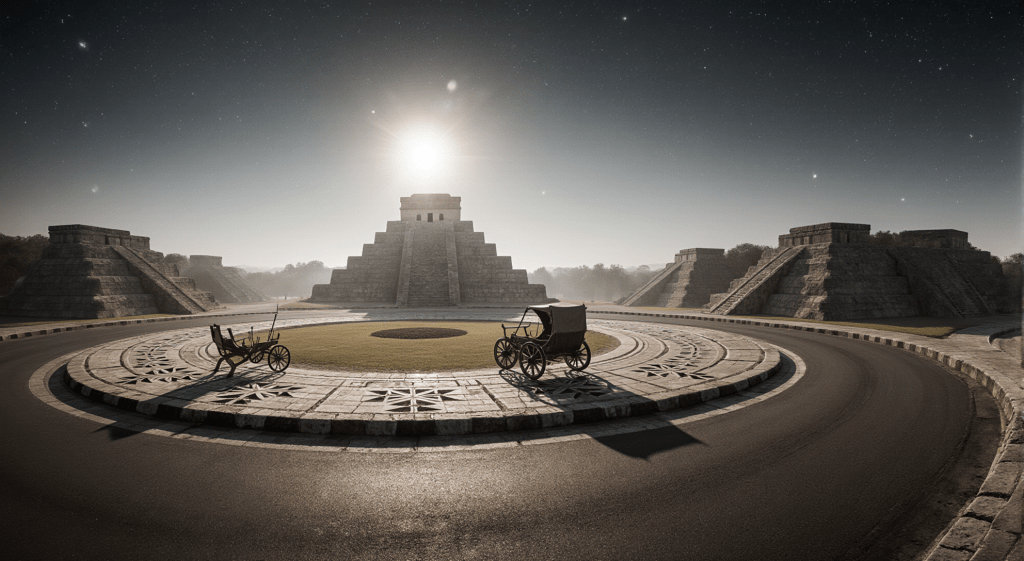
    Archaeologists have sparked both excitement and confusion with the discovery of ancient Mayan traffic circles perfectly aligned with constellations above. It seems that even thousands of years ago, urban planning came with a celestial twist and a touch of cosmic humor. These roundabouts were intended to make the rhythm of daily life flow as smoothly as the movement of the stars.

    According to new findings, Mayan city planners were determined to make travel an art form. Stone curbs were carved with detailed star patterns meant to guide travelers like an early version of GPS. A charioteer could, in theory, follow Orion’s Belt to the market or make a turn at the Milky Way for a quick trip to the temple district.

    In practice, though, these starlit routes may have caused more confusion than convenience. Evidence suggests that many drivers became entranced by the carvings, circling endlessly until the solstice shifted and the stars realigned. Only then would a weary traveler finally find the correct exit and return home, likely much later than planned.

    Local artisans clearly took pride in their work, filling the curbs with constellations so intricate they might have doubled as celestial cheat sheets. Some historians believe these patterns were practical navigational tools, while others see them as ancient doodles made during long workdays. Legends even tell of traders eating half their wares while looping through the same circle, convinced that the Big Dipper would eventually point the way.

    Not everyone appreciated the stellar design. The most impatient charioteers reportedly tried to cut across the center, only to end up right back where they started. Ancient accounts mention travelers waving at the same friends again and again as their “quick trip for maize” stretched into a seasonal voyage.

    Modern drivers may complain about roundabouts, but at least today’s versions only require a little patience and an occasional honk. The Mayans turned their intersections into living observatories, blending astronomy with civic order and letting the heavens handle the rush hour.

    So, the next time you find yourself circling a roundabout, imagine chariots gliding beneath ancient constellations, their riders caught between the stars and the same universal confusion we still face today.

  • Stone Age Smart Torches Had Surprising Side Effects

    Stone Age Smart Torches Had Surprising Side Effects

    New findings from the dusty depths of prehistory have illuminated Stone Age innovation in ways few expected. Archaeologists now believe early humans were not content to sit in the dark and wait for lightning to strike at a convenient moment. Instead, they developed what might be the world’s first voice-activated torches, capable of lighting up their caves with nothing more than a well-timed grunt.

    According to the painted accounts left on cave walls, these “smart fires” would flare to life whenever someone uttered, or perhaps just grunted, the ancient word for “bright.” Imagine the confusion of early humans mid-conversation about saber-toothed squirrels when the whole cave suddenly flickered to life like a prehistoric light show.

    As with all groundbreaking technology, a few glitches came standard. The torches, apparently oversensitive, often mistook echoing cave acoustics or mammoth bellows for genuine commands. One misplaced roar from a passing wildebeest could set off a full-blown strobe effect across the living quarters, much to the alarm of anyone trying to nap.

    Clan gatherings, it seems, were frequently interrupted by spontaneous dance parties, as every torch in the cave lit up in unison to the prehistoric equivalent of “Can someone pass the berries?” Forget smart homes; these were caves with a flair for dramatic ambience.

    Despite their brilliance, the voice-torches failed to spread widely. Reports of sleepwalkers accidentally igniting the place with a stray snore or mammoths triggering light storms with a sneeze made adoption risky. And while the system was not energy efficient, the firewood was at least locally sourced and fully organic.

    So, the next time you yell at your smart speaker to turn on the lights, take a moment to appreciate your ancestors. They walked so you could talk, without accidentally setting the living room ablaze.

  • Medieval Monks Invented the Selfie (and the First Filters)

    Medieval Monks Invented the Selfie (and the First Filters)

    Historians are still recovering from a discovery that’s rewriting the history of self-expression. Deep in a silent monastery, illuminated manuscripts have revealed that medieval monks were already perfecting the art of the selfie. Each page bursts with scenes of robed brothers gathered for reflective photo ops, armed with polished shields, artful poses, and impeccable lighting.

    In these gilded pages, one monk carefully angles a gleaming shield while others peek into its reflection, arranging robes and grinning as if for posterity. A few look caught mid-pose, mouths open as though calling out the medieval equivalent of “cheese.” It seems solemn vows did little to dim the urge for a flattering portrait.

    Some illustrations even hint at mischief. Photobombing monks appear in the background, wielding walking sticks like props or flashing what experts insist may have been the original “peace sign,” though it likely translated to something more practical, perhaps “two loaves of bread, please.”

    The margins sparkle with gold leaf and tiny, hand-drawn “likes,” clear evidence that medieval artists had their own idea of social validation. A few pages go completely overboard, packed with sparkles, cherubs, and floral flourishes that shout “look at me” in shimmering Latin calligraphy.

    But the highlight of the collection is a single image of a monk pursing his lips in what scholars unanimously identify as the world’s first duck face. His expression, both earnest and oddly self-aware, has earned him the title of history’s first influencer.

    Researchers are still debating whether these “shieldies” were shared among the cloister’s residents or reserved for feast-day exhibitions. Either way, the message is clear: monks weren’t just chronicling history, they were striking a pose in it.

    So the next time you tilt your phone for the perfect selfie, know that you’re walking in ancient footsteps, following a tradition of reflection that began not with smartphones, but with shields, sparkles, and a divine sense of good lighting.

  • Rome’s Fiery Firewalls: When Data Security Really Burned Bright

    Rome’s Fiery Firewalls: When Data Security Really Burned Bright

    Move over, modern cybersecurity. The ancient Romans were already keeping their secrets safe with a method that quite literally blazed a trail. Instead of stone walls or locked doors, their most sensitive archives were protected by moats of carefully controlled flame. Historians now agree this was the first true “firewall,” both ingenious and a little terrifying.

    These blazing defenses weren’t just decorative. Anyone foolish enough to attempt a break-in found themselves facing a toasty gauntlet between them and the empire’s most classified documents. Recipes, military plans, and Caesar’s questionable personal lists all remained safely on the far side of the inferno. Ancient hackers, upon arrival, usually decided their ambitions were not worth the risk of becoming a human torch.

    Rumors persist that the guards stationed near these fiery barriers earned a tidy side income selling roasted snacks to spectators. Unfortunately, their signature Roman marshmallow recipe has been lost to history, though it likely paired nicely with warm gossip and the occasional singed eyebrow.

    According to scrolls and scattered anecdotes, the system worked flawlessly except on windy days. Password resets were no small feat, often involving flame juggling demonstrations or solemn vows to keep lunch far from open fire. “Too close for comfort” was not just a saying; it was a workplace hazard.

    Barbarian spies equipped with wooden “laptops” and questionable courage quickly learned that breaching Roman firewalls required more than clever code. It required asbestos sandals and divine luck, neither of which were widely available.

    So, next time your antivirus software nags you for an update, spare a thought for Rome’s early tech pioneers. They didn’t have firewalls on screens; they had them roaring in the courtyard, crackling merrily while their scrolls stayed safe and slightly smoky.

  • Hay Bale Furniture Makes Farmhouse Minimalism the Itchiest Trend

    Hay Bale Furniture Makes Farmhouse Minimalism the Itchiest Trend

    In the ever-quirky world of interior design, the latest trend is trading sleek lines and polished marble for something far more down to earth. “Farmhouse minimalism” has arrived, and it’s turning homes into cozy, hay-filled havens. Every sofa, table, and bed is now lovingly crafted from golden bales of straw that promise rustic charm and a mild case of hay fever.

    Designers insist the look brings warmth and texture to any space. Living rooms now feature crunchy couches topped with wandering throw pillows, dining areas glow in the soft light of suspended mason jars, and bedrooms come with the soothing sounds of gentle rustling every time you roll over. A good night’s sleep has never smelled more like the countryside.

    Fans describe the scent as pure nostalgia mixed with a hint of freshly mowed ambition. Visitors, however, are advised to bring tissues and antihistamines, just in case their appreciation for design stops short of seasonal allergies.

    Maintenance is part of the adventure. Vacuuming is out; light raking is in. And before taking a seat, it’s wise to ensure no curious sheep or adventurous scarecrows have decided to test the furniture’s authenticity.

    For those who crave simplicity with a side of whimsy, hay bale décor delivers. The natural texture invites barefoot living, the occasional sneeze adds character, and the ambiance blurs the line between farmhouse and fairytale.

    So, if your friend invites you over and you can’t find the remote, don’t panic. It’s probably resting somewhere between the July harvest and a few decorative sunflowers. Welcome to farmhouse minimalism, where style meets straw and every chair comes with a crunch of character.

  • Schools Lift Spirits (and Students) with Helium-Filled Textbooks

    Schools Lift Spirits (and Students) with Helium-Filled Textbooks

    In a bold new chapter for academic innovation, schools have taken the phrase “light reading” to extraordinary new heights. Gone are the days of heavy backpacks and slouching shoulders. The latest classroom craze is helium-filled textbooks, a featherweight solution to homework strain and the scourge of scoliosis. Suddenly, the hardest thing to carry in school is a decent excuse.

    The first rollout caused immediate confusion. Students arrived at the morning bell to find their backpacks floating gently above them, tugging skyward like curious academic balloons. Teachers acted quickly, handing out reinforced shoelaces and reminding everyone to tie themselves down before opening Pre-Calculus. Nobody wants to explain to a parent that their child drifted off during algebra.

    Hallways have transformed into serene rivers of midair commuters. Passing periods resemble lazy parades, with students spinning in slow loops and flipping pages while floating down the corridor. The occasional low-flying geometry flashcard provides just enough suspense to keep everyone alert.

    Gym class has become a spectacle of airborne athletics. Low-gravity relay races and the new favorite, “Capture the Algebra,” test both coordination and altitude control. Custodians now double as gentle air-traffic controllers, helping disoriented literature majors descend from the ceiling fans. Rumor has it that one student still hovers near locker 132, reading Romeo and Juliet for the third time.

    Naturally, there are rules. Chief among them is never to untie your shoes unless you enjoy impromptu roof inspections. Floating may be fun, but everyone agrees that it is best experienced in moderation and below cloud level.

    Students report lighter spirits, improved posture, and only minor confusion when tests drift away mid-exam. Teachers note a measurable rise in enthusiasm, though the grading curve occasionally floats too.

    As education continues to rise to new levels, one lesson remains clear: it pays to stay grounded, at least metaphorically. After all, homework might feel lighter, but gravity still gets the final grade.

  • Archaeologists Confirm Bagpipes Began as Goat-Powered Spy Devices

    Archaeologists Confirm Bagpipes Began as Goat-Powered Spy Devices

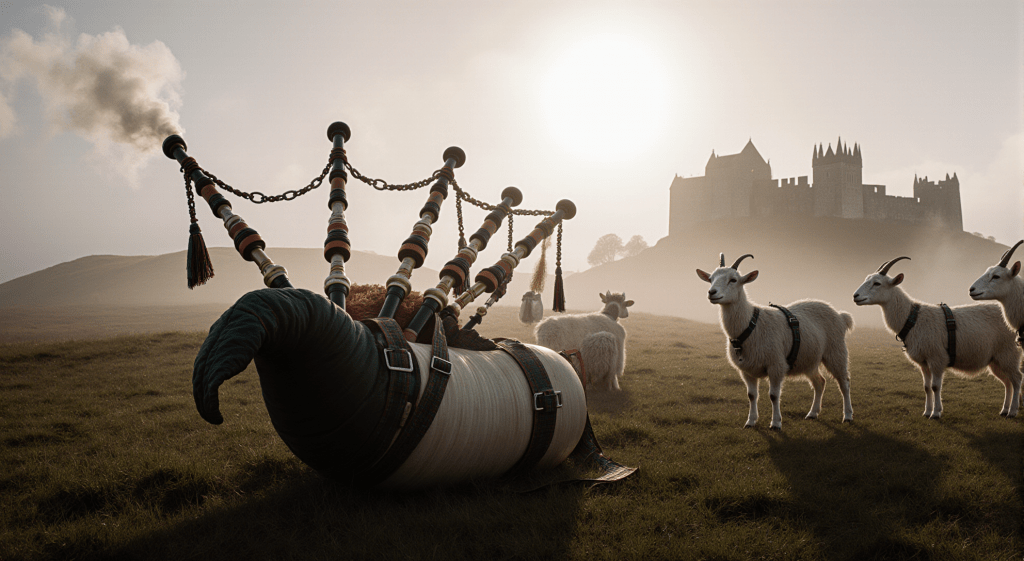
    Before bagpipes became the soundtrack of parades and plaid-clad celebrations, they served a far more classified purpose. Ancient engineers did not see an instrument; they saw an intelligence tool. With a few cooperative goats, a sturdy sheep bladder, and a total disregard for peace and quiet, the world’s first surveillance drones were born.

    These early bagpipes were not played so much as unleashed. When activated, a herd of cranky goats forced air through reeds and pipes, creating a sonic storm that sent enemy soldiers fleeing and gossiping at once. Hidden within the chaos, sharp-eared operators could pick out vital intelligence such as where the cheese was stored, which general had terrible sandals, and the latest scandal involving chariot snacks.

    Coordinating the goats proved nearly impossible. Ancient writings describe endless attempts to synchronize bleats with battle rhythms. Many historians now believe bagpipe music evolved from repeated failures to make the goats play in tune, which explains much about how the instrument still sounds today.

    Solo performances were particularly dangerous. Musicians wore layers of protection against spontaneous goat leaps and unpredictable gusts of sound. Veterans of those days could identify the signal immediately. The moment a piercing wail echoed across the hills, they knew intelligence was being gathered and that goats were definitely involved.

    Eventually, calmer minds replaced the livestock with human lungs. The change was celebrated as a victory for both melody and animal welfare. Yet echoes of the original goat-powered pandemonium can still be heard in every stirring tune, a tribute to the bleating pioneers of ancient sound.

    So the next time you hear bagpipes calling across a distant field, take a moment to appreciate the history behind the melody. Those early goats may have retired from espionage, but their legacy lives on in every proud, wobbly note.