Author: Not Fact-Checked

  • Vikings Paused Raids For Breathwork, Gratitude, and Gentle Boat Polishing

    Vikings Paused Raids For Breathwork, Gratitude, and Gentle Boat Polishing

    Maritime historians are revising the image of Viking life after new field notes suggest crews routinely took sabbaticals devoted to breathing, gratitude, and hull care. Sources describe a daily ritual of twenty slow breaths timed to the tide, followed by a roll call of thanks addressed to the oars by name. Splinters dropped. Disagreements cooled. The air smelled of pine steam, salt, and warm tar.

    Routine entries read like a wellness manual for longships. Sand was rubbed along hulls in calm circles. Helmets rested on driftwood to collect dew. A quiet tea of evergreen needles steeped while sails aired out in the morning light. Captains asked for three acknowledgments before noon, most commonly a cooperative wind, a reliable knot, and the gull that kept morale in view.

    Archaeological details support the story. Oars lie in parallel lines on shingle beaches, rope coils hold deliberate spirals, and a blackened kettle still curls thin threads of soot as if counting breaths. Pebbles show polished crescents where cloths once rested. Dragonheads shine with a thoughtful gloss that suggests more than simple vanity.

    Chroniclers say results were immediate. Landings grew quieter, cargo lists tidier, and navigation choices ended with a calm nod at a familiar star. Quartermasters recorded fewer splinters and a new habit of placing pebbles on map corners to keep the breeze polite.

    By evening, prows often reflected the shoreline like a friendly mirror, and sails gave a small exhale before folding. When sabbaticals ended, crews took up the oars with easy rhythm, as if the names had stayed with the wood. The sea answered with measured ripples that seemed to approve of neat work.

  • Royal Court Serves Twelve Courses From Tins, Applause Measured In Spoons

    Royal Court Serves Twelve Courses From Tins, Applause Measured In Spoons

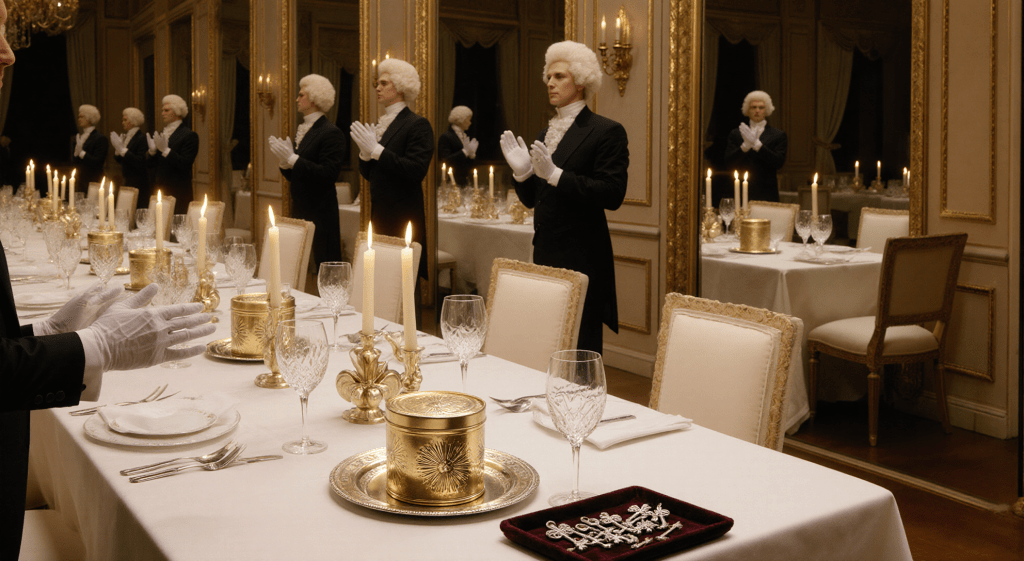
    Court records now insist a sun loving monarch once hosted a twelve course feast made entirely of sardines sealed in ornate tins. Guests applauded the innovation with a refined clatter of spoons, a polite ovation for airtight certainty. At each place sat a gilt cylinder with a sun in relief, positioned where a soup would normally wait.

    Courses ranged from smoked to candied to bathed in bergamot oil, opened on a cue from a distant violin. Footmen turned tiny keys in unison, producing a soft silver sigh that traveled the table like a well bred wave. Proper etiquette required a brief pause to appreciate the vacuum, then a measured taste of oil by candlelight.

    Evidence lines up with tidy posture. Inventories list a royal scepter with a discreet puncture tip, a valet for lids, and a quiet cart that stacked the empties into low gleaming towers. Linen holds elliptical oil halos where tins rested, and the mirrors doubled the procession until the room seemed calmly overprovided.

    A surviving memorandum titled Sardine Service Protocol fills in the finer points. Keys turn on the violinist’s third note. Lids lift no more than a finger’s breadth. Spoons speak only in applause. Guests nod at the vacuum, taste the oil clockwise around the sun relief, and allow towers to rise to seven lids unless permission is granted for more.

    Witnesses recall that the aromas behaved. Smoked salt, candied citrus, and a bergamot hush walked the table in even steps. A butler recorded a faint brine standing at attention in the mirrors, then bowing.

    After the twelfth course, the hall settled into a light maritime calm. The scepter rested on its velvet. The cart carried its small monuments away without complaint. Somewhere beyond the doors the gardens accepted a gentle, briny breath and kept it.

  • Courtyard Engineers Deploy Patch Catapult, Accidentally Installs Second Breakfast

    Courtyard Engineers Deploy Patch Catapult, Accidentally Installs Second Breakfast

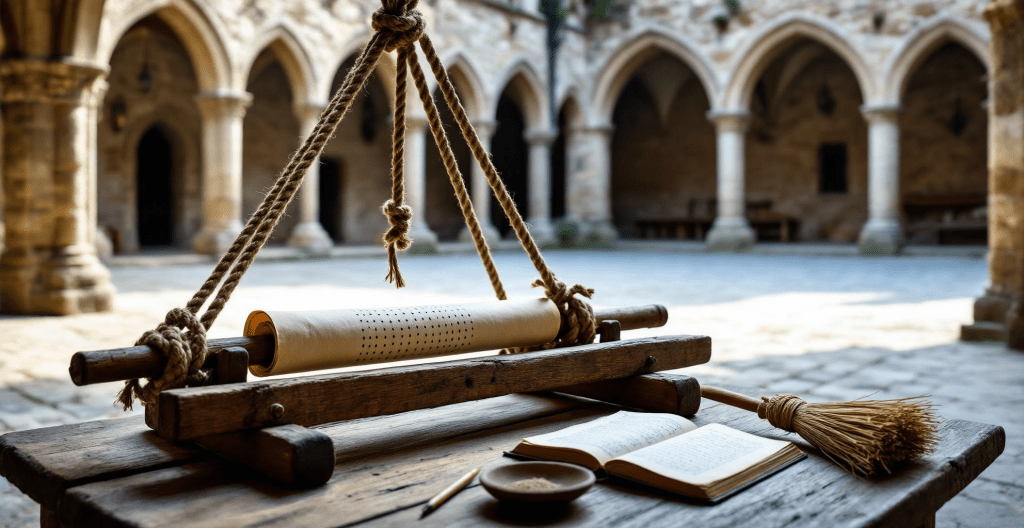
    In a quiet walled courtyard, engineers unveiled a counterweight catapult that hurls coded parchments to neighboring workshops to clear lingering glitches. The project aims to sweep away stubborn morale bugs with tidy arcs and convincing thumps.

    Workshop notes list parchment rolls with knot ciphers and notched edges for checksums, a bell that rings backward on failed cleanses, and candle smoke that traces a doubtful loop. Pebbles at the launch site form a neat circle around spent scrolls, as if voting.

    In trials, a scroll landed and the dining ledger quietly added second breakfast without asking anyone. An envy indicator lantern flickered on and off like it could not decide if the chair was coveted or just nicely varnished.

    Technicians report small proofs. Twine fibers show a shine where tension hits true, wax seals leave comet streaks on stone, and the quill by the ledger pauses midair before committing a fresh tally.

    “It is a courtyard patch deployment system, and sometimes the patch notes arrive with bonus features,” said Maera Luth, kinetic remediation lead at the Collegium of Courtyard Mechanics.

    The fix was simple, add patience as a header and aim slightly left. The device sneezed once, a polite puff of dust, then began behaving as if it had read the manual.

    After adjustment, the bell chimed in the forward direction, smoke curled into a tidy checkmark, and the next scroll politely removed the extra meal while steadying the lantern. The ledger now shows breakfast, breakfast remembered, and a line through the surplus with a small smile in the margin.

  • Victorian Astronomers Test Tea-Powered Telescope, Occasionally Screams at Infinity

    Victorian Astronomers Test Tea-Powered Telescope, Occasionally Screams at Infinity

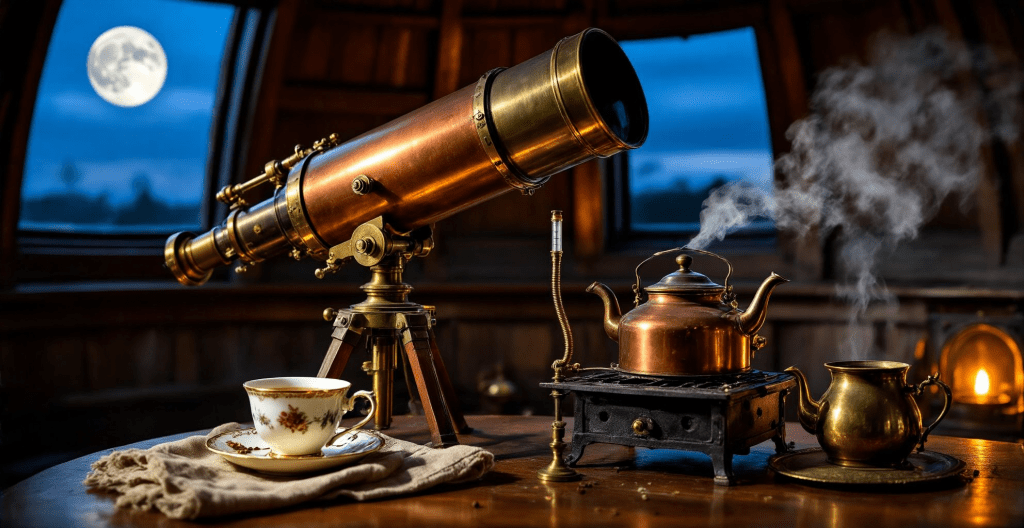
    In a lamplit dome, Victorian astronomers trialed a telescope driven by boiling tea, brass piping humming as it found remote stars. On clear nights it reportedly paused, considered the void, and screamed about the concept of infinity.

    Lab notes mention the kettle gauge peaking, steam haloing the eyepiece, and the ledger blotter hopping when the howl began. Condensation beaded on the tube in neat rows, as if taking attendance.

    A teaspoon vibrated across a saucer toward due north, then settled with a polite clink. Leaves in the spent basket drifted into tidy ellipses that matched last night’s observing plan.

    After each episode the instrument calmed when given fresh water and a biscuit it could not eat, then resumed polite stargazing. The focus wheel purred like a reconciled cat, and the dome felt relieved.

    “It is a boiling point guidance system with Victorian manners, inclined to contemplate the abyss at full whistle,” said Elda Fenn, kettle optics specialist at the Society for Gentle Astronomy.

    Small proofs keep steeping. The kettle lid stamps a faint ring that correlates with altitude, the stove ticks count out patient intervals, and a moony hush returns as the tube pivots to the next polite sparkle.

  • Archaeologists Uncover Encouraging Sandals, Count Steps and Compliments Alike

    Archaeologists Uncover Encouraging Sandals, Count Steps and Compliments Alike

    At a quiet hillside dig, archaeologists lifted a pair of sandals fitted with pressure plates meant to tally steps and murmur encouragement. The Latin guidance roughly renders as keep conquering, you are doing great, in a voice described as briskly supportive.

    Construction details read like a pocket pep band. Layered leather lies over narrow bronze reeds to make a whisper, a heel cavity holds a pebble abacus for counts, and a small clay resonator bead sits neatly at the strap.

    In testing, a light tap made the strap thread quiver and a soft puff of dust jump twice along the arch. A wax tablet beside them added a tidy stroke, as if the sandals kept their own minutes.

    Notch marks on the insole rise in steady intervals, the fifth slightly polished where encouragement seems to crest. Pebbles shift with a faint clack that matches the tally, then settle as if pleased.

    Field notes say the right sandal praised uphill effort while the left suggested a water break, both politely silent when the wearer paused to admire the view. The clay bead warmed a touch near a slope, then cooled when the sky was the only task.

    “It is wearable metronomy with manners, a small chorus for feet that prefers progress over speeches,” said Ilen Row, gait instrumentation lead at the Institute of Motivated Footwear.

    Small proofs keep accumulating. Dust trails bend toward the steeper path, the resonator bead shows ring wear at intervals that map to climbs, and the tablet’s strokes match the pebble counts exactly. Now the pair sits on felt, quiet until the table tilts like a hill.

  • Historians Suspect A Wardrobe Of Invisible Hats From The Early 1800s

    Historians Suspect A Wardrobe Of Invisible Hats From The Early 1800s

    Historians now say a certain early 1800s notable owned a full wardrobe of invisible hats for formal occasions. Tailor notes describe brim weight, plume balance, and travel cases fitted to nothing at all. The hats reportedly boosted confidence, visibility optional.

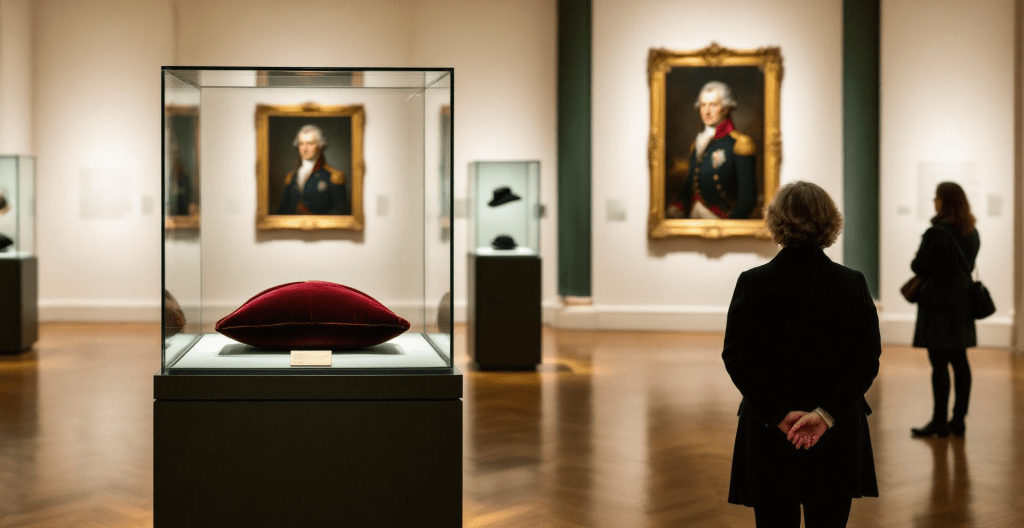
    Conservators point to empty hat boxes with velvet rings pressed just so, a travel trunk that sits heavy on one side, and a portrait sitter who keeps tilting a head toward a brim the museum has not cataloged. A valet’s ledger lists summer rain ready, morning parlor, and evening slightly taller, entries that appear to adjust posture more than clothing.

    Material clues are oddly persuasive. Green baize shows a shallow oval where something rested and then thought better of being seen. Dust motes bend around a curve above a mannequin’s brow, and a polite draft moves past as if circling felt. Photographs from the period develop a soft line where light has nothing to land on.

    Reenactors are now issued invisible bicornes at key ceremonies. Spectators report a faint crescent of shade across the forehead when the sun is low and the neat hush of wind passing a brim that cannot be seen. Ushers have begun reminding guests to allow extra room for unlisted millinery.

    Museums are testing loan programs and careful fittings. Registrars practice signing for absence, gloves hover, and hat stands seem to lean forward by a polite inch. A small plaque asks visitors not to tap the air.

    The fashion reads as confident, the gallery remembers a shadow, and the afternoon light behaves as if it has met this brim before. When the room empties, the peg sighs, the velvet forgets its crease, and a quiet curve of shade settles where it always does, just above the brow.

  • Botanists Launch Cactus Wellness Classes For Responsible Drinking

    Botanists Launch Cactus Wellness Classes For Responsible Drinking

    Botanists have launched a wellness initiative teaching cacti to drink responsibly after several were found overwatering themselves in sympathy with humans. Greenhouses report night sips from stray misters, a little extra dew coaxed from air, and morning soil with the polite shine of a late regret. The air smells of warm clay and cooled light.

    Classes meet at first light. Instructors set a drip timer to a slow beat and seat the plants in saucer circles, where they practice the two sip rule and a respectful pause. Moisture meters serve as breathing sticks for stomata, and a shallow basin in the center acts as a reminder, not a buffet.

    Evidence keeps tidy notes. Gravel shows small commas where pots settled and listened. A black line of emitters holds poised droplets that consider, then wait. A bead rides a spine, thinks better of it, and slides back into the mix with quiet relief.

    An accompanying memorandum, Desert Hydration Etiquette, rests on a clipboard in careful script. Water to be introduced with a greeting. Count to five, then remember the desert. Beads to return to soil without applause. Plants to lean away from unattended spray, and to take turns at the tap. Timers to click no louder than a turning page, labels to refrain from glare.

    Early results are steady. Spines look rested, pots dry evenly, and new growth arrives with the calm of someone who knows where the tap is but prefers conversation. The hygrometer keeps a modest baseline, coasters stack like patient moons, and the spray bottle sits facing slightly away to model restraint.

    Public guidance suggests repeating the greeting, counting to five, and letting the rest be weather. At close, the basin mirrors rafters without reaching, the drip line tidies its own shadow along the bench, and the plants hold a composed thirst. Dawn finds them ready, saucers clean in concentric rings, and the desert remembered by heart.

  • Egyptologists Rebuild Bronze Applause Automaton, Confirms “Bold Move, My Sun”

    Egyptologists Rebuild Bronze Applause Automaton, Confirms “Bold Move, My Sun”

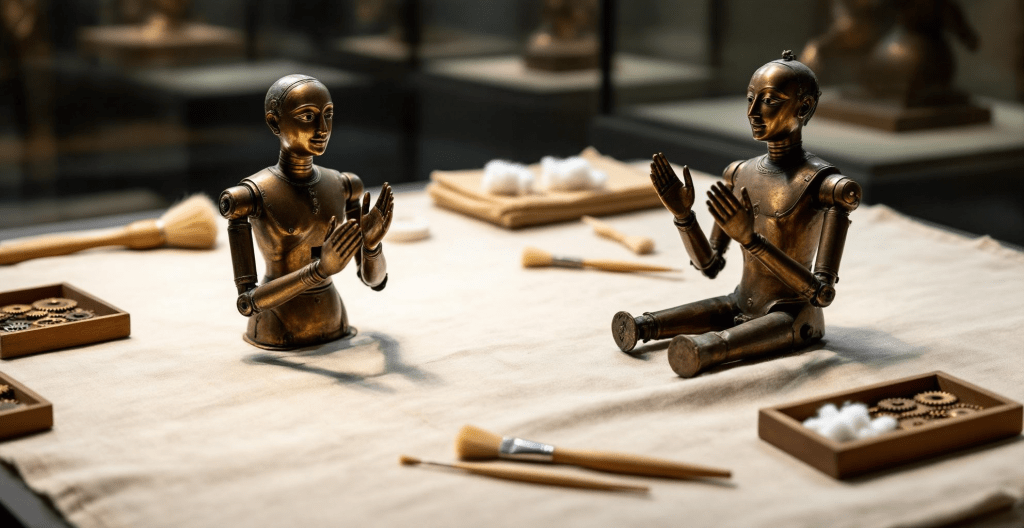
    In a quiet lab, Egyptologists have reconstructed a bronze automaton that once trailed pharaohs, applauding important decisions. Its only recorded utterance, coaxed from a reed bellows, translates as “bold move, my sun.”

    Construction notes list palm shaped clappers on spring wrists, a reed voice box tucked behind a grille, and a bronze toe that taps to keep royal tempo. Fine soot rims the mouth opening, and the clapper palms carry a bright polish along the outer fingers.

    In trials, the machine tracked a painted sun disk on the floor and began a slow clap the moment a door was decisively closed. A pressure quiver in the bellows preceded each praise, and the toe marked time with three neat taps before speech.

    Set beside a bowl of sand, the applause raised small dunes that settled into cartouche shapes, as if the room were signing the decision. The toe left a dotted path of metronome marks that curved gently east.

    “It is a ceremonial validator, tuned to conviction and sunward alignment,” said Nara Kel, automata conservator at the House of Kinetic Antiquities.

    When the door merely drifted, the device lifted its palms, reconsidered, and produced a single polite clap that sounded like a shrug. At a crisp latch, it delivered the full phrase, the reed resonator chiming with a faint papyrus rasp.

    After each session the automaton rotated to face the sunrise and waited, still as a statue. Lab logs show the same pattern every time, a tiny hiss from the bellows, a toe tap in triplet, and a quiet readiness for the next bold move.

  • City Hires Octopus Traffic Officers, Commutes Get Surprisingly Smoother

    City Hires Octopus Traffic Officers, Commutes Get Surprisingly Smoother

    A coastal city has deputized octopuses to manage underwater intersections, and the early verdict is tidy. Tentacle coordination is excellent. Turn signals are less so, especially at the eelgrass roundabout during tide changes, where half the mullet commit and the other half hover like they forgot a grocery list.

    Each officer holds a low perch at canal crossings, one arm lifted to pause a school while two guide a slow turtle and a row of hermit crabs. Signals include a lift of the third arm, a left side ripple for merging, and a polite puff of ink for caution. Nearby cuttlefish mirror the gestures with casual bioluminescence, which does not help.

    Evidence lines the channel like neat tide notes. Sand shows diagonal commas where suction cups practiced yielding. A glass float at the corner throws soft glints that count like blinks. A ribbon of ink hangs like a bookmark, thins to nothing, and the eelgrass leans in agreement before standing up straight.

    The city is testing luminous sleeves for clearer blinking and small shells that click once for right and twice for left. The sleeves are algae lined and glow at conversation brightness, then dim politely when the moon climbs. On certain mornings a cool seam marks the centerline where bubbles turn from round to crisp, and everyone pretends to understand.

    Commute times have improved. Schools travel like tidy ribbons, crabs queue in alphabetical shells, and the turtle arrives when the turtle arrives. Rocks keep a spiral of scuffs that reads like attendance, while a patient current purrs along the curb.

    Locals say the stops feel fair and that everyone gets waved through eventually. At closing, an officer coils the sleeves, pats the glass float, and settles on the square block with a satisfied curl. One last puff of ink lingers like a soft comma, and the channel carries it gently downstream.

  • Greece’s Pre-Coffee Games Crowned Champions of the Perfect Pour

    Greece’s Pre-Coffee Games Crowned Champions of the Perfect Pour

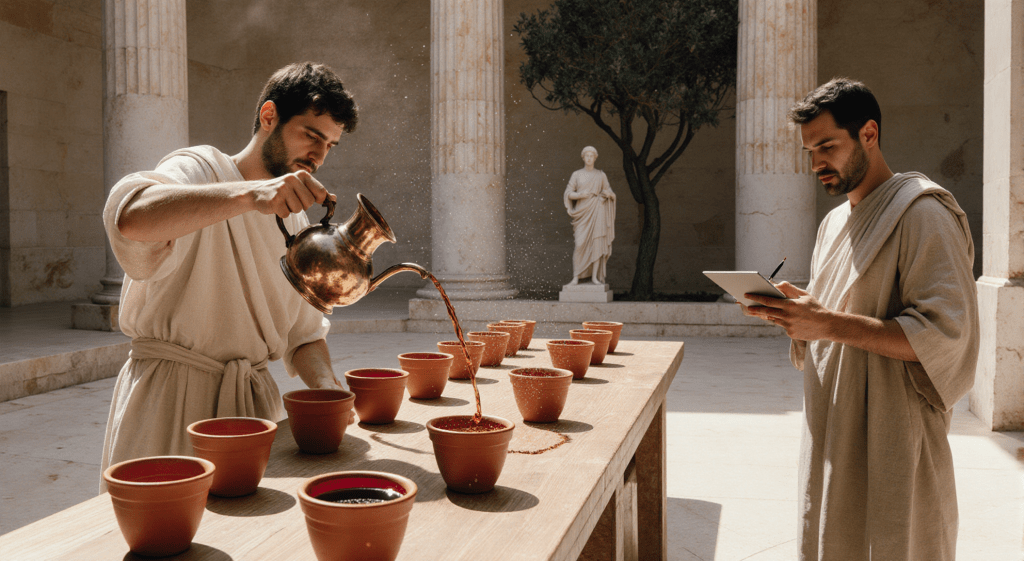
    Archaeologists report that Ancient Greece briefly hosted a precision pouring contest at dawn, centuries before coffee existed. Competitors stood at a marble table and guided a thin stream from bronze ewers into shallow cups scored with rings. The courtyard smelled of warmed stone and early figs, a setting built for careful wrists.

    Rules favored a continuous pour, a landing on the second circle, and a finish that left the saucer dry. Judges tracked spill lines on wax tablets and weighed each cup for grace rather than volume. Laurels went to anyone who could pause a stream mid air, as if listening for an aroma that had not yet arrived.

    Material clues line up neatly. Table edges hold a soft shine where sleeves learned to hover. Ewer spouts show a blush of wear at the balance point. The marble keeps a faint ring that looks suspiciously like a memory of brown.

    Flagstones record the choreography. Light scuffs curve in semicircles that match the step forward, then back, of a steady hand finding its measure. A lyre beat a small tempo for the pourers, and the onlookers adjusted their breathing to match.

    Philosophers, posted under the olive trees, wondered whether alertness belonged to the idea or the drink. “The ritual seems to wake the room,” said one curator on site, “even when the cup holds nothing stronger than sunlight.”

    Records close with a tidy return to normal. By noon the cups were back to wine service, the ewers rested on cool stone, and the laurel leaves dried in the shade. The second circle looked like any other ring in marble, except it was not, and the table seemed quietly taller for having been trusted with precision.

  • National Library Debuts Whisper Calibration, Graduates Can Hush From 50 Feet

    National Library Debuts Whisper Calibration, Graduates Can Hush From 50 Feet

    Librarians have begun mandatory whisper calibration sessions held before opening, when the building is at peak quiet. The goal is national consistency. Trainees practice sending a hush that lands at ear level and disturbs neither shelf nor signage.

    The toolkit is precise. Instructors use felt covered decibel wands, a page turning metronome, and a jar of polite gravel to set texture. A narrow ribbon stretches down the aisle to visualize pressure, tilting just enough when a well shaped sh travels past.

    Technique is taught in layers. Breaths match the rustle pace of a turning page, syllables narrow by the fifth shelf, and soften again by the seventh. The whisper is kept at shoulder height. Commas are preferred over periods to avoid hard stops.

    Early results read like tidy lab notes. Dust motes sketch a pale wave between coach and student. A rolling cart settles as if reassured. On the far table, a brochure folds itself by one neat third when a distant hush arrives.

    Certification has two parts. First, candidates must deliver a cart settling whisper at close range. Second, they send a distance hush that persuades a brochure to fold from across the room. Graduates receive a silent card that will not crinkle and a small pin that refuses to glare under fluorescent light.

    After training, the instruments rest. The metronome dozes with its arm at ease, the ribbon hangs plumb, and the gravel agrees in a single soft shift. Doors open, conversations end at a comfortable comma, and the building exhales like a page turned cleanly to the next.

  • Archivists Catalog Snow Beast Etiquette, Calm Rules In Frosted Ink

    Archivists Catalog Snow Beast Etiquette, Calm Rules In Frosted Ink

    Archivists have unveiled a cache of winterworn scrolls that read like a code of manners for giant snow creatures. The rules are disarmingly calm: no roaring before sunrise, paws brushed at thresholds, and a courteous berth when passing a sleeping pine.

    Illustrations show a hulking figure bowing to a drift, then pausing so icicles can finish their remarks. Track diagrams appear in polite pairs, with small notches interpreted as “after you.” A recurring frost seal depicts a listening ear, the emblem of patient behavior.

    The material evidence is as quiet as the subject. A loupe leaves a cool circle on linen, a soft brush clears a neat path through sifted snow, and a brass weight keeps a curling edge in line while the window admits careful morning light.

    Researchers say the etiquette has not vanished so much as blended into the season. Dawn wind arrives in a whisper, roofs creak once to acknowledge the hour, and fresh snowfall sometimes hesitates at a doorway like a guest waiting to be announced. “It is less superstition and more neighborhood policy,” said Dr. Lida Harrow, who led the catalog. “Winter behaves better when someone is listening.”

    The scrolls now rest in cold storage, the frost seal holding its patient ear. Outside, a pine seems to lean in, and the street keeps the kind of hush that suggests something large and careful just passed and said, very politely, after you.

  • New Agency Asks Time Travelers to RSVP For Parties They Already Attended

    New Agency Asks Time Travelers to RSVP For Parties They Already Attended

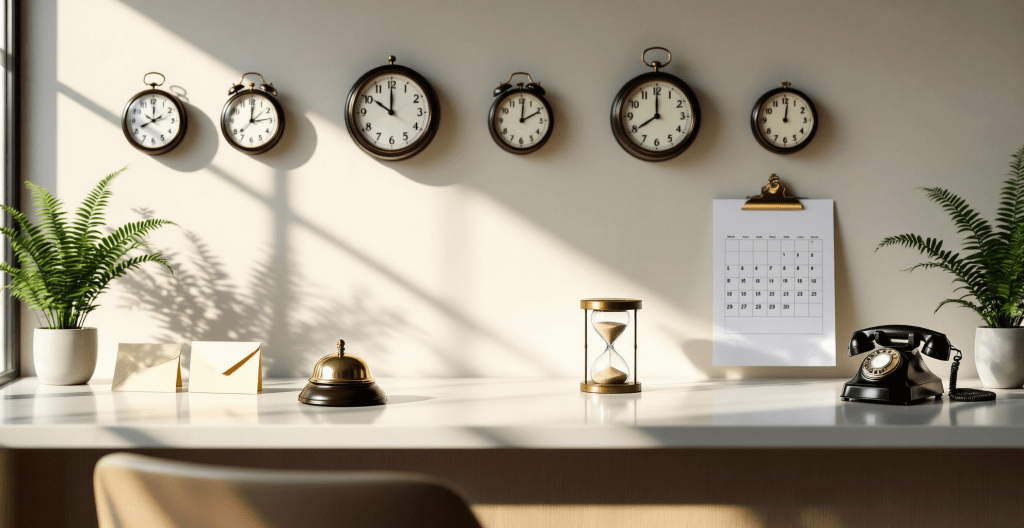
    A newly formed bureau is reminding time travelers to RSVP for gatherings they have already attended. Staff track small timeline ripples, compare chair scuffs to guest lists, and send courteous notices that arrive just before you forget that you remembered. Desk lamps hum in a steady way that suggests the calendar is listening.

    The RSVP card is tidy and familiar. Three boxes read Will attend, Did attend, and Currently attending, with a line for the hors d’oeuvres you recall tasting. Returned cards travel by certified loop, pick up two postmarks, and come back with a faint scent of confetti and static. The date stamper leaves overlapping rings that resemble a handshake.

    Phone support begins at the bar you remember. Hold music cues the same measure you heard last time. An agent speaks in present tense, verifies in past perfect, and checks that your toast matches the version that already happened. The phone cord knots itself into a small bow, and the pen keeps its cap close so the signature does not wander.

    Officials report quick results. Paradoxes are fewer, seating charts are kinder, and confirmations often appear already filed in your sent folder with a subject line that reads cleared with relief. Nearby, a wire basket holds envelopes that seem to recognize one another, and the mail chute breathes just enough to keep time.

    “Think of it as hospitality for causality,” said a bureau spokesperson. “A timely RSVP keeps conversations aligned and prevents duplicate cheers.”

    Evidence accumulates like polite echoes. Chair legs match familiar scratches, name tags sit exactly where they sat, and the catering tongs remember the sequence. You place the card on the counter, it stamps itself with a soft click, and for a pleasant instant the future thanks you for being on time, again.

    A newly formed bureau has begun reminding time travelers to RSVP for gatherings they have already attended. Staff monitor small timeline ripples, compare chair scuffs to guest lists, and post a courteous notice that arrives slightly before you forget that you remembered. Desk lamps hum in a steady way that suggests the calendar is listening.

    The RSVP card is simple and direct. Three boxes read Will attend, Did attend, and Currently attending. A fourth line asks for the hors d’oeuvres you recall tasting. Returned cards travel by certified loop, collect two postmarks, and come back with a faint scent of confetti and static. The date stamper leaves overlapping rings that resemble a handshake.

    Phone support is equally specific. Call the hotline and the hold music begins at the bar you remember. An agent greets you in present tense, verifies details in past perfect, and confirms that your toast matches the version that already happened. The phone cord knots itself into a small bow. The pen keeps its cap close so the signature does not wander.

    Officials report immediate results. Paradoxes are fewer, seating charts are kinder, and confirmations often appear already filed in your sent folder with a subject line that reads cleared with relief. A wire basket on the counter holds envelopes that seem to recognize one another. The mail chute inhales and exhales just enough to keep time.

    “Think of it as hospitality for causality,” said a bureau spokesperson. “A timely RSVP keeps conversations aligned, keeps toasts in the right order, and saves the seating from guesswork.”

    By close of day, chair legs line up with familiar scratches, name tags sit exactly where they sat, and the catering tongs remember the sequence. You place the card on the counter, it stamps itself with a soft click, and the future thanks you for being on time, again.

  • Victorian Homes Briefly Lit Rooms With Static, Optimism, and Tinfoil

    Victorian Homes Briefly Lit Rooms With Static, Optimism, and Tinfoil

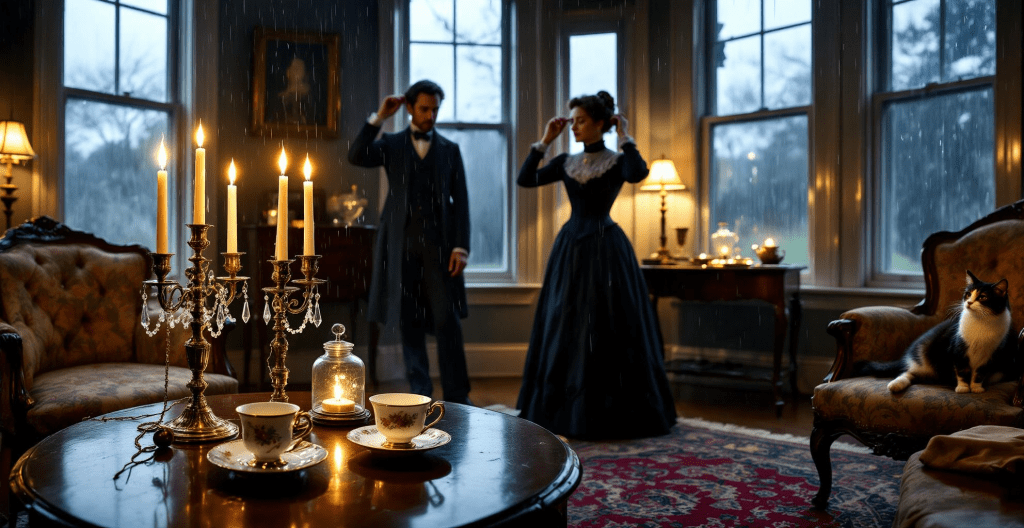
    Archives describe a short lived Victorian fad that promised candles powered by static electricity and good cheer. Households laid wool rugs, set out glass jars with brass caps, clipped thin tinfoil ribbons to candlesticks, and shuffled purposefully until the parlor agreed to glow.

    Evenings took on the air of modest experiments. An ebonite rod met a silk cloth, compliments circled the room, and wicks answered with a faint blue frill and a polite crackle. Flames brightened during toasts, thinned during talk of rainfall, and a stray spark often hopped to the doorknob like small applause.

    Material evidence remains tidy and persuasive. Parlor rugs show a narrow runway of scuff where slippers did their work. Brass finials keep a soft halo of fingerprints that refuses to polish away. Foil ribbons hold tiny pleats like well read pages, and the air keeps a whisper of beeswax with a hint of new ozone.

    “Think of it as morale assisted lighting,” said a museum conservator. “The static was real, the optimism helped, and both together made a very cooperative candle for a very dry night.” Records note that jars hummed gently when conditions were right, then went shy when the room lost its enthusiasm.

    The fashion dimmed with spring humidity. On damp days the candles sulked, their blue fringe retreating to a polite dot, and families kept the slippers anyway because the glide had grown popular. The jars became vases, the foil tucked into drawers, and the doorknob resumed its normal job with a faint, satisfied coolness.

    A few museum sets still sit quietly behind glass. Stand nearby, read the label in a friendly voice, and think something encouraging, and the wick seems to lean a fraction closer. For a moment the room brightens just enough to feel agreed upon, a modest glow powered by manners as much as charge.

  • Archaeologists Identify Communal Stone As Earliest Village News Feed

    Archaeologists Identify Communal Stone As Earliest Village News Feed

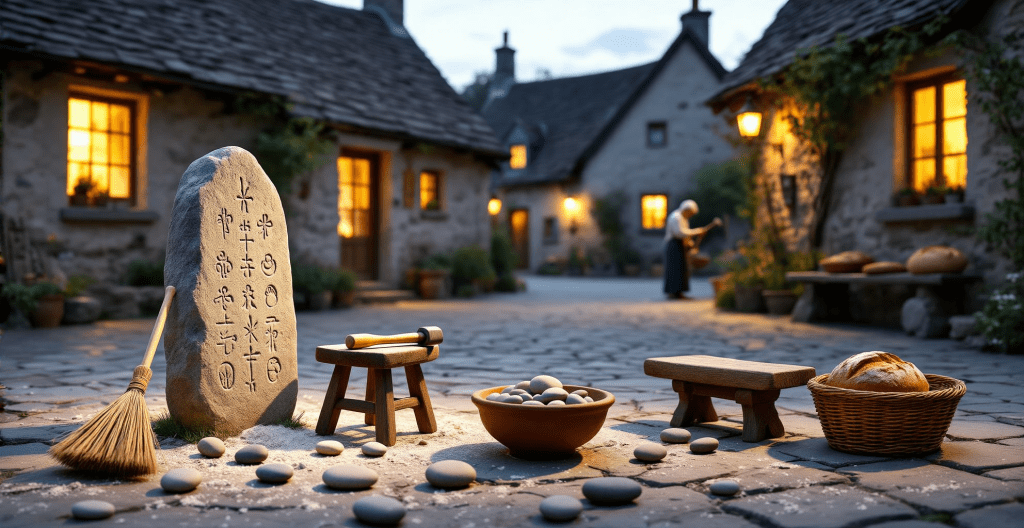
    Field notes from a cluster of hill villages describe a single slab that carried the day’s updates with remarkable efficiency. Residents carved brief status lines in shallow bands, reporting a fine catch, a mended roof, and the occasional goat with opinions. On market mornings the steward brushed the face, dampened it for contrast, and the square read itself in a courteous hush.

    Membership required simple steps: Add your name in the left margin, then tap a small symbol kept by the carver at the bottom. Moderation was prompt and very public. When friendships cooled, the steward issued a mallet and chisel, and the space returned to plain rock. The first recorded unfriend appears in a chapel log, three steady blows, a curl of chalk dust, and a tidy nod.

    Archaeologists point to lingering artifacts as proof of high engagement. The slab shows pale ovals where names were lifted away, neat absences among crowded lines. Chips collected on the ledge like quiet reactions, then disappeared on broom day. A faint groove along the base marks where the steward’s brush rested between posts.

    Evenings brought a predictable cadence. The stone held weather and intentions in cool relief. Tomorrow: roof patching, creek clearing, dried figs by the gate after noon. A chalked star signaled breaking news. A tiny fish indicated the catch of the day. No one argued with the interface. It was heavy.

    “The posting guidelines were obvious,” said one researcher. “Write briefly, carve legibly, and do not gossip about the millstone.” Slab etiquette also discouraged carving while annoyed. Officials recommend a cooling walk around the square before submitting any remarks about goats.

    By the time the feed faded at dusk, the village had a shared record and a swept ledge. The steward capped the water jar, the brush line dried, and plans for morning settled into the stone like headlines waiting on light.

  • Ancient Kingdom Tried Taxing Snowmen, Was Met With Perfectly Polite Blizzard

    Ancient Kingdom Tried Taxing Snowmen, Was Met With Perfectly Polite Blizzard

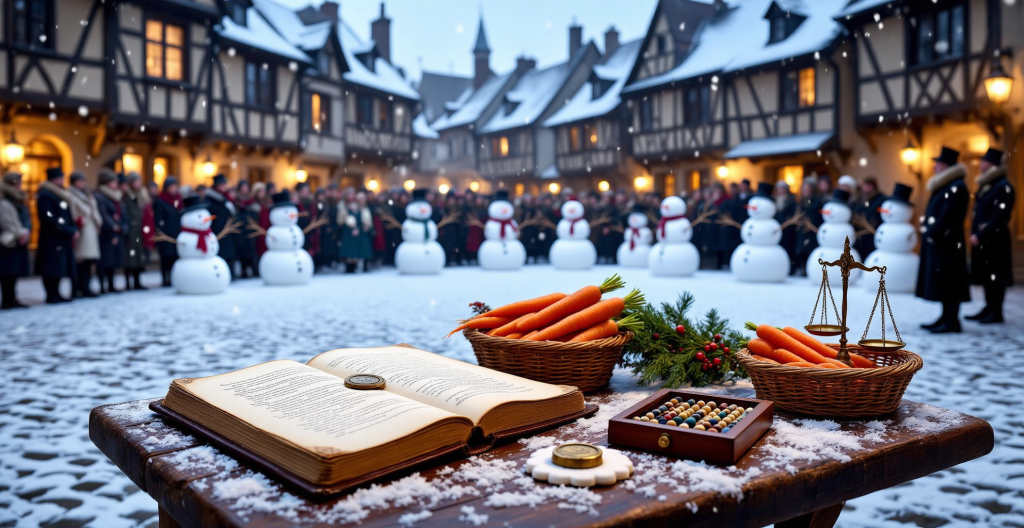
    Court records describe a brief season in an unnamed ancient kingdom when officials levied a tax on snowmen. Collectors patrolled the squares with abaci and felt lined tongs, counting buttons, noses, and hats as billable features. Receipts bore a damp stamp that sometimes froze to the parchment before anyone could leave the square.

    The policy looked simple on wax: One button, one unit. One carrot, two units. A top hat meant premium status and a tidy surcharge. Children learned the term taxable adornment before they could tie a scarf. Street vendors began selling certified economy twigs with a brochure that promised low profile arms.

    Resistance arrived overnight and tidy as snowfall. Streets filled with orderly ranks of snow citizens, each wearing a knitted protest scarf in tasteful colors. Branch arms formed polite barricades. Carrot noses pointed toward the palace in unanimous silence, and a single top hat changed hands whenever an official approached, which made the census uncooperative.

    Collectors reported measurable complications. Abaci stuck between sums. Stamps froze mid press and left a ring of ice on the clerk’s thumb. Coal buttons rolled off ledgers and lined up like little coins that refused to stack. A broom leaned against the palace steps with a note that read “inventory in flux, do not sweep.”

    Officials thawed toward compromise. Families received an allowance for two smiles per household. Garlands counted as seasonal deductions. Any snowman that melted into a useful puddle, such as one that watered an herb bed, was forgiven by spring. “We found compliance improved dramatically when the sun handled collections,” said a palace scribe.

    The statute expired with the weather. By thaw, the law had vanished from postings, leaving a trail of coal buttons leading to the river like unspent currency. In the archives, a single receipt survives with a frozen stamp and a smudge of carrot, evidence that even the most ambitious tax code can be undone by April.

  • Physicists Link Overcooked Turkey to Minor Time Glitches at Holiday Tables

    Physicists Link Overcooked Turkey to Minor Time Glitches at Holiday Tables

    Physicists are advising Thanksgiving hosts to avoid overcooking turkeys after test kitchens reported minor time irregularities during trial roasts. In multiple observations, oven lights blinked twice, kitchen clocks replayed the same minute, and a faint shimmer formed above the stovetop.

    “We are not talking about paradoxes,” said one researcher. “These are small, local repeats that resolve on their own if heat is reduced.” Labs describe the effect as a thinning of late afternoon that encourages brief echoes of recent actions.

    Early indicators are straightforward: Gravy thickens before it is stirred. A carving knife appears on the counter a moment before the host reaches for it. Short toasts repeat with cleaner phrasing. Cranberry sauce briefly reverts to a smoother state, then resumes its place as if nothing happened.

    Physical traces are consistent. Thermometers leave twin condensation rings on cutting boards. Refrigerators pause, emit a hum that resembles excuse me, and resume. Gravy boats cast two soft shadows that merge by dessert. Salt cellars are found slightly displaced with no clear witness.

    Guidance from researchers is simple. Remove the turkey from heat, tent with foil, and keep conversation in the present tense until the room stabilizes. “Avoid forecasting next year’s menu,” a lab note reads. “Let timers ring once. Do not restart them.” Most rooms return to normal within minutes as steam output flattens and wall clocks recommit to forward time.

    If a wishbone delivers the same result twice, officials recommend accepting the first outcome and moving to dessert. Custard has tested as stabilizing, and crust cooling sounds correlate with a rapid return to single track time. “Serve pie, keep voices level, and the evening proceeds as expected,” the memo concludes.

  • Smart Lampposts Now Read Your Sweater and Set the Mood

    Smart Lampposts Now Read Your Sweater and Set the Mood

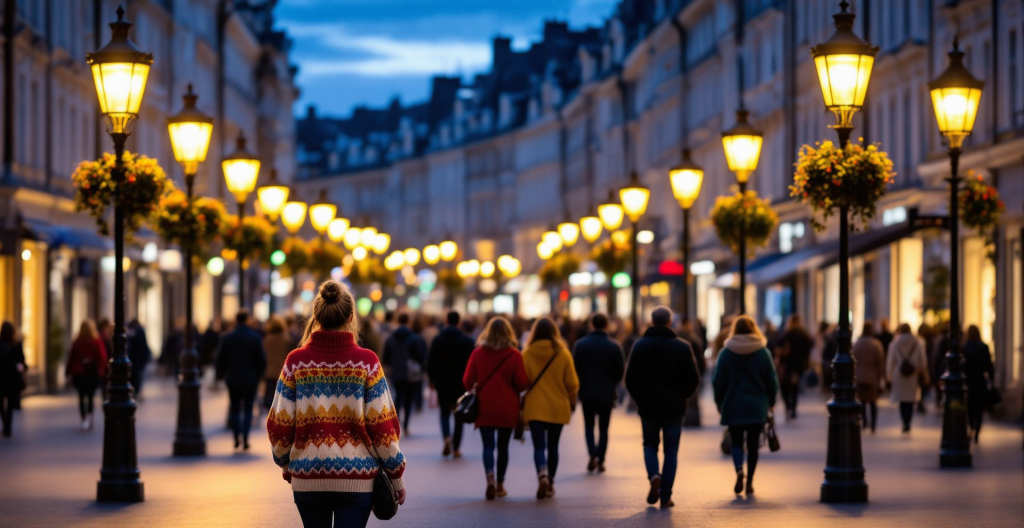
    Engineers have introduced a new era of intelligent street lighting. Smart lampposts can now sense the density of nearby sweaters and automatically adjust their color temperature to match. When sidewalks fill with cable knit and wool, the lamps glow warm and golden. When cardigans and light layers take over, the glow shifts cooler and brisker.

    The rollout began on a quiet avenue where residents agreed to a simple test. One block hosted a sweater parade at dusk. The lamps blushed to a caramel hue within seconds, then politely cooled when a jogger passed in a thin zip up. A tiny status light on each pole blinked twice as if to say understood.

    Neighbors quickly turned the feature into friendly competition. Households compare “lumens of coziness” during evening strolls, and community boards now track knit density like a weather report. Thursday is cable knit night, according to a chalkboard sign posted by the bakery. Gloves optional, scarves encouraged.

    Evidence of the system’s accuracy keeps piling up. A lamp outside a café drifted warmer when a party in fishermans sweaters lined up for cocoa. Another lamp cooled just a hair for a birthday group in breezy layers. The poles record only aggregate knit levels, engineers say, but it is hard to miss the way a lamp nods toward a particularly confident turtleneck.

    Local etiquette has already adapted. Residents pause beneath a pole to let it take a reading, then continue once the glow settles. A small placard near the park bench reads “thank you for layering.” Benches respond by feeling slightly more inviting, or at least that is how everyone describes it.

    Officials report fewer complaints about harsh lighting and more evening foot traffic. The plan is simple: Dress for the stroll you want, let the lamps do the rest, and enjoy a neighborhood that tunes itself to sweaters in real time. Sweater weather, it turns out, was waiting for a dimmer switch.

  • Stone Hearth Keeps Ice Age Flame On A Diet Of Unmailed Cards

    Stone Hearth Keeps Ice Age Flame On A Diet Of Unmailed Cards

    A longstanding local tradition claims a stone hearth has burned continuously since the last Ice Age, fed nightly with unmailed holiday cards. At dusk, a custodian places a neat stack by the grate, slides a few into the flames with tongs, and the room takes on the scent of paper, pine twine, and ink.

    Operators sort cards by decade to keep the burn consistent. Glossy stock ignites quickly like kindling, matte paper sustains a slower flame, and old stamps curl into laurel shapes before disappearing. Embossed snowflakes throw sharp shadows on the fireback, while stray glitter behaves like polite sparks that lift in measured bursts.

    Investigators note a pattern. Cards that were addressed but never posted burn with a steady, story length glow. Mail that once left the house refuses to catch, resting at the edge until it is removed and placed back in a separate pile. At the winter solstice, the hearth reportedly pauses, then resumes when a late season stack arrives from drawers and desk corners.

    Physical evidence supports the account. Ash settles in perforated lines that resemble stamp edges. The grate shows a bright strip where brass tongs habitually rest. A wax seal spoon sits on a trivet with a single red ring, and the stone lintel is worn smooth, consistent with frequent, careful handling over generations.

    Neighbors describe a reliable evening scene. The window takes on a blue quiet, the kindling crackles on cue, and a foil ribbon on the table flashes once before going still. The custodian lifts the tongs, the hearth accepts the cards without complaint, and the house settles as if a backlog of messages has finally been processed.

    Officials have not offered an explanation for the continuous burn. For now, the practice continues at dusk, and residents are advised to expect a faint scent of ink and fir whenever the stack is fresh and the season runs late.

  • Temple Fleet Comes Ashore, Mosaic Map Points Nowhere in Particular

    Temple Fleet Comes Ashore, Mosaic Map Points Nowhere in Particular

    Witnesses along a remote shoreline woke to an armada of stone vessels that look suspiciously like temples that set sail and never turned back. Each hull carries a porch and columns, all gently crusted with barnacles, and a tidy staircase that walks straight into the tide.

    Teams cordoned off a tide-level mosaic that shows a compass rose, stylized swells, and a faint legend that appears to read “continue until satisfied.” The tesserae flash at sunset, as if the map approves of the lighting.

    Inside the nearest vessel, surveyors recorded marble benches spaced like pews, plus mooring rings carved into the floor where hymnals might go. A stray gull has adopted the nave and insists on supervising.

    Divers say the stone keels are hollow in places, with shelves that look like they once held amphorae or very confident choir robes. The water inside is calm even when the waves outside disagree, which is either excellent engineering or good manners.

    Beachcombers keep returning curious items to the trench: a bronze cleat shaped like a laurel, a chipped pilot’s whistle, and a tile that reads as either “starboard” or “snack break” depending on the angle. Both options test well with the crew.

    “It is either a traveling sanctuary or a very ambitious picnic,” said Dr. Callie Mire, curator of nautical mysteries. “Until the mosaic stops pointing at itself, we will call it navigation adjacent.”

    At low tide the compass rose briefly aligns with a sailing dinghy on the horizon, then changes its mind and points toward a nicer patch of beach. The fleet does not move, but it does look pleased with its parking.