Author: Not Fact-Checked

  • Composers Assemble Orchestras From Ice, Finales Conclude As Rain

    Composers Assemble Orchestras From Ice, Finales Conclude As Rain

    For several winters, composers staged full concerts with instruments carved from frozen water. Violins came out of clear lake ice, flutes took shape from icicles, and a low row of snow timpani held the back line. Rehearsals started before sunrise, when the hall stayed motionless and frost lines behaved like tuning marks.

    The sound leaned bright and glassy. Chords arrived like light through crystal. Plucked notes answered with a soft clink. The conductor kept time by watching the slow halo of each musician’s breath. Stagehands wore felt so the floor would not squeak warmer than the score.

    Evidence still lingers around the pit. A chair shows a shallow oval where a cello rested and quietly thawed. Music stands carry a pale crust that looks like rosin and feels colder than it should. A brass thermometer hangs on a velvet ribbon, pleased whenever the needle pauses just below zero. Even the curtain learned to move in centimeters.

    A house memo called Etiquette For Seasonal Instruments spelled out the basics. Bow hair to be pre chilled and never sighed on. Mallets to be dusted with clean snow. Applause to stay brief to conserve temperature. Rests to be counted by the rise of breath, not the clock. Any drip from an f-hole to be addressed first and by name.

    The series only stumbled when the heating remembered its job. A quiet click, a warmer sigh, and the orchestra eased a few cents flat as beads appeared along the f-holes. Bows found rivulets. Snow timpani lowered themselves to hush. The finale resolved as a measured drizzle into the pit. Programs dried into gentle waves that archivists now file under water music, good condition.

    “It is like conducting weather,” one concertmaster said. “You cue the downbeat, and the room decides how bright the note will be.”

    On certain mornings, before the vents make up their minds, a single icicle flute still clears its voice and gives the hall a clean A. The lights lift by a thoughtful notch, the stage listens without moving, and a neat puddle shapes itself into a small encore.


  • Boaters Say Quiet Lake Now Repeats Weeks-Old Remarks, Mostly Apologies, With Unsettling Sincerity

    Boaters Say Quiet Lake Now Repeats Weeks-Old Remarks, Mostly Apologies, With Unsettling Sincerity

    Boaters on a quiet lake report the water softly repeats things said weeks earlier, selecting remarks at random. Apologies are heard most often, usually out of context, drifting past like someone still working on personal growth.

    Several paddlers noted a delayed echo arriving from open water with no matching voice on shore. The phrases come low and close to the surface, as if the lake prefers not to make a scene.

    Tiny “proof” details have been logged by regulars who insist they are not the type to log anything. A forgotten tin can floating near the reeds was seen bobbing in place each time the phrase “sorry about that” returned, keeping tempo like a reluctant percussionist.

    At the dock, a rope on a cleat reportedly tightened itself into an unusually neat fresh knot shortly after one echo faded. The knot held fast through a light breeze, then loosened just enough to look innocent.

    The lake’s selection of lines appears inconsistent but oddly pointed. One pair of anglers heard “I should’ve phrased that better” drift by, followed minutes later by a gentle, solitary “anyway,” with no further explanation.

    “It’s a delayed acoustic phenomenon with strong remorse clustering,” said Tamsin Greel of the Shoreline Auditory Anomalies Bureau. “We recommend speaking kindly, because the lake seems to be taking notes.”

    Officials say the lake is calm, which is technically true. The water remains smooth at dusk, quietly rehearsing old sentences, and sending them out in ripples that arrive late but somehow still land.

  • Valley Adjusts to Echoes That Return After Dessert, Forks Await Punchlines

    Valley Adjusts to Echoes That Return After Dessert, Forks Await Punchlines

    Residents of a remote valley report that voices bounce so slowly, replies drift back several minutes later. Conversations routinely reappear mid-dessert, like polite guests who followed the scenic route.

    Hikers say hello answers halfway down the switchbacks. Brass chimes on one porch hang still while a second set farther along rings cheerfully, the wind having moved on. Trail signs pick up a soft double knock after boots have already faded.

    Inside the lone diner, forks pause at the first laugh, then the punchline finishes itself over coffee. Whipped cream slumps, then lifts into tiny ridges when a delayed chuckle brushes past, and untouched mugs show concentric ripples as if the joke remembered the table.

    Town meetings now open with thank you, so gratitude arrives in time for cake. The clerk notes applause in advance, then checks it off when the room finally catches up. The sheet cake knife collects two neat crumbs from the same slice.

    “We are observing an acoustic lag that behaves less like an echo and more like a leisurely parade,” said Dr. Elka Fern, director of the Slow Sound Unit at the Valley Resonance Observatory.

    Evidence continues to pile up like reverb. Voice recorders ping after the stop button is pressed, salt shakers tremble at last week’s compliment, and a chalk mark on the cliff wavers when greetings swing home. Locals now send their hellos two bends early, and goodbyes arrive politely after the dishes are done.

  • Town Declares Words “Too Efficient,” Moves All Conversation to Crosswalk Interpretive Dance

    Town Declares Words “Too Efficient,” Moves All Conversation to Crosswalk Interpretive Dance

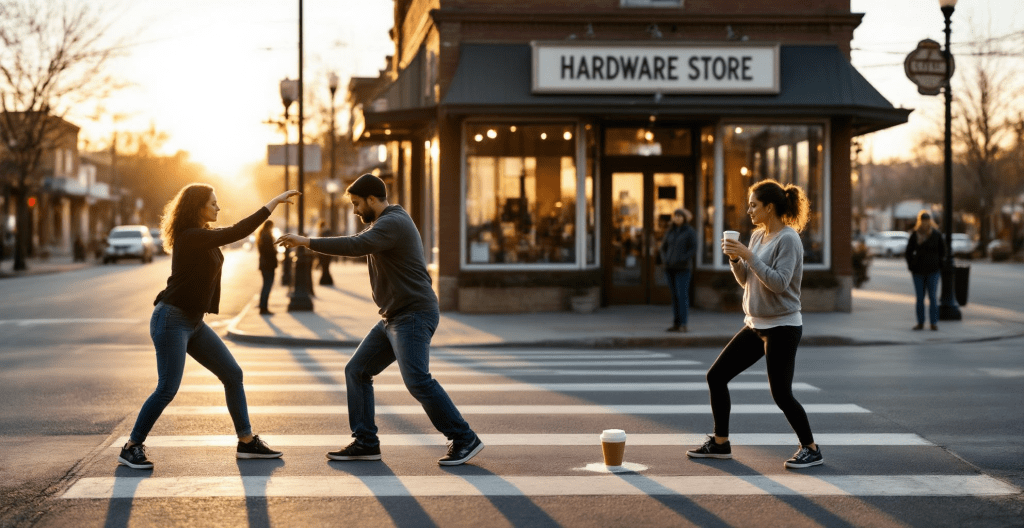
    An entire town has reportedly switched to communicating only through interpretive dance, saying words were becoming too efficient and therefore suspicious. Street signs remain, but everyone now uses the crosswalk as a conversational stage.

    Morning foot traffic has taken on the calm intensity of a rehearsal, with residents waiting for the walk signal like it is their cue. Chalk dance marks have appeared neatly aligned with the crosswalk stripes, suggesting someone is either organized or deeply committed to blocking traffic.

    Evidence includes a coffee order successfully placed by stirring an empty cup, then doing two quick shimmies to indicate extra foam. A foam-topped cup was later spotted sitting perfectly upright on the curb, as if placed mid-move and left there to cool off from the drama.

    At the hardware store, a refund was granted after a customer performed disappointed ladder, complete with a slow descent and a single finger wag at a bolt. Staff reportedly responded with a synchronized nod-step that translates to “valid point,” followed by a brisk pivot toward the returns counter.

    Bystanders have started holding their expressions the way people hold doors, politely and for longer than feels natural. Several witnesses described seeing shoppers freeze in expressive stances near storefronts, as if waiting for the next phrase to arrive through the elbows.

    Officials say silence is optional, but punctuation now requires stretching. Periods are widely understood as a grounded squat, question marks involve a cautious lean, and exclamation points have been linked to minor calf cramps.

    “Interpretive movement eliminates mumbling, and it also reveals who has been skipping leg day, which is valuable public information,” said Mara Pindle, lead auditor at the Municipal Clarity Office.

  • Man Sets Record for Longest Stretch Pretending to Understand Cryptocurrency, Nods Every 47 Seconds

    Man Sets Record for Longest Stretch Pretending to Understand Cryptocurrency, Nods Every 47 Seconds

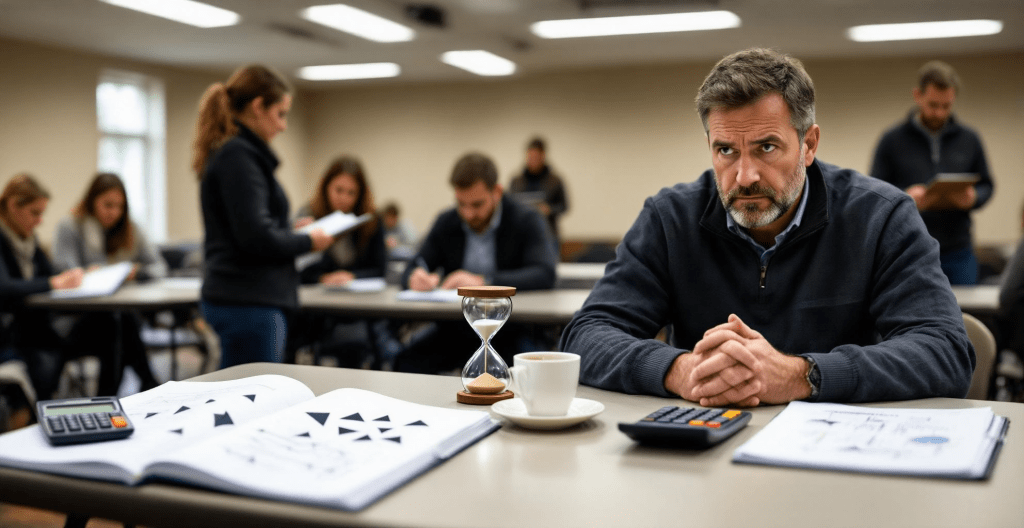
    A man has reportedly set a new record for the longest time pretending to understand cryptocurrency, maintaining a steady expression of thoughtful concern for 14 hours straight. Witnesses say he achieved peak realism by nodding exactly every 47 seconds, as if receiving invisible market wisdom.

    The attempt took place at a folding table in a neutral community hall, under lighting that made every decision feel permanent. Observers with clipboards timed each nod while an hourglass nearby appeared to barely move, as if even the sand was unsure.

    Evidence includes a notebook filled with triangles and arrows pointing to the word “maybe,” plus a calculator that displayed 0.00 and still got flipped over for privacy. A dark phone screen remained on the table the entire time, yet drew intense stares like it was broadcasting complex charts directly into his soul.

    Judges also confirmed he used the phrase “interesting volatility” while staring at the blank phone, then followed it with a long, respectful pause. At one point he took a sip of coffee and exhaled in a way that suggested he had just read something deeply technical, or simply remembered a password.

    Small proof details were cataloged, including a perfectly timed brow furrow at the mention of “wallets” and a finger tap that appeared to signal agreement with absolutely nothing. Witnesses reported he occasionally murmured “right, right” to the air, possibly to reassure nearby furniture.

    “His performance demonstrates advanced conversational endurance, plus a disciplined relationship with vague agreement,” said Lorna Bexley, adjudicator for the National Registry of Plausible Expertise.

    The attempt ended when someone asked him to explain it without using the word “blockchain.” Officials say his face briefly searched for an exit, then settled into an honest silence that the room reportedly found refreshing.

  • Alien Tourists Mistaken for Street Performers After Polite Landing Near Fountain

    Alien Tourists Mistaken for Street Performers After Polite Landing Near Fountain

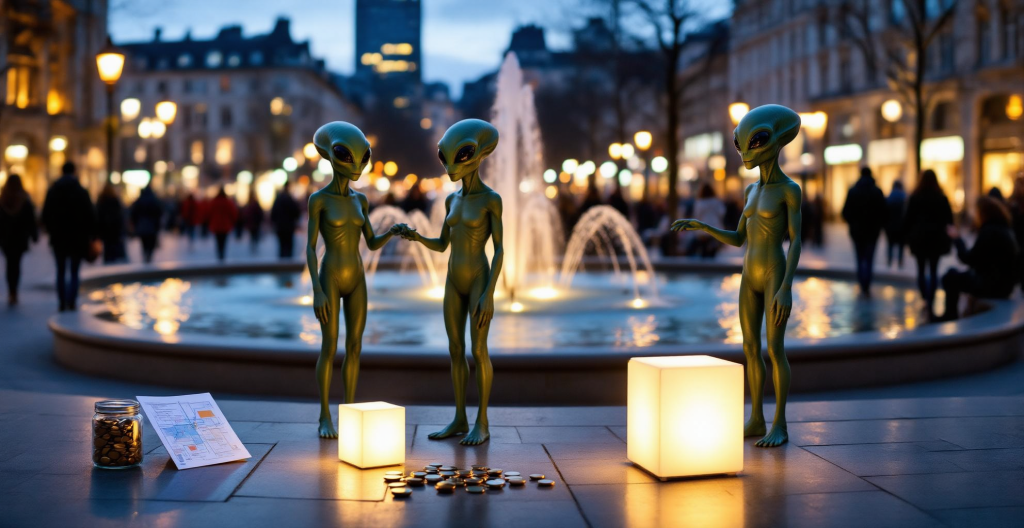
    Several alien tourists were reportedly mistaken for street performers after landing briefly and setting up politely near a fountain. Onlookers tossed coins as the visitors unfolded three matching elbows and began a slow routine that appeared to interpret local weather.

    The visitors, dressed in understated travel clothing, selected a spot with good foot traffic and respectful acoustics from the fountain’s splash. Their synchronized poses were gentle and deliberate, like a museum tour that learned choreography.

    Evidence includes a tip jar containing only perfectly polished pebbles, plus a small laminated map of Earth held upside down with great confidence. Witnesses say the map remained upside down even after multiple helpful gestures from the crowd, suggesting either stubbornness or an advanced understanding of “south.”

    A nearby busker noted their instrument was a glowing cube that played one note, then paused as if waiting for applause to ripen. Each time it sounded, the wet stone plaza briefly reflected the cube’s light in a crisp square, like reality was trying to take notes.

    Onlookers reported the routine included a careful arm-sweep toward the sky, followed by a slow bend that seemed to translate to “chance of drizzle, emotionally speaking.” Coins were accepted with solemn nods, then placed beside the pebbles as if being sorted into an exhibit.

    “It had the unmistakable feel of tourism, enthusiastic, slightly lost, and determined to be courteous about it,” said Pella Morn, outreach coordinator for the Civic Welcome & Oddities Office.

    Authorities say the tourists left peacefully after receiving directions, snacks, and a standing ovation they seemed to catalog. The tip jar was left behind, heavier than expected, and the fountain’s edge showed three faint, perfectly aligned elbow prints.

  • AI-Generated Cheese Wins Award for “Most Emotionally Complex,” Wheel Reportedly Hums in Plain Cooler

    AI-Generated Cheese Wins Award for “Most Emotionally Complex,” Wheel Reportedly Hums in Plain Cooler

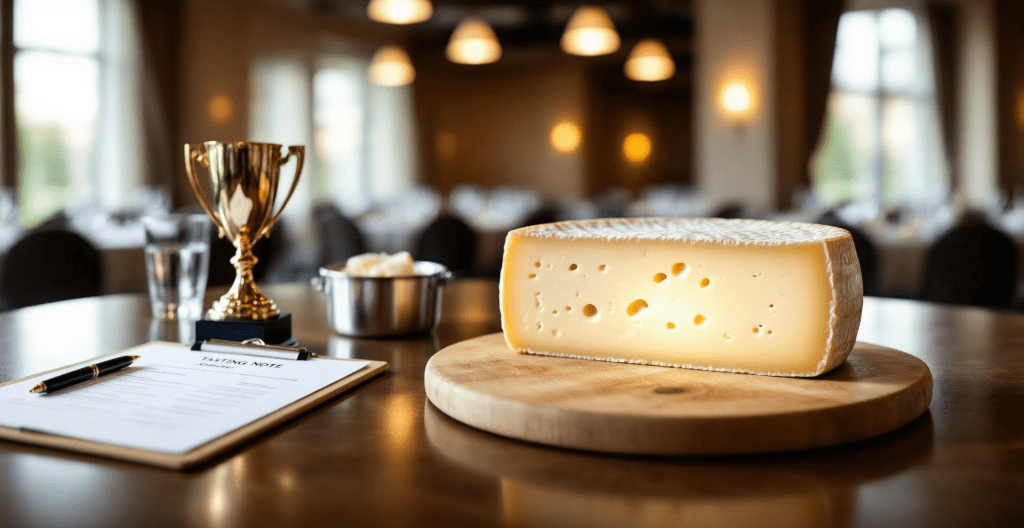
    The world’s first AI-generated cheese has reportedly won an award for most emotionally complex, after judges described it as tasting like nostalgia, regret, and a polite new beginning. The wheel was presented in a plain cooler, humming softly as if thinking about pasture.

    The ceremony took place in a neutral event hall where culinary professionals leaned in with the seriousness usually reserved for weather and curtains. A simple metal trophy sat beside the cheese like it, too, was trying to process its feelings.

    Evidence includes a tasting note sheet that updated itself mid-bite, changing from mild to longing with a small, decisive checkmark. Observers say the pen on the clipboard shifted slightly on its own, as if eager to be specific.

    Inspectors also found the rind developing tiny dimples that resembled concern when placed near a cutting board. When the knife approached, the dimples appeared to deepen, then settle into an expression described as “brave, but not ready.”

    Additional proof details have been logged, including a faint LED-like glow under the wheel and a nearby glass of water showing a subtle vibration, consistent with the alleged hum. The cooler remained slightly open, releasing a thin mist that smelled like dairy plus a second draft of an apology.

    “It is the first cheese we’ve seen that finishes with a question and then waits for your answer,” said Dr. Elwin Sorrell, sensory metrics lead at the Institute for Applied Dairy Feelings.

    Organizers say it pairs well with crackers, silence, and making eye contact with the fridge. Several attendees reportedly left the table with a new respect for leftovers and a brief urge to call someone they have not texted since soup season.

  • Office Sweater Contest Won by Cosmic-Ray Knit, Winner Accepts Gift Card and Mild Chromosome Damage

    Office Sweater Contest Won by Cosmic-Ray Knit, Winner Accepts Gift Card and Mild Chromosome Damage

    A man has won his workplace’s ugly holiday sweater contest with a sweater reportedly knitted from cosmic rays and snickerdoodle crumbs, beating out several loud entries and one that simply hummed. Judges praised the garment for its aggressive sparkle and the faint cinnamon cloud that followed him like a seasonal warning.

    The winning look debuted in a break room elsewhere under a mix of warm party lights and unforgiving fluorescent glare. Witnesses say the sweater reacted to the lighting like it had opinions, shifting from “festive” to “possibly licensed by astronomy” depending on the angle.

    Evidence includes sleeves that crackled softly near the ceiling panels, prompting several coworkers to step back while continuing to compliment the craftsmanship. One attendee reported the static felt “friendly but insistent,” like a handshake that lasts two beats too long.

    The sweater’s pocket became its own ongoing incident, repeatedly producing warm, unrelated crumbs long after lunch. Crumbs spilled onto a napkin in tidy little drifts, as if the garment was trying to contribute to catering without being asked.

    Coworkers also noted the sweater shed tiny glowing flecks onto the carpet, which the vacuum later returned, politely, as if the dust belonged. Facilities staff reportedly emptied the canister twice, only to find the flecks had regrouped in a small, twinkling crescent near the winner’s shoes.

    “It’s rare to see a textile that combines seasonal cheer with low-grade astrophysical consequences,” said Lyle Pennant, senior evaluator at the Office Aesthetics and Soft Hazards Council.

    The trophy was a gift card and mild chromosome damage. The winner left early, allegedly to “cool down,” while the sweater continued to sparkle in the doorway for several seconds after he was gone.

  • Coastal Team Tests Weather Crank, Beards Rearranged On Schedule

    Coastal Team Tests Weather Crank, Beards Rearranged On Schedule

    Researchers reading coastal sagas report a mechanical crank said to begin storms on command. Field notes admit it mostly produced wind that rearranged beards with alarming courtesy.

    The device uses an oak frame, iron teeth, and a tethered bellows wrapped around a rune dial marked squall, drizzle, and grand entrance. Salt crust under the pawl and a thumb-polished notch at drizzle suggest frequent, optimistic use.

    In trials the bellows sent a tidy gale along the hall bench, braiding whiskers by alphabetical order. A fish rack swayed in fours, a torch flame combed itself into a straight part, and a puddle corrugated into neat rings.

    A modern replica moved only a puddle and three hats, yet left a crisp isobar sketched in sea salt on a sleeve. A measuring cord tied to a post tugged to the same angle each turn, and a ladle rotated politely to face downwind.

    “It is a barometric suggestion engine, superb at grooming, modest at doom,” said Bryn Alvar, maritime mechanics lead at the Institute of Scheduled Weather.

    Field notes list rune chips in the sweep tray, bellows leather scented of kelp, and a chalk tally of whisker outcomes under B for brisk. A gentle tap on the frame quieted the draft, whereupon the crank spun once of its own accord and parted the doormat down the middle.

  • Courtyard Harps Broadcast Silent Melodies, Listeners Report Music At The Elbow

    Courtyard Harps Broadcast Silent Melodies, Listeners Report Music At The Elbow

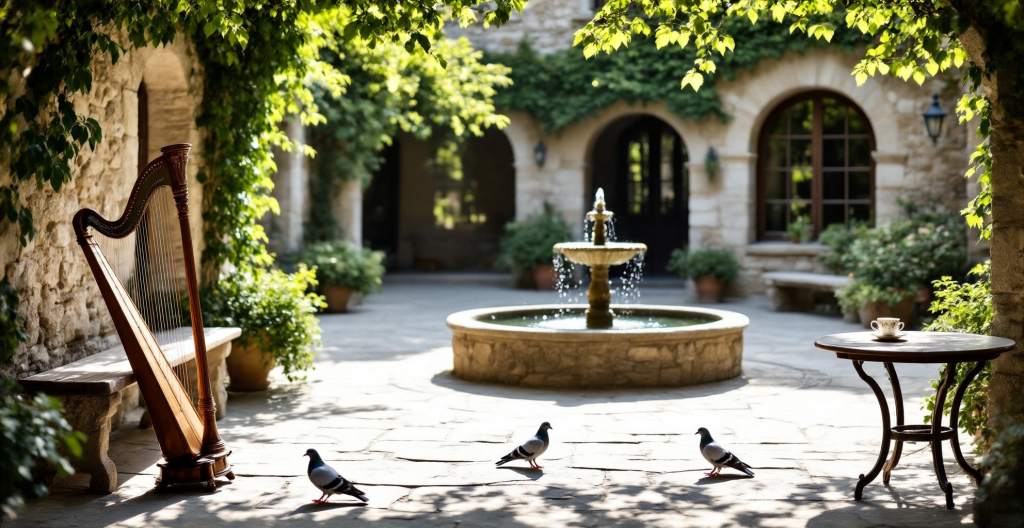
    Excavators in a walled quarter report evidence that musicians tuned harps to send melodies silently across courtyards. Marginal sketches show elbows circled with tiny notes, as if the tune arrived like a courteous nudge.

    Recovered harp pegs are carved with arch and balcony icons, and a bone tuning key bears a neat courtyard grid. Peg grooves are polished at intervals labeled gallery, shade, and laundry, with a faint dot where elbows would rest on a rail.

    In trials a reconstructed frame was strummed without sound, yet the fountain kept time in ripples. Pigeons nodded in threes, and a laundry line tugged itself into a chorus that ended with a neat bow of clothespins.

    Modern volunteers reported elbow tingles and the sudden urge to applaud with forearms. Microphones caught only wind, but tea on a saucer formed little crescents on the handle side as if a rhythm politely leaned there.

    “It is an elbowphonic network that treats courtyards like resonant sleeves,” said Maera Quill, acoustic archaeologist at the Institute of Ambient Music.

    Field notes list chalk rings at balcony height, elbow-polished stone on two corners, and a ledger line that reads refrain travels via shade. The bone key warmed when held at arm’s crook, and at sunset the arch icons aligned with shadows that seemed to hum yes, again.

  • Historians Log Weather Kiosks, Drizzle Sold by the Minute With Thunder Hush Fee

    Historians Log Weather Kiosks, Drizzle Sold by the Minute With Thunder Hush Fee

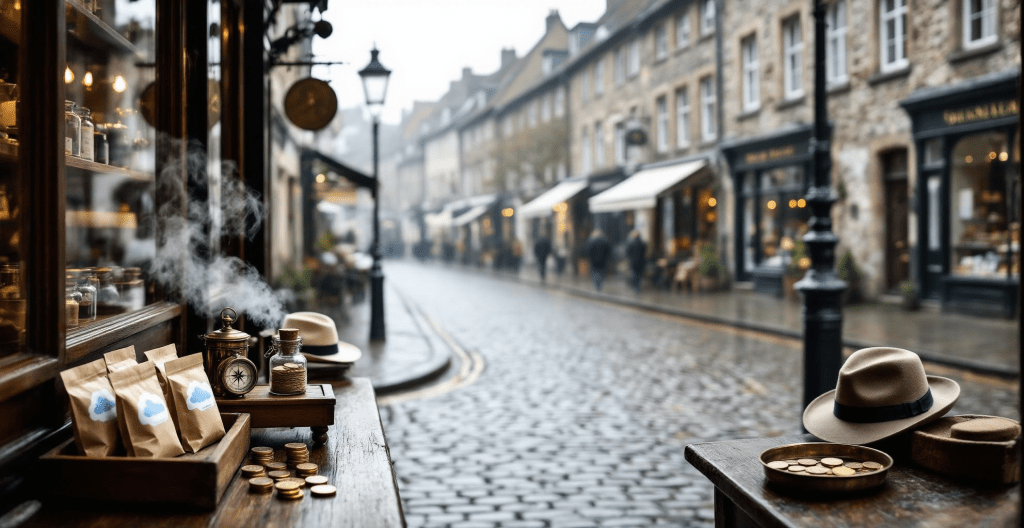
    Historians have cataloged street sketches of kiosks where citizens purchased pre seasoned weather, from pocket breezes to artisanal fog for exits. The drawings price drizzle by the minute and list a polite surcharge for quieting thunder.

    Margins show corked vials tied with compass thread, sachets stamped with a tiny puff glyph, and a crank that seasons wind with citrus or sea salt. A little gauge rides the counter, its needle nodding like a shopkeeper who knows your usual.

    In a bench test, a packet opened, hats leaned two degrees west, and a lamppost gathered dew in a precise ankle high ring. Coins on the tray came back slightly damp and oddly content.

    Popular sets bundled farewell fog with a single decisive footstep, ideal for dignified exits. Receipts curled at the corner as they dried, leaving a faint ellipse that smelled of limes and rain.

    “It is microclimate retail, punctual and courteous, with an option to keep the sky from clearing its throat,” said Mira Fen, atmospheric provisions curator at the League of Street Meteorologies.

    Small proofs keep piling up. The windsock atop the cart stirs without a breeze, chalk prices bead with condensation when drizzle is on special, and returned packets arrive half lighter.

  • Hill City Maps Lantern Network, Gossip Reported at Light Speed

    Hill City Maps Lantern Network, Gossip Reported at Light Speed

    Surveyors in a quiet hill city have mapped a lattice of signal lanterns built to carry gossip at the speed of light. Street plans label routes for rumor, rebuttal, and awkward correction in neat, unapologetic script.

    Recovered lamps have ear-shaped shutters and a brass wheel marked “hmm, gasp, and tell no one.” In tests a beam crossed a courtyard until the roofline kinked, then bent toward the eaves and arrived as a faintly judgmental flicker.

    Analysts note that nosy rooftops intercepted most messages, storing half-finished scandals like heat in late stone. Soot around chimney pots forms tidy ellipses, and at dawn the tiles click as if returning only the words you did not hear this from me.

    Wear patterns cluster around gasp, and a tiny notch near tell no one is polished bright by generations of caution. One lantern produced a sympathetic dim when set beside a cooled teacup, and a moth hovered at the edge as if auditing.

    “It is an optical rumor engine, calibrated for speed and plausible deniability,” said Mara Quill, senior lanternologist at the Municipal Whisper Works.

    A field log describes beams that hesitate at corners, then proceed with a small shrug of amber. When two signals met in crossing they merged into a tidy double-take, and the eaves released a soft “ah” actually that drifted down like warm lint.

  • On-Demand Icicles Promised in 30 Minutes or Your Warmth Returned

    On-Demand Icicles Promised in 30 Minutes or Your Warmth Returned

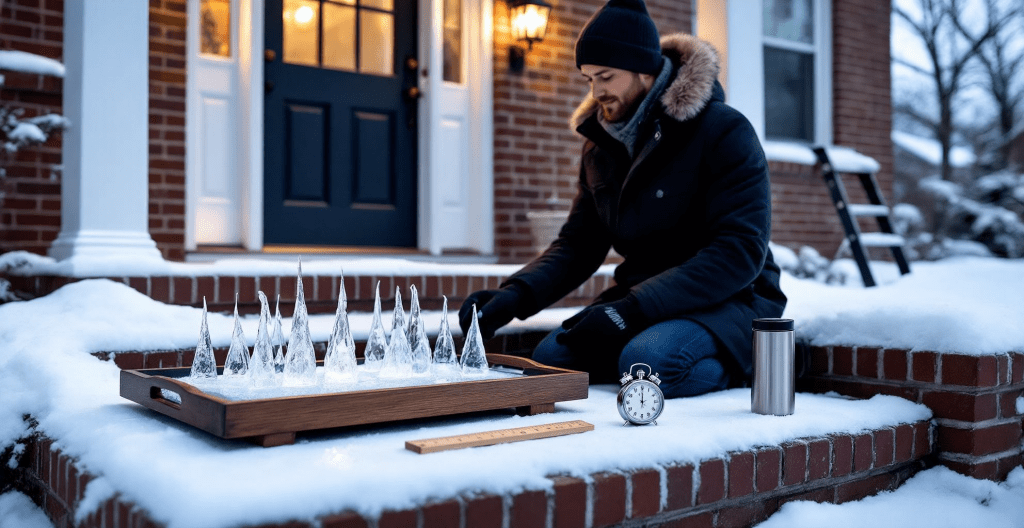
    A startup has entered peak winter with a bold offer: handcrafted icicles delivered to your gutter in half an hour, or a courteous refund paid in heat. Couriers travel shaded routes and north facing stoops, their satchels giving off a polite chill that steps around doormats like a well trained guest.

    Customers choose length, clarity, and a subtle curl. On arrival, the courier opens a felt lined tray, lifts an icicle with cotton gloves, and taps the gutter with a wooden ruler so the piece settles with quiet confidence. A brief mist appears, then the air looks freshly pressed, as if someone ironed the evening on low.

    Neighbors say the clues are gentle. A stopwatch leaves a pale ring on the step. The porch light lowers its voice. A ladder sets its feet and gives the smallest nod. The gutter replies with a soft metallic yes, and the breath above the tray signs off like it knows where to stop.

    Company reps describe a simple code of manners. Install on the third measured tap. Approach from the shaded side. Face curls streetward unless a hedge requests privacy. If asked, a courier will hold the icicle in the doorway for one quiet moment so the house can learn the shape.

    If the thirty minute mark slips, a technician arrives to return your warmth by careful ladle from a small thermos, just enough to fog the hallway mirror at its usual pace. The steam pauses beside the coat hooks as if reading the names. The guarantee is finished with a thumbprint of clean condensation.

    Most deliveries hit on time. Evenings now carry a soft clink as porches try on winter jewelry and decide it suits them. The ruler slides back into its sleeve. The tray closes with a whisper. The new icicles hold still, pleased to belong to the cold that brought them.

  • Archaeologists Uncrate Bronze Emotional Compass, Needle Ignores North

    Archaeologists Uncrate Bronze Emotional Compass, Needle Ignores North

    Researchers at a quiet dig report a bronze compass that refuses north, orienting toward the nearest strong feeling. Tool marks place it in the classical lecture hall era, where chalk was plentiful and patience scarce.

    In trials the needle warmed near laughter and fogged at despair. Set beside a fruit bowl and a yawning cat, it ignored the orange and snapped toward the cat, then hummed faintly at a distant sigh.

    The face shows tiny icons for joy, dread, and secondhand embarrassment, each with a modest tick mark that reads “oof.” Verdigris settles in the grooves, and the glass carries one careful scratch shaped like a smile that changed its mind.

    Archives mention a famed philosopher who used it to steer around dramatic students. In a modern group project meeting, it spins once, clicks, and politely lies down.

    “It is essentially a barometer for moods that forgot about weather,” said Lyra Pesh, instruments curator at the Institute of Hypothetical Navigation.

    Field notes list fig crumbs and chalk dust inside the hinge, as if lectures were snacks and vice versa. When a volunteer whispered an apology he did not mean, the needle drifted to the theater mask and made a sound like a distant polite cough.

    Researchers are drafting a map that uses feelings as cardinal points, with “Cheer” to the east and “Yikes” in the lower left. The crate ledger reads emotional compass find in tidy handwriting, and the cat has been retained as a recurring control variable.

  • Workshop Unveils Gossiping Quill, Banned After Logging Duke’s Dramatic Naps

    Workshop Unveils Gossiping Quill, Banned After Logging Duke’s Dramatic Naps

    Archivists in a Renaissance workshop report a quill that wrote gossip on its own. Court officials banned it after it itemized a duke’s nap habits with times and cushions, complete with a legend.

    The feather perched on a brass stand fitted with a tiny listening wheel. Ink freckles ring the wheel’s perforations, and the brass shows a thumb-bright crescent where someone tried to dial it to discretion.

    In tests the nib moved when voices dropped, underlining sighs and sketching a folding screen in quick strokes. It tallied three pillows at the third hour, then added a courteous note on texture.

    Left alone, it recorded the rosemary plant’s opinions in faint, slanted lines. The quill wrote hush in smaller and smaller letters until the inkwell lid eased itself closed and left a perfect rim print on the page corner.

    “It is a stenographer for whispers, tireless and unhelpfully precise,” said Mira Vell, audial curiosities lead at the Guild of Applied Inks.

    Field notes list a blot shaped like a yawn, a margin bracket labeled behind the screen, and a quill tip that warmed when anyone cleared a throat. Shelved upright, it rotated one degree toward the nearest conversation, which was the rosemary, then sketched a pillow with impeccable fringe.

  • Pyramid Chamber Turns Echoes Into Advice, Visitors Exit Hydrated and Thoughtful

    Pyramid Chamber Turns Echoes Into Advice, Visitors Exit Hydrated and Thoughtful

    Archaeologists beneath a stepped pyramid report a chamber with nested stone rings that turn echoes into advice. Most translations urged visitors to hydrate and reconsider recent choices, with a soft emphasis on pacing oneself.

    The rings are grooved like shells above a shallow bowl of a floor. A single hand clap returned as suggestions such as “drink now” and “maybe not all the stairs at once.”

    In trials a canteen cap rolled toward a clay water jar and parked itself at the base. Chalk dust settled into little arrows that pointed to a low bench, and a headlamp flickered politely until someone sat down.

    Microphones caught only clean delay, yet field notes list jar condensation that refreshed exactly on the echo, and footprints that drifted from the stair mouth to the bench in a thoughtful loop. A string line tied to the survey stake kept leaning toward the water with small, decisive twitches.

    “It is a reflective counsel engine, acoustics tuned to the human second thoughts,” said Mara Tellig, senior echoist at the Institute of Advisory Stonework.

    On departure, people moved slower, sipping, and measuring the stairs as if they were options in a catalog. A loose coin spun once near the drain and came to rest on heads, which someone circled in chalk and labeled yes, hydrate.

  • Rome Briefly Paid Sailors In Canned Sardines, Economic Notes Say

    Rome Briefly Paid Sailors In Canned Sardines, Economic Notes Say

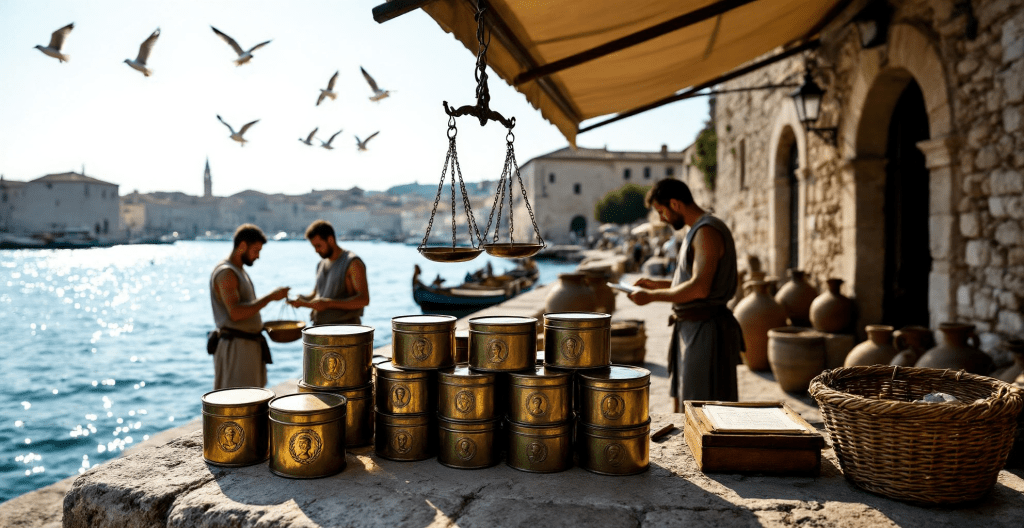
    Economic notes from the late Republic point to a short lived monetary experiment at sea. Instead of coins, fleet paymasters issued sealed tins of sardines, each lid lightly hammered with an imperial profile and stacked by the chest like a pantry with rank.

    Denominations were practical. One fish for small change, five for a day’s wage, and a premium issue packed in extra olive oil for hazard duty. Dockside treasuries shaded their reserves under damp linen, tallied interest as a slow tilt of brine, and posted exchange rates that drifted with the afternoon temperature.

    Auditors learned to shake a tin by the ear and read the slosh like a balance sheet. Counterfeits gave themselves away with a faint lemon note. Port clerks accepted a spoon of oil as a modest fee and insisted the spoon be returned to the bowl with good manners.

    Pay tables kept the evidence. Domed lids held soft thumbprints from honest counting. Half moons of oil marked the planks where tins had rested. Counting boards gained a permanent gloss at the elbow line, and quay stones wore round water rings that dried in neat time.

    Quartermasters preferred tins that answered a tap with a clean bell shaped ring. Too flat meant short packed. Too dull meant overfilled. Someone always asked if bonuses could be issued in anchovies. The answer was yes, but only on festival days.

    “The incentive structure was simple,” said a museum conservator who studies maritime ledgers. “Weight and certainty in every payment. Unfortunately, certainty also smells like fish after noon.”

    Surviving ledgers suggest the policy did what policies do. Landings grew punctual. Cargo lists smelled organized. The harbor economy sat tightly packed, well preserved, and surprisingly civil. At dusk, a final tin gave one agreeable ping inside the pay chest, and the anchorage settled level and olive bright.

  • Florence Workshops Once Tuned Screwdrivers To C Major

    Florence Workshops Once Tuned Screwdrivers To C Major

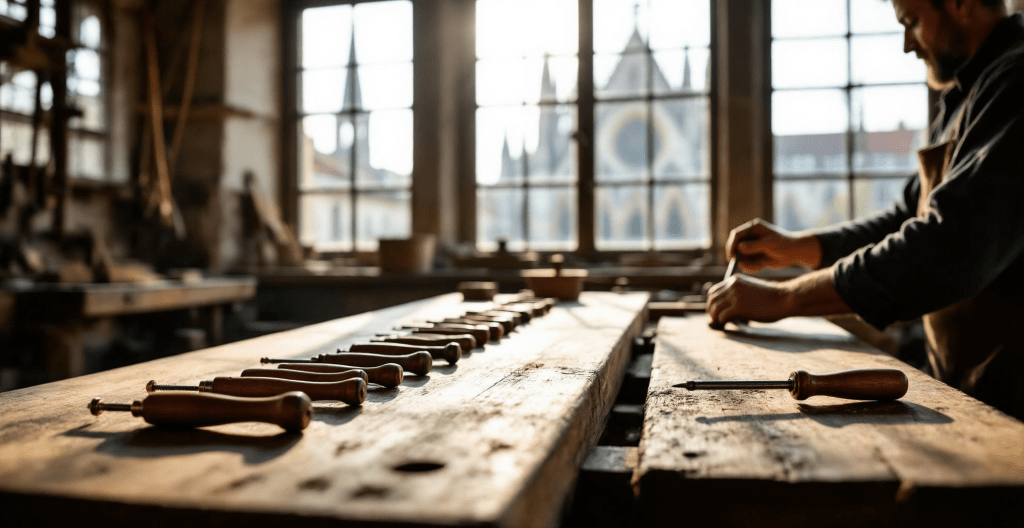
    Archivists in Florence now credit early workshops with tuning screwdrivers to specific musical pitches so crews could harmonize during construction. Walnut handles were weighted to ring true, shanks filed to exact lengths, and the room settled into a low, sturdy chord before work began. Stone vaults reportedly resonated in C major, steady as a bell, until someone overtightened the soprano section.

    Foremen set the key by striking a chisel against a stone offcut, then pointed with a plumb line while the bench line joined one by one. Turning pressure was measured by ear, the good torque arriving when the tool sang back to the note. Braces carried the bass, small drivers took the melody, and mallets kept time in a patient two.

    Evidence keeps tidy posture. Racks remember the warm outline of handles, and the bucket by the trestle shows concentric ripples that answer a chord without fuss. Floorboards hold soft arcs where apprentices stepped in time, and a chalk line refuses to smudge during a good chorus. Even the shavings cooperate, curling to a measured rhythm.

    An accompanying memorandum, Workshop Harmony Protocol, survives in careful script. Tools are to be tuned at first light and checked at the hour. Torque shall cease when the note rounds at the edges, not when the wrist grows brave. Cork shims may correct bright work, braces are to hum without complaint, and mallets will count a patient two. The plumb line sets the tempo with a polite nod.

    On clear mornings the high vault picked up the harmony and leaned it along the scaffolds like sunlight. Ledger notes mention a brief migration to bright D after a spirited afternoon, corrected with cork and a deep breath. Offcuts kept their pitch overnight and made fine reference stones at dawn.

    Later guilds kept a rack of sizes to cover an octave, practical and pleasant, so a wall could be tightened without ever leaving the tune. Apprentices learned to whistle the key across a clay cup, and the plumb bob offered a tiny approval tremble when the chord settled.

    By evening the benches exhaled. Screws sat with quiet confidence, the room held a supported hush, and one last chisel tap sent a clear C through the timbers that landed neatly in the grain and stayed.

  • Dawn Drummers and the Original Snooze Button

    Dawn Drummers and the Original Snooze Button

    Archaeologists say several ancient cities outsourced their mornings to rhythm. At first light, teams of temple drummers on tower tops struck a synchronized pattern that rolled through the streets, turning sunrise into a civic percussion rehearsal and getting bakers, scribes, and goats moving on the same beat.

    Records describe a simple opt out. If you were not ready to greet the day, custom allowed a single piece of fruit tossed toward the nearest drummer. A brief pause followed, the sticks lifted, and the block earned a few extra minutes before the downbeat returned. Oranges were recommended for accuracy. Pomegranates were discouraged for obvious reasons.

    City ledgers note a side effect that vendors still envy. Breakfast markets opened with the final cadence, and stalls did brisk business in “snooze fruit,” softened for humane tossing and discounted after the third bell. Street sweepers reported tidy peels and a noticeable rise in community aim.

    Temple manuals were surprisingly specific. Drummers rotated by quadrant, rain rhythms dropped one tempo, and festival days added a flourish that sounded like a bright braid at the end of the pattern. A chipped tablet lists replacement stick sizes and a polite reminder to return misthrown figs to their owners.

    “The system was less about noise and more about choreography,” said one museum curator. “Wakefulness became a shared event. If a neighborhood needed five more minutes, you could hear it in the fruit.”

    By midmorning the towers fell silent, markets hummed, and the city settled into its tasks with a faint beat still tapping at the edge of memory. Centuries later, a few plazas keep a ceremonial drum on the hour. No fruit allowed, for everyone’s sake.

  • Spaghetti That Can “Read the Room” Debuts In Quiet Lab Trial

    Spaghetti That Can “Read the Room” Debuts In Quiet Lab Trial

    A culinary lab says it has cooked the first spaghetti that responds to diners’ moods. In early tastings, calm guests watched long, silky strands settle neatly across the plate, while anxious visitors found their noodles braiding into small bows that clung to the fork like reassurance.

    The setup looks modest. Stainless bowls, a quiet thermometer, and a ring of sensors listen for tiny tremors in tableware and footsteps. When the signal says “relaxed,” strands align in parallel. When the signal says “nervous,” curls gather at the rim and begin a gentle weave that steadies the twirl.

    Little details back the claim. Condensation beads line the bowl in evenly spaced rows, as if counting heartbeats. The tasting bench holds two pale scuffs where shoes pause before sitting. Fork handles pick up a bright spot right where hesitant fingers rest. A pencil ledger on the counter notes texture shifts and ends every line with a tidy check.

    Music matters. Soft background tempos loosen the gluten and smooth the bite. A burst of confident laughter made one plate fall perfectly into straight lanes, according to the tasting log. In a quieter session, a shy visitor produced a decorative knot near the rim that the chef preserved in chilled olive oil for reference.

    “The pasta is not thinking,” the lead researcher said, “it is measuring. We are translating small human signals into strand behavior, then letting the boil and the starch do the rest.” The lab adds that warm plates and unhurried fork angles help the effect along.

    Most evenings end in a low hush of vents and clinks. Utensils settle. The thermometer blinks its approval. When someone pauses at the threshold, steam lifts in thin threads, and a single noodle ties a polite bow, just in case.