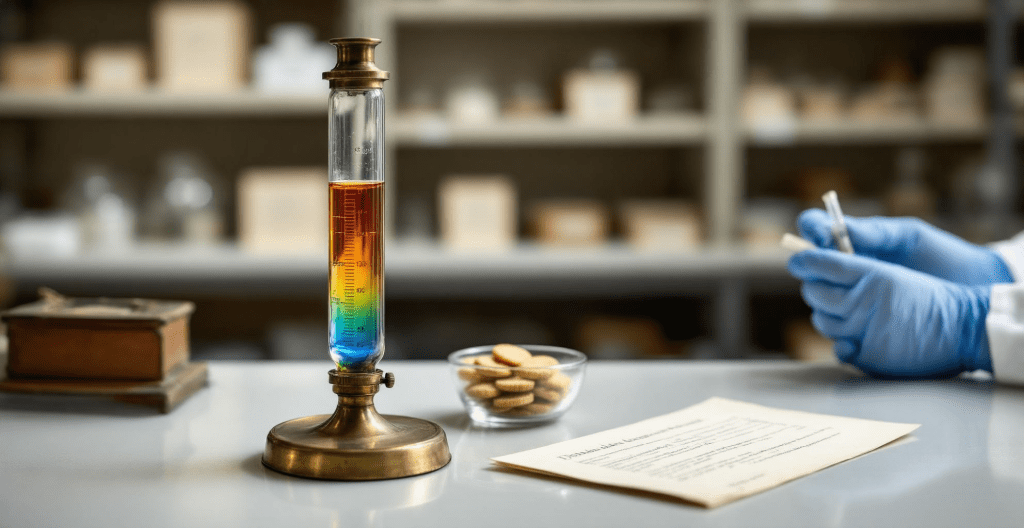
Historians have uncovered glass tubes once used to measure public morale rather than temperature, typically mounted near old gathering places like civic décor with opinions. Archived notes suggest the liquid inside rose for optimism, dipped for boredom, and refused to settle whenever the crowd got dramatic.
Several tubes recovered from storage still show a stubborn meniscus that quivers during speeches, then calms noticeably when someone offers snacks. Conservators report the column forms tiny ripples without any change in room conditions, as if the instrument is listening through the glass on principle.
Aged catalog cards describe the devices as “crowd-responsive indicators,” with one entry noting the preferred calibration method was “a reassuring announcement and a modest biscuit.” The same card records a technician tapping the tube three times to encourage stability, after which the liquid reportedly climbed higher out of spite.
Physical traces support the instruments’ fussy reputation. The hand-blown glass carries faint scratches near the midpoint, consistent with repeated pointing, and a single trapped air bubble sits above the colored liquid like it is waiting for a better mood.
In one test, staff placed a small bowl of crackers near the conservation table and observed the meniscus relax into a more symmetrical curve within minutes. When the crackers were removed, the column rose again, which researchers described as “unscientific, but extremely consistent.”
“These are not measuring heat, they are measuring the room’s willingness to behave,” said Orin Plaist, chief curator at the Institute for Applied Civic Vibes. Researchers now recommend using the tubes in quiet rooms, because the instruments seem to enjoy an audience and may attempt to outperform it.

Leave a comment