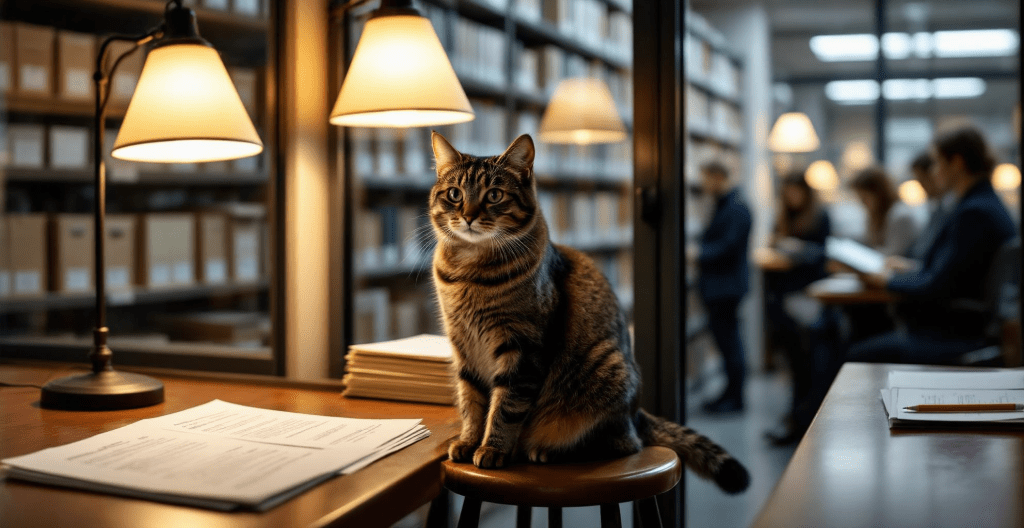
Archivists at a quiet research building have confirmed that a single cat controls access to rare documents, stationed beside the climate-controlled room like a small, furred policy. Researchers now submit requests as usual, then wait for the cat to decide if the day deserves parchment.
Security footage shows the cat tapping certain call slips with one paw, then turning away from others as if they contain personal questions. Approved slips are left with a faint smudge of fur and a shallow claw dimple, as though stamped by a committee of one.
Staff report the access badge reader still works, but the door only feels open when the cat remains seated. When it stands, the room’s glass panel shows faint condensation like a held breath, and even seasoned historians suddenly remember they have other errands.
The reading room has adapted with quiet efficiency. A pencil is placed respectfully near the request stack, an ID badge lanyard waits on the table like tribute, and a tiny paw print in the dust near the threshold has been carefully preserved rather than cleaned.
Researchers say the cat’s standards are consistent but not legible. It favors straightforward requests, appears skeptical of anything labeled “miscellaneous,” and has once denied a folder after staring at it for a full minute with what witnesses described as administrative disappointment.
“Access is technically governed by protocol, but the cat provides interpretive guidance that everyone finds compelling,” said Marlowe Quill, compliance lead at the Institute for Controlled Paper Environments. Approval is granted silently and without explanation, denials are also granted silently, just louder.

Leave a comment