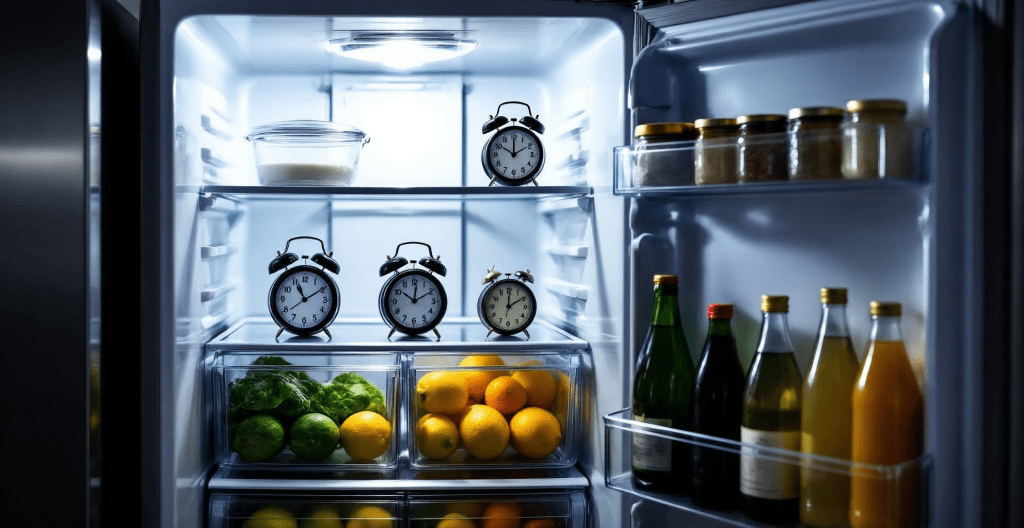
Household science just delivered a cool shock. Researchers now say each refrigerator keeps private time zones, which explains why leftovers seem to age at different speeds. A soup stashed in the door gains a day by dinner, while a salad in the crisper still swears it is Wednesday. The interior light performs a tiny sunrise every time the door opens, a small dawn with a hint of parsley and chill.
Field teams are mapping interiors with calibrated magnets and patient thermometers. Early charts place the butter compartment at local noon, the top shelf on permanent daylight saving, and the crisper a dependable two days behind. Door shelves inch ahead by an hour with every peek. On some models a faint, polite breeze marks the date line, right where condensation flips from dew to frost.
Clues are visible to the careful eye. A sprig of herbs holds morning on its left and late afternoon on its right, split by a shy shimmer in the glass. Bottles in the door bead with dense droplets while jars inside carry only a light mist. A circular water ring on the shelf keeps perfect time without numerals, and a level on the counter gives a small approving nod.
“Treat the fridge like a tiny archipelago,” said one appliance physicist. “Label your islands, visit with intention, and never store a birthday cake across two climates unless you want another party.”
Families are already posting simple maps on the inside wall, just above the quiet clock made by the shelf’s circular drip. Stickers mark the meridian like buoy lights. The hum drops half a tone when the door closes, as if the compressor has set its watch. A pencil log on the freezer records arrivals and returns with square checks that look very sure of themselves.
After midnight the fridge rehearses a private sunrise, then settles. Butter keeps its noon without hurry. The crisper folds Wednesday like a postcard. A slice of bread steps into tomorrow for one brave minute, returns a touch taller, and waits for breakfast.

Leave a comment