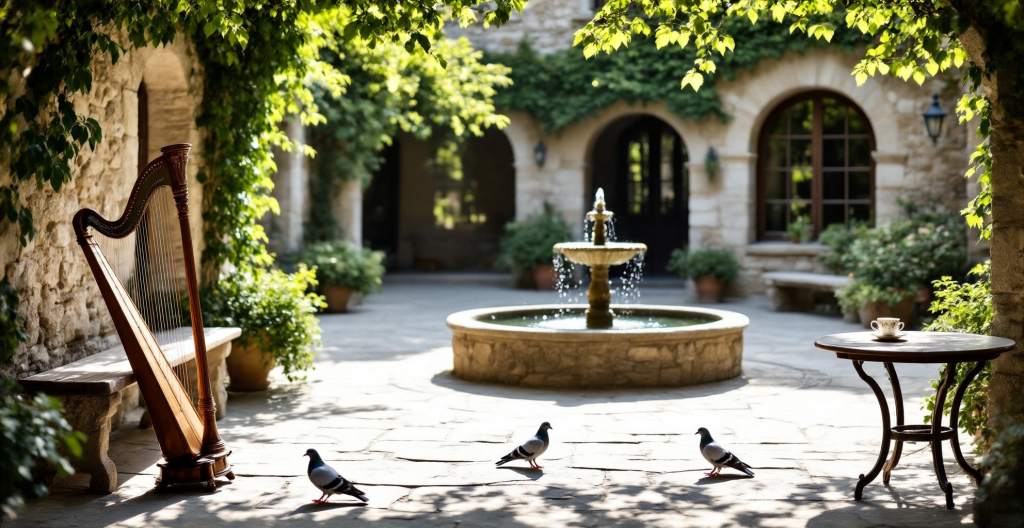
Excavators in a walled quarter report evidence that musicians tuned harps to send melodies silently across courtyards. Marginal sketches show elbows circled with tiny notes, as if the tune arrived like a courteous nudge.
Recovered harp pegs are carved with arch and balcony icons, and a bone tuning key bears a neat courtyard grid. Peg grooves are polished at intervals labeled gallery, shade, and laundry, with a faint dot where elbows would rest on a rail.
In trials a reconstructed frame was strummed without sound, yet the fountain kept time in ripples. Pigeons nodded in threes, and a laundry line tugged itself into a chorus that ended with a neat bow of clothespins.
Modern volunteers reported elbow tingles and the sudden urge to applaud with forearms. Microphones caught only wind, but tea on a saucer formed little crescents on the handle side as if a rhythm politely leaned there.
“It is an elbowphonic network that treats courtyards like resonant sleeves,” said Maera Quill, acoustic archaeologist at the Institute of Ambient Music.
Field notes list chalk rings at balcony height, elbow-polished stone on two corners, and a ledger line that reads refrain travels via shade. The bone key warmed when held at arm’s crook, and at sunset the arch icons aligned with shadows that seemed to hum yes, again.

Leave a comment