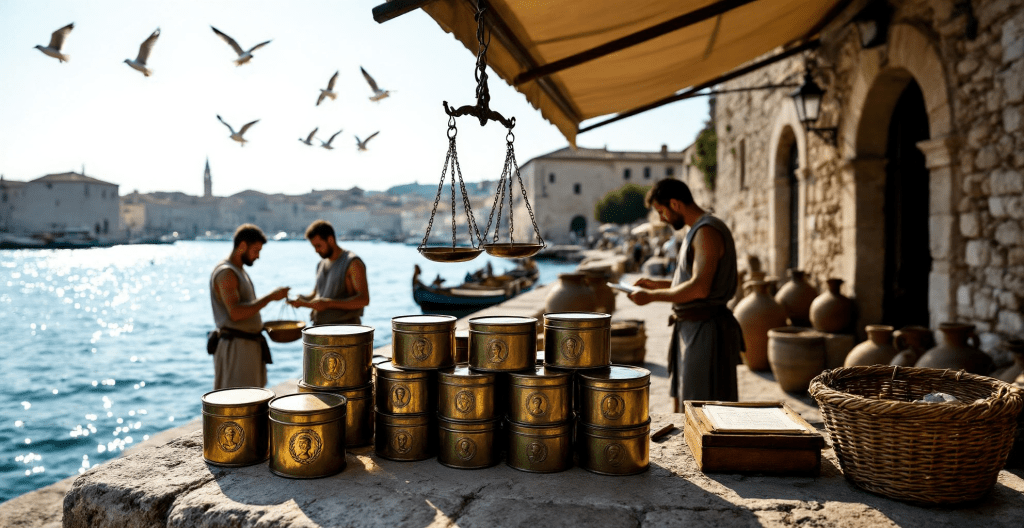
Economic notes from the late Republic point to a short lived monetary experiment at sea. Instead of coins, fleet paymasters issued sealed tins of sardines, each lid lightly hammered with an imperial profile and stacked by the chest like a pantry with rank.
Denominations were practical. One fish for small change, five for a day’s wage, and a premium issue packed in extra olive oil for hazard duty. Dockside treasuries shaded their reserves under damp linen, tallied interest as a slow tilt of brine, and posted exchange rates that drifted with the afternoon temperature.
Auditors learned to shake a tin by the ear and read the slosh like a balance sheet. Counterfeits gave themselves away with a faint lemon note. Port clerks accepted a spoon of oil as a modest fee and insisted the spoon be returned to the bowl with good manners.
Pay tables kept the evidence. Domed lids held soft thumbprints from honest counting. Half moons of oil marked the planks where tins had rested. Counting boards gained a permanent gloss at the elbow line, and quay stones wore round water rings that dried in neat time.
Quartermasters preferred tins that answered a tap with a clean bell shaped ring. Too flat meant short packed. Too dull meant overfilled. Someone always asked if bonuses could be issued in anchovies. The answer was yes, but only on festival days.
“The incentive structure was simple,” said a museum conservator who studies maritime ledgers. “Weight and certainty in every payment. Unfortunately, certainty also smells like fish after noon.”
Surviving ledgers suggest the policy did what policies do. Landings grew punctual. Cargo lists smelled organized. The harbor economy sat tightly packed, well preserved, and surprisingly civil. At dusk, a final tin gave one agreeable ping inside the pay chest, and the anchorage settled level and olive bright.

Leave a comment