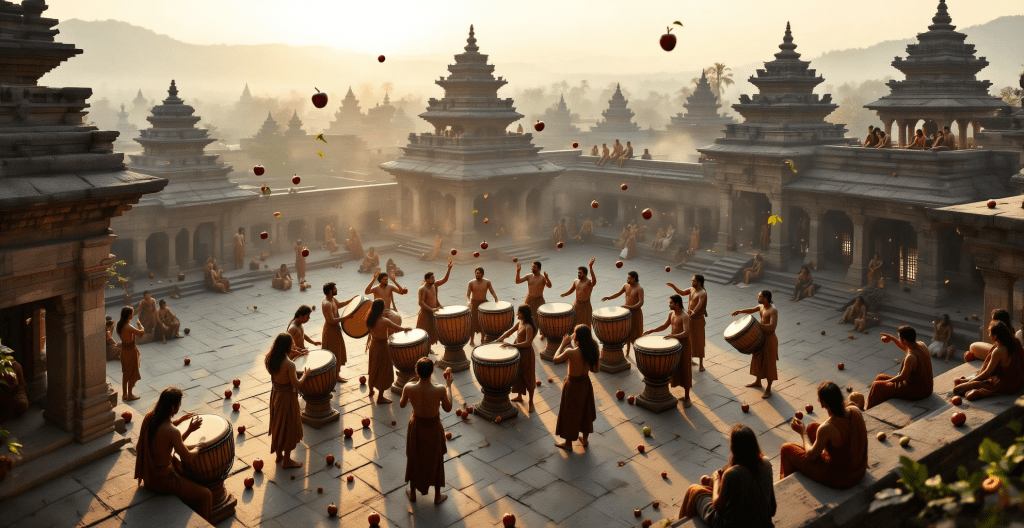
Archaeologists say several ancient cities outsourced their mornings to rhythm. At first light, teams of temple drummers on tower tops struck a synchronized pattern that rolled through the streets, turning sunrise into a civic percussion rehearsal and getting bakers, scribes, and goats moving on the same beat.
Records describe a simple opt out. If you were not ready to greet the day, custom allowed a single piece of fruit tossed toward the nearest drummer. A brief pause followed, the sticks lifted, and the block earned a few extra minutes before the downbeat returned. Oranges were recommended for accuracy. Pomegranates were discouraged for obvious reasons.
City ledgers note a side effect that vendors still envy. Breakfast markets opened with the final cadence, and stalls did brisk business in “snooze fruit,” softened for humane tossing and discounted after the third bell. Street sweepers reported tidy peels and a noticeable rise in community aim.
Temple manuals were surprisingly specific. Drummers rotated by quadrant, rain rhythms dropped one tempo, and festival days added a flourish that sounded like a bright braid at the end of the pattern. A chipped tablet lists replacement stick sizes and a polite reminder to return misthrown figs to their owners.
“The system was less about noise and more about choreography,” said one museum curator. “Wakefulness became a shared event. If a neighborhood needed five more minutes, you could hear it in the fruit.”
By midmorning the towers fell silent, markets hummed, and the city settled into its tasks with a faint beat still tapping at the edge of memory. Centuries later, a few plazas keep a ceremonial drum on the hour. No fruit allowed, for everyone’s sake.

Leave a comment