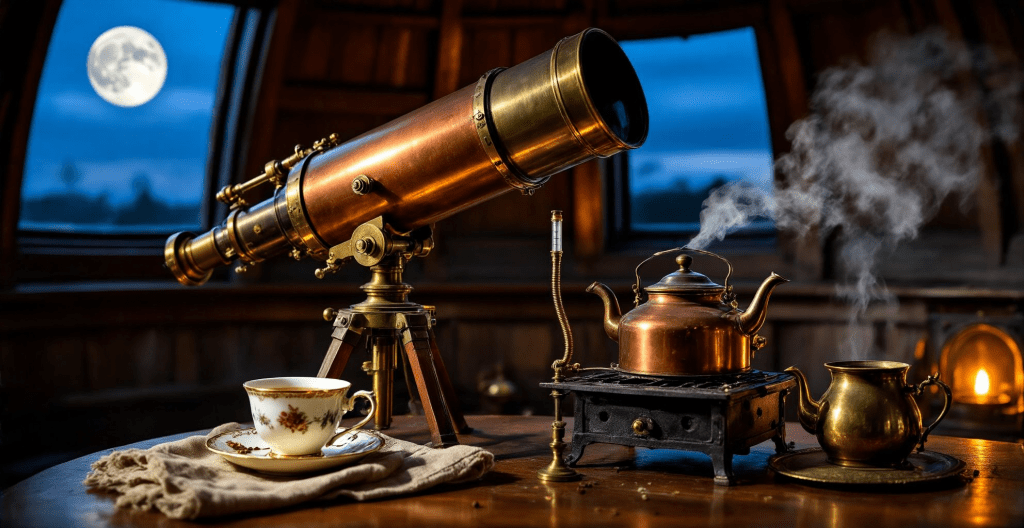
In a lamplit dome, Victorian astronomers trialed a telescope driven by boiling tea, brass piping humming as it found remote stars. On clear nights it reportedly paused, considered the void, and screamed about the concept of infinity.
Lab notes mention the kettle gauge peaking, steam haloing the eyepiece, and the ledger blotter hopping when the howl began. Condensation beaded on the tube in neat rows, as if taking attendance.
A teaspoon vibrated across a saucer toward due north, then settled with a polite clink. Leaves in the spent basket drifted into tidy ellipses that matched last night’s observing plan.
After each episode the instrument calmed when given fresh water and a biscuit it could not eat, then resumed polite stargazing. The focus wheel purred like a reconciled cat, and the dome felt relieved.
“It is a boiling point guidance system with Victorian manners, inclined to contemplate the abyss at full whistle,” said Elda Fenn, kettle optics specialist at the Society for Gentle Astronomy.
Small proofs keep steeping. The kettle lid stamps a faint ring that correlates with altitude, the stove ticks count out patient intervals, and a moony hush returns as the tube pivots to the next polite sparkle.

Leave a comment