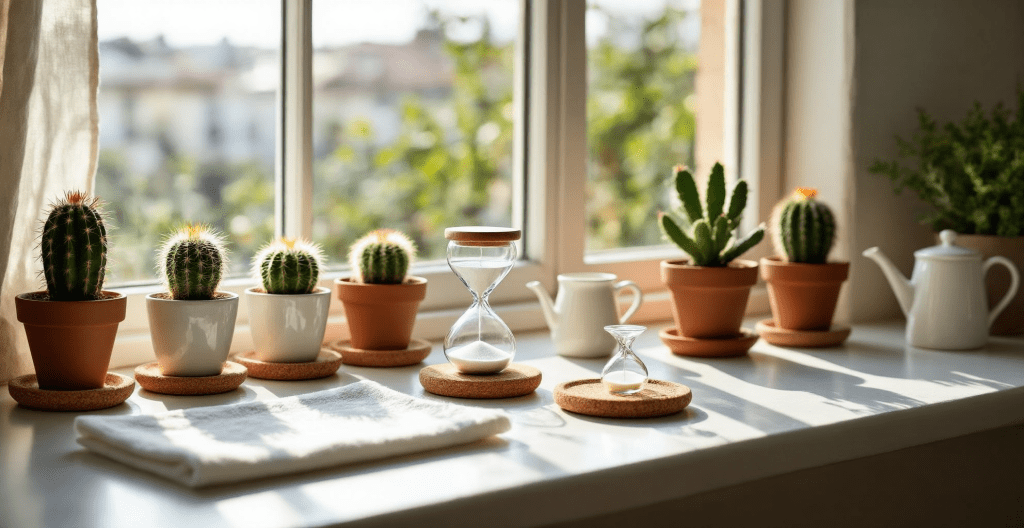
Botanists have launched a wellness initiative teaching cacti to drink responsibly after several were found overwatering themselves in sympathy with humans. Greenhouses report night sips from stray misters, a little extra dew coaxed from air, and morning soil with the polite shine of a late regret. The air smells of warm clay and cooled light.
Classes meet at first light. Instructors set a drip timer to a slow beat and seat the plants in saucer circles, where they practice the two sip rule and a respectful pause. Moisture meters serve as breathing sticks for stomata, and a shallow basin in the center acts as a reminder, not a buffet.
Evidence keeps tidy notes. Gravel shows small commas where pots settled and listened. A black line of emitters holds poised droplets that consider, then wait. A bead rides a spine, thinks better of it, and slides back into the mix with quiet relief.
An accompanying memorandum, Desert Hydration Etiquette, rests on a clipboard in careful script. Water to be introduced with a greeting. Count to five, then remember the desert. Beads to return to soil without applause. Plants to lean away from unattended spray, and to take turns at the tap. Timers to click no louder than a turning page, labels to refrain from glare.
Early results are steady. Spines look rested, pots dry evenly, and new growth arrives with the calm of someone who knows where the tap is but prefers conversation. The hygrometer keeps a modest baseline, coasters stack like patient moons, and the spray bottle sits facing slightly away to model restraint.
Public guidance suggests repeating the greeting, counting to five, and letting the rest be weather. At close, the basin mirrors rafters without reaching, the drip line tidies its own shadow along the bench, and the plants hold a composed thirst. Dawn finds them ready, saucers clean in concentric rings, and the desert remembered by heart.

Leave a comment