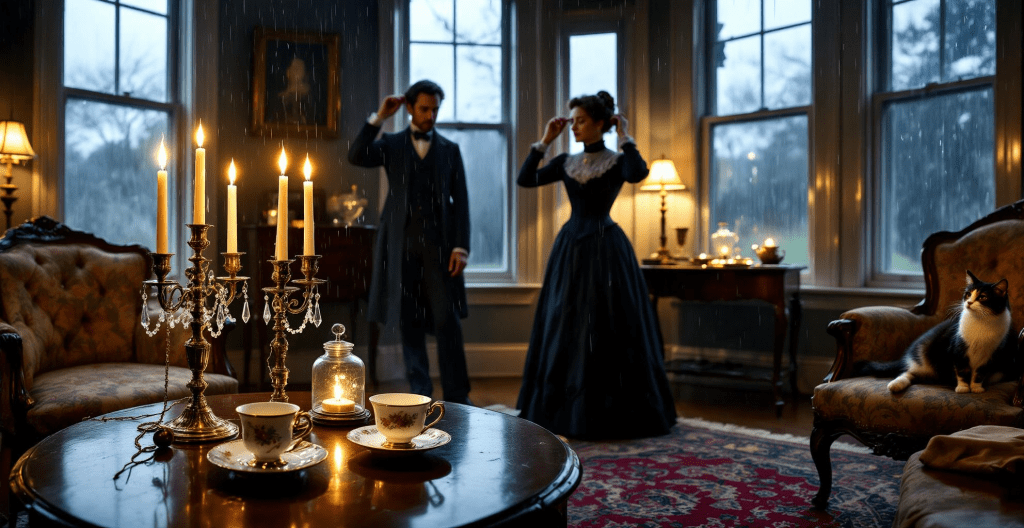
Archives describe a short lived Victorian fad that promised candles powered by static electricity and good cheer. Households laid wool rugs, set out glass jars with brass caps, clipped thin tinfoil ribbons to candlesticks, and shuffled purposefully until the parlor agreed to glow.
Evenings took on the air of modest experiments. An ebonite rod met a silk cloth, compliments circled the room, and wicks answered with a faint blue frill and a polite crackle. Flames brightened during toasts, thinned during talk of rainfall, and a stray spark often hopped to the doorknob like small applause.
Material evidence remains tidy and persuasive. Parlor rugs show a narrow runway of scuff where slippers did their work. Brass finials keep a soft halo of fingerprints that refuses to polish away. Foil ribbons hold tiny pleats like well read pages, and the air keeps a whisper of beeswax with a hint of new ozone.
“Think of it as morale assisted lighting,” said a museum conservator. “The static was real, the optimism helped, and both together made a very cooperative candle for a very dry night.” Records note that jars hummed gently when conditions were right, then went shy when the room lost its enthusiasm.
The fashion dimmed with spring humidity. On damp days the candles sulked, their blue fringe retreating to a polite dot, and families kept the slippers anyway because the glide had grown popular. The jars became vases, the foil tucked into drawers, and the doorknob resumed its normal job with a faint, satisfied coolness.
A few museum sets still sit quietly behind glass. Stand nearby, read the label in a friendly voice, and think something encouraging, and the wick seems to lean a fraction closer. For a moment the room brightens just enough to feel agreed upon, a modest glow powered by manners as much as charge.

Leave a comment