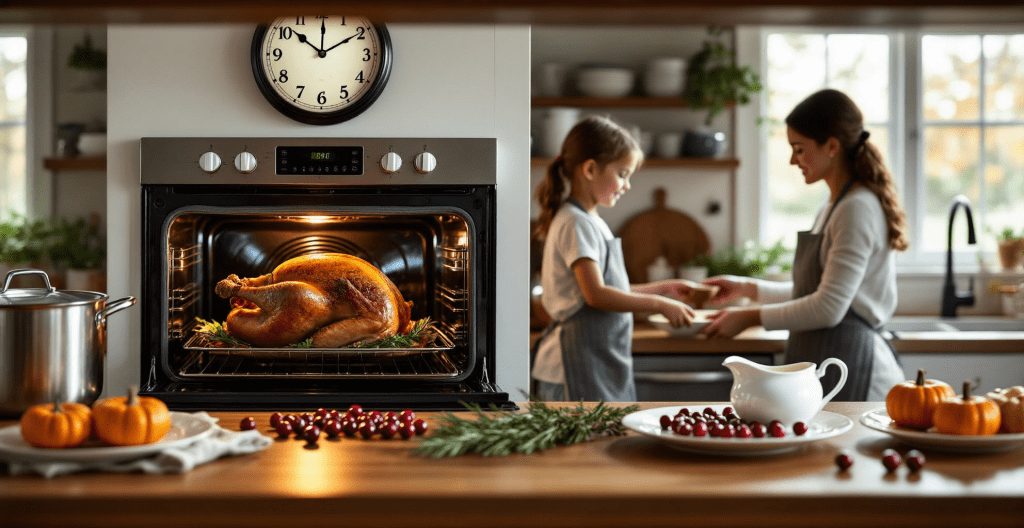
Physicists are advising Thanksgiving hosts to avoid overcooking turkeys after test kitchens reported minor time irregularities during trial roasts. In multiple observations, oven lights blinked twice, kitchen clocks replayed the same minute, and a faint shimmer formed above the stovetop.
“We are not talking about paradoxes,” said one researcher. “These are small, local repeats that resolve on their own if heat is reduced.” Labs describe the effect as a thinning of late afternoon that encourages brief echoes of recent actions.
Early indicators are straightforward: Gravy thickens before it is stirred. A carving knife appears on the counter a moment before the host reaches for it. Short toasts repeat with cleaner phrasing. Cranberry sauce briefly reverts to a smoother state, then resumes its place as if nothing happened.
Physical traces are consistent. Thermometers leave twin condensation rings on cutting boards. Refrigerators pause, emit a hum that resembles excuse me, and resume. Gravy boats cast two soft shadows that merge by dessert. Salt cellars are found slightly displaced with no clear witness.
Guidance from researchers is simple. Remove the turkey from heat, tent with foil, and keep conversation in the present tense until the room stabilizes. “Avoid forecasting next year’s menu,” a lab note reads. “Let timers ring once. Do not restart them.” Most rooms return to normal within minutes as steam output flattens and wall clocks recommit to forward time.
If a wishbone delivers the same result twice, officials recommend accepting the first outcome and moving to dessert. Custard has tested as stabilizing, and crust cooling sounds correlate with a rapid return to single track time. “Serve pie, keep voices level, and the evening proceeds as expected,” the memo concludes.

Leave a comment