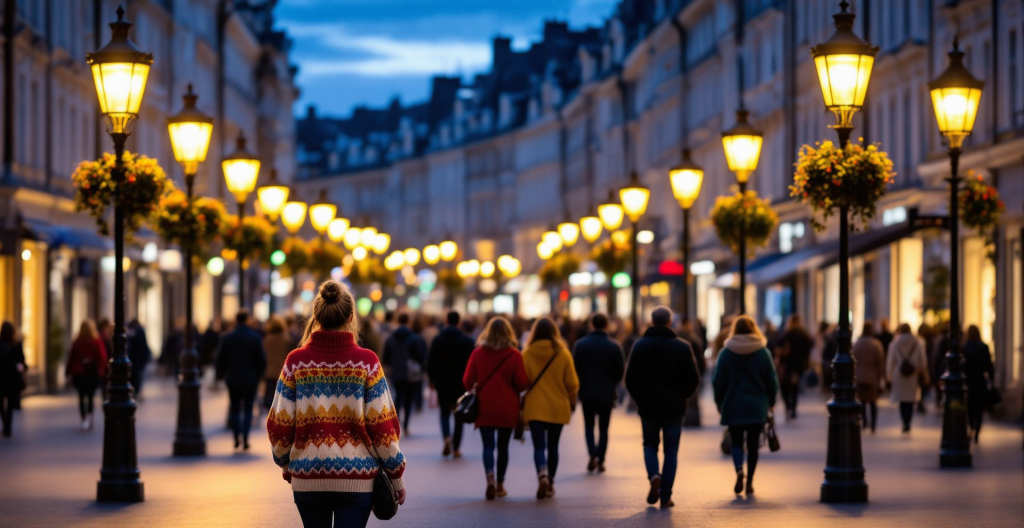
Engineers have introduced a new era of intelligent street lighting. Smart lampposts can now sense the density of nearby sweaters and automatically adjust their color temperature to match. When sidewalks fill with cable knit and wool, the lamps glow warm and golden. When cardigans and light layers take over, the glow shifts cooler and brisker.
The rollout began on a quiet avenue where residents agreed to a simple test. One block hosted a sweater parade at dusk. The lamps blushed to a caramel hue within seconds, then politely cooled when a jogger passed in a thin zip up. A tiny status light on each pole blinked twice as if to say understood.
Neighbors quickly turned the feature into friendly competition. Households compare “lumens of coziness” during evening strolls, and community boards now track knit density like a weather report. Thursday is cable knit night, according to a chalkboard sign posted by the bakery. Gloves optional, scarves encouraged.
Evidence of the system’s accuracy keeps piling up. A lamp outside a café drifted warmer when a party in fishermans sweaters lined up for cocoa. Another lamp cooled just a hair for a birthday group in breezy layers. The poles record only aggregate knit levels, engineers say, but it is hard to miss the way a lamp nods toward a particularly confident turtleneck.
Local etiquette has already adapted. Residents pause beneath a pole to let it take a reading, then continue once the glow settles. A small placard near the park bench reads “thank you for layering.” Benches respond by feeling slightly more inviting, or at least that is how everyone describes it.
Officials report fewer complaints about harsh lighting and more evening foot traffic. The plan is simple: Dress for the stroll you want, let the lamps do the rest, and enjoy a neighborhood that tunes itself to sweaters in real time. Sweater weather, it turns out, was waiting for a dimmer switch.

Leave a comment