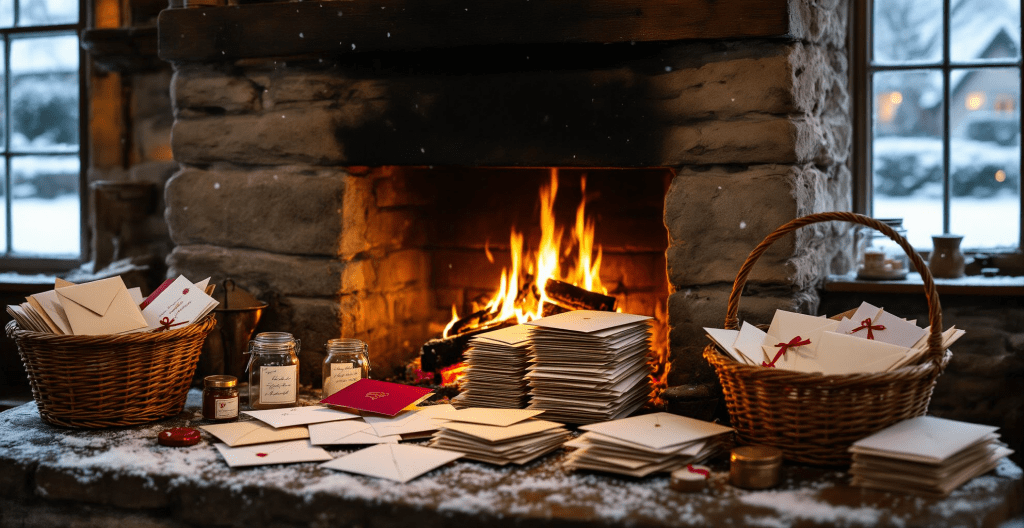
A longstanding local tradition claims a stone hearth has burned continuously since the last Ice Age, fed nightly with unmailed holiday cards. At dusk, a custodian places a neat stack by the grate, slides a few into the flames with tongs, and the room takes on the scent of paper, pine twine, and ink.
Operators sort cards by decade to keep the burn consistent. Glossy stock ignites quickly like kindling, matte paper sustains a slower flame, and old stamps curl into laurel shapes before disappearing. Embossed snowflakes throw sharp shadows on the fireback, while stray glitter behaves like polite sparks that lift in measured bursts.
Investigators note a pattern. Cards that were addressed but never posted burn with a steady, story length glow. Mail that once left the house refuses to catch, resting at the edge until it is removed and placed back in a separate pile. At the winter solstice, the hearth reportedly pauses, then resumes when a late season stack arrives from drawers and desk corners.
Physical evidence supports the account. Ash settles in perforated lines that resemble stamp edges. The grate shows a bright strip where brass tongs habitually rest. A wax seal spoon sits on a trivet with a single red ring, and the stone lintel is worn smooth, consistent with frequent, careful handling over generations.
Neighbors describe a reliable evening scene. The window takes on a blue quiet, the kindling crackles on cue, and a foil ribbon on the table flashes once before going still. The custodian lifts the tongs, the hearth accepts the cards without complaint, and the house settles as if a backlog of messages has finally been processed.
Officials have not offered an explanation for the continuous burn. For now, the practice continues at dusk, and residents are advised to expect a faint scent of ink and fir whenever the stack is fresh and the season runs late.

Leave a comment