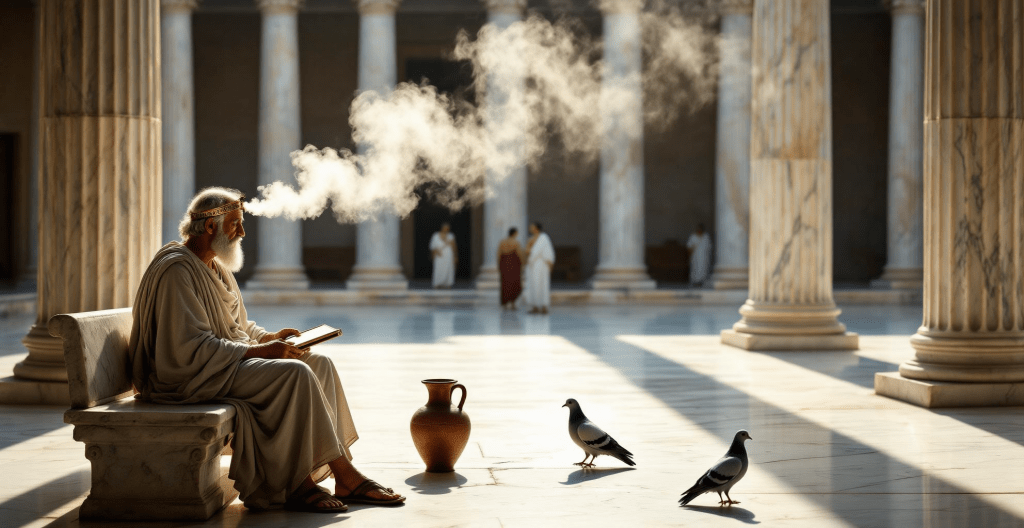
Historians now suggest that a certain Greek thinker built a small apparatus that released a puff of steam whenever his thoughts aligned. The device did not hurry, it preferred conclusions to come to it.
Notes from pupils describe lessons gently timed by pale vapor that rose, paused beneath the rafters, then thinned into the courtyard air. A reed valve was reportedly linked to a finger rest on his wax tablet, so when a proof settled, the pressure did too. The room learned to wait for that soft exhale before anyone spoke.
The study shows its evidence. Wax tablets carry faint rings where warm air hovered, the lamp bowl wears a tidy crescent of soot that repeats at the same height, and the floor beside the tripod is scuffed into a neat half moon. The spout itself has a thumb-sized polish, as if gratitude were routinely aimed at it.
In a modern reconstruction, a little olive oil heat and a saucer of water produced the same obedient plume above a tablet, leaving a soft ring of condensation by the stylus. Curators noted a clean mineral tang, lamp smoke as gentle as linen, and ceiling beams that seem to remember where the mist paused. Even the doorway gave a courteous draft that lifted the wisp and set it aside.
Late in the afternoon the nozzle sometimes issues a single, satisfied sigh with no hand upon the tablet. The flame steadies, the stylus waits, and the silence feels comfortably explained, as if an idea has decided to stay where everyone can see it.

Leave a comment