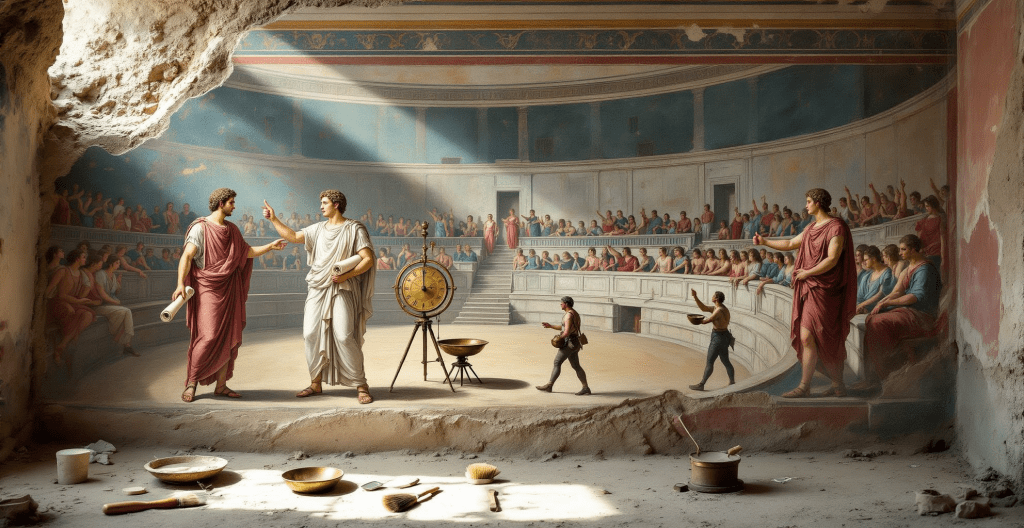
Conservators have unveiled murals that suggest the arena schedule once included rapid verse contests between regular bouts. At dusk, two cloaked performers stepped onto painted sand, laurel cords at their waists, arms lifted in crisp cadence while the tiers leaned forward like a city holding its breath.
The rhythm section kept it tidy. A scabellum sat by a poised heel for the beat. Chalk stripes marked tempo so nobody faked the count. A bronze clepsydra ticked along like a patient metronome. A magistrate held a wax tablet for scoring meter and wordplay, and a boy with a lyre waited to drop a soft loop behind the flow.
The crowd still voted by thumbs. Up granted a laurel crown. Down demanded another verse. Sideways called for a draw and citrus water served in shallow cups. Vendors drifted past with honeyed lozenges for tired voices, and a painted caption in tidy Latin claimed the echo was excellent that night.
Backstage panels spill the rest. A basket of chalk sticks by the gate. Cloaks loosened for breath control. Scansion marks in cinnabar hover over a line like marching feet. One corner brag reads of a perfect couplet landed while the scabellum rang like silver.
Format rules kept things fair. Topics came from an urn, pastoral to maritime, with a brief pause to wet the voice and retune the lyre. Borrowed hexameters cost a half point and a raised eyebrow. Fresh metaphors earned figs and applause, sometimes both at once.
Acoustics got real engineering. Amphorae in the walls acted as gentle resonators. Stone steps returned syllables without smudging the ends. A runner steadied the clepsydra while a page smoothed the chalk stripes. When the lyre loop entered, the painted crowd leaned closer, as if even the sand began to count.
The mural’s final frame shows a clerk pressing a sun seal into the logbook wax, writing Done in calm capitals, and setting a slice of lemon beside the page for anyone finishing a verse. Translation for modern readers. Mic drop, then refreshments.

Leave a comment