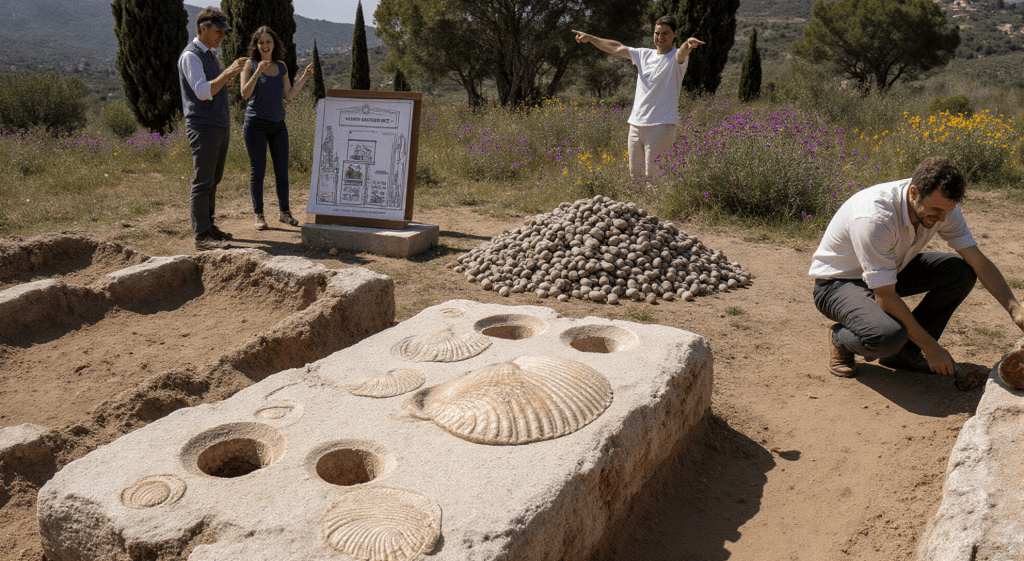
Archaeologists are buzzing after the discovery of what looks like the ultimate ancient convenience: Roman vending machines. Hidden beneath sunbaked layers of Italian soil, these clever contraptions reportedly dispensed plump olives in exchange for seashells, a currency that was both biodegradable and effortlessly beach-chic.
Early findings suggest the process was delightfully simple. Slip a shell into a concealed slot and a perfectly portioned olive would tumble out, ready for citizens and centurions alike. No need to risk wrinkled togas or sandy snacks during a trip to the Forum. Parmesan might not have been on offer, but spotless fingers certainly were.
Scholars now have questions by the amphora. Did the machine accept only pristine shells, or did chipped and weathered specimens count? Was there a premium tier for extra-juicy olives that required oversized shells gathered from distant shores? The debate over ancient exact change grows livelier with every trowel of dirt.
Imagine the scene at the Colosseum’s snack corner. Crowds jostle gently for front-row seats and a handful of briny treats. Lines snake around the forum as gladiators and theater fans clutch shells with mounting anticipation, rehearsing their coin-free purchases.
Evidence is stacking up. Carved slabs have surfaced with grooved slots and olive-branch motifs, alongside piles of well-worn shells and a suspicious abundance of ancient pits. The picture that emerges is a civilization deeply committed to snacking and even more devoted to convenience.
With excitement running higher than an aqueduct arch, experts are already planning the next dig. The dream is to uncover a lost manual titled “Tips for Unjamming Olives,” or perhaps a stone plaque that reads “kick here” in elegant Latin.
Modern vending machines may serve everything from fizzy drinks to chilled sandwiches, but the Romans appear to have pioneered the concept with style. A simple shell, a savory reward, and a city determined to keep togas tidy and hands gloriously clean.

Leave a comment