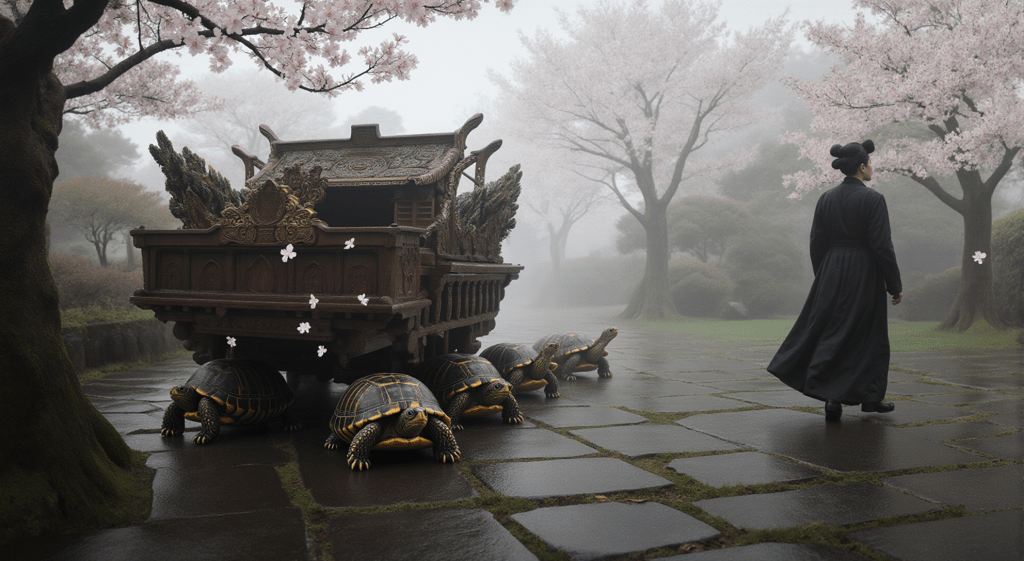
Centuries before self-driving cars and bullet trains, travelers in ancient Japan relied on a method that was dependable and delightfully slow. According to old scrolls, certain carts were so loyal they followed their owners everywhere, shadowing them like the best-trained pets in the province.
The secret was not elaborate craftsmanship or mystical charms. A small ensemble of exceedingly patient turtles lived beneath the wooden frames. With a collective look of calm surprise, they shuffled forward and propelled each cart at a pace best described as meditative.
Journeys required respect for both time and turtle temperament. Arriving fashionably late was more than a social trend. It was inevitable, and often interpreted as a sign of wisdom and inner peace. The more turtles under your cart, the slower and more distinguished your entrance.
Children loved to guess which noble’s turtle cart would reach the market last. Impatient travelers perfected tea rituals to pass the hours. As for the turtles, they enjoyed slow-motion sightseeing and the occasional snack from a wayward leaf.
Traffic jams became an adorable affair. Ornate carts queued neatly while clusters of turtles conferred at a cautious crawl. Owners exchanged polite greetings, and the only road drama came from a brief detour toward a lily pond.
Historians now agree that the turtle cart era set a gold standard for stress-free commuting. Modern rush hour rarely offers so much dignity, serenity, or shell-based perseverance.
So the next time you are stuck in traffic, consider a gentler pace. A few surprised turtles at the lead might be exactly what the world needs.

Leave a comment