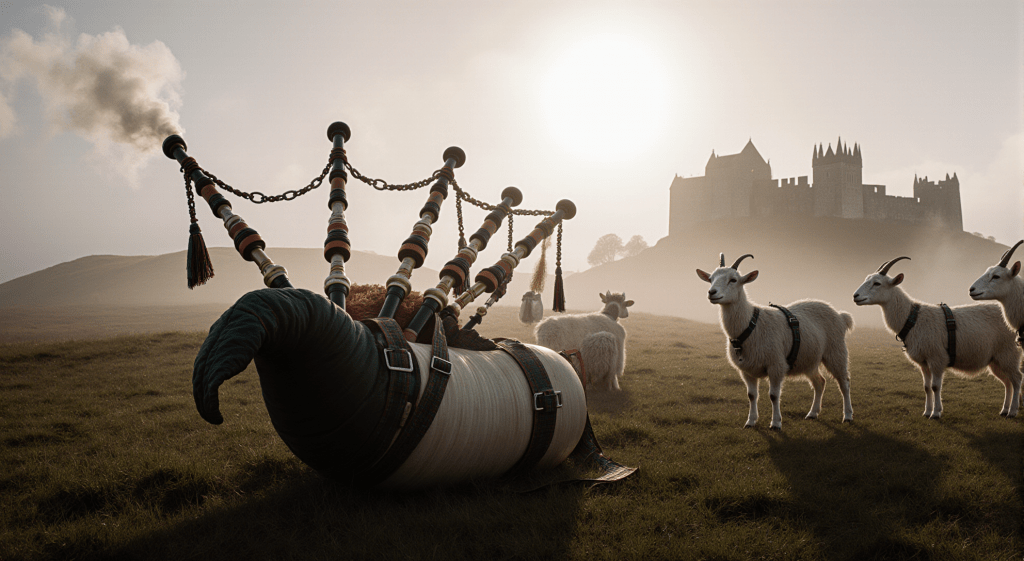
Before bagpipes became the soundtrack of parades and plaid-clad celebrations, they served a far more classified purpose. Ancient engineers did not see an instrument; they saw an intelligence tool. With a few cooperative goats, a sturdy sheep bladder, and a total disregard for peace and quiet, the world’s first surveillance drones were born.
These early bagpipes were not played so much as unleashed. When activated, a herd of cranky goats forced air through reeds and pipes, creating a sonic storm that sent enemy soldiers fleeing and gossiping at once. Hidden within the chaos, sharp-eared operators could pick out vital intelligence such as where the cheese was stored, which general had terrible sandals, and the latest scandal involving chariot snacks.
Coordinating the goats proved nearly impossible. Ancient writings describe endless attempts to synchronize bleats with battle rhythms. Many historians now believe bagpipe music evolved from repeated failures to make the goats play in tune, which explains much about how the instrument still sounds today.
Solo performances were particularly dangerous. Musicians wore layers of protection against spontaneous goat leaps and unpredictable gusts of sound. Veterans of those days could identify the signal immediately. The moment a piercing wail echoed across the hills, they knew intelligence was being gathered and that goats were definitely involved.
Eventually, calmer minds replaced the livestock with human lungs. The change was celebrated as a victory for both melody and animal welfare. Yet echoes of the original goat-powered pandemonium can still be heard in every stirring tune, a tribute to the bleating pioneers of ancient sound.
So the next time you hear bagpipes calling across a distant field, take a moment to appreciate the history behind the melody. Those early goats may have retired from espionage, but their legacy lives on in every proud, wobbly note.

Leave a comment