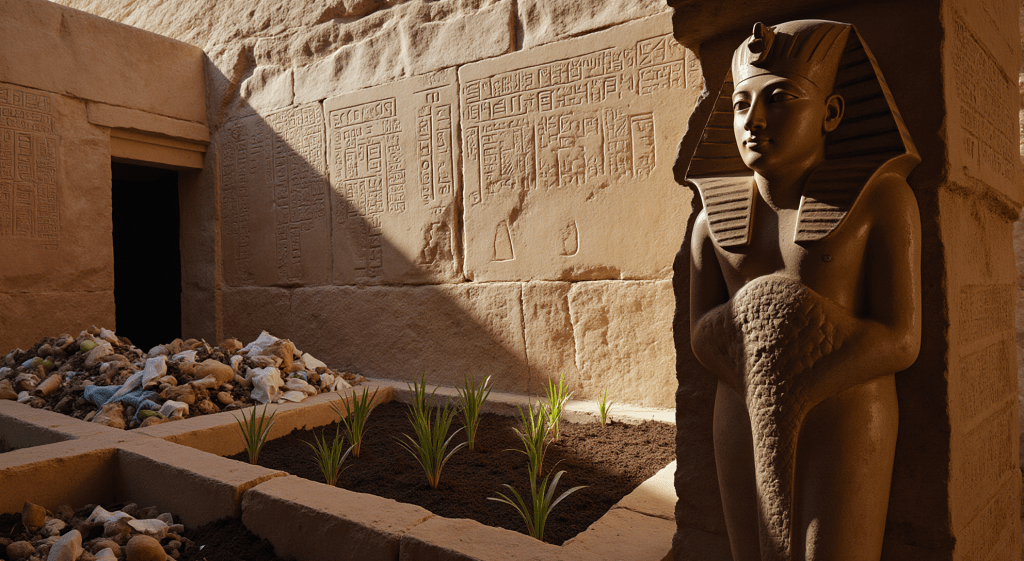
Forget everything you thought you knew about pharaohs’ treasure. Recent discoveries now suggest that Egypt’s most iconic monuments were not glittering tombs but the ancient world’s most efficient recycling centers. According to these theories, the pyramids did not just hold royal remains. They held compost, carefully layered heaps of organic matter designed to nourish eternity itself.
While legends tell of gold and gemstones, archaeologists now believe the real treasure was the perfectly balanced blend of banana peels, wilted papyrus, and ceremonial leftovers slowly transforming into the richest soil this side of the Nile. Pharaohs, it seems, pursued immortality not through wealth but through waste management. They were not hoarding riches for the afterlife; they were creating top-tier fertilizer.
Visitors to these ancient recycling pyramids were greeted by carved hieroglyphic instructions that detailed the proper disposal of leftover figs, olive pits, and ceremonial flower petals. Sorting compost was considered a sacred act. Priests supervised with solemn reverence, ensuring that no errant date pit found its way into the fruit peel pile. Rumor has it that the Royal Beetle Inspector held the highest authority in the land, armed with both a magnifying glass and impeccable compost etiquette.
Pharaohs were deeply committed to their eco-conscious afterlives. Some insisted on open-air sarcophagi so they could personally monitor the nutrient cycle for eternity. Tutankhamun himself is now rumored to rest beneath a flourishing patch of cucumbers that archaeologists describe as suspiciously divine.
Travelers from distant kingdoms visited these compost pyramids to witness the miracle of royal decomposition. They returned home bragging of the sweet, earthy scent of immortality and occasionally explaining to border guards why their souvenirs smelled faintly of banana bread. Meanwhile, local farmers near the pyramids enjoyed harvests so abundant that even desert onions grew to the size of chariot wheels.
So, the next time you toss your food scraps into the compost bin, take a bow. You are continuing a royal tradition thousands of years old. In the end, the secret to eternal life may not lie in gold or glory but in a well-tended heap of peelings, petals, and pure potential.

Leave a comment