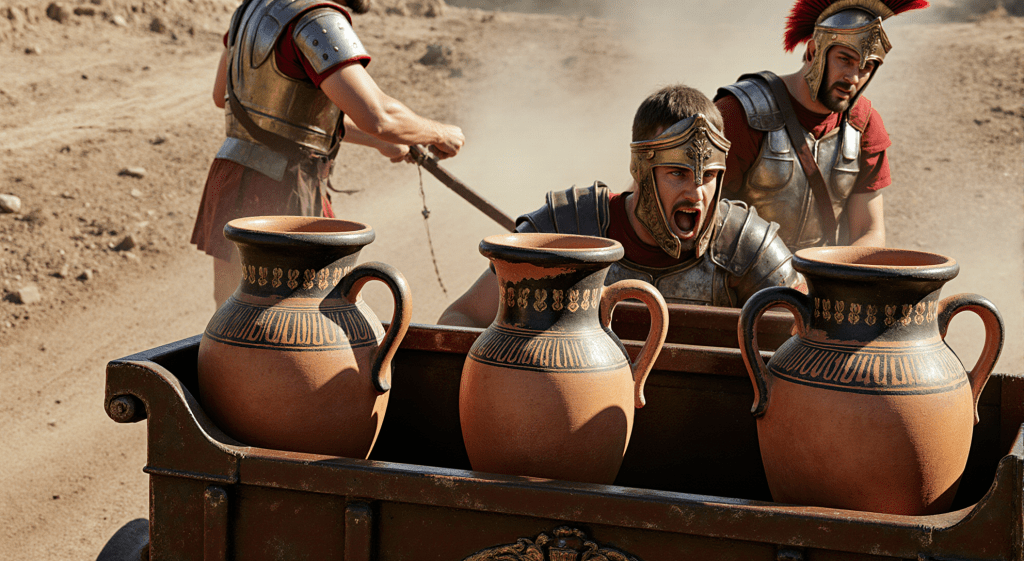
The ancient Romans loved their technological upgrades, and while gladiators may have had their share of innovations, chariot racing held one of the most surprising. Hidden in the footnotes of history is the revelation that Roman engineers invented the first cupholders.
These cupholders were not an afterthought. Artisans carved sturdy receptacles directly into the chariot frame, ensuring beverages stayed put while drivers thundered down the Appian Way. Hands were freed for steering, sword-swinging, or the occasional salute to admiring crowds, all while sipping with imperial flair.
There was, however, a flaw. Roman standards for comfort were extravagant, so the holders were sized for amphorae of wine rather than modest cups. The image of a charioteer sipping vintage reds at forty miles an hour may sound grand, but those oversized containers had a wobble that spelled disaster on sharp turns.
Colosseum race days became notorious for their grape-scented chaos. The roar of the crowd was often punctuated by cries of anguish as prized vintages splashed across sand and tunics. Eventually, officials instituted the now-legendary “no refills on straightaways” rule in an attempt to salvage dignity and arena cleanliness.
Roman poets seized on the drama, recording spilled-wine mishaps in florid verse. Some claimed champions could be traced by the purple trails behind their chariots, while others joked that togas were designed as stain camouflage for such calamities.
So the next time you slide a travel mug into your car’s cupholder, remember that you are carrying forward a tradition nearly two millennia old. The Romans may not have mastered spill-proof design, but they certainly knew how to race in style.

Leave a comment