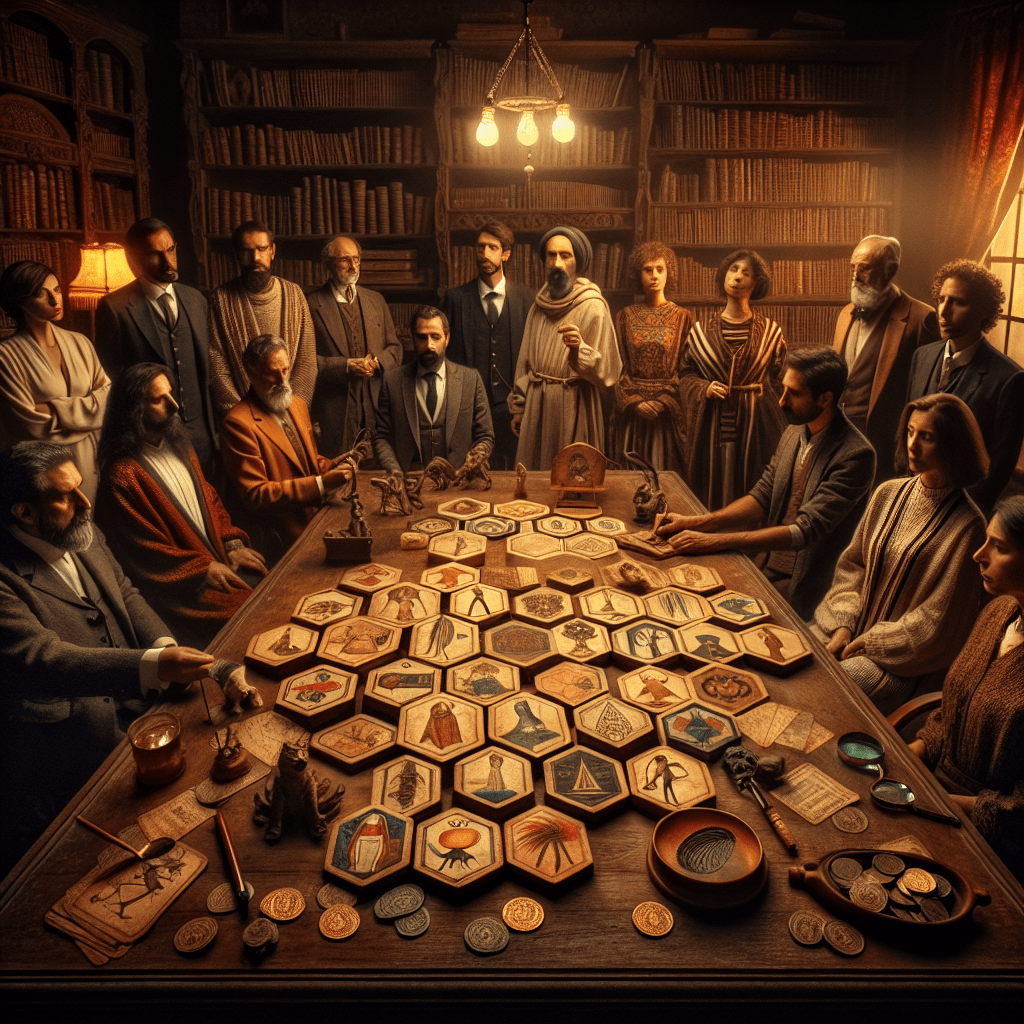
Think today’s card games are wild? They’re nothing compared to the decks shuffled and dealt in ancient times. Historians have recently unearthed packs with a head-spinning twenty different suits, making your average Pinochle deck look downright straightforward. And let’s not even start on the cards themselves, which were shaped like hexagons. This was perfect for both gaming and confusing future archaeologists.
The face cards were truly a sight to behold. Instead of kings and queens, players were treated to lavishly illustrated animals strutting their stuff in togas. Picture a solemn owl in a Roman robe or a sassy squirrel giving side-eye from beneath a laurel wreath. Ancient parties must have been an absolute toga animal parade.
No one can say for sure how these extravagant games were played. Some speculate the rules took hours to recite, possibly requiring flip charts, interpretive dance, and a small brass gong. Others believe the object of the game was to simply finish explaining the instructions before any actual cards were dealt.
Despite all the wild suits, ranging from suns and boats to mysterious images of wheat, some things never change. Cheating was still as obvious as ever. Ancient cheaters, after all, could hardly slip an octagonal “Jack of Wheat” up their sleeve without attracting a few raised eyebrows.
Scholars delight in examining these perplexing relics, often battling each other in heated debates over the “True Purpose of the Lizard in a Toga.” Modern card collectors can only dream of adding a hexagonal dolphin suit to their collection.

Leave a comment