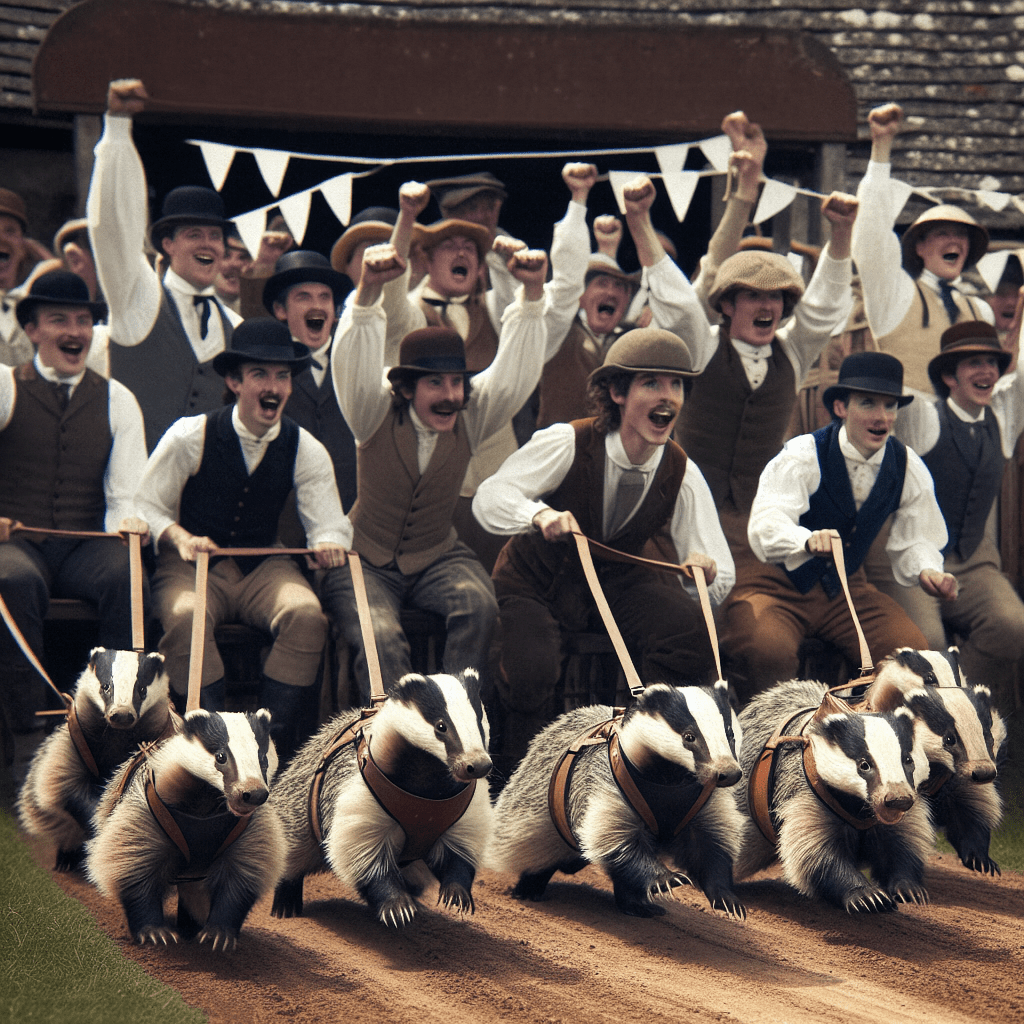
Long before horse racing trotted into the spotlight as “the sport of kings,” the world’s fastest and furriest excitement came from badger racing. Early tracks were designed with just the right width to accommodate the determined dash of a properly motivated badger. Spectators flocked to the sidelines, clutching tiny banners and placing far too much faith in their favorite striped contender.
The atmosphere was electric as crowds eagerly awaited the starting bell. Badgers, sporting the latest in minuscule racing harness fashion, crouched at the line with all the focus of a champion. Prior to each race, nobles and commoners alike would compare stats, argue over badger pedigrees, and speculate wildly about who might actually run in a straight line this time.
However, a key challenge quickly gnawed away at badger racing’s future. It is a universally accepted fact that betting on a badger’s direction is an exercise in pure whimsy. The creatures zigged, zagged, and sometimes just took a determined nap, leaving bookkeepers with empty pockets and philosophers questioning the very nature of competition.
With chaos the only predictable winner, the organizers soon realized four legs are good, but hooves are better, especially if you need at least a vague chance of a photo finish. The era of the badger dash faded, but echoes remain for those who look closely and listen for the sound of tiny paws scurrying off the beaten path.
In fact, history whispers that the phrase “dark horse” originally began as “uncooperative badger.” Who needs a mysterious racing stallion when you’ve got a tiny, tunnel-loving mammal prone to dramatic detours?

Leave a comment