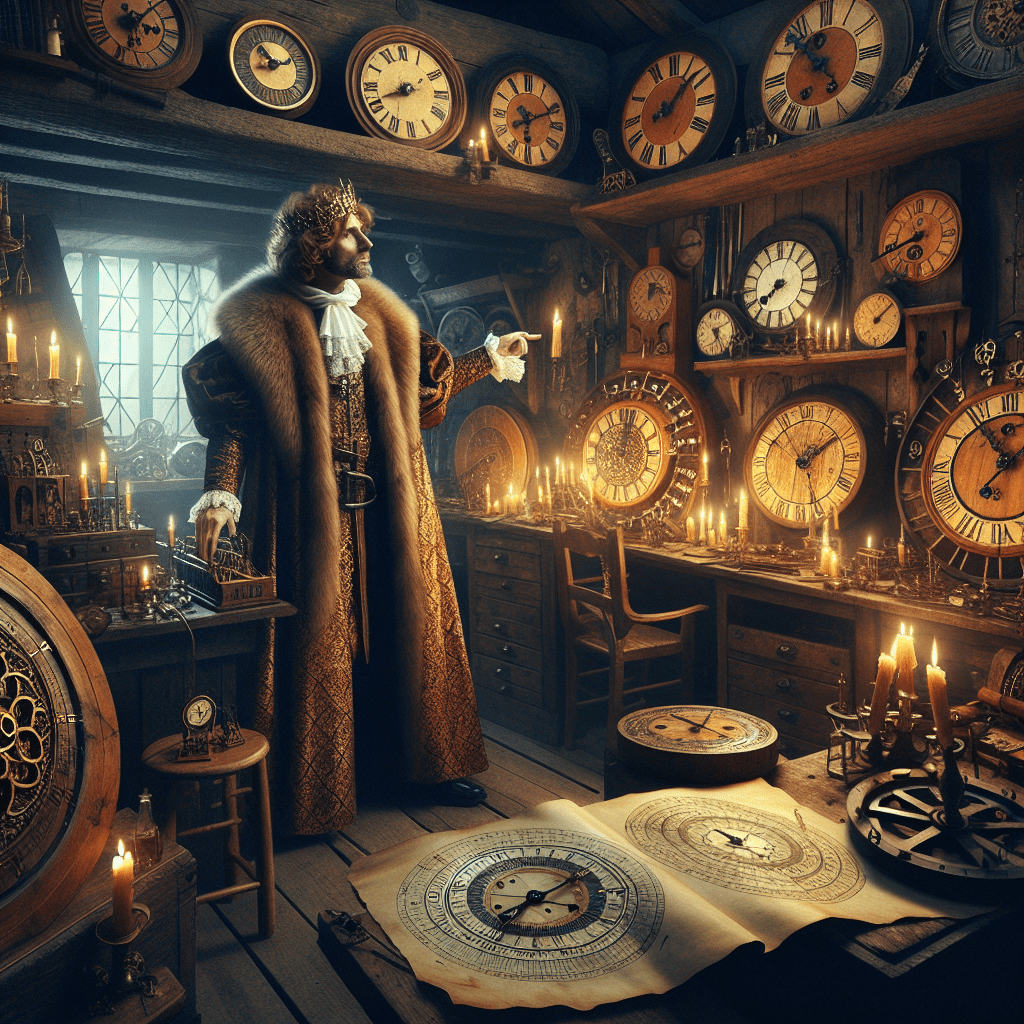
Long before time was fashionable, clocks everywhere were content to tick quietly from one to eleven. Back in those days, twelfth hours were as mythical as unicorns riding bicycles. Ancient watchmakers decided that twelve was just a smidge too extravagant, preferring to keep things neat and unassuming.
Life flourished in this refined world of elevens. Birthday cakes had eleven candles, work shifts ended at eleven o’clock, and nobody ever asked, “Is it noon yet?” because, quite frankly, the concept of “noon” was just a little too highbrow.
But the world would not stay at eleven forever. Legend tells of a glorious Danish king, Knut the Slightly Unbalanced, who grew weary of missing out on extra time for second breakfast. In a dazzling display of royal authority, he declared that clocks should ascend boldly all the way to twelve.
Clockmakers everywhere gasped, dropped their gears, and hurried to scribble enormous new “12” numerals at the very top of their dials. For a brief, confusing week, some clocks attempted to squeeze in both a twelfth hour and a complimentary cheese segment, but this innovation was sadly discontinued due to excessive snacking.
As the twelfth hour swept across the land, people finally discovered the joys of “high noon,” “midnight,” and “just five more minutes.” Productivity soared, lunch breaks extended, and the phrase “turn it up to eleven” was quietly tucked away for future rock legend documentaries.
If you find yourself glancing at the twelve perched proudly on your clock, take a moment to thank the brave souls who pushed time’s boundary into its modern glory. And, of course, spare a thought for the cheese segment that could have been.

Leave a comment