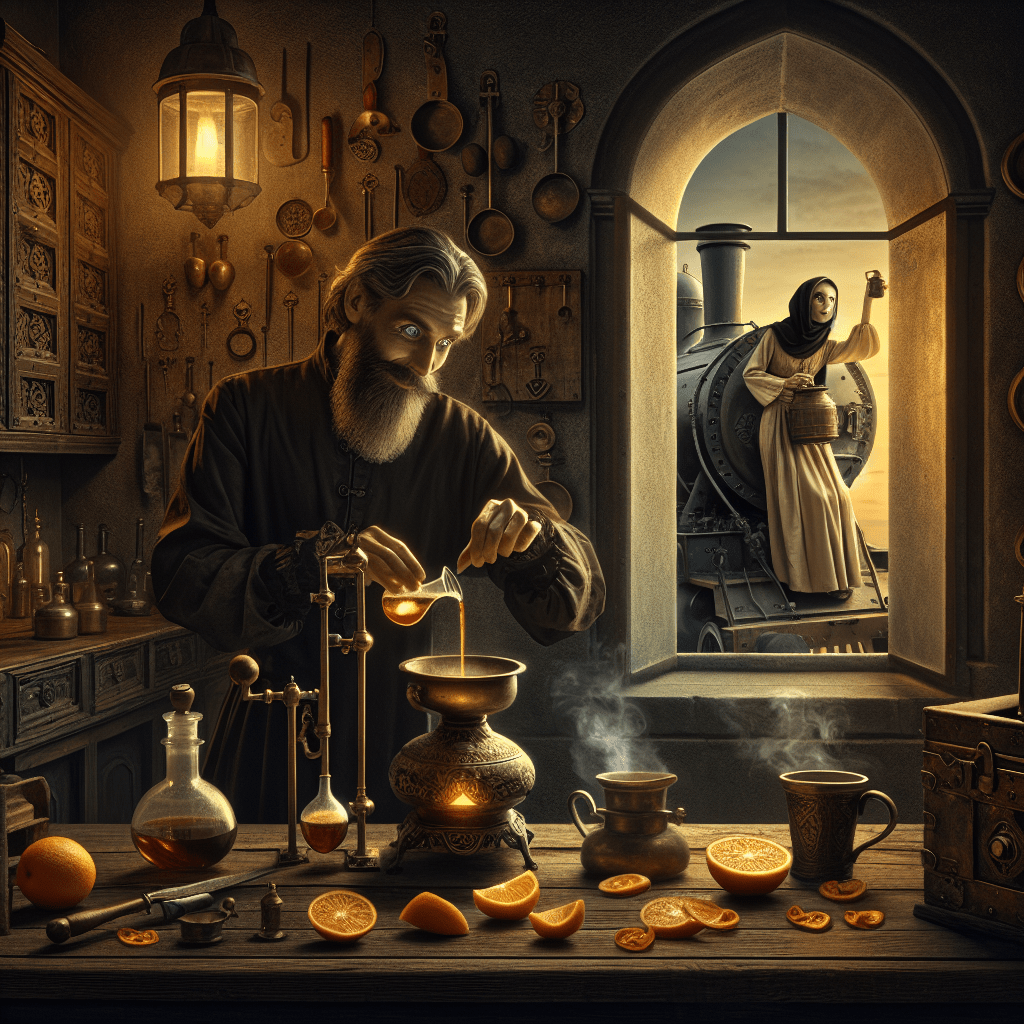
Before coffee claimed the title of “liquid motivation in a mug,” its talents were called upon for some of history’s most unexpected projects. During the Renaissance, curious alchemists believed a properly brewed cup could transform humble orange peels into pure gold. While the gold supply didn’t exactly boom, local compost bins were suddenly pungent and highly caffeinated.
In dim-lit workshops, bearded inventors huddled around bubbling pots and labyrinthine tubing, solemnly pouring coffee over citrus and whispering, “Eureka!” Results, as you may expect, were mostly sticky and attracted a lot of squirrels.
Meanwhile, across the continent’s railways, train engineers discovered a surprising use for their morning brew: lubricating train whistles. Folk tales suggest entire locomotives once thundered across the countryside with a faint espresso aroma, their whistles producing a distinct “toot-toot” with a subtle jitter.
Passengers, freshly woken by the caffeinated music in the air, may have wondered why their trains arrived five minutes early and had a sudden craving for biscotti. The secret lay not in punctuality, but in the power of a double shot on the whistle.
Yet during this wondrous age of experimentation, the concept of drinking coffee was a radical notion, nearly lost among all the inventive chaos. Mugs sat gathering dust, overlooked for their true purpose, as everyone was far too busy oiling gadgets and chasing dreams of unlimited gold.
Let’s toast the innovators who brought coffee out of the workshop and into our mugs—eventually.

Leave a comment